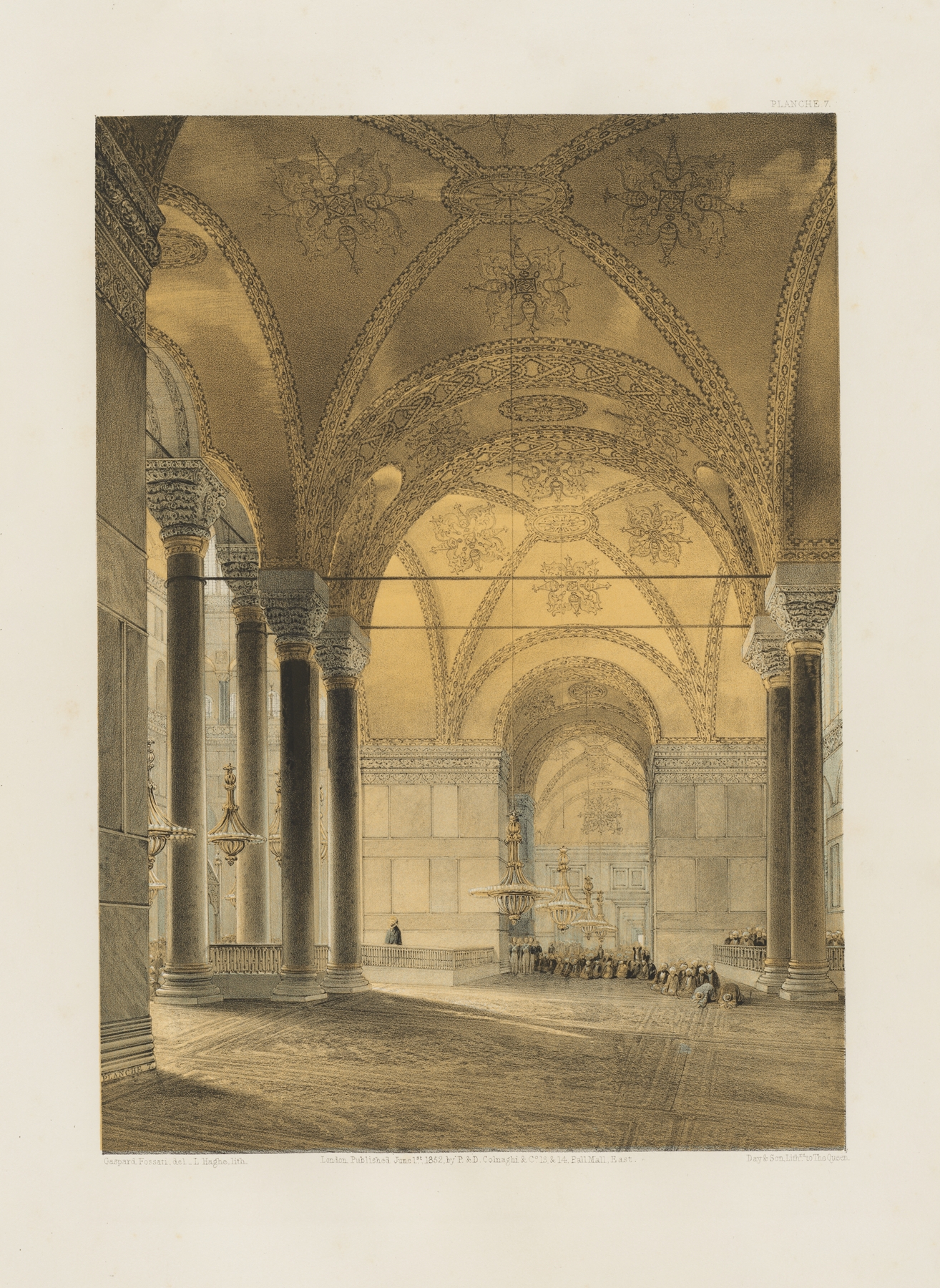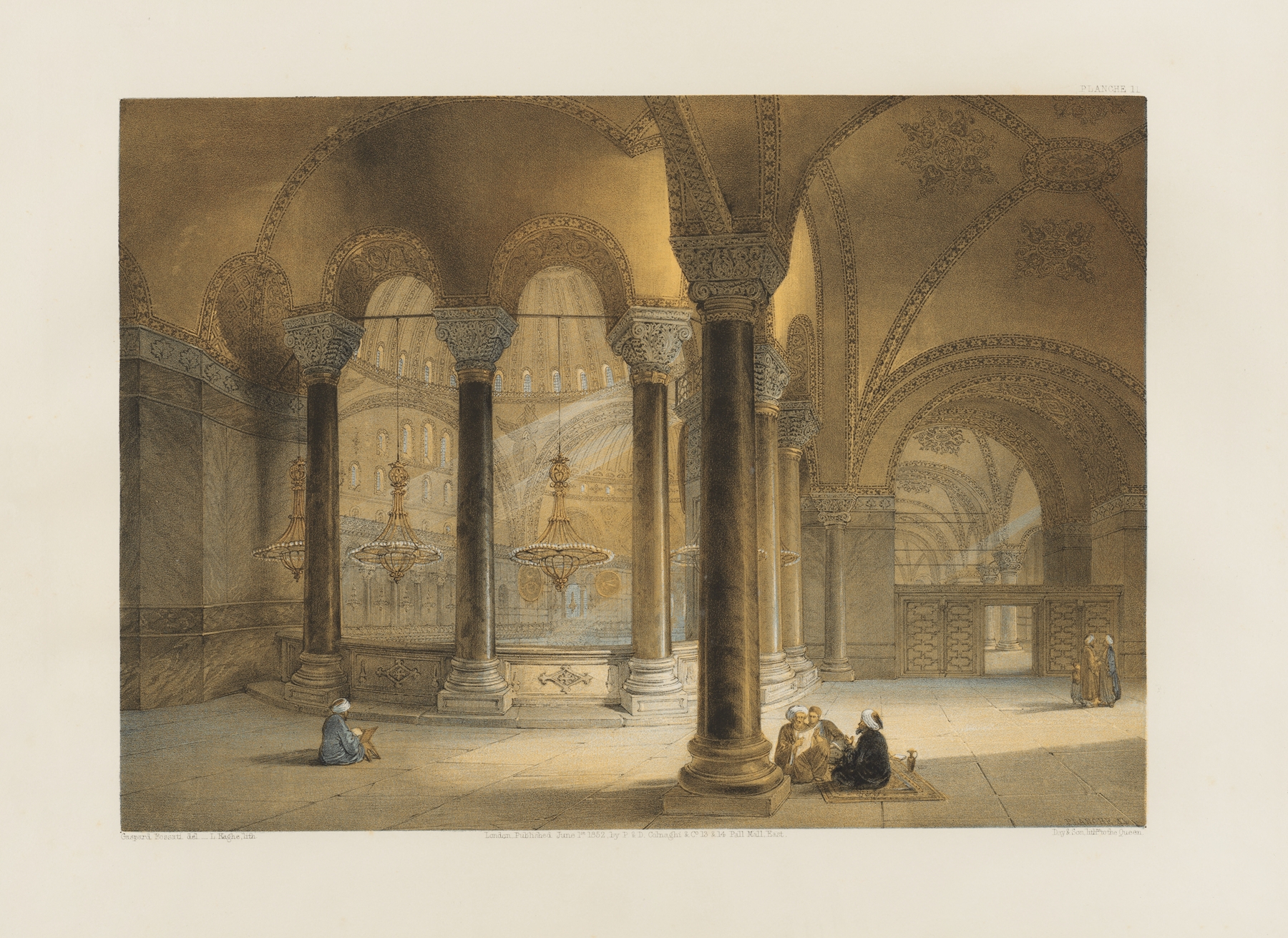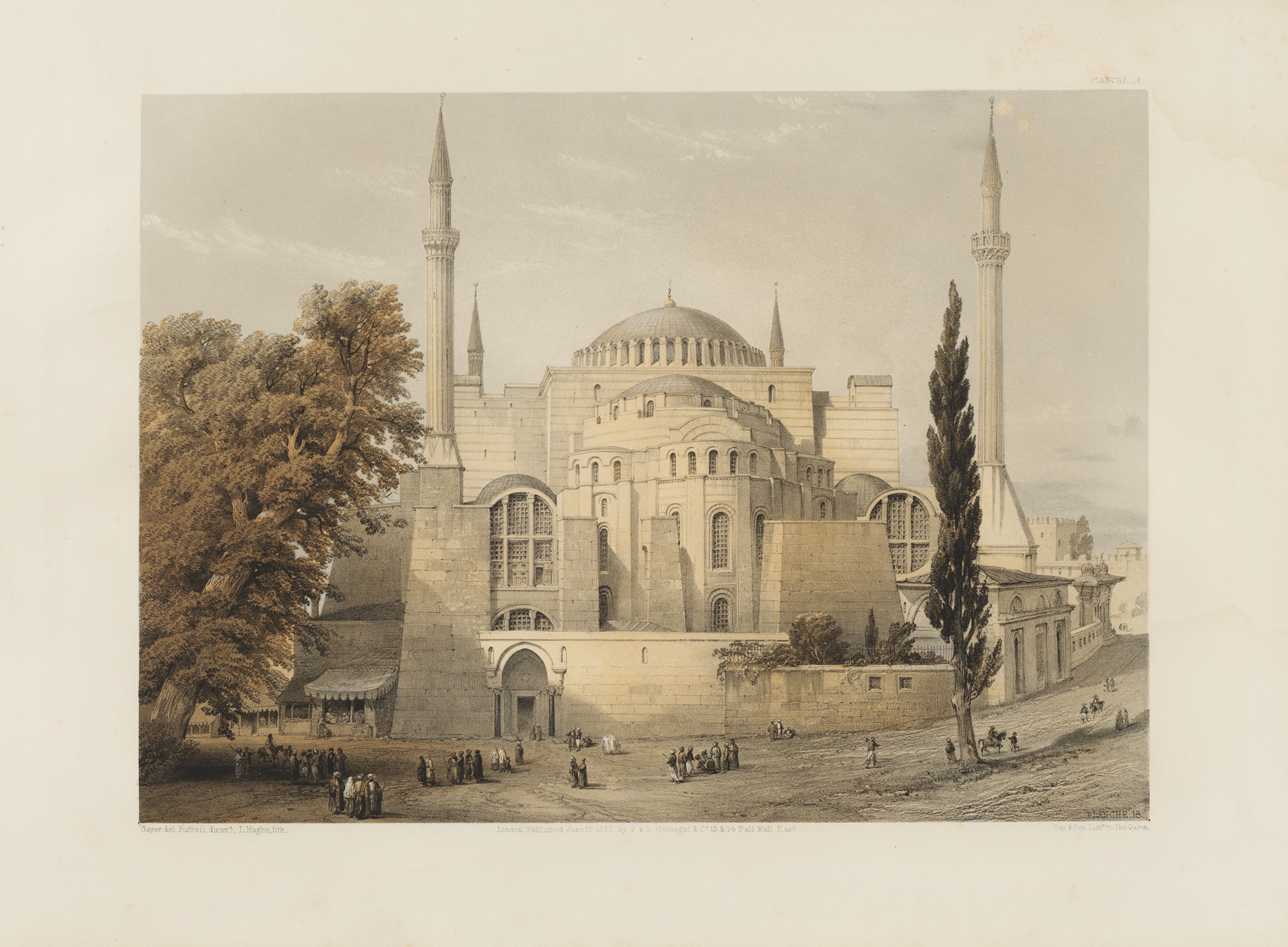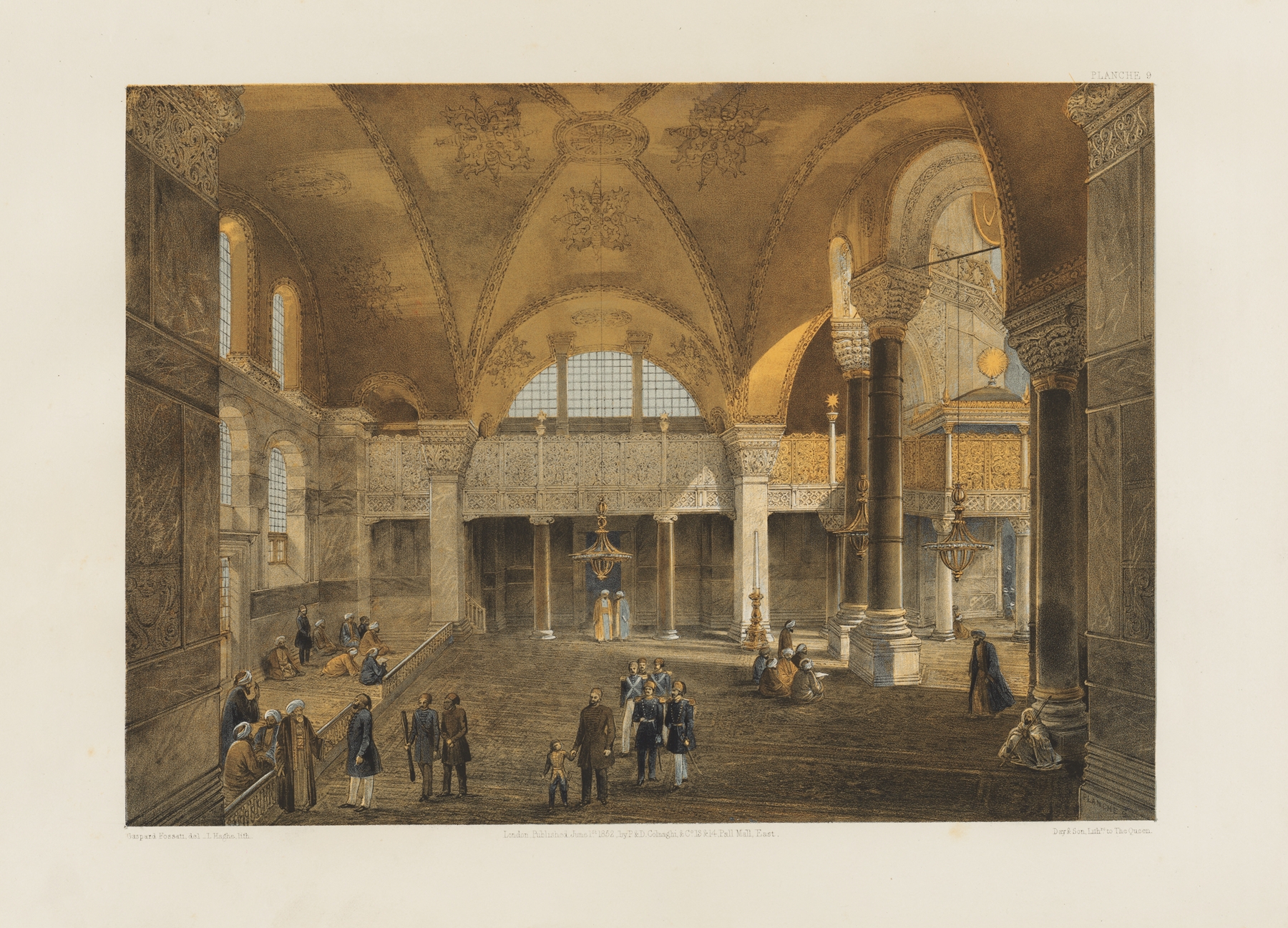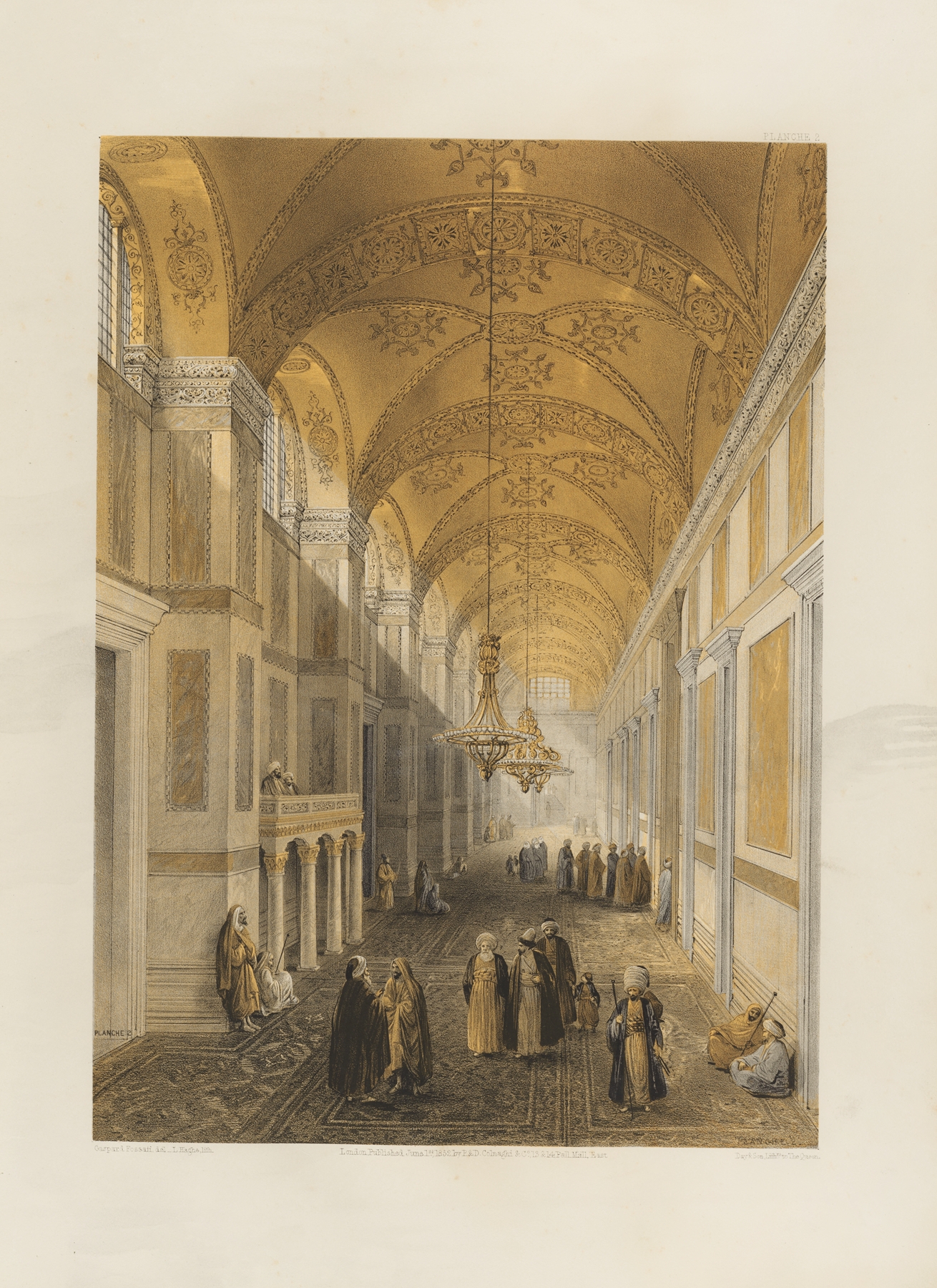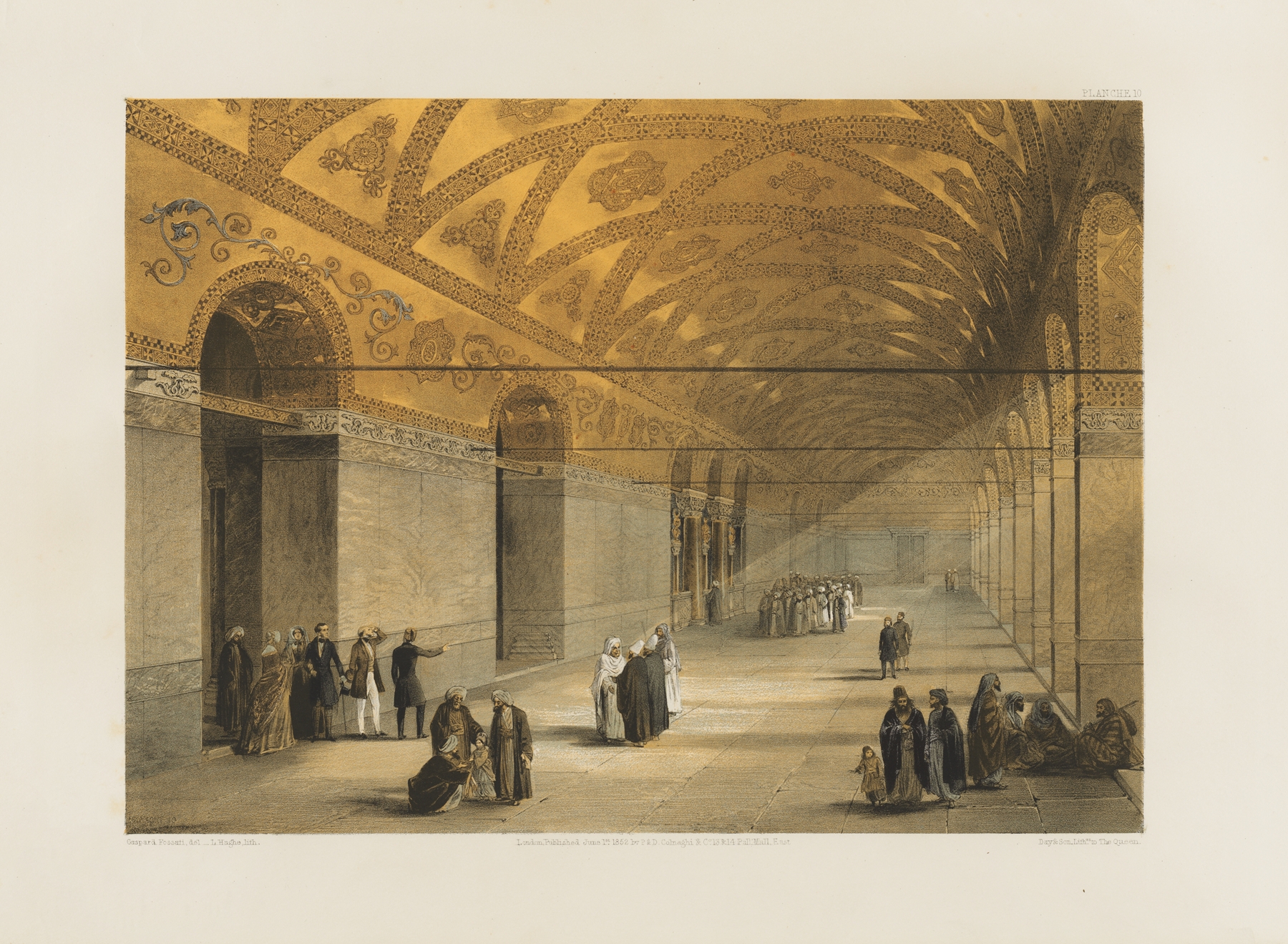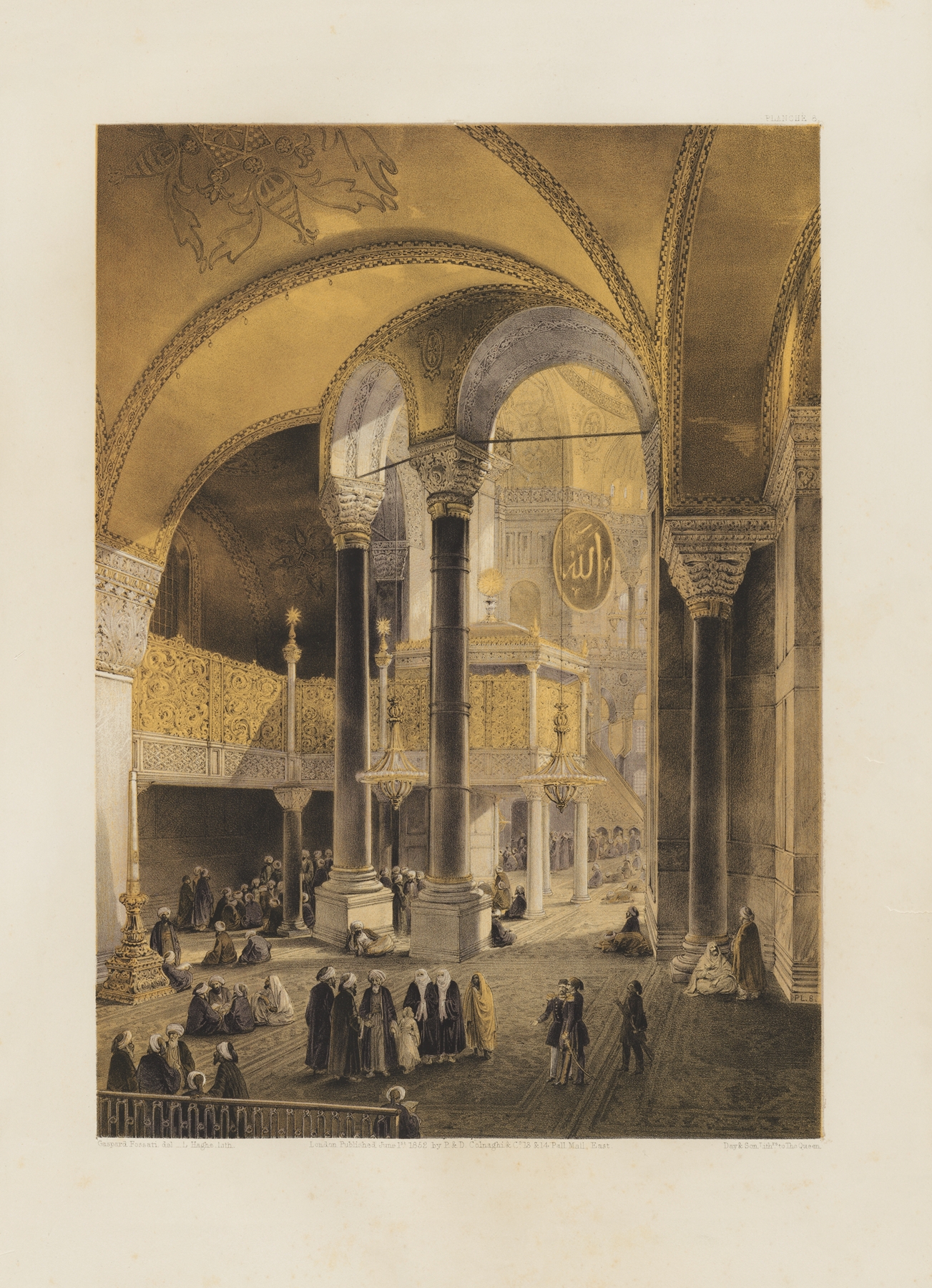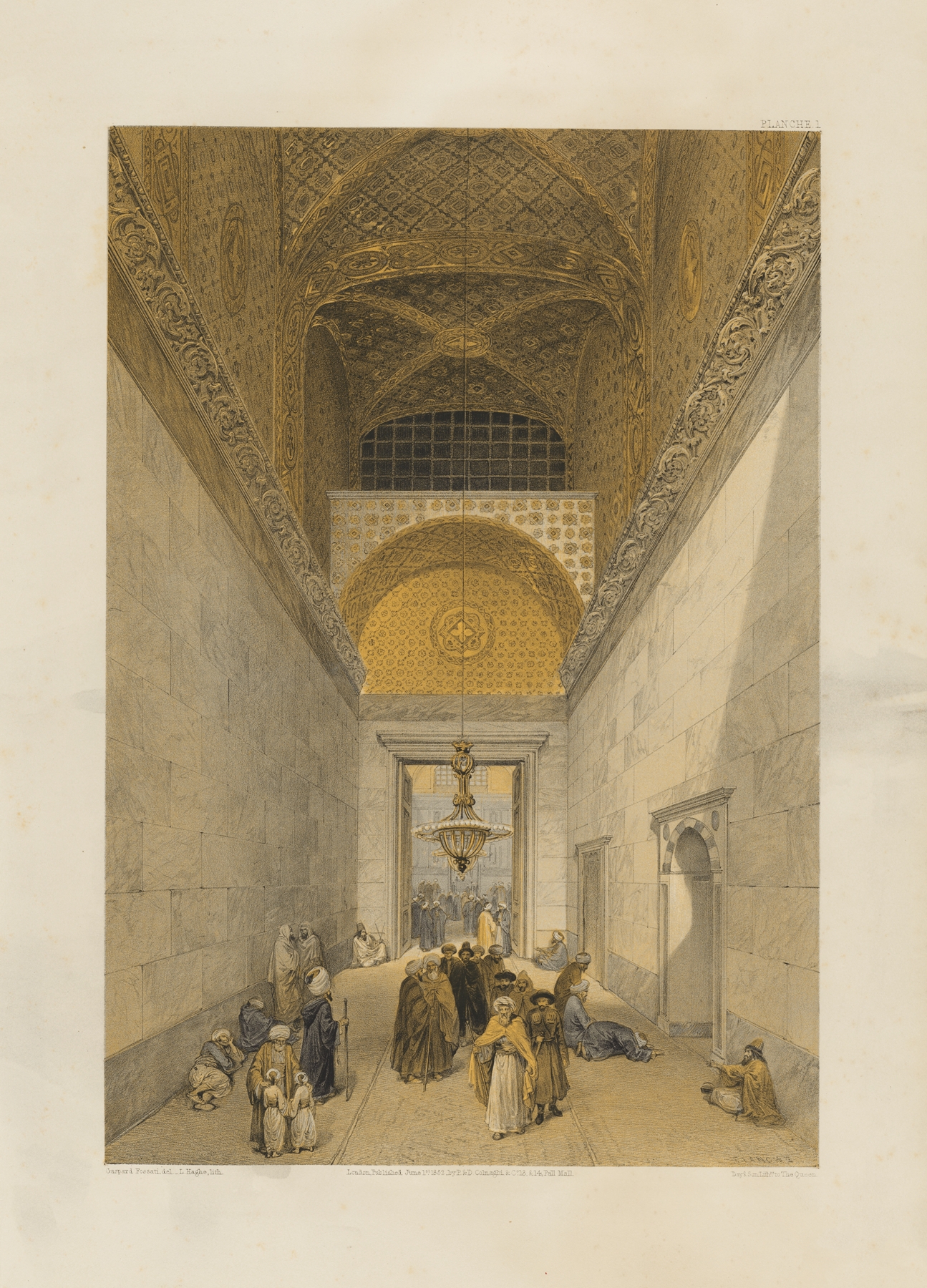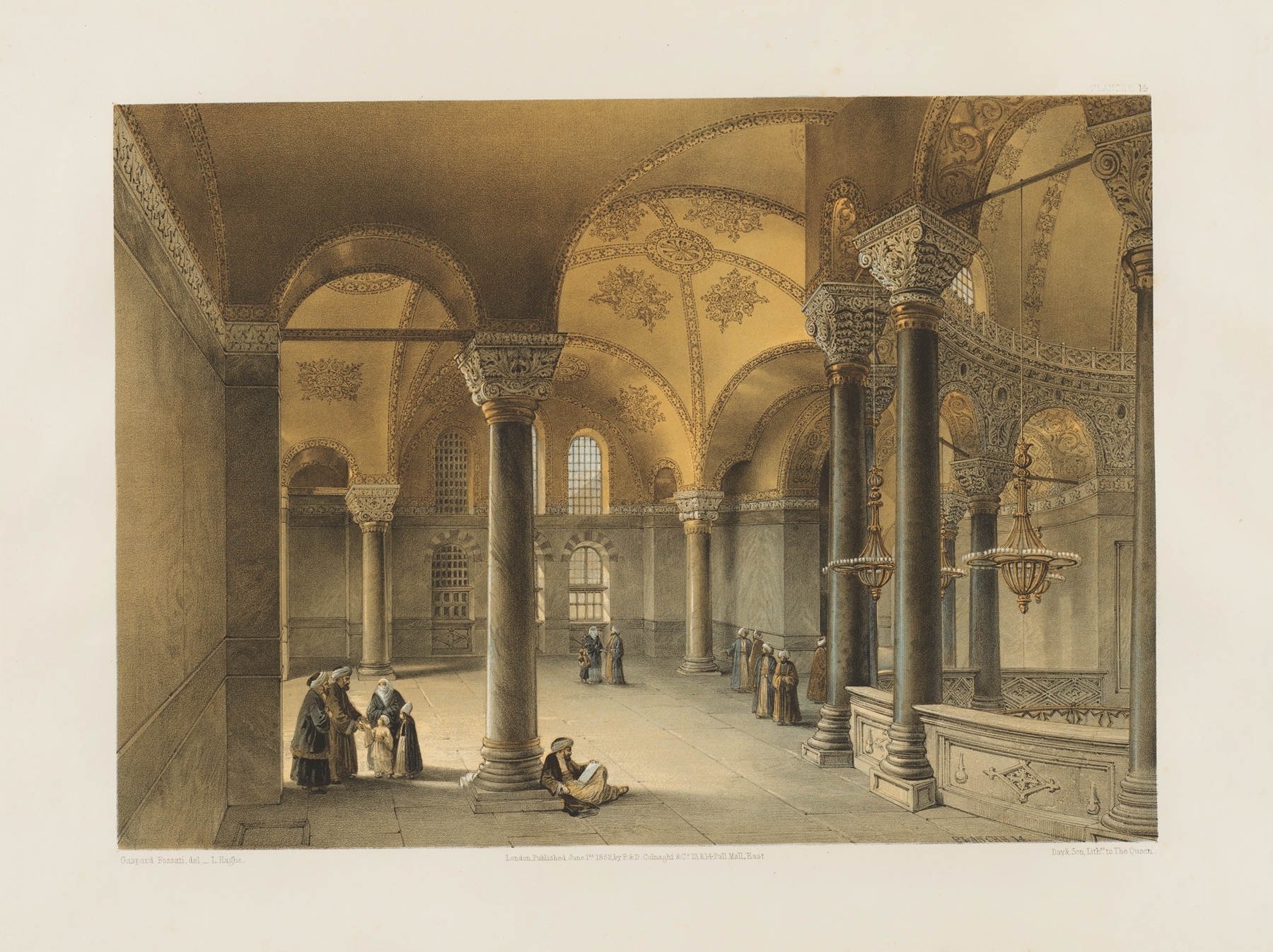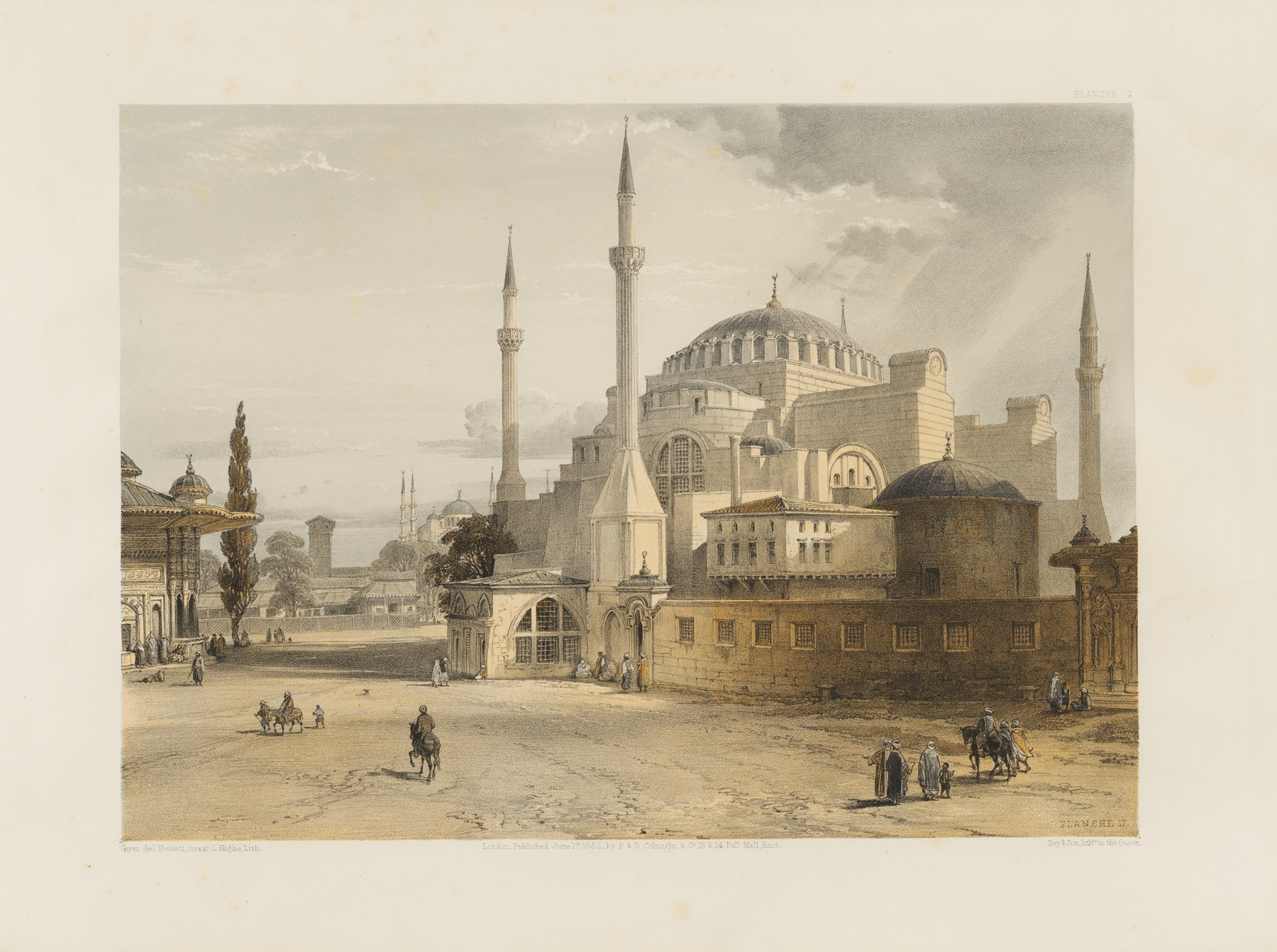
Aya Sofia, Constantinople; as recently restored by order of H. M. the sultan Abdul-Medjid Pl.17 — History & Analysis
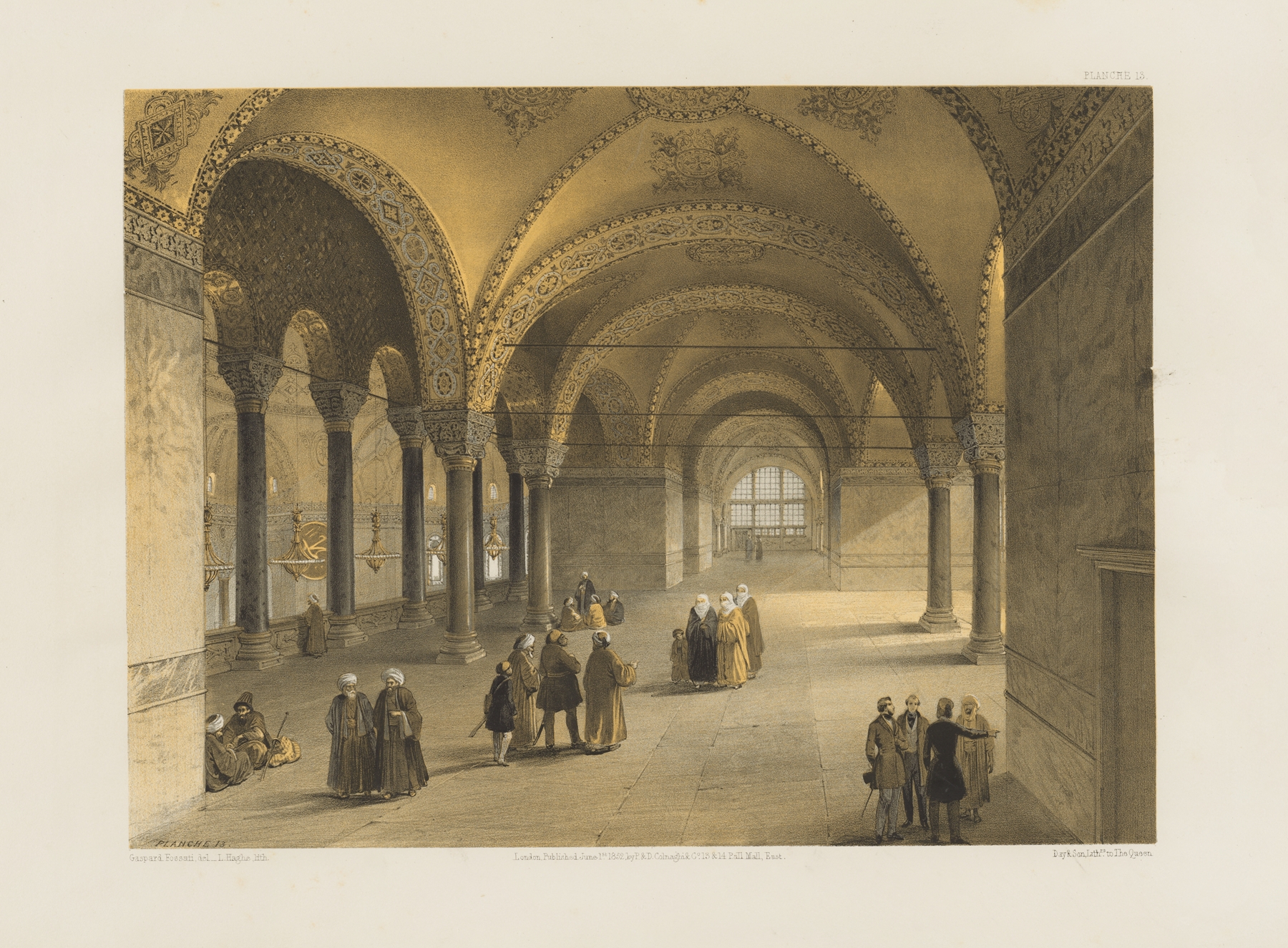
What if silence could speak through light? In Aya Sofia, Constantinople, the interplay of shadow and illumination beckons us to listen closely to the whispers of history embedded in its walls. Look to the center of the composition, where the grand dome looms above, its intricate mosaics glimmering softly against the muted backdrop. The artist employs a delicate balance of light and shade, skillfully highlighting the architectural marvel while allowing the surrounding shadows to cradle it protectively. The warm earth tones envelop the space, inviting the viewer to step closer, each hue evoking the weight of centuries past.
Notice how the interplay between the brilliant golds and deep browns brings forth a palpable tension, a dance between the sacred and the forgotten. This artwork resonates with the historical complexities of its subject. The contrast between light and dark not only emphasizes the architectural grandeur but also suggests the layered narratives of faith and culture that have thrived within these walls. Here, the shadows may represent the unspoken stories of those who have worshipped and wondered beneath this dome, while the light heralds a moment of renewal.
Each faint detail—the intricate carvings, the fading frescoes—whispers of a time when this space held vibrant life, now captured in a moment of stillness. In 1852, Gaspare Fossati was commissioned to document the restoration of this iconic edifice, a project undertaken under the watchful eye of Sultan Abdul-Medjid I. At this pivotal moment, Fossati found himself in a rapidly modernizing Ottoman Empire, where the tension between tradition and progress was palpable. His portrayal of the Aya Sofia not only chronicled its architectural brilliance but also reflected the broader cultural shifts of an era marked by the echoes of its past.