Bauernhaus — History & Analysis
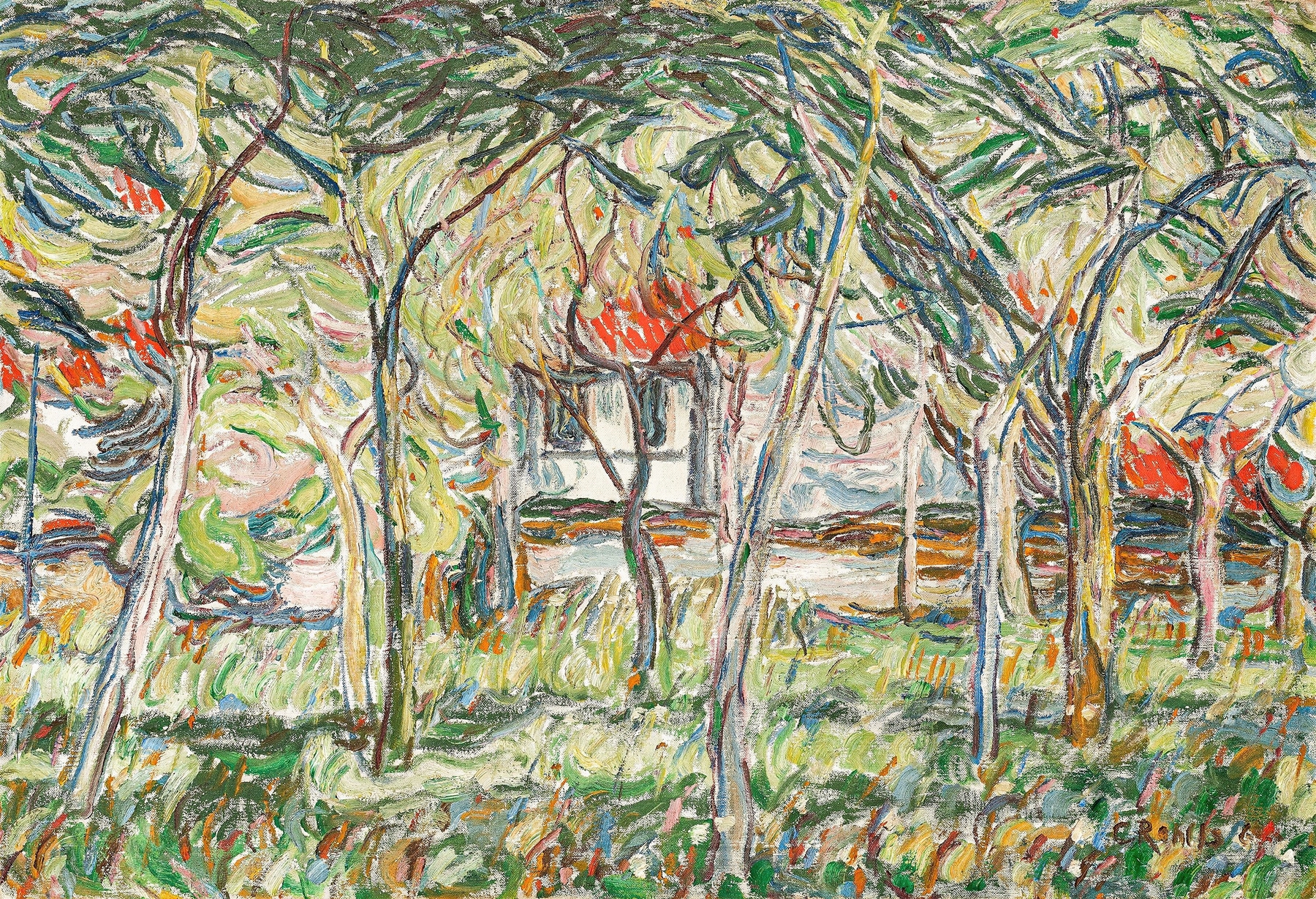
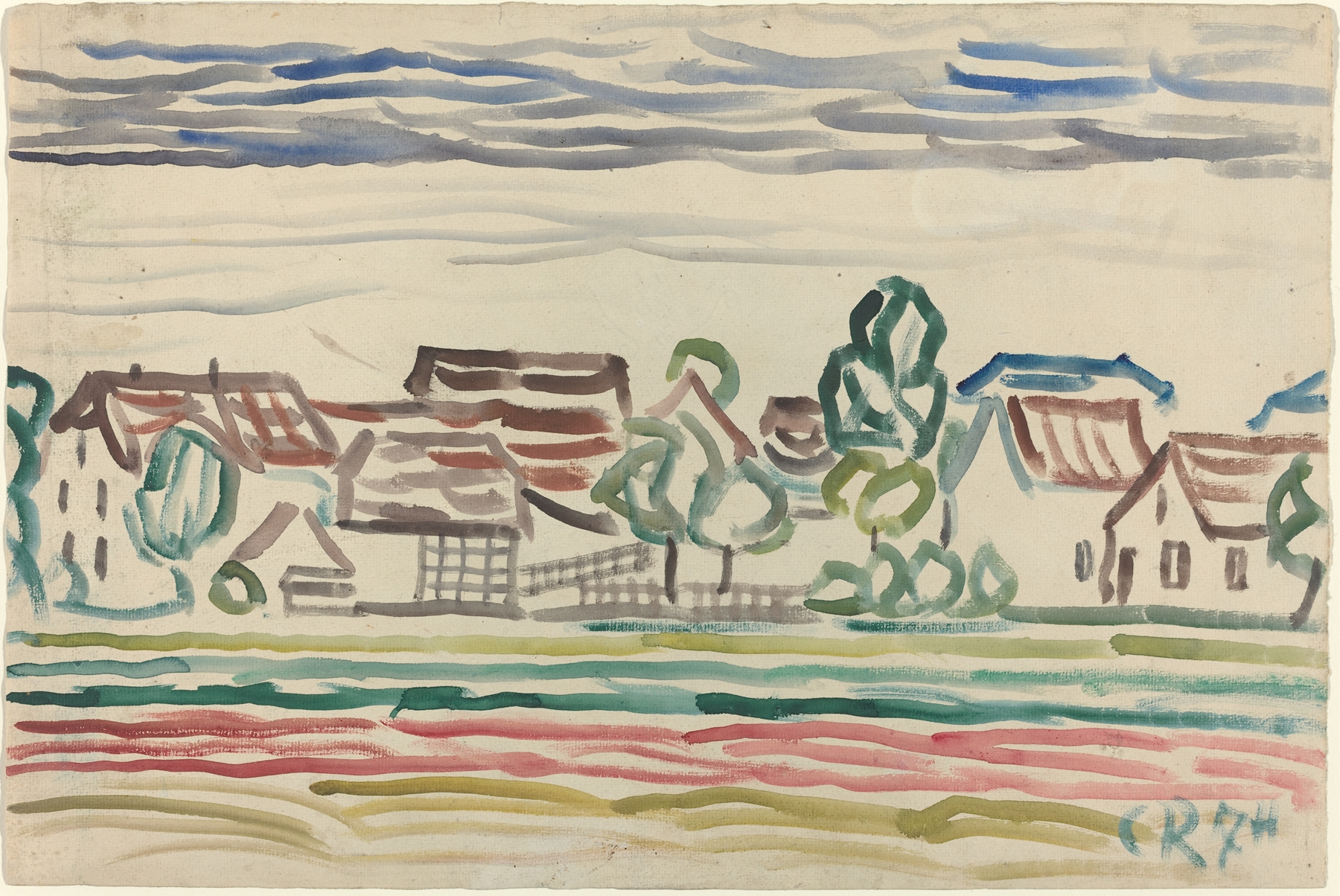
What if beauty was never meant to be finished? The allure of a rustic farmhouse, with its rough-hewn charm and quiet presence, invites contemplation and evokes a sense of longing for simplicity amidst chaos. In Bauernhaus, we find ourselves immersed in an illusion of tranquility, where the ordinary is transformed into something profound. Look to the left at the robust structure, its weathered facade and earthy tones grounding the composition. The artist employs a palette of deep greens and rich browns, punctuated by flecks of light that dance across the uneven surfaces, emphasizing texture and depth.
Notice how the brushstrokes vary in intensity — some are bold and direct, while others are softer, creating a gentle ebb and flow that mimics the natural world. The interplay of shadow and light frames the farmhouse, inviting the viewer to explore the layers of meaning tucked within its walls. Delve deeper into the contrasts presented in the work: the stability of the farmhouse against the ever-changing sky, the stillness of the structure juxtaposed with the whispers of wind in the surrounding landscape. This balance symbolizes a tension between permanence and transience, reminding us that even the most unassuming elements of life hold beauty that is fleeting.
The illusion of serenity belies the chaos of existence, suggesting that beauty thrives in its unfinished state, forever evolving. In 1899, Christian Rohlfs created Bauernhaus during a pivotal time in his career. Living in Germany, he was influenced by the expressionist movement that sought to convey deeper emotional truths through distortion and abstraction. This period marked his transition from traditional landscape painting to a more personal, introspective style, reflecting a world grappling with the dawn of modernity and its impact on rural life.