Beach at Low Tide (Mouth of the River) — History & Analysis
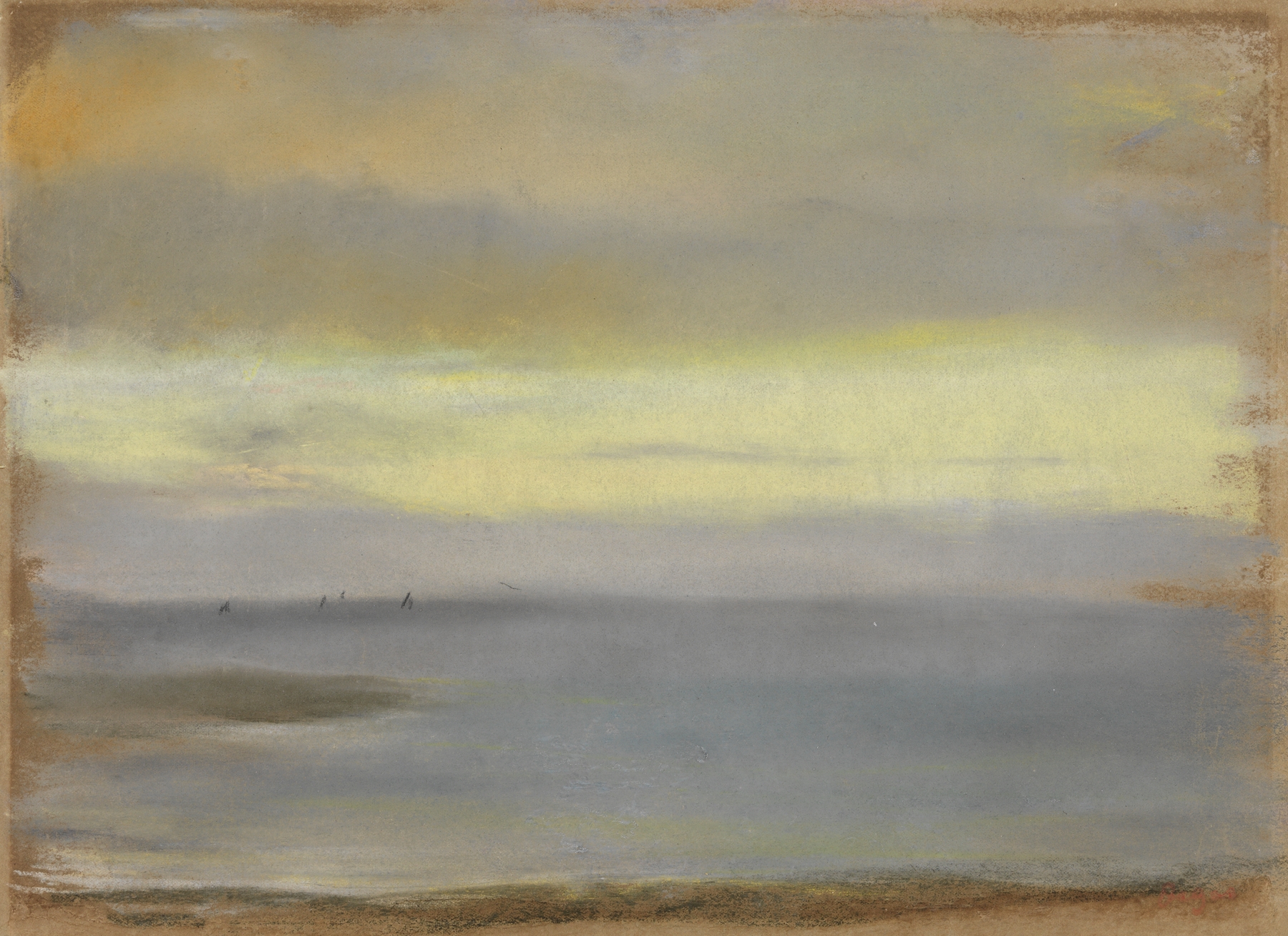
Can beauty exist without sorrow? In Beach at Low Tide (Mouth of the River), a delicate interplay of light and shadow evokes a tension between joy and melancholy, inviting us to contemplate the dualities of existence. Look to the foreground where the sun-drenched sand is dappled with long shadows, bending and stretching like whispered secrets across the canvas. The figures, small and distant, meld into the landscape, their soft outlines suggesting both intimacy and isolation.
Notice how the palette of warm ochres and muted blues creates a calm atmosphere, while the gentle brushwork captures the ebb and flow of the tide, blurring the line between water and shore. This dichotomy beckons the viewer to explore the emotional landscape that unfolds beneath the surface. The scattered footprints in the sand seem to ask questions about the passage of time and the lives once lived in this serene setting. There’s a haunting quality to the empty spaces, where absence speaks louder than presence.
The contrast between the vibrant sunlit areas and the encroaching shadows hints at the fleeting nature of joy, as if to suggest that happiness is often accompanied by an undercurrent of loss, a reminder of what remains unsaid. In 1869, Edgar Degas found himself amid a burgeoning Impressionist movement, rapidly evolving his artistic voice. While working on this piece in the coastal town of Honfleur, he was influenced by the interplay of light and color characteristic of the new style, yet also faced personal struggles that informed his views on beauty and isolation. This painting reflects a pivotal moment in both his life and the larger art world, where joy and sorrow eternally coexisted in the fleeting impressions of time.