Beside the Sea — History & Analysis
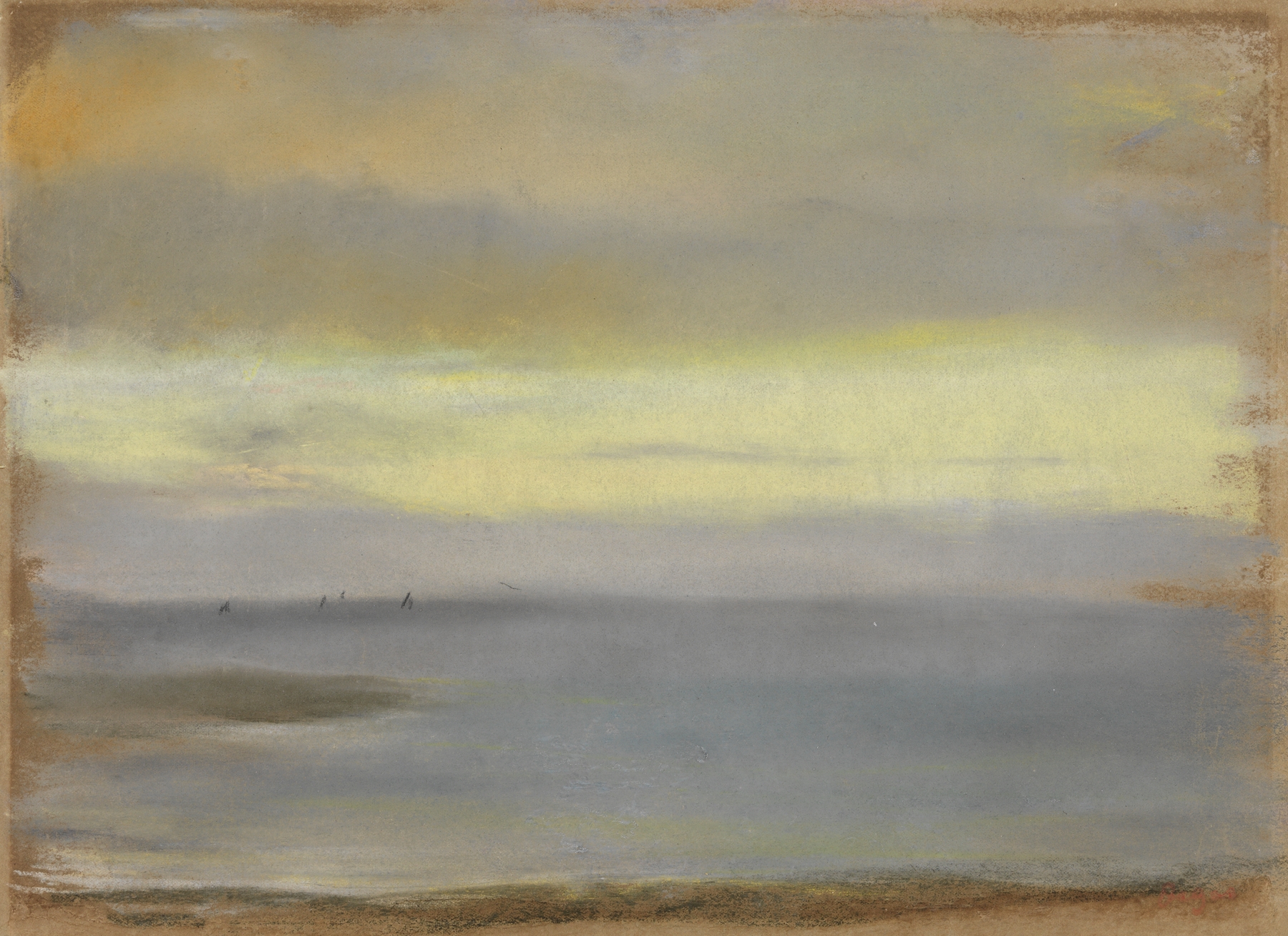
“Every brushstroke is a heartbeat remembered.” In Beside the Sea, serenity envelops the viewer, inviting a moment of quiet reflection amidst life's chaos. Look to the left at the soft, undulating waves, their gentle movement captured in shades of blue and green. Focus on the figures seated on the beach, their silhouettes framed against the luminous sky, where warm hues of orange and yellow depict a setting sun. The masterful use of light conveys a sense of tranquility, while the brushwork — loose yet deliberate — emphasizes the fleeting nature of this peaceful moment.
Hidden within this idyllic scene lies a contrast between the stillness of the beach and the rhythmic pulse of the ocean. Notice how the two women, seemingly lost in conversation, are delicately separated by the expanse of sand — a reminder of the distance often felt between individuals, even in moments of closeness. The interplay of light and shadow not only enhances the depth of the composition but also hints at the transience of time, urging the viewer to savor these peaceful interludes.
In 1869, Edgar Degas painted Beside the Sea in Paris, during a period of profound personal and artistic exploration. At this time, he was deeply engaged in capturing contemporary life, influenced by the impressionist movement yet maintaining a distinctive approach that highlighted the human experience. This work reflects an era of shifting societal norms and the burgeoning popularity of leisure, establishing a connection to a world that was both familiar and evolving.