Bridge near Toledo — History & Analysis
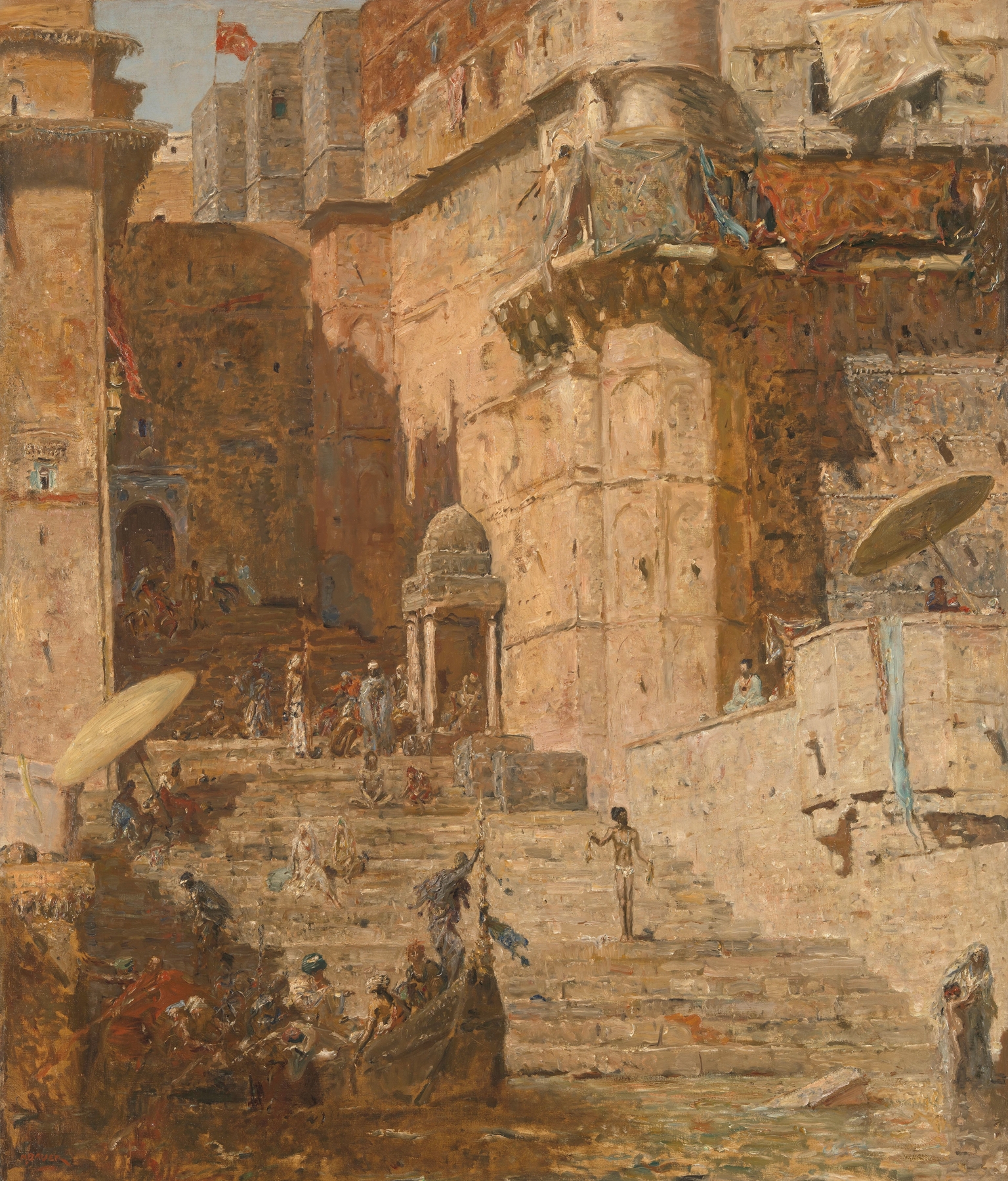
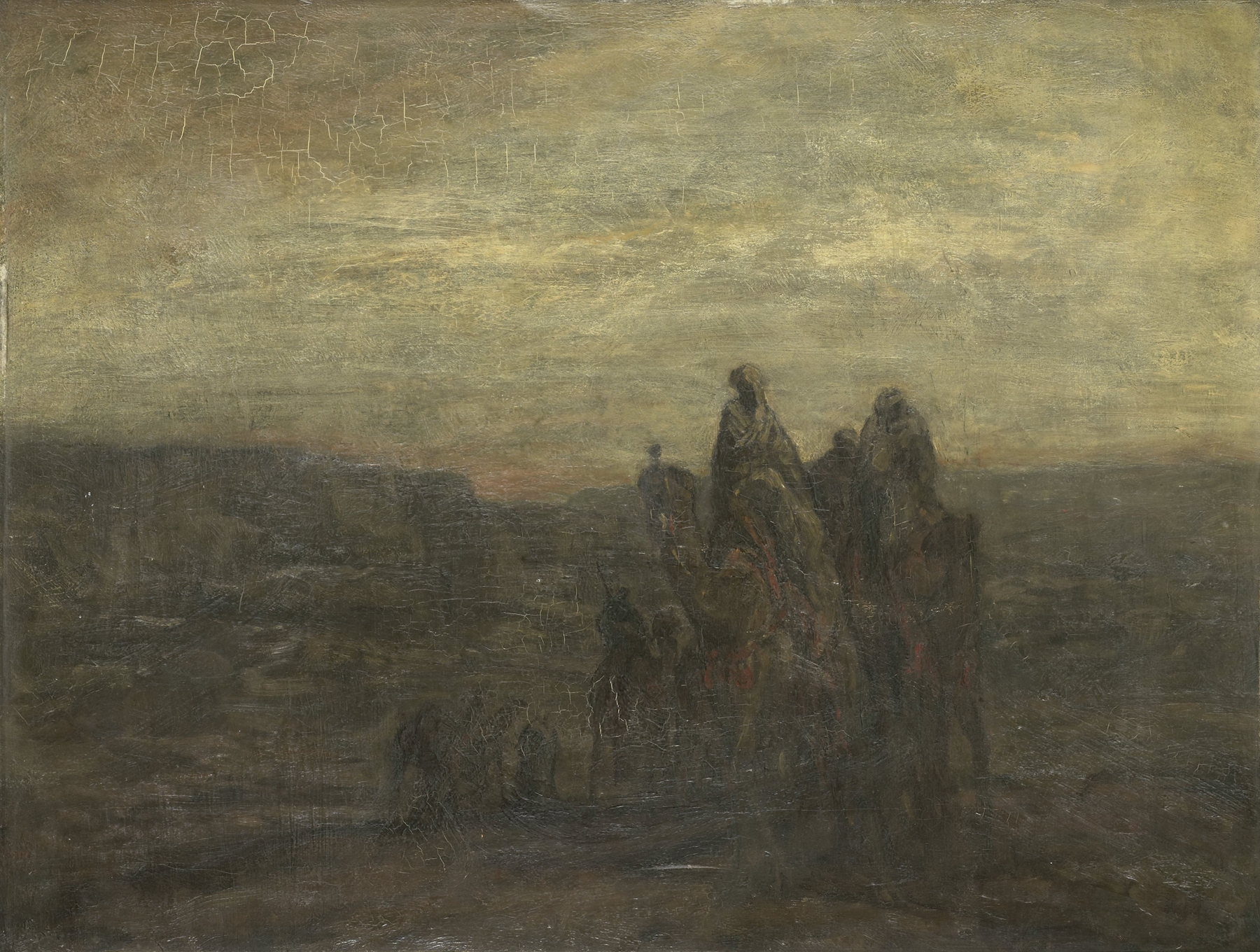
“Every brushstroke is a heartbeat remembered.” In Bridge near Toledo, Marius Bauer captures the delicate balance between humanity and the void that surrounds it. The painting speaks to the ephemeral nature of existence, evoking the silent yearning that resides within us all. Look to the center, where the bridge arches gracefully over the sweeping river below, its structure both inviting and imposing. Notice how the muted palette of earth tones and wispy blues coalesces, enveloping the figures strolling across the bridge in a veil of harmony and solitude.
The interplay of light and shadow suggests the passage of time, inviting the viewer to ponder the unseen journeys traversed on this bridge, which stands as a metaphor for connection amid isolation. Hidden within the layers of paint are echoes of longing and introspection. The distant mountains loom quietly, hinting at the vastness of the world outside the intimate scene, while the solitary figures reflect the isolation of their existence. The bridge, both a physical and symbolic passage, contrasts starkly with the void of the surrounding landscape, conjuring feelings of both hope and melancholy.
Bauer painted this piece in 1903 during a time of personal exploration and artistic transition, influenced by the rise of modernism in Europe. Living in the Netherlands, he sought to capture fleeting moments and emotions in his work, responding to the changing tides of artistic expression that sought to bridge the gap between reality and abstraction. This period marked a pivotal shift in his career, as he endeavored to merge his mastery of realism with a deeper emotional resonance.