Bridge on the Seine — History & Analysis
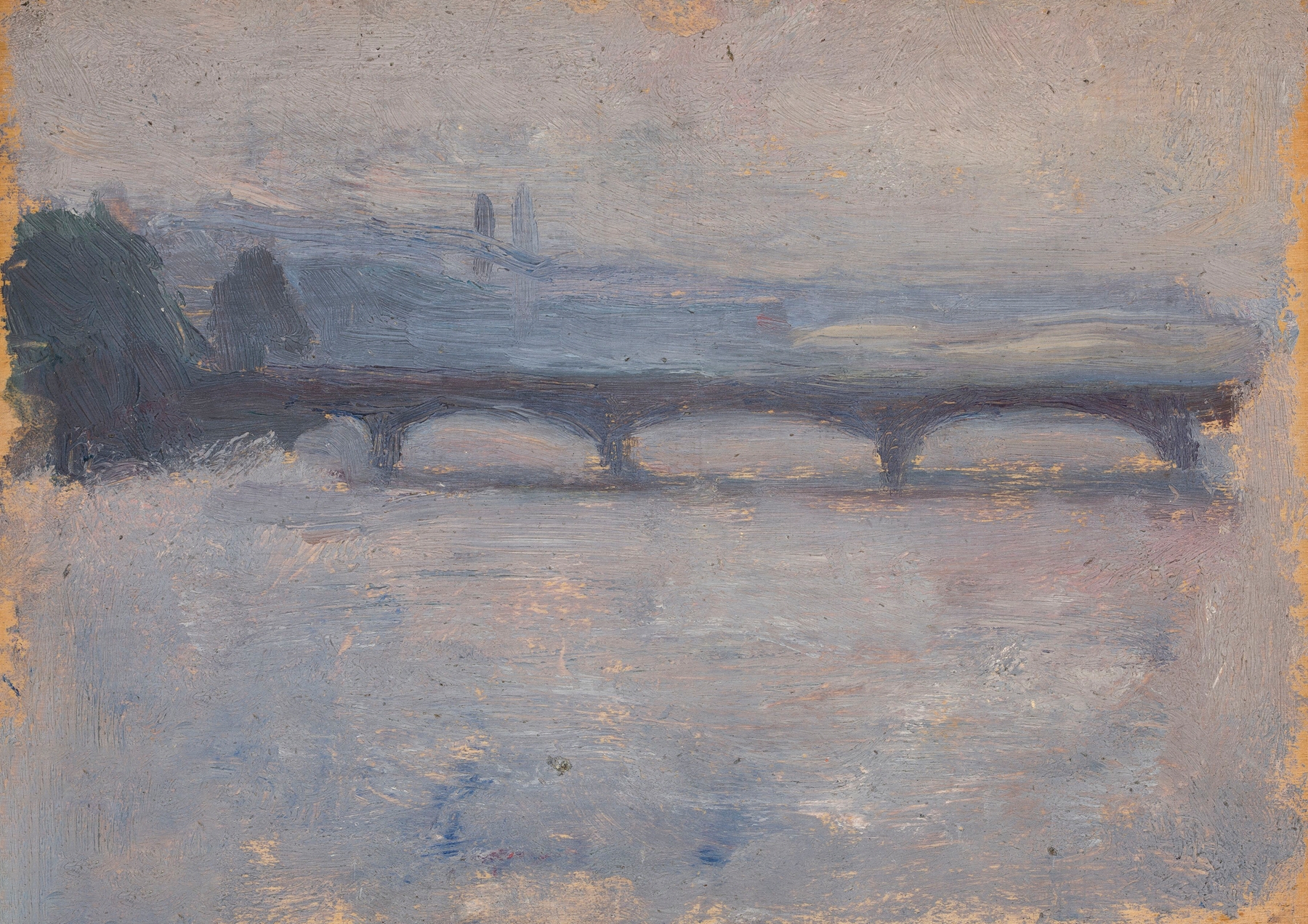
Did the painter know this moment would outlive them? In Bridge on the Seine, the colors and forms intertwine, capturing an ephemeral essence of solitude that whispers of both presence and absence. Look to the left at the gentle arch of the bridge, its contours softly merging with the serene water below. The muted palette of blues and grays draws the eye, while the delicate brush strokes create texture that allows the scene to breathe. Shadows play against the surface, suggesting the quiet passage of time, inviting viewers to linger on the tranquil reflection of the bridge in the water.
This composition speaks of a world that is both familiar and distant, a place where solitude reigns. In the foreground, a solitary figure stands, embodying the emotional weight of loneliness that permeates the painting. Their smallness against the vastness of the scene invites contemplation—are they lost in thought, or simply a part of the landscape? The juxtaposition of the robust bridge and the lone individual emphasizes a poignant contrast: the enduring nature of human constructs against the transient experience of life itself.
The gentle ripples in the water seem to echo this sense of fleeting moments, reminding us of our own ephemerality. Tadeusz Makowski painted this work in 1908 while living in France, amidst a vibrant art scene that thrived on innovation and emotional expression. During this period, he sought to forge his unique voice, moving away from traditional styles towards a more personal interpretation of reality. His exploration of themes like isolation and contemplation resonated deeply with the tumultuous changes in society and art, placing him firmly within the evolving narrative of early 20th-century expressionism.