Pociąg — History & Analysis
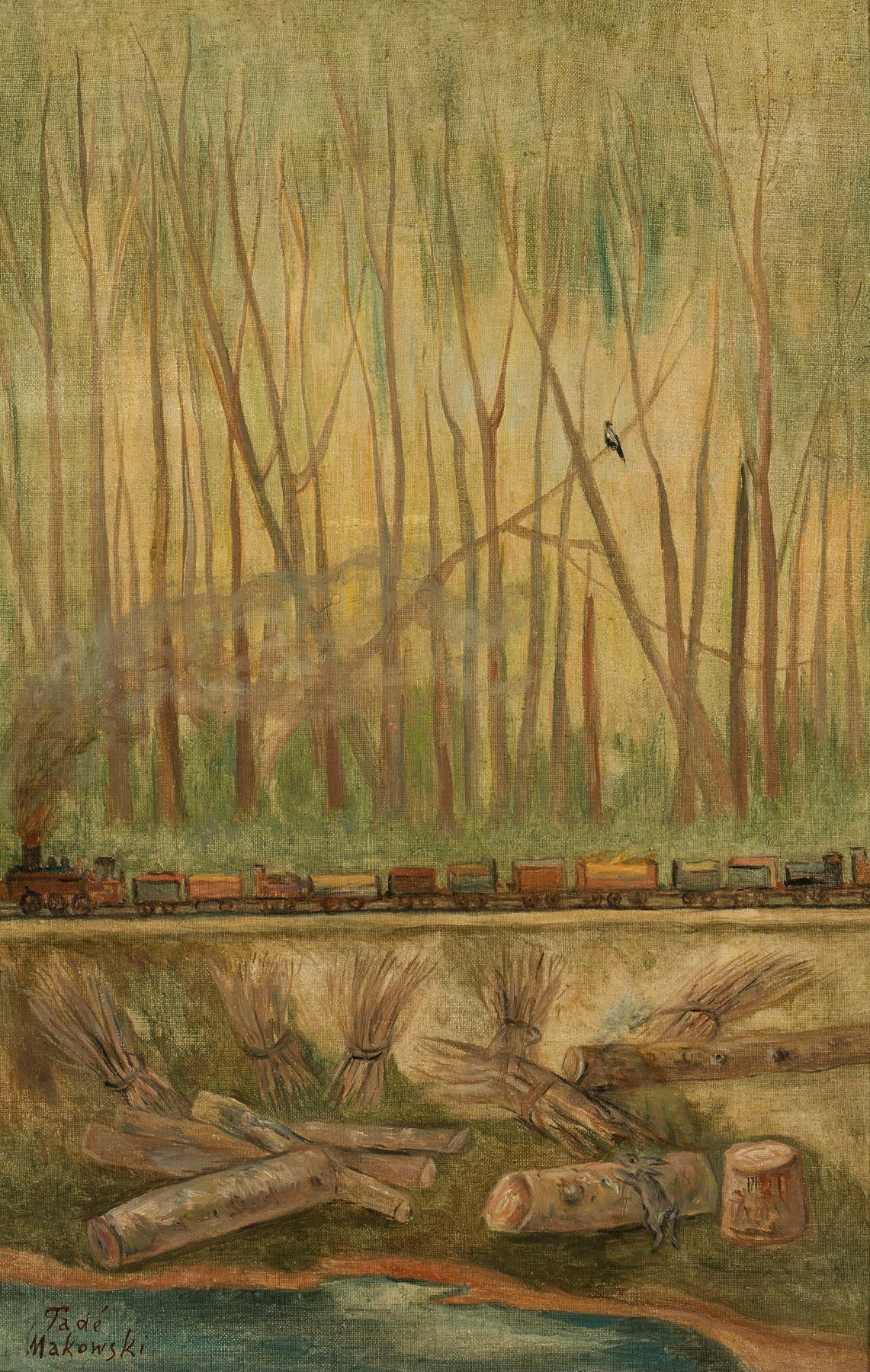
“The canvas doesn’t lie — it simply waits.” This stillness captures a profound melancholy, echoing the longing for moments lost and journeys never taken. Look to the center of the canvas, where a train emerges, shrouded in muted earth tones that evoke a sense of nostalgia. The thick brushstrokes create a palpable texture, allowing you to feel the weight of the locomotive's presence. Notice how the soft, diffused light spills over the scene, illuminating the train’s iron structure while casting long shadows that stretch toward the edges, hinting at the passage of time and unfulfilled promises.
The sparse landscape surrounding the train amplifies its solitude, inviting you to ponder the significance of its journey. Beneath the surface, the painting reveals layers of emotional tension. The train, a symbol of movement and progress, stands still, evoking a sense of waiting and longing. The barren surroundings juxtapose the vibrant energy of travel against an immobilized backdrop, capturing the bittersweet nature of human aspirations.
The absence of figures emphasizes solitude, inviting the viewer to reflect on personal journeys and the spaces in between. In 1927, Tadeusz Makowski created this work during a time when he was exploring themes of isolation and identity amidst a changing Europe. Living in Paris, he was influenced by the avant-garde movements of the time, yet he remained deeply connected to his Polish roots. The era was marked by artistic experimentation, and in Pociąg, he encapsulates a moment of stillness that speaks to the universal experience of longing and the complexities of progress.