Cottage on fire at night — History & Analysis
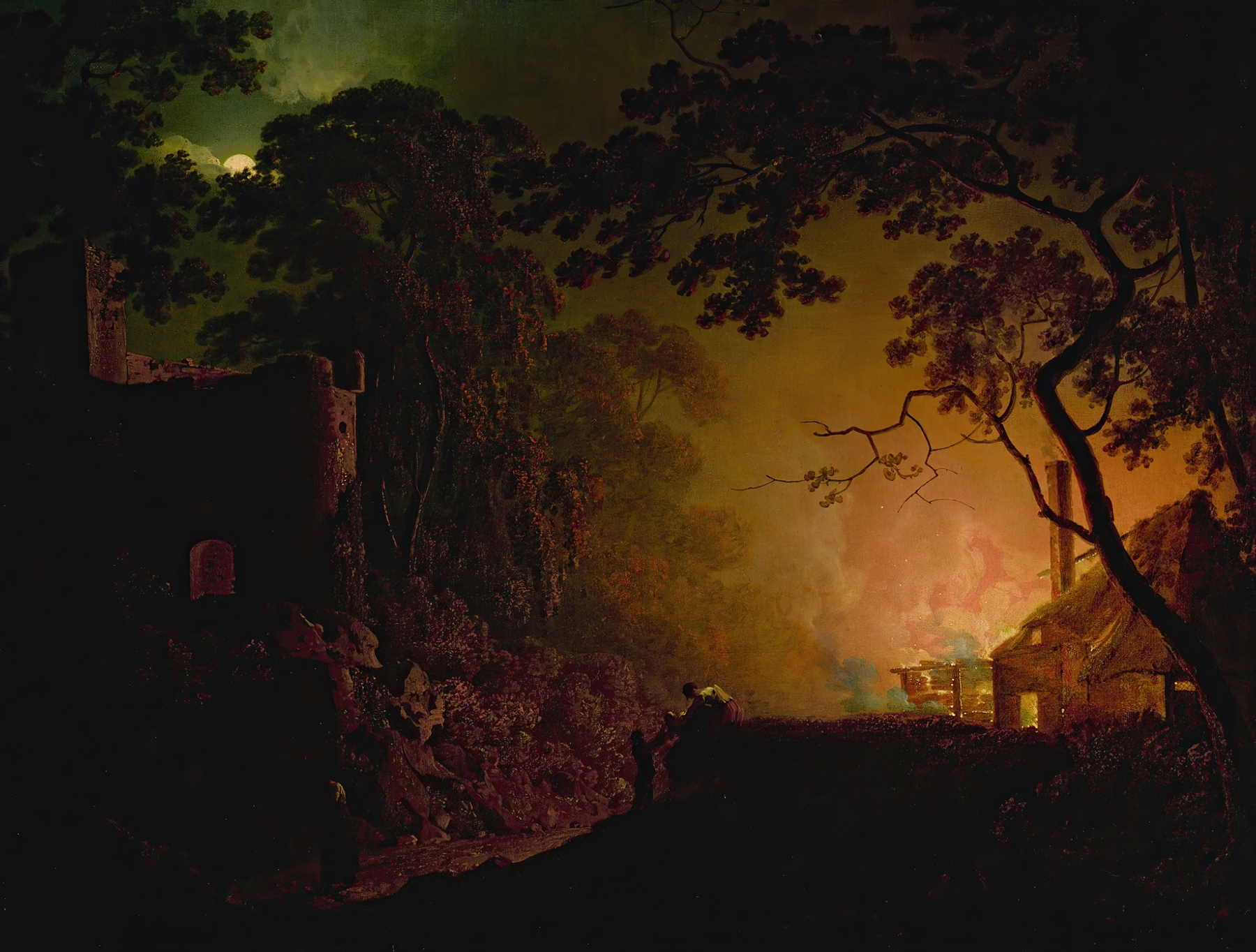
Can paint confess what words never could? In Cottage on Fire at Night, a haunting narrative unfolds, enveloping viewers in a profound yearning that transcends mere visual experience. Look to the left at the cabin, its flames licking the night sky, a vivid contrast to the surrounding darkness. The palette of deep blues and striking oranges captures the viewer’s gaze, while the flickering light reveals gestures of urgency and despair on the faces of the onlookers.
Wright’s masterful chiaroscuro technique enhances the drama, with shadows cloaking the figures, suggesting their helplessness against the engulfing fire. As the glowing flames illuminate the night, a stark duality emerges; warmth against cold, chaos against stillness, hope against despair. The viewer can almost feel the tension in the air, a palpable mix of fear and longing for safety.
Each face tells a story, revealing more than shock—they embody the raw emotion of those witnessing their sanctuary turn to ashes, creating a poignant reflection on loss and vulnerability. Joseph Wright of Derby painted this work during a period marked by the burgeoning Age of Enlightenment, a time when the balance of nature and mankind’s progress was hotly debated. His exploration of light and shadow in this piece aligns with both scientific inquiry and emotional depth, as he sought to capture the very essence of human experience against the backdrop of a rapidly changing world.