Crinolines sur la plage à Trouville — History & Analysis
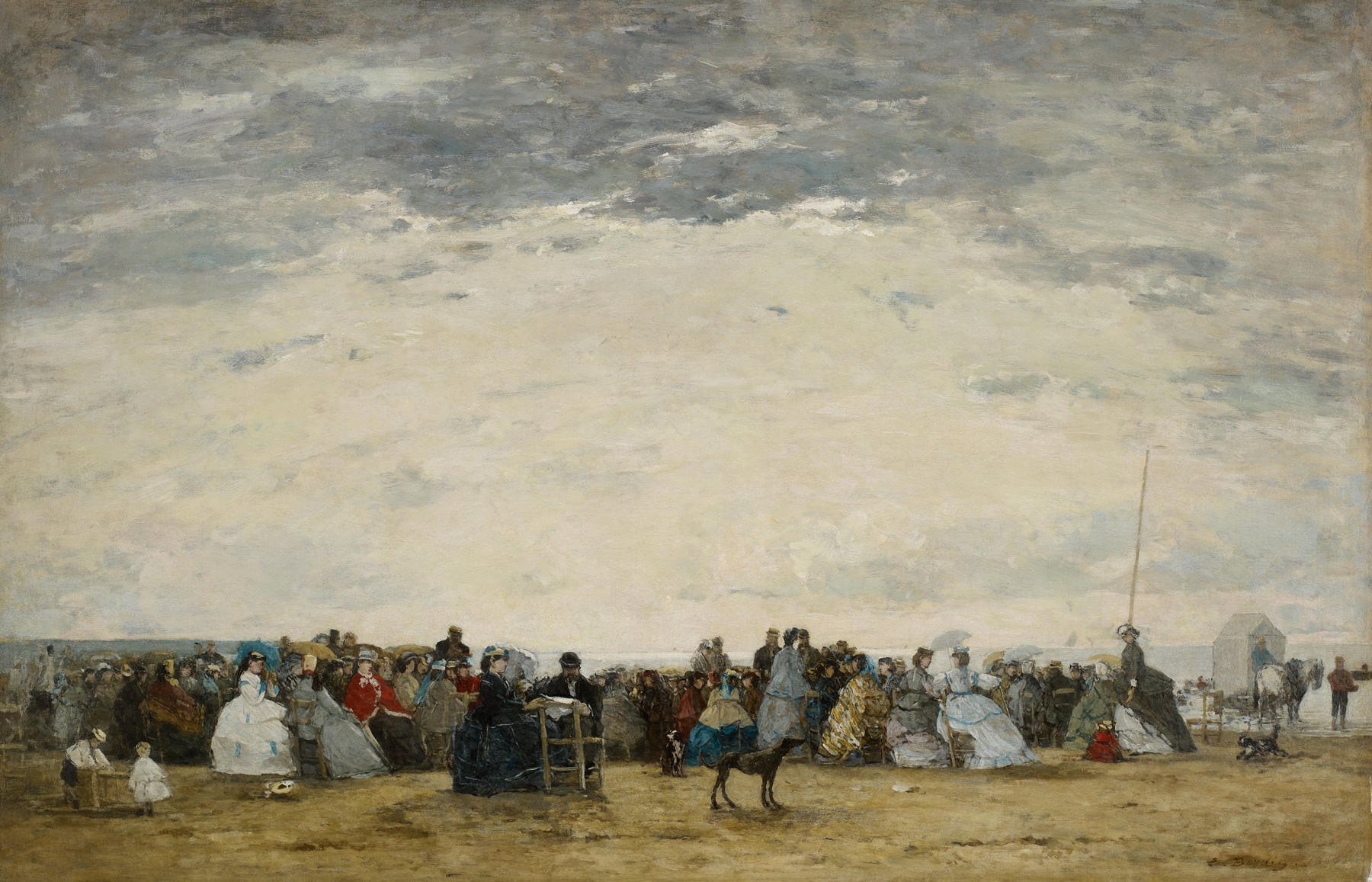
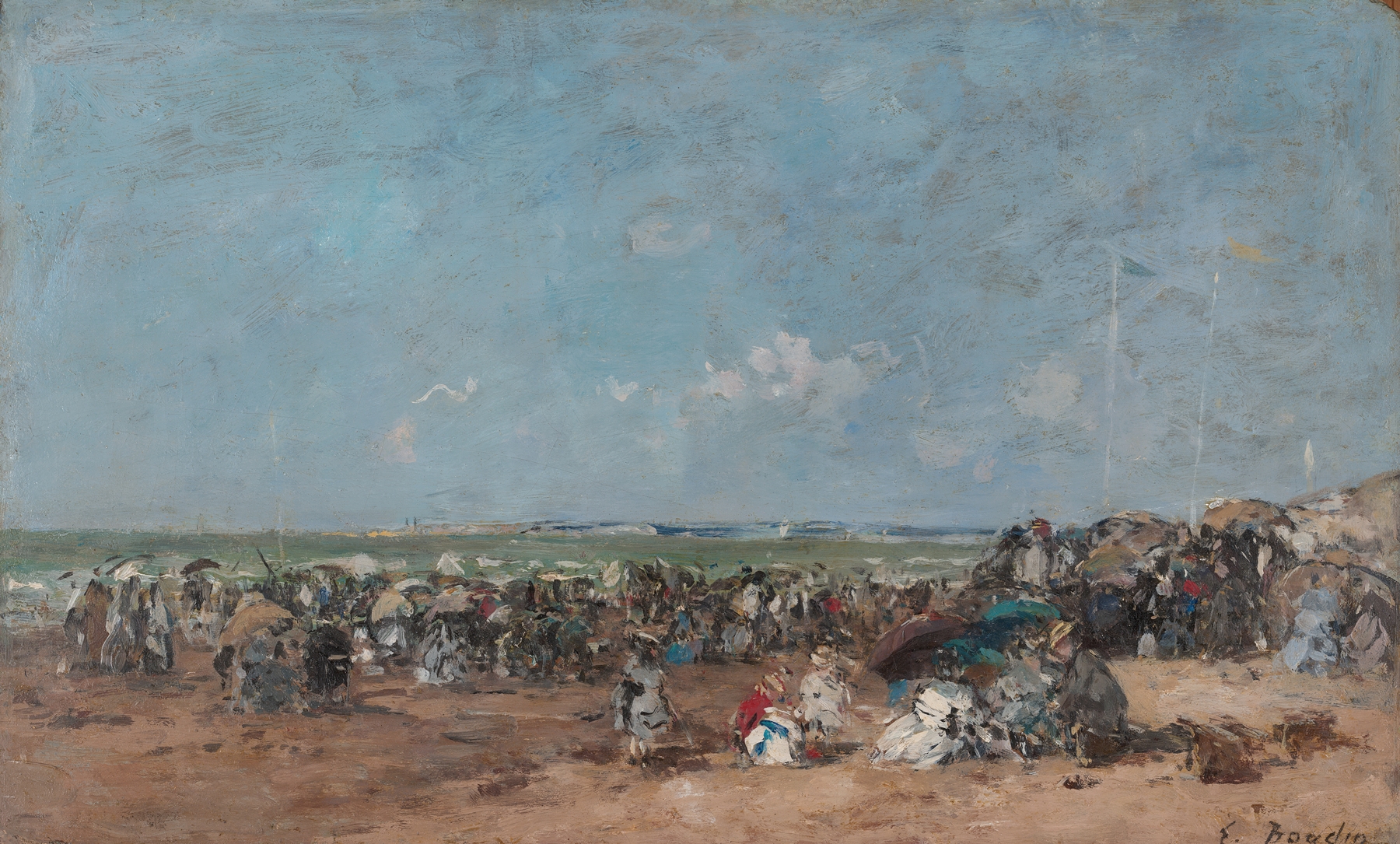
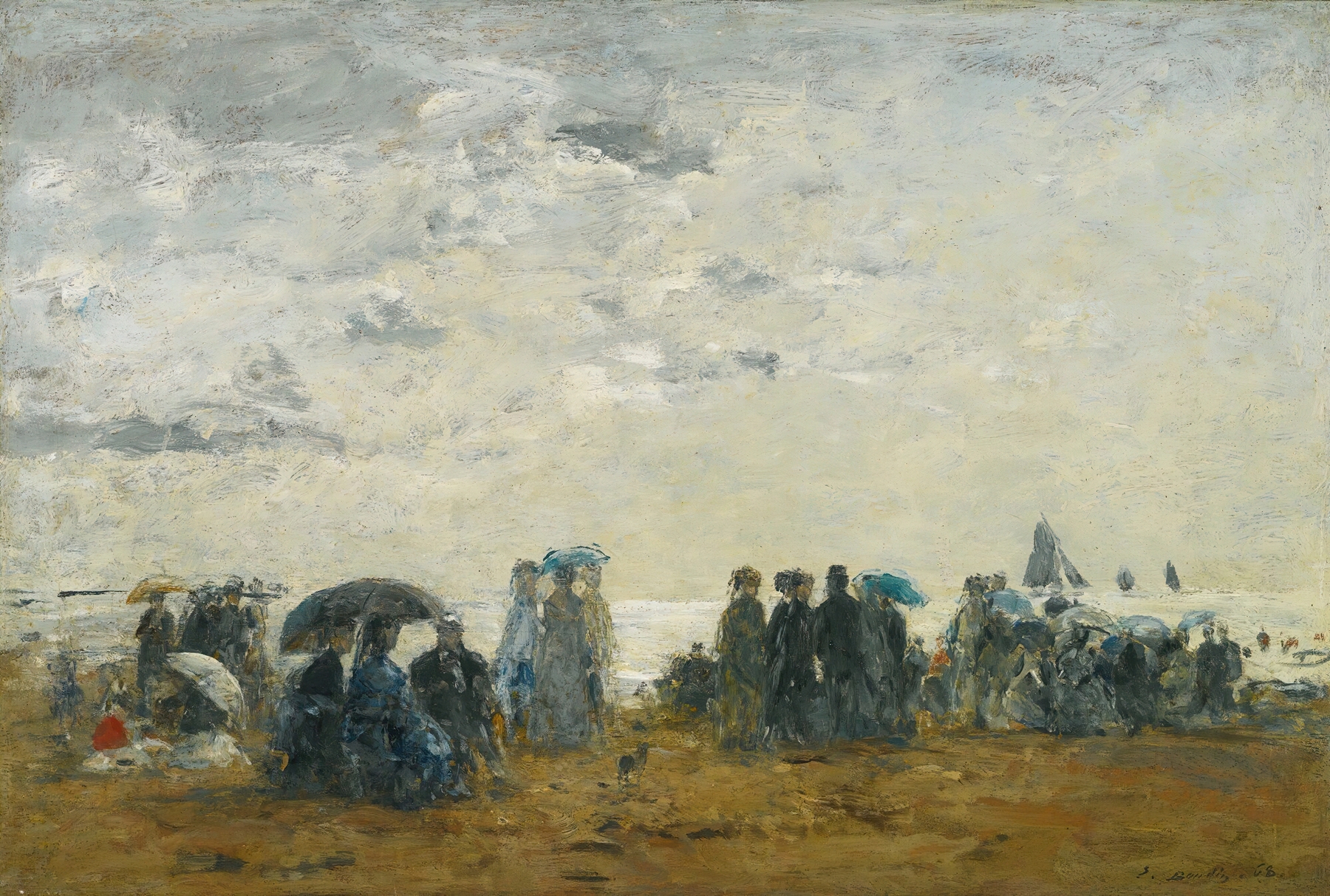
“Under the brush, chaos becomes grace.” In Crinolines sur la plage à Trouville, the tumult of everyday life transforms into a dance of vibrant color and movement, encapsulating a fleeting moment of joy amidst the mundane. Look to the right at the delicate figures adorned in billowing crinolines, their skirts swirling with the wind, as they flirt with both the sea breeze and each other’s laughter. Notice how the sun bathes the beach in golden light, illuminating the pastel hues of their dresses, while the cool blue of the ocean stretches endlessly behind them. The artist employs broad, lively brushstrokes that blend together, evoking the energy of summer and a sense of carefree abandon.
Boudin’s choice of setting highlights a contrast between the structured elegance of the women's attire and the natural, chaotic rhythm of the seaside. The juxtaposition of calm, rolling waves against the bustling activity of the beachgoers speaks to a deeper tension—one between societal expectations and the freedom found in nature. Each figure is a fragment of a greater whole, yet they share a collective experience, hinting at the madness of life that exists just beneath the surface.
Eugène Boudin painted this piece during a period when Impressionism was beginning to take shape in France, around the late 19th century. He often found inspiration along the Normandy coast, where he observed the interplay of light and atmosphere. At this time, the art world was in flux, moving away from traditional realism toward a more spontaneous and personal expression, which Boudin embraced wholeheartedly as he captured the subtle beauties of everyday life.