De Dam te Amsterdam — History & Analysis
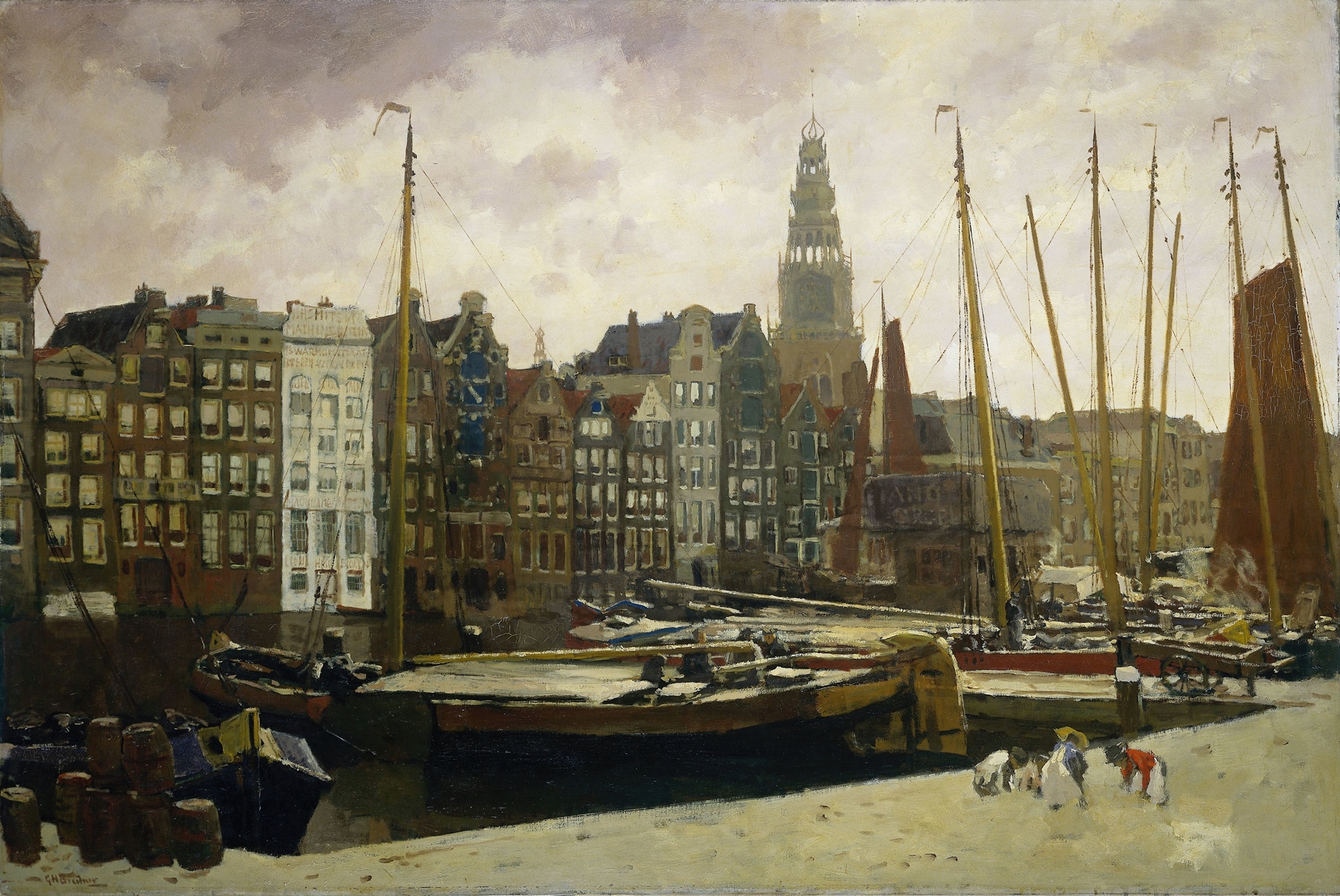
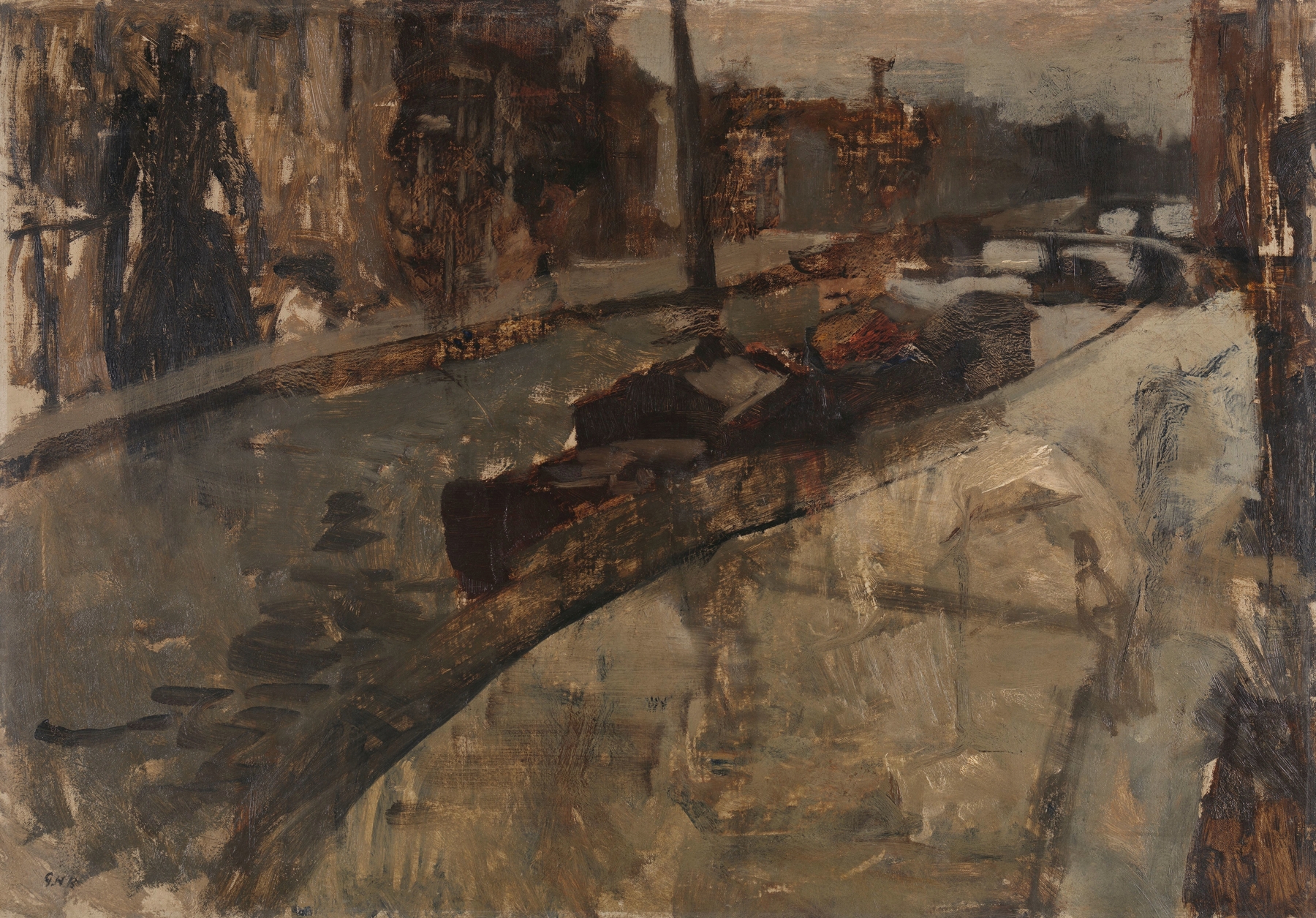
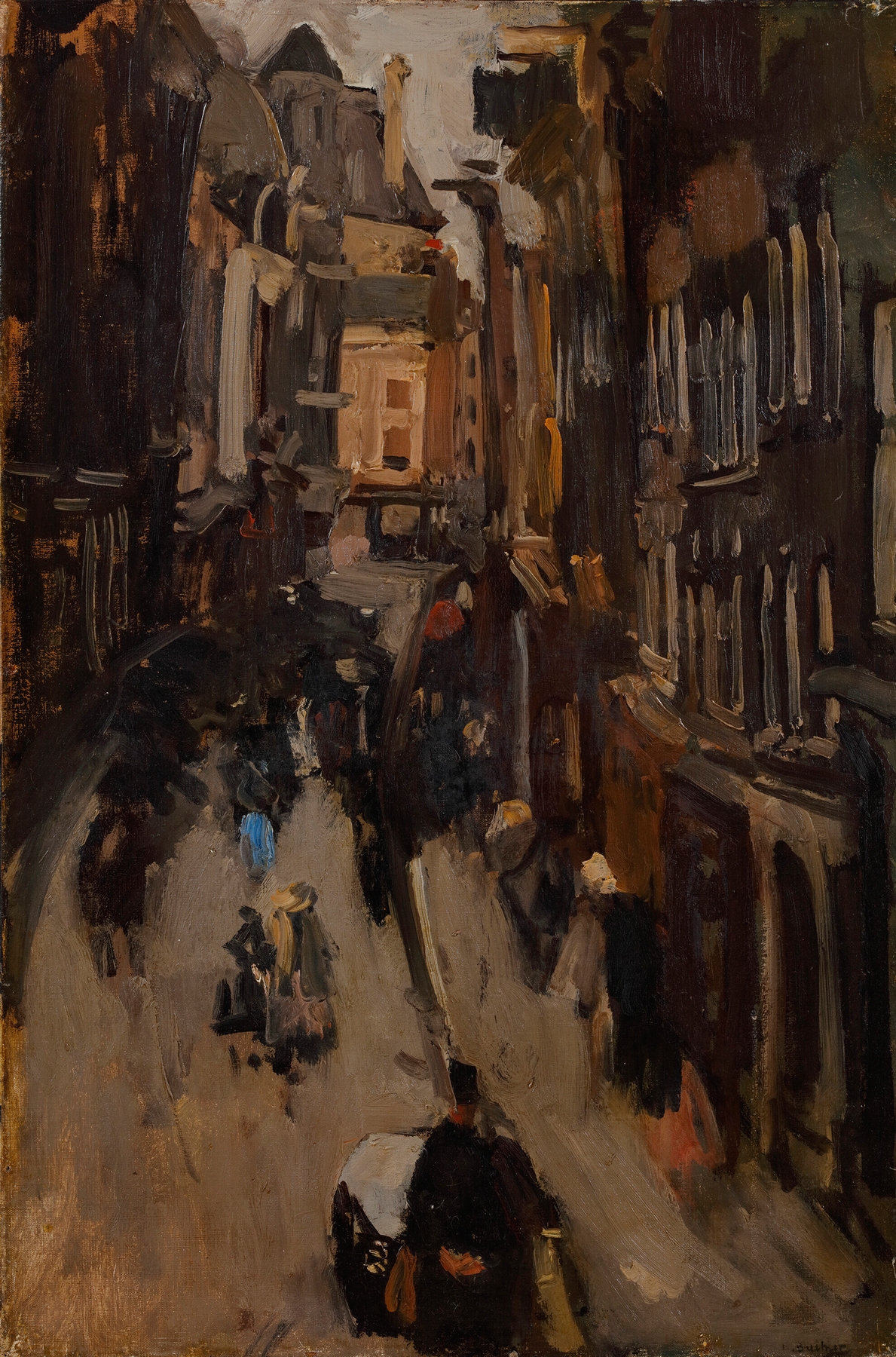
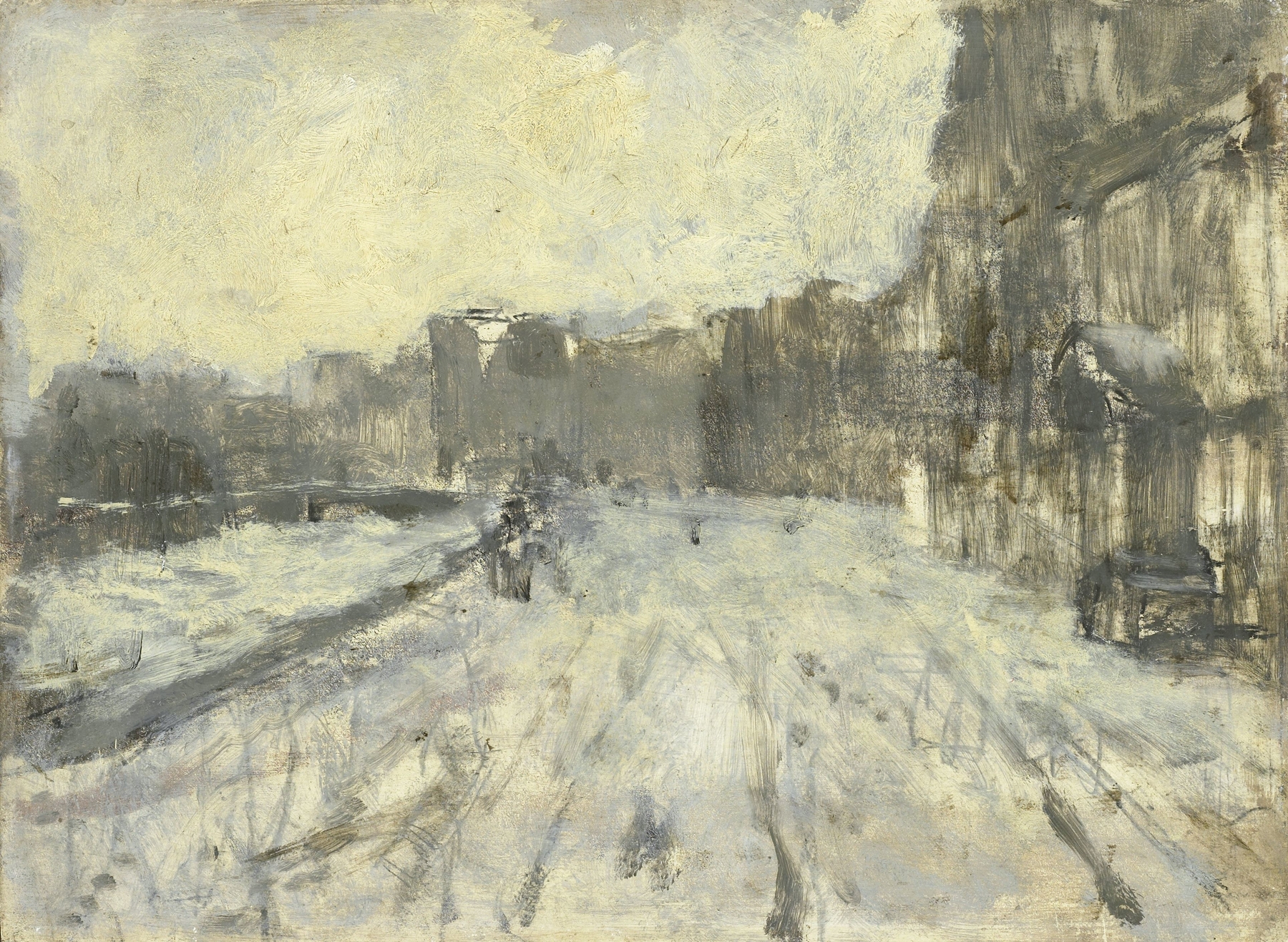
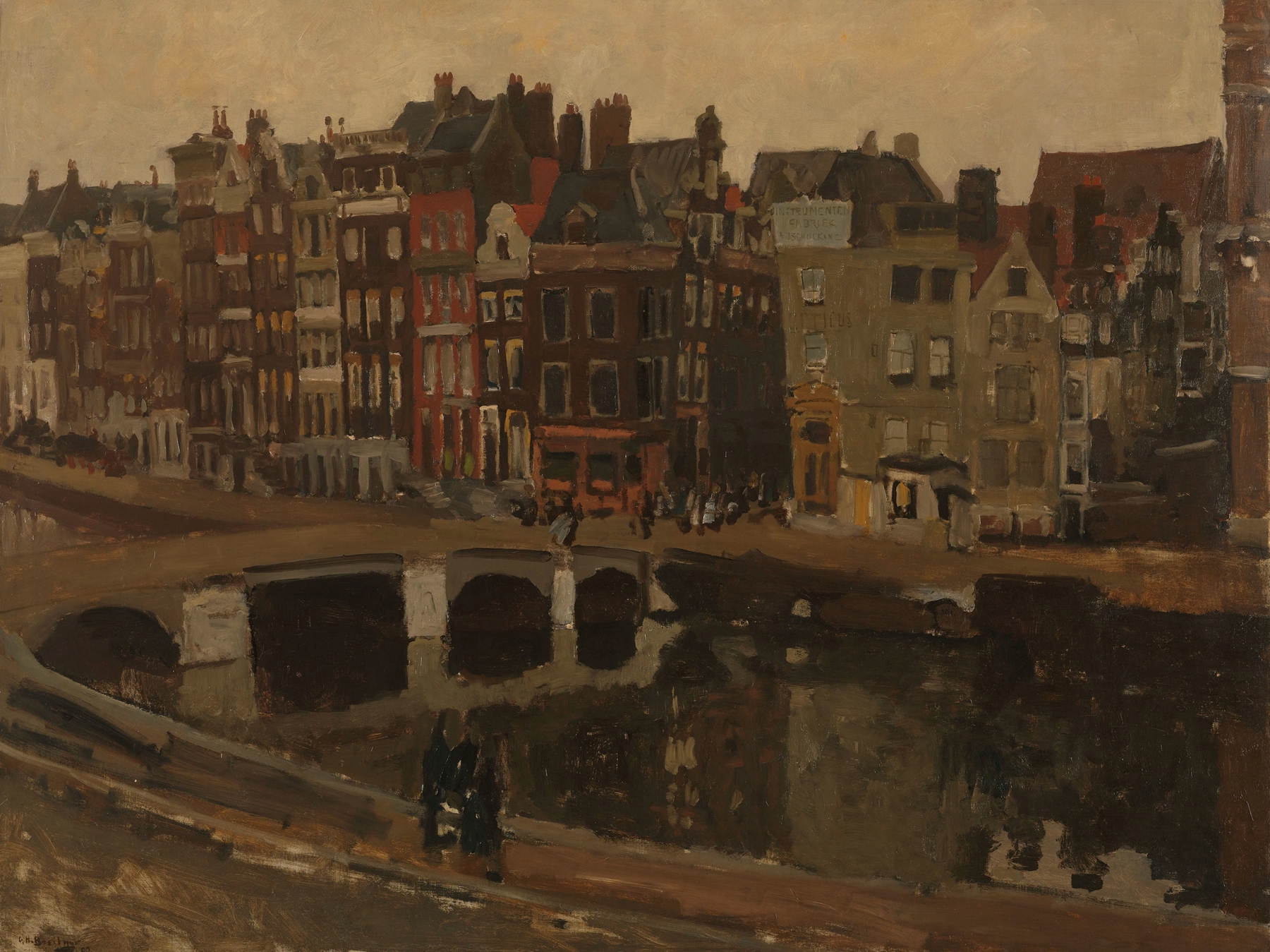
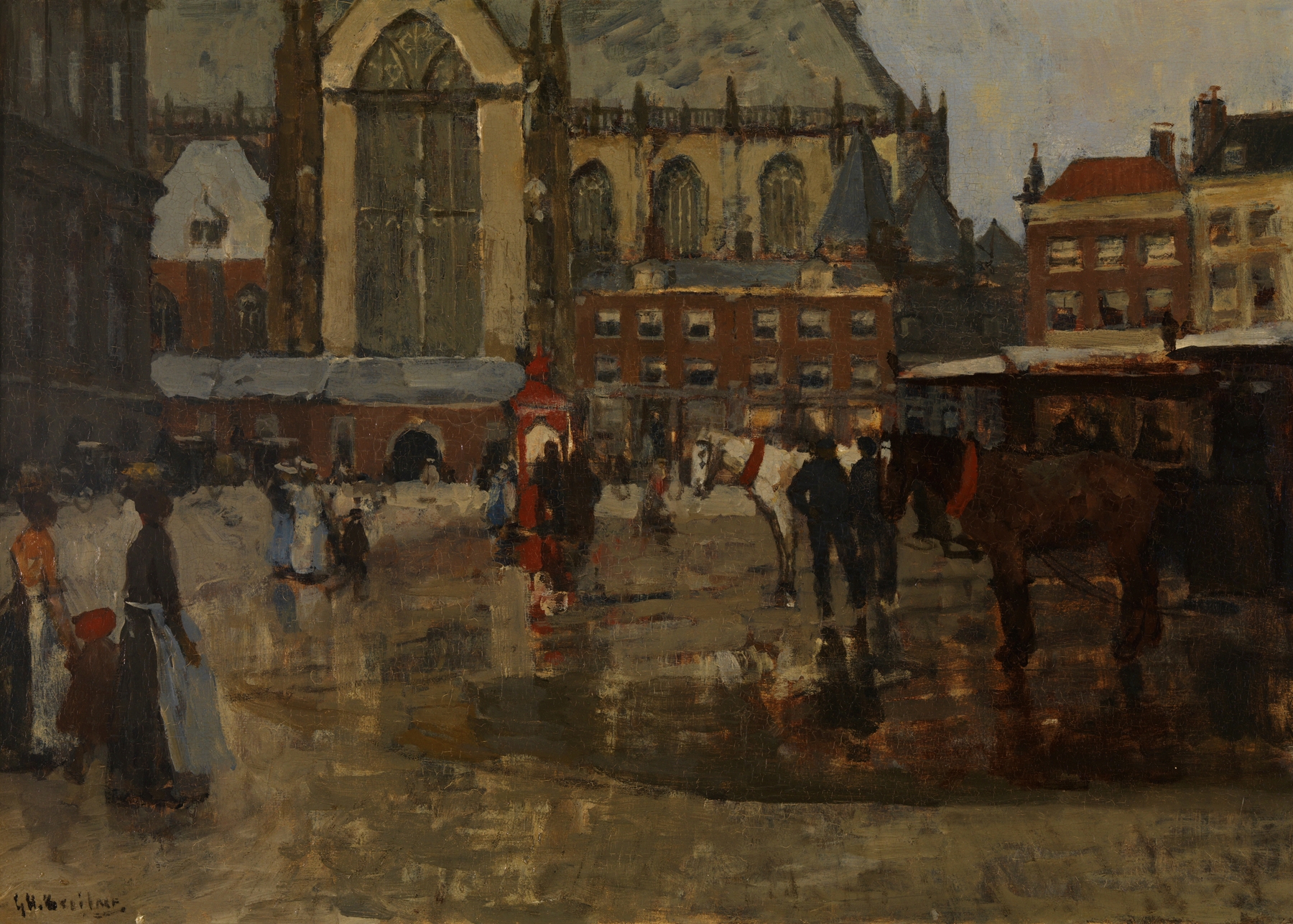
“Every silence here is a confession.” In the hushed moments of reflection, grief lingers like fog—an echo of lost connections and unspoken words. Look to the foreground, where the figures, clad in muted tones, appear almost ghostlike against the vibrant backdrop of Amsterdam’s iconic Dam Square. Notice the way the brushwork captures movement, each stroke pulsating with life yet tinged with melancholy. The light, diffused by a cloudy sky, creates a somber atmosphere that draws the eye towards the central monument, a harbinger of both celebration and sorrow.
The contrast between the lively architecture and the stillness of the people evokes a poignant tension—a celebration trapped within the confines of grief. Hidden beneath the surface, the painting reveals layers of emotional complexity. The solitary figures, absorbed in their thoughts, suggest isolation in a bustling public space. Their gestures—some hands clasped, others tucked away—speak to unshared burdens, while the somber palette reflects a collective mourning for what’s been lost amidst prosperity.
The juxtaposition of lively surroundings against the stillness of the individuals amplifies this sense of longing and quiet despair. In 1901, when this work was created, George Hendrik Breitner was deeply engaged in capturing the essence of urban life in Amsterdam. A pioneering figure in the Dutch Impressionist movement, he sought to portray the dynamism of the city, yet beneath his brushstrokes lay a profound sensitivity to human emotion. During this time, his personal life was marked by both artistic exploration and the challenges of everyday life, influencing his ability to capture such nuanced narratives.