Denizens of the Forest of Dean — History & Analysis
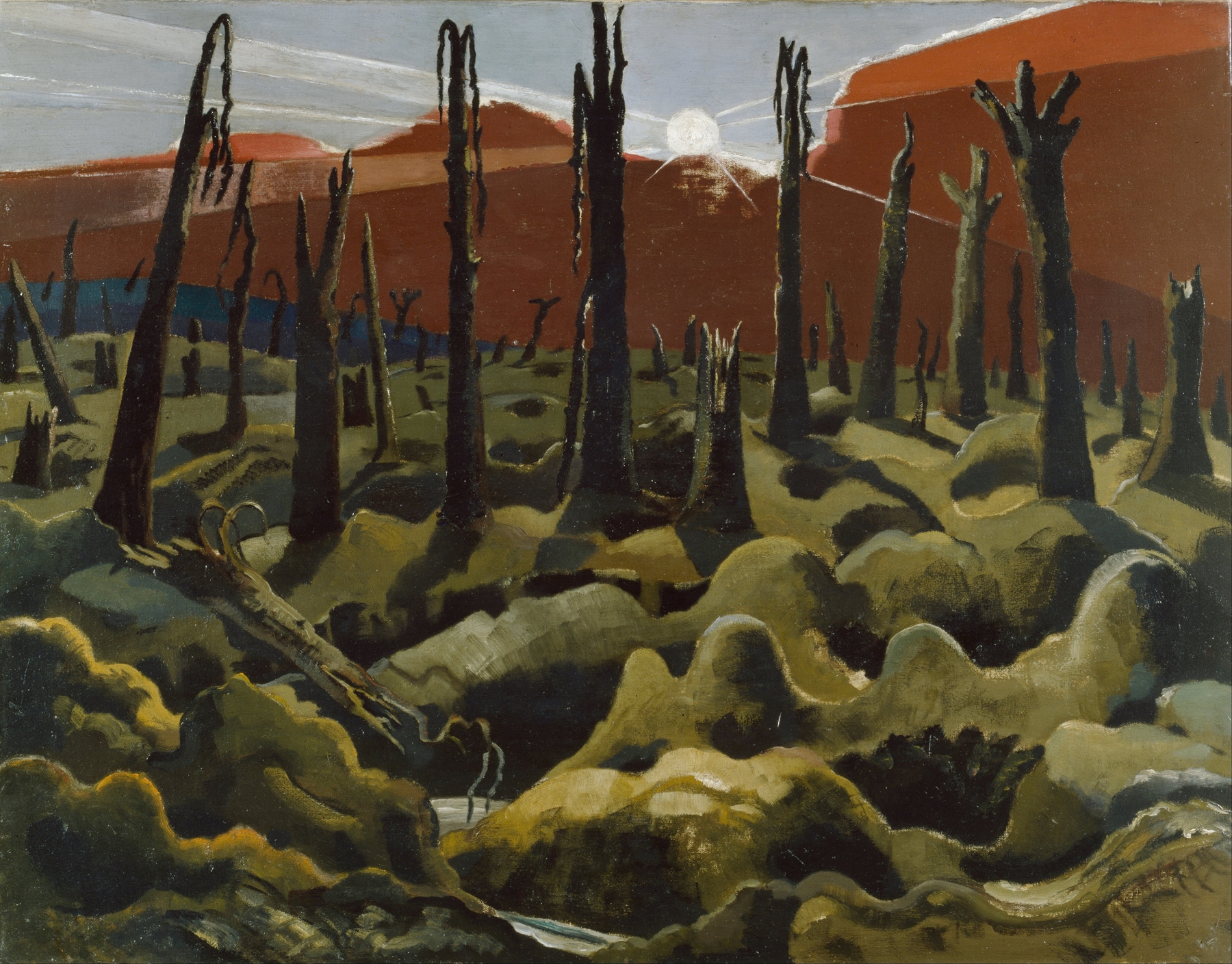
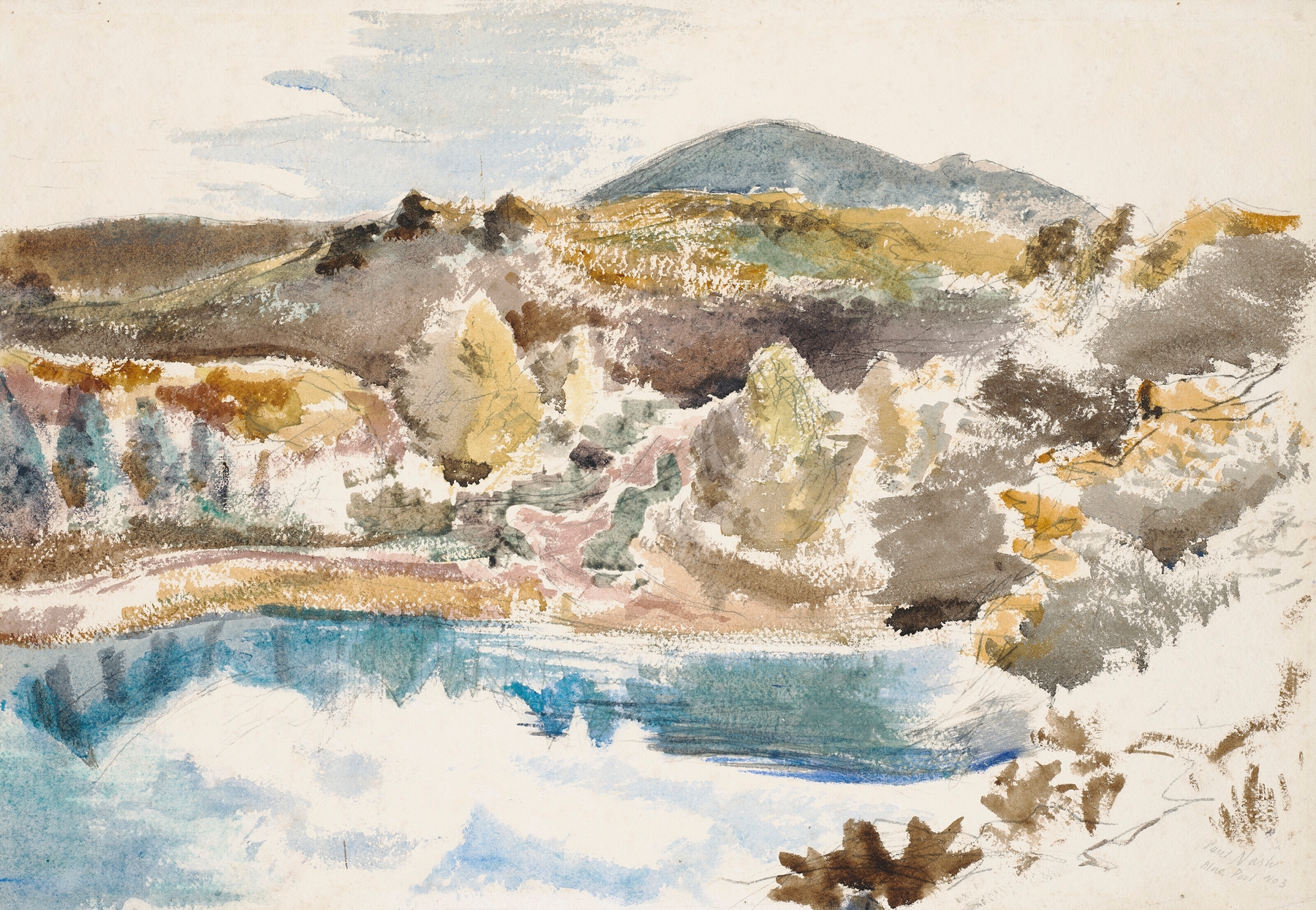
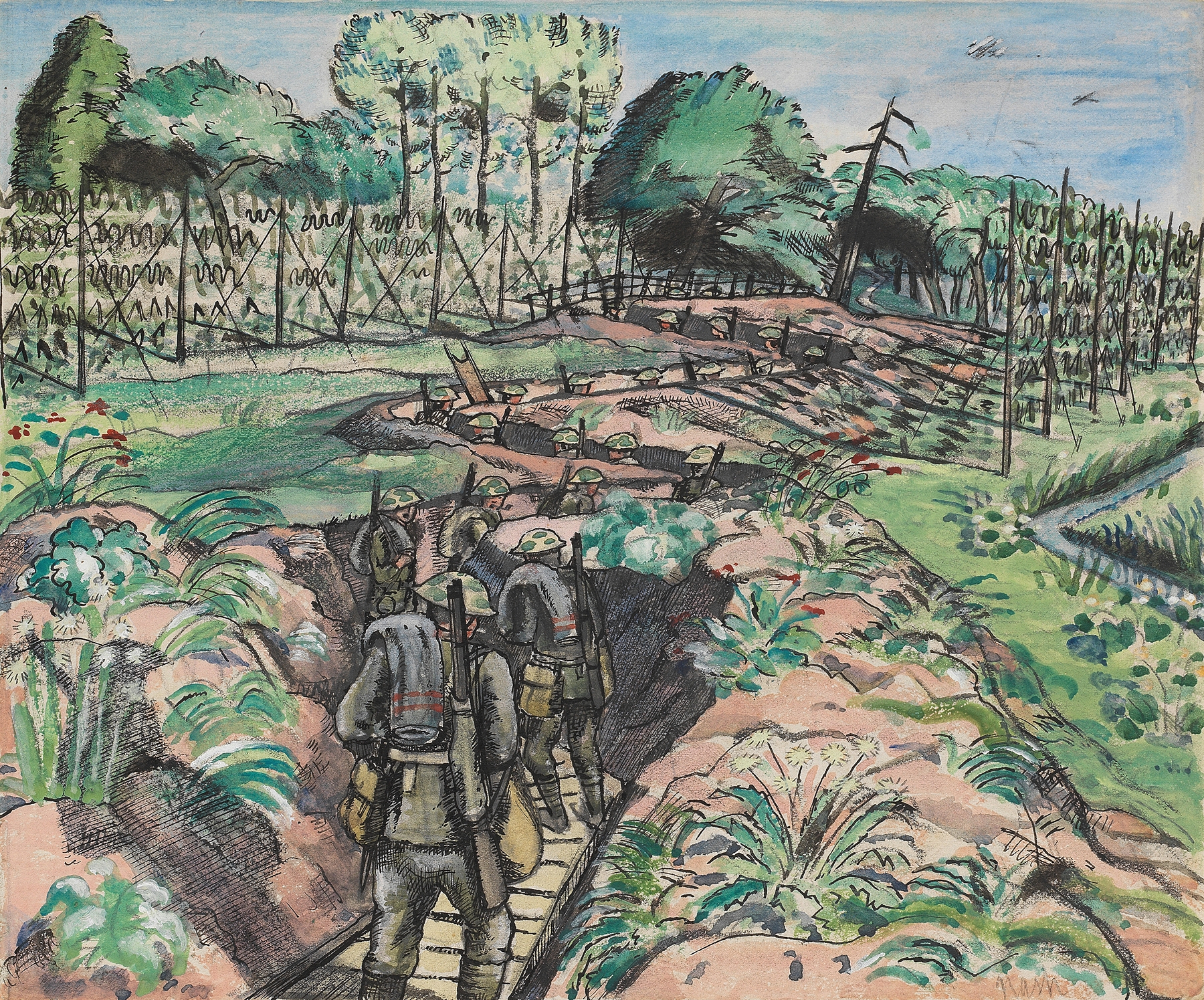
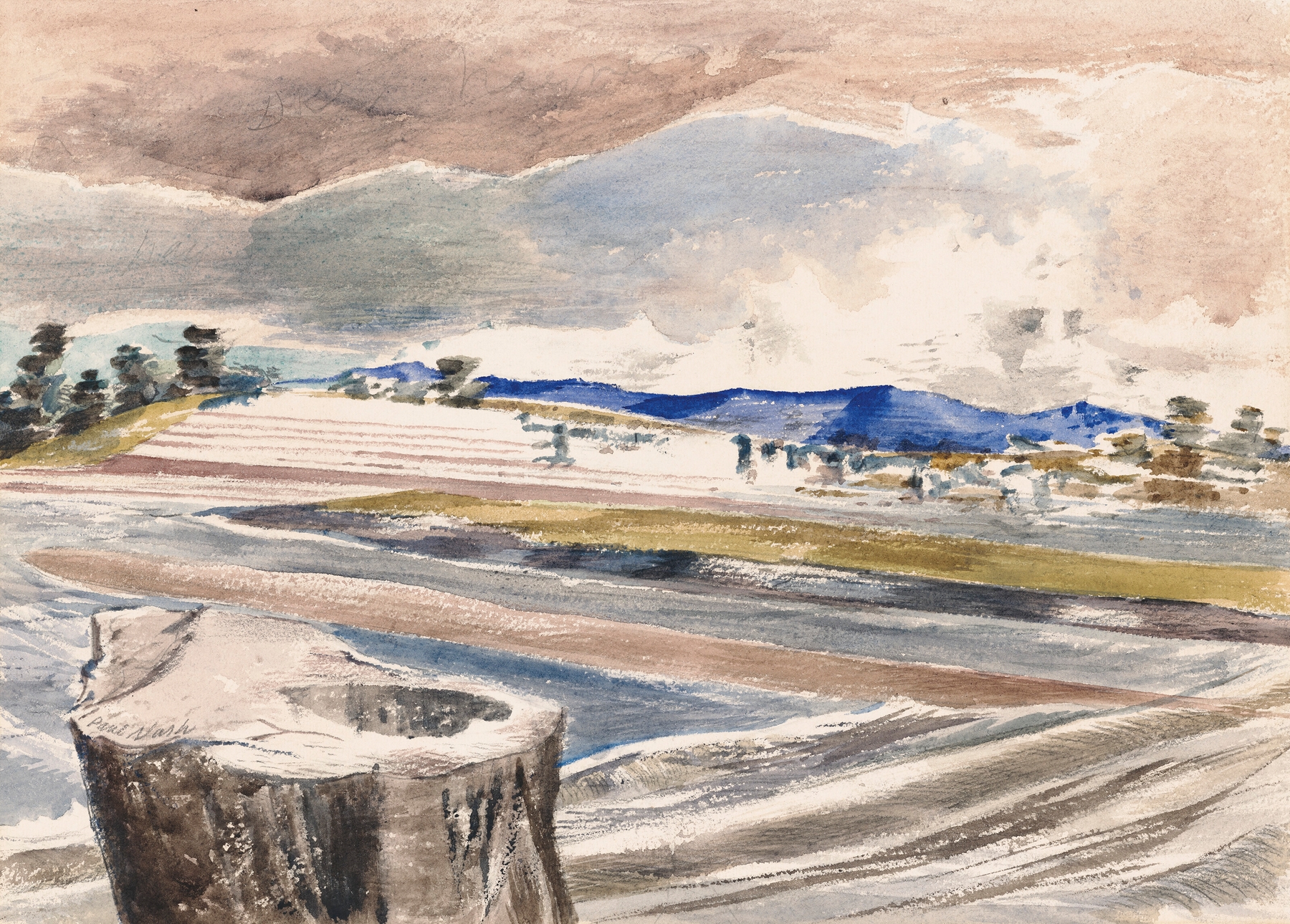
Could beauty survive in a century of chaos? In Denizens of the Forest of Dean, Paul Nash invites us to contemplate the fragile interplay between reality and illusion, lost amidst the shadows of a turbulent time. Focus on the interplay of light and texture across the surface of the canvas. The luminescent greens and browns draw you into a dense, almost ethereal woodland, while the stark whites and blacks delineate the forms of trees and foliage. Notice how the brushstrokes dance rhythmically, creating a sense of movement that seems to whisper secrets of the forest.
The composition serves to both entice and ensnare, leading your gaze through a labyrinth of nature’s raw beauty, yet hinting at an underlying eeriness. Beneath the surface, an emotional tension emerges. The distorted forms of the trees possess an uncanny quality, suggesting a disquieting proximity to the human experience. The harmonious beauty of the forest contrasts sharply with the lurking sense of unease, as if it stands as a fragile shield against the chaos outside its borders.
This duality speaks to the struggle of maintaining serenity amidst turmoil, embodying the illusion of peace in a world on the brink. In 1938, Nash was deeply engaged with the themes of landscape and memory, reflecting the anxiety of an impending war. Living in England, he was part of a broader artistic movement, creating works that resonated with the emotional landscape of the time—one marked by uncertainty and change. His exploration of the natural world was not only a personal retreat but also a response to the political and social upheaval surrounding him, making this piece a poignant reflection of both his inner world and the chaos beyond.