Der Karrenweg (Heimkehrender Jäger) — History & Analysis
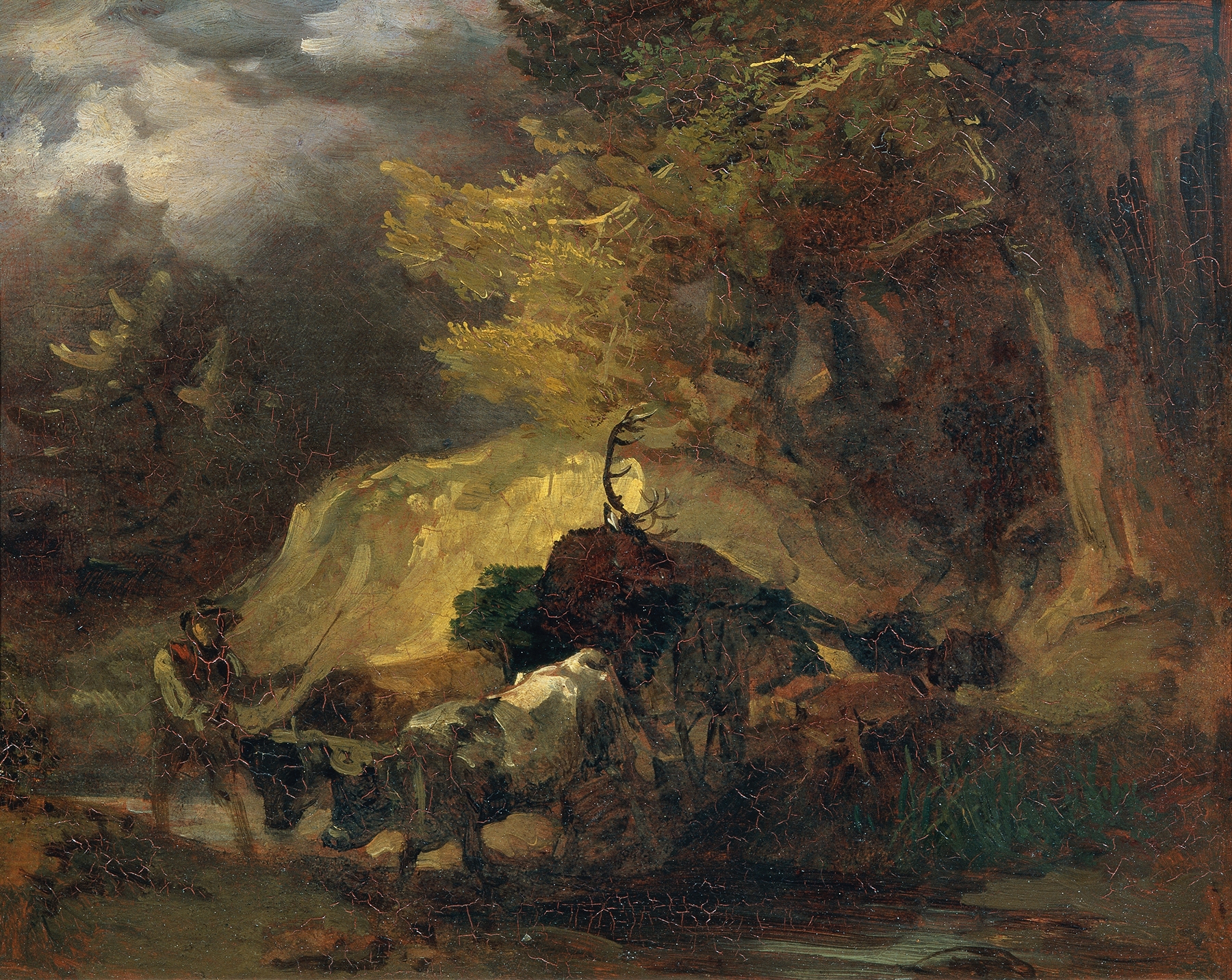
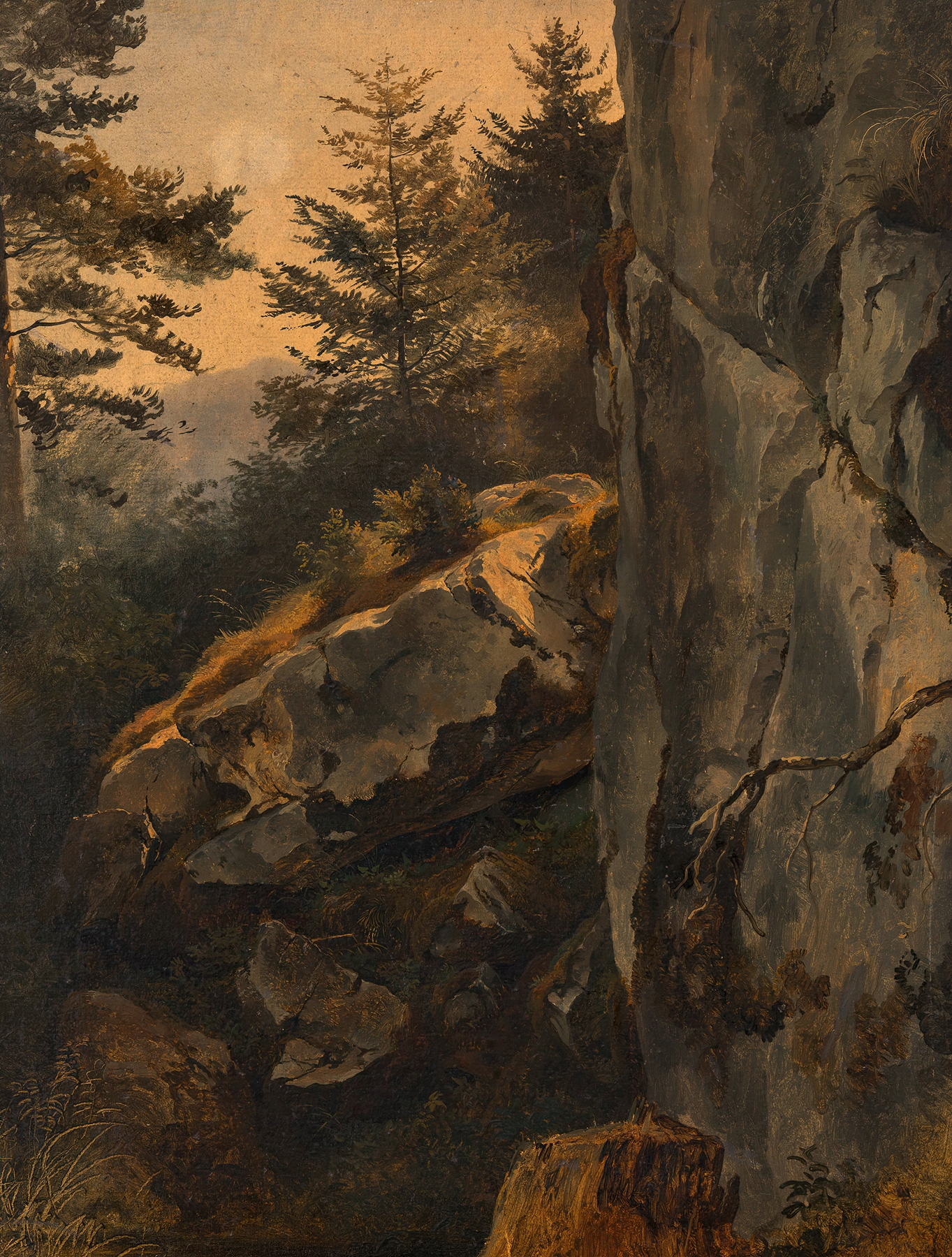
Who listens when art speaks of silence? In a world increasingly consumed by noise, the stillness in Der Karrenweg (Heimkehrender Jäger) invites introspection, urging viewers to confront the weight of decay that lingers in its embrace. Look to the left at the worn path, its contours gently guiding the eye toward the figure of the returning hunter. The muted earth tones evoke a sense of age, as sunlight filters through the trees, illuminating the path and casting shadows that hint at forgotten stories. The hunter's posture suggests both weariness and reflection, a testament to the journey undertaken.
Notice how the delicate brushwork captures the interplay of light and shadow, imbuing the scene with an almost tangible atmosphere of nostalgia. Beneath the surface, the work reveals a poignant contrast between life and decay. The hunter, though returning home, embodies the transient nature of existence, as the crumbling path beneath him symbolizes a journey that is both physical and metaphorical. The trees, richly textured yet fading, echo the theme of time's relentless passage, while the stillness of the moment invites contemplation of the fragility of life.
Each element holds significance, woven together in a tapestry of emotion that resonates with the viewer. Created in 1844, Gauermann painted Der Karrenweg (Heimkehrender Jäger) during a period of growing Romanticism in art, where themes of nature, nostalgia, and the human experience flourished. Living in Vienna, he was influenced by the burgeoning interest in portraying landscapes that reflected deeper emotional truths. This work encapsulates his desire to capture the essence of the human spirit intertwined with the natural world, marking a significant moment in both his personal journey and the larger narrative of 19th-century art.