Nach der Jagd — History & Analysis
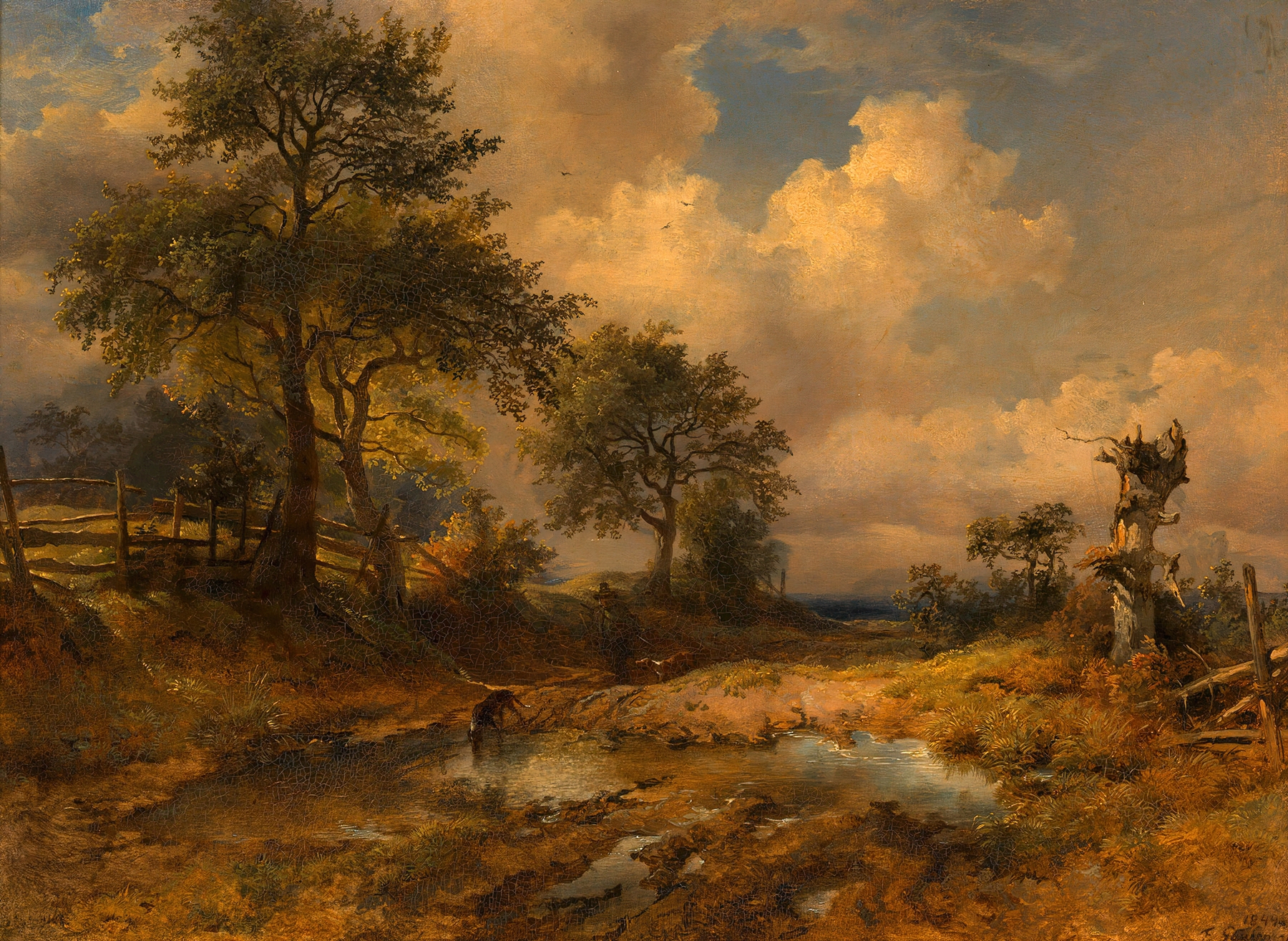
“Every brushstroke is a heartbeat remembered.” In the quiet aftermath of a hunt, the air is thick with awe and reverence for nature's wild beauty. The moment captured invites us to ponder not just the hunt itself, but the profound connection between humanity and the wilderness. Look to the center of the canvas, where a couple, clad in rustic hunting attire, stands in quiet contemplation. The warm hues of their garments blend harmoniously with the earthy tones of the surrounding landscape, while the subtle interplay of light dances across their faces, illuminating their expressions of relief and wonder.
Notice how the trees frame them, their dark silhouettes contrasting against the softer, sunlit background—each brushstroke meticulously rendered to evoke the serenity of the post-hunt stillness. Yet, there lies more beneath the surface. The posture of the hunters conveys a sense of reflection, hinting at the balance between triumph and loss inherent in their endeavor. The presence of the aged, majestic stag at their feet, rendered with tenderness, serves as a poignant reminder of nature's vulnerability.
This scene captures the duality of life and death, illustrating not just the thrill of the chase, but also the deeply ingrained respect for the creatures that inhabit the wild. Gauermann created this work during the early 19th century, a period when the Romantic movement was flourishing in Europe, influencing artists to explore themes of nature and emotion. Living in Vienna, Gauermann was immersed in a world that celebrated the intricate dance between civilization and the untamed wilderness. As industrialization began to reshape society, he sought out these moments of connection with nature, marking this painting as a testament to that ongoing dialogue.