Landschaft bei Miesenbach — History & Analysis
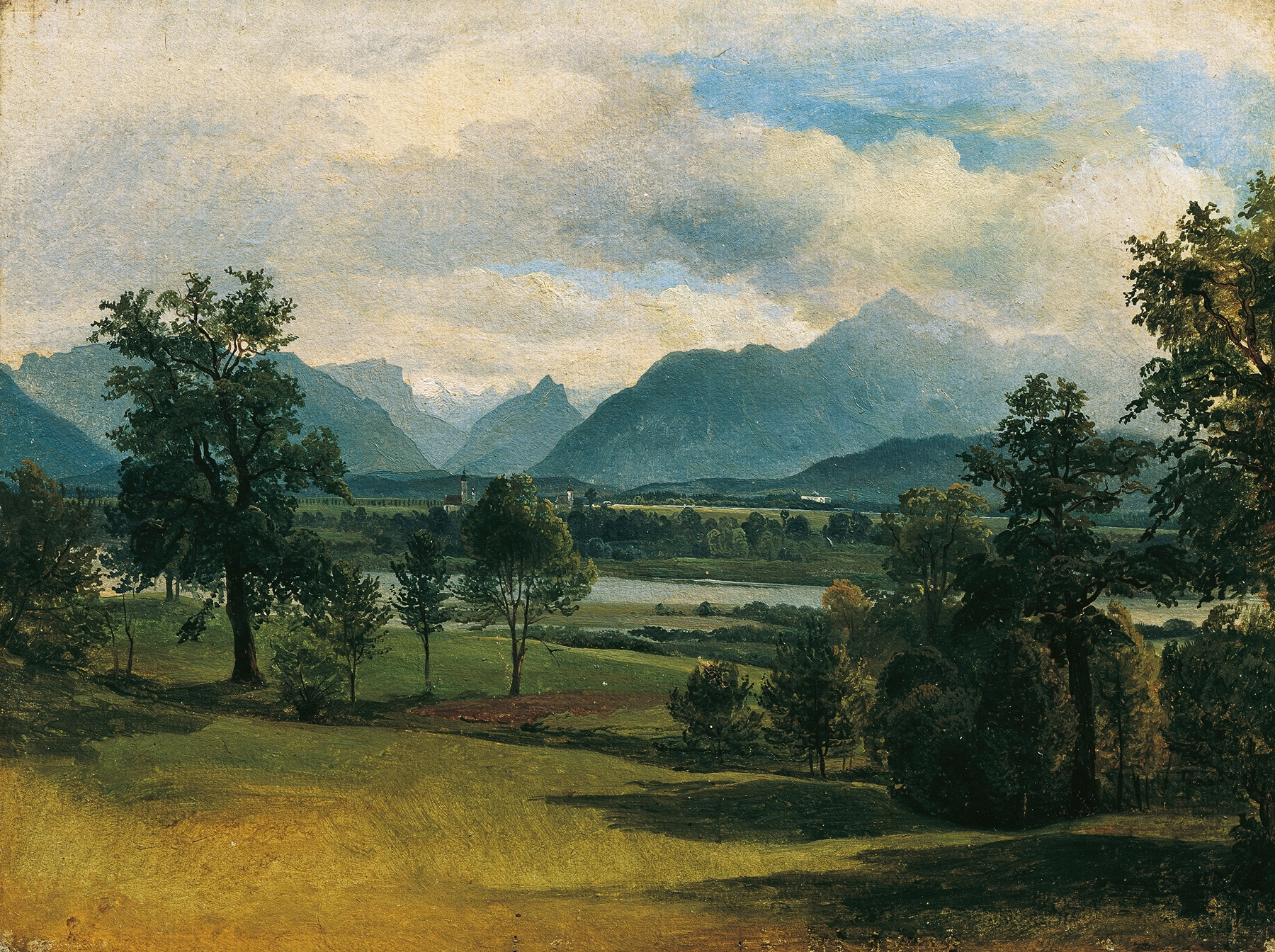
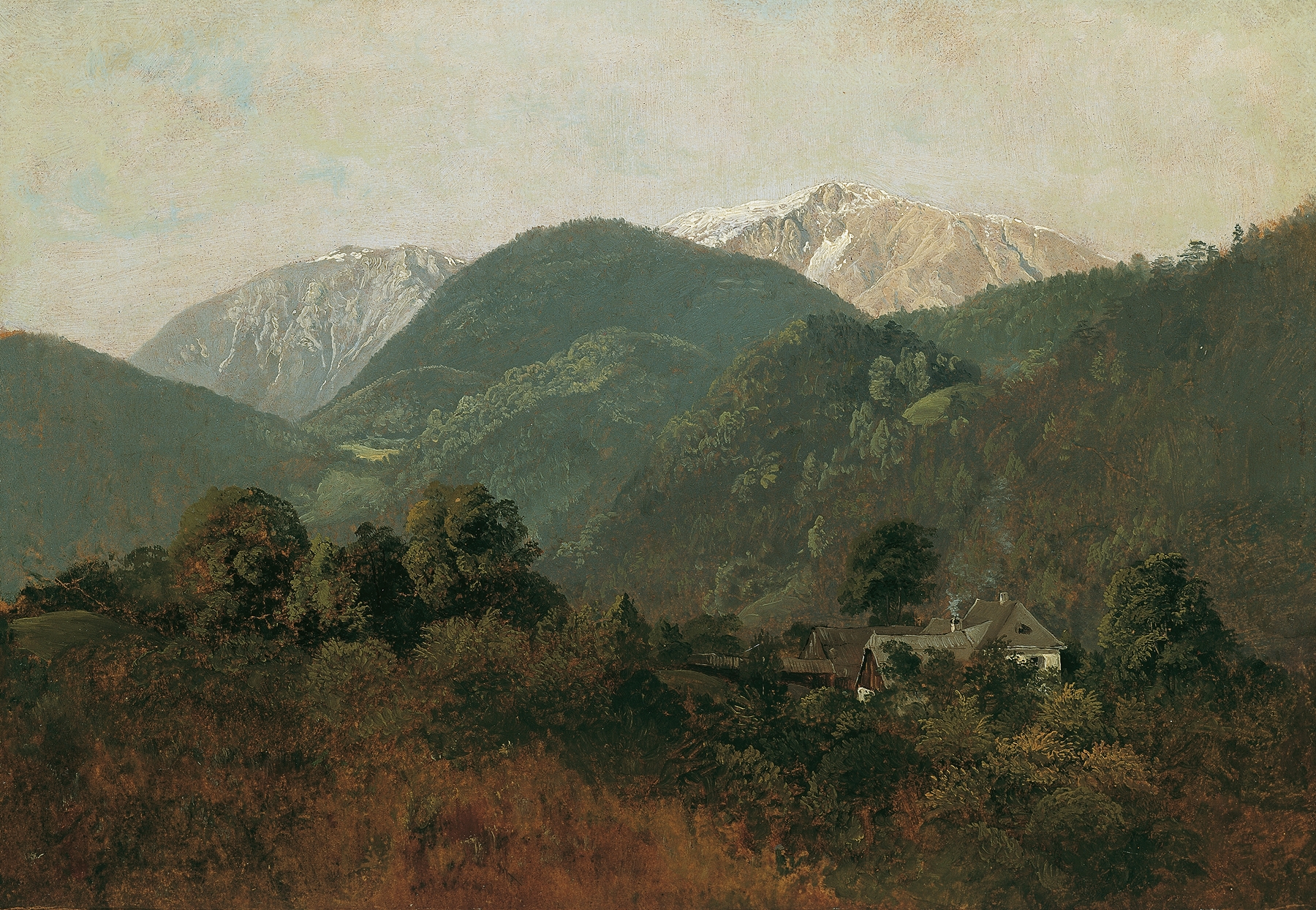
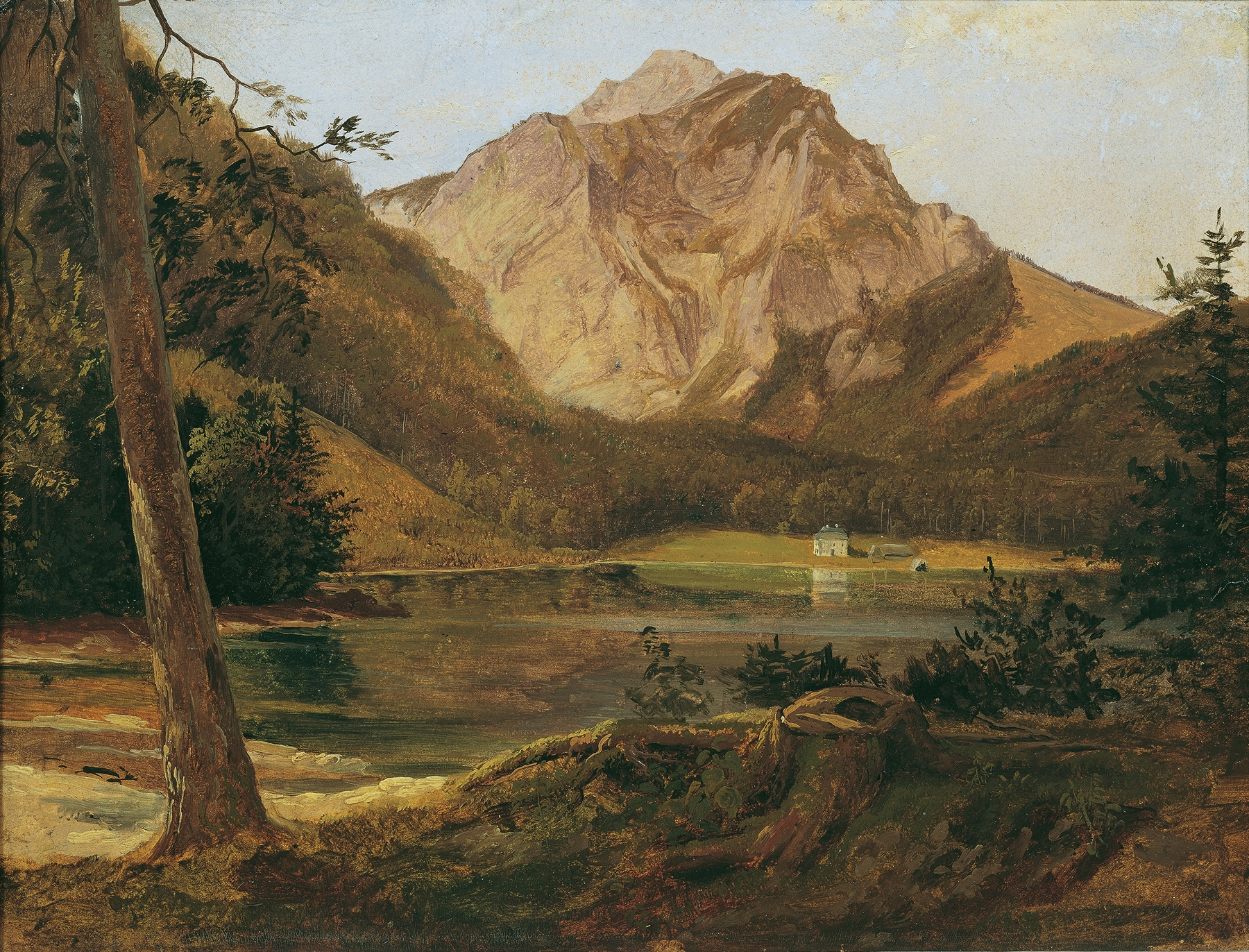
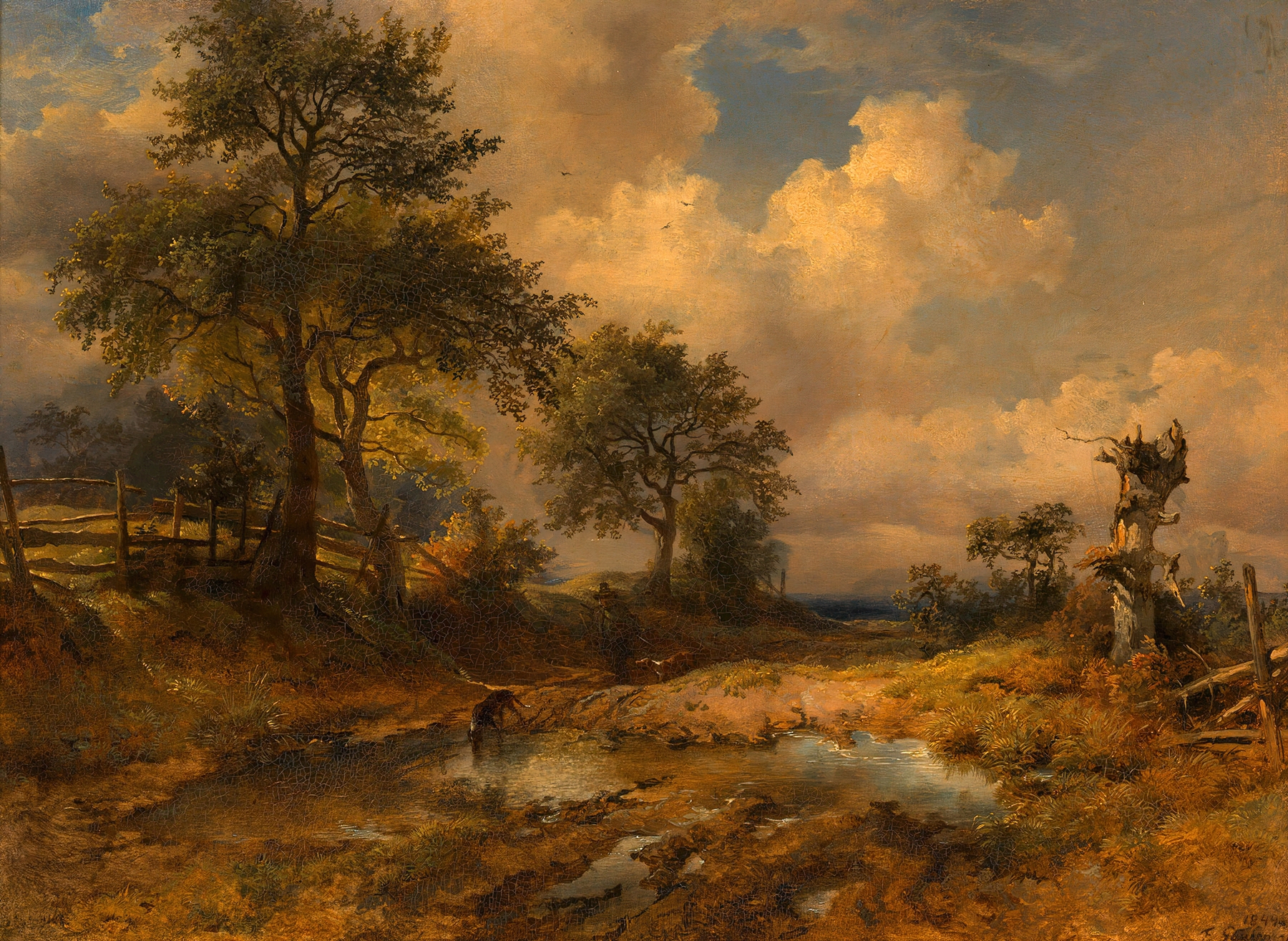
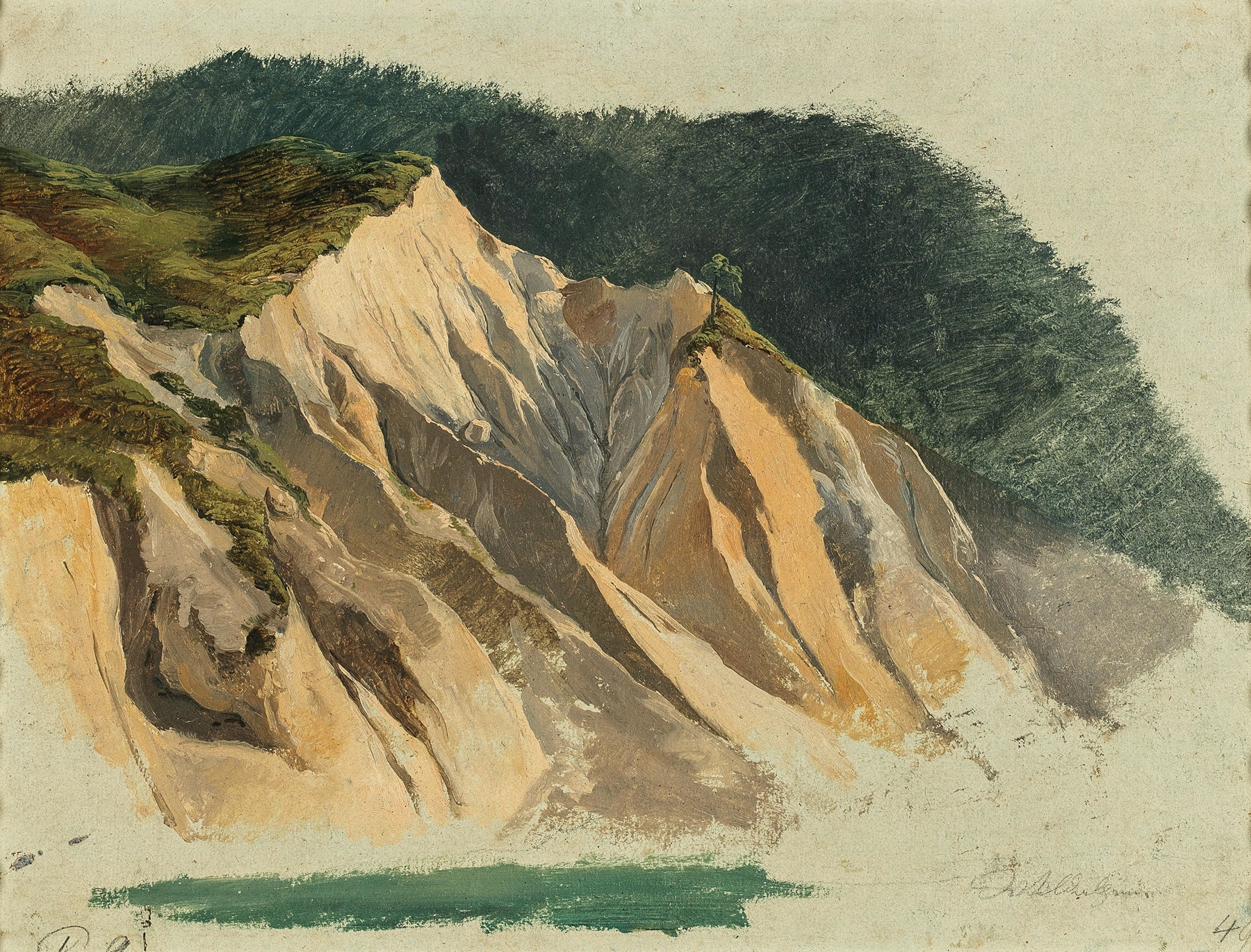
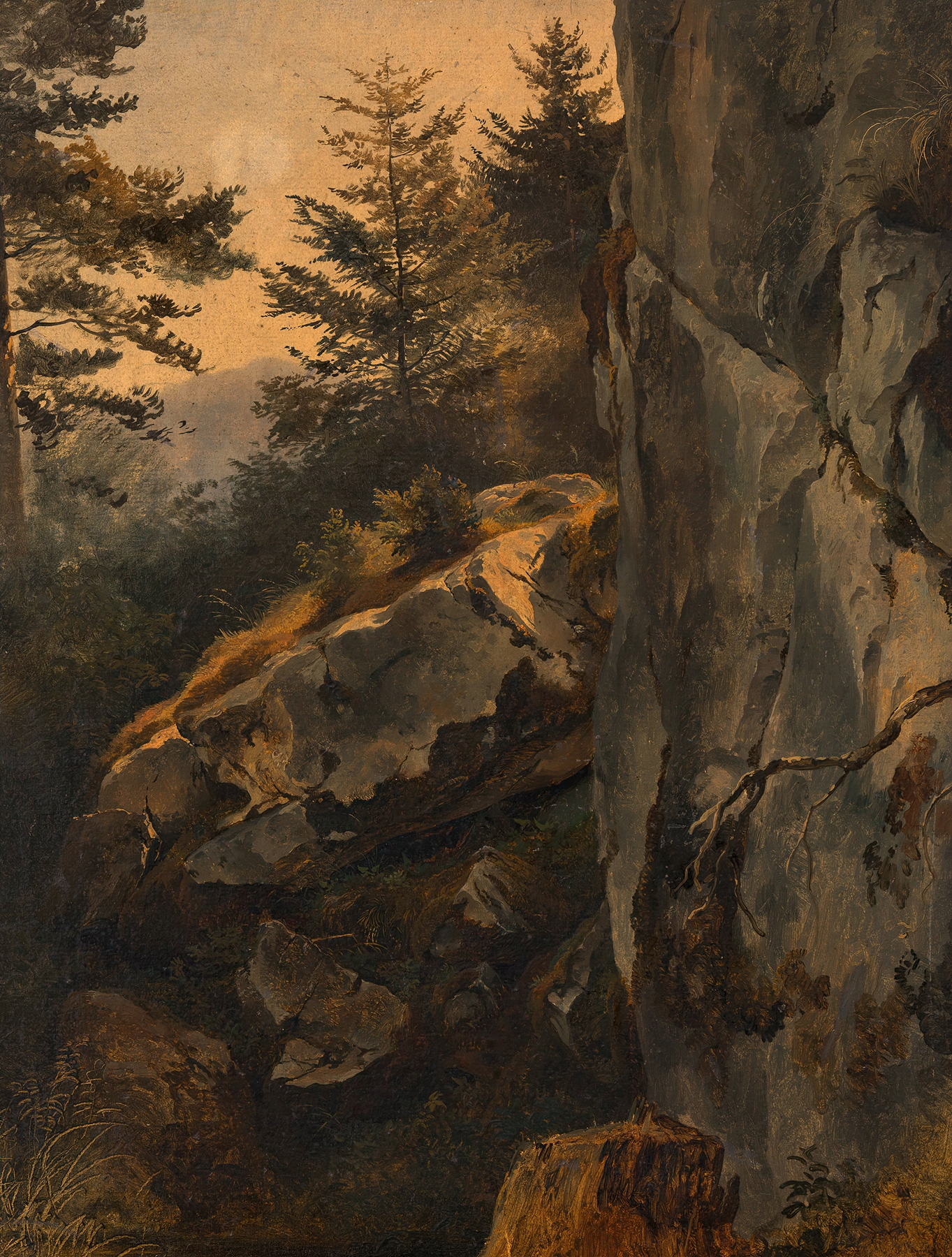
Under the brush, chaos becomes grace. In the serene embrace of nature, balance finds its way through vibrant strokes and subtle hues. Look to the left at the rolling hills, each contour carefully sculpted with gentle greens that invite the eye to wander. Notice how the sky transitions from a soft cerulean at the horizon to a deeper azure above, capturing the fleeting moment of daybreak.
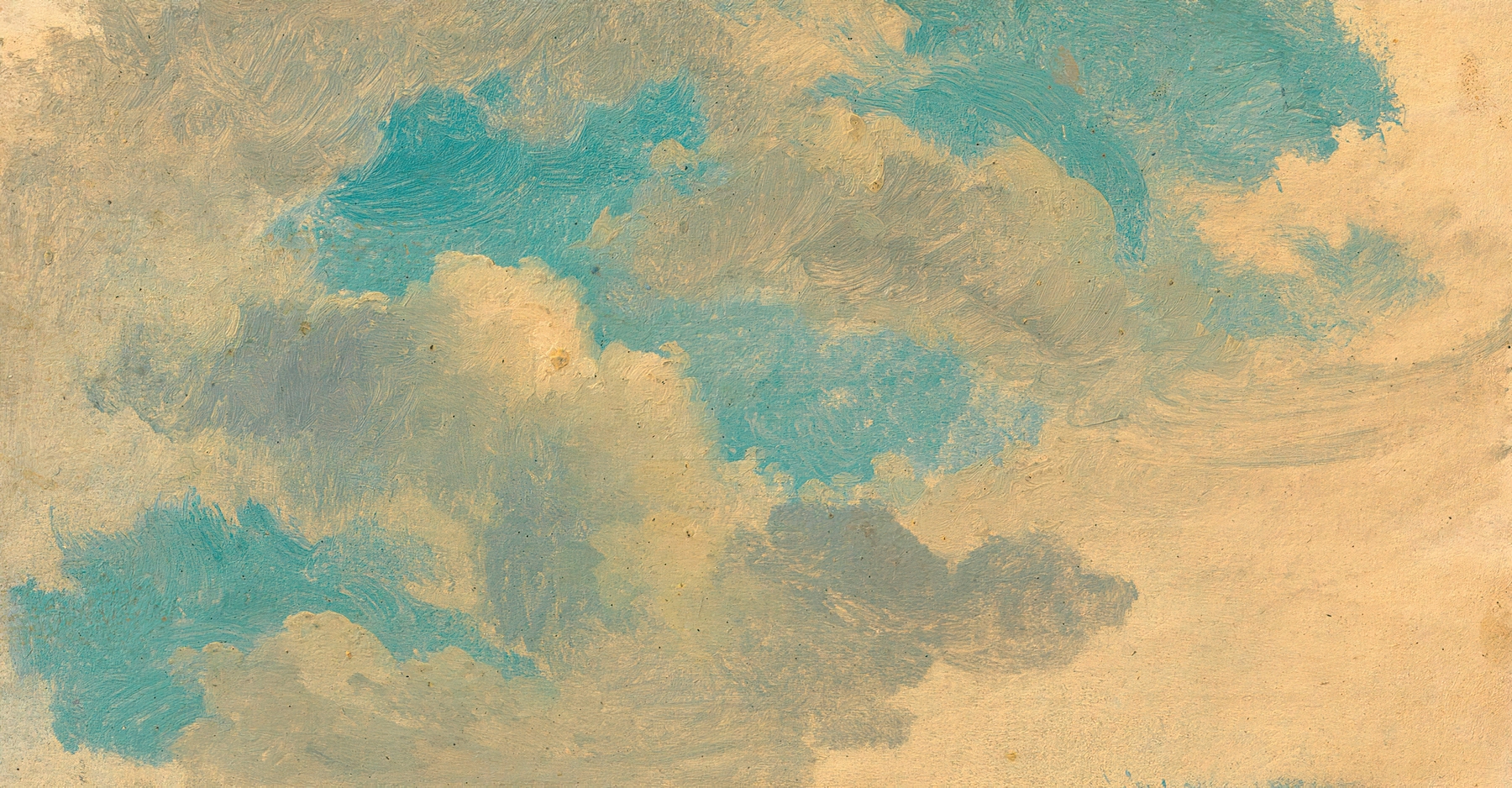
The interplay of light and shadow creates a harmonious rhythm across the landscape, drawing your gaze toward the distant trees that stand like guardians of the scene. As you explore the painting further, the juxtaposition of tranquility and movement begins to emerge. The stillness of the foreground, with its lush grasses, contrasts sharply against the dynamic clouds that swirl overhead, hinting at the winds of change. Hidden within these contrasts is an emotional tension that speaks to the duality of nature; it is both peaceful and alive, gentle yet powerful.
The delicate balance of color choices enhances this dialogue, elevating the viewer's experience into a contemplative space. Created in 1830, this artwork emerged during a period when Friedrich August Matthias Gauermann was deeply engaged with the Austrian landscape. Working in Vienna, he sought to capture the sublime beauty of his surroundings, reflecting the Romantic ideals of the time. The world was shifting, as the industrial revolution began to reshape Europe, yet this piece stands as a testament to the enduring power of nature amidst change.