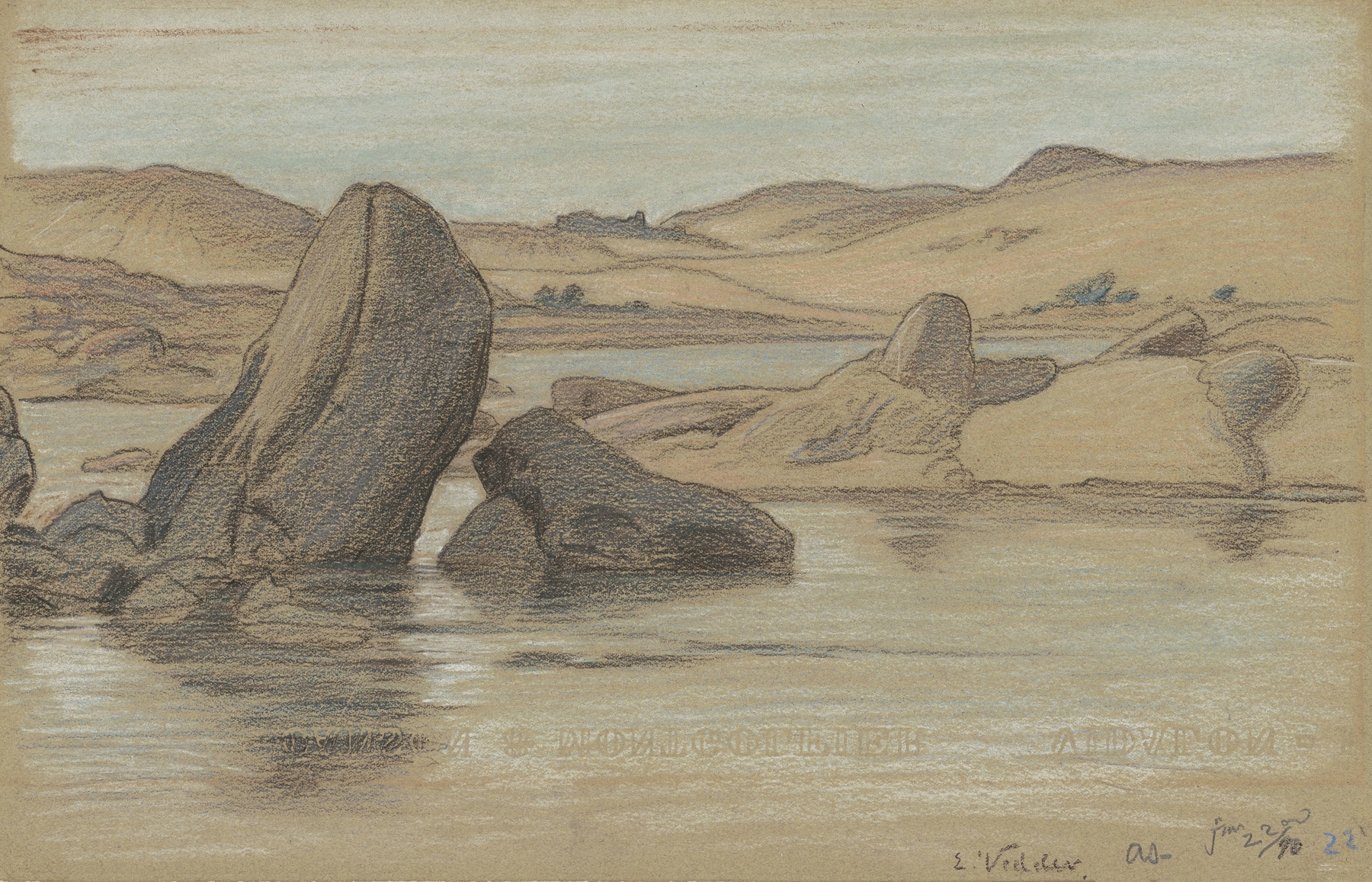
Desolation — History & Analysis
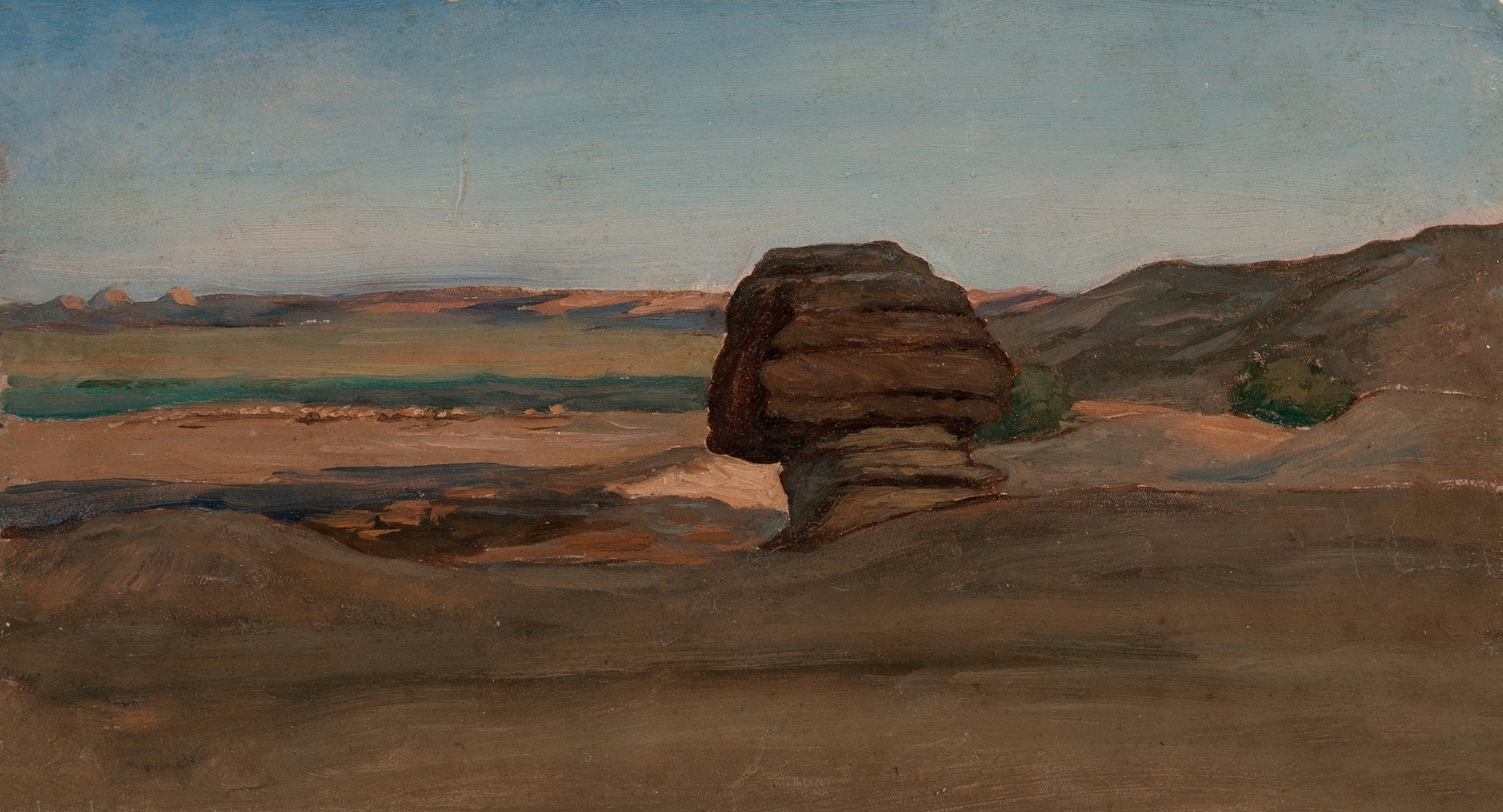
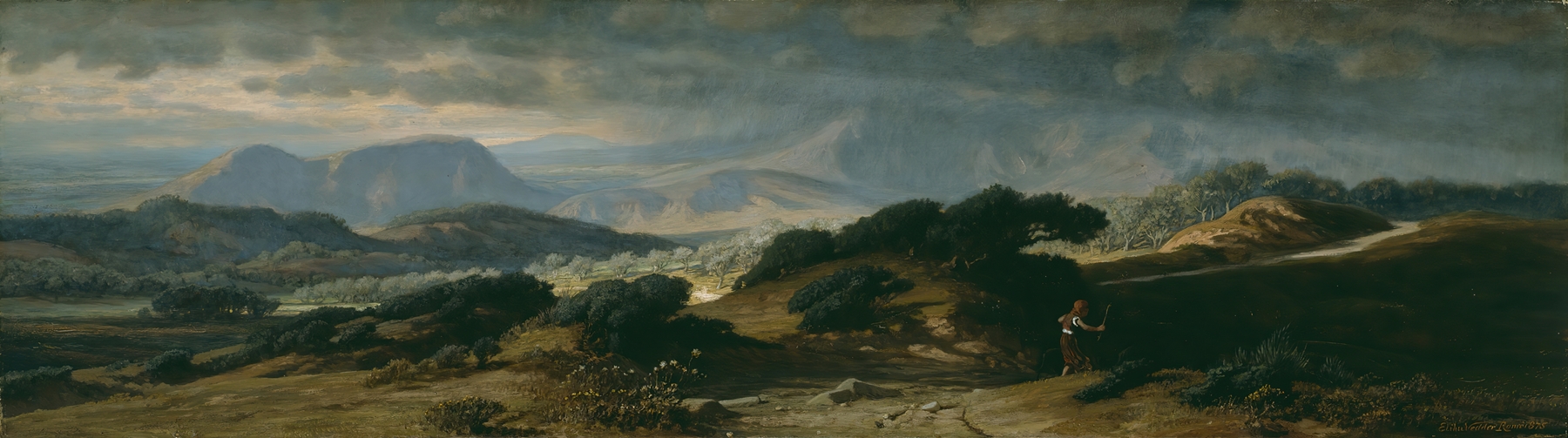
Could a single brushstroke hold eternity? In Elihu Vedder’s Desolation, the canvas resonates with an ecstasy that lingers in the silence of absence. Here, the artist captures the soul’s yearning for something beyond the mundane—a quest that speaks to the depths of human experience. Look to the center, where a solitary figure stands in stark silhouette against a vast, muted landscape. Notice how the deep, somber hues of earth and shadow amplify the loneliness that pervades the scene.
The swirling, dynamic brushstrokes evoke a sense of movement in the sky, contrasting with the stillness of the figure, suggesting an internal tumult that rivals the desolate surroundings. The build-up of texture in the foreground draws the viewer’s attention, enveloping us in a world that feels both alien and achingly familiar. The tension between solitude and yearning emerges through the figure’s posture, arms stretched toward an unseen infinity, as if reaching for a connection that remains just out of grasp. The muted palette elicits a profound sense of melancholy, yet the vibrancy of the brushwork hints at an underlying hope—the ecstasy of aspiration amid despair.
Each element plays a role in conveying the emotional weight of existence, encouraging contemplation of our own moments of isolation. Elihu Vedder painted Desolation in 1872, during a period of personal reflection that paralleled a broader movement in art toward explorations of the emotional landscape. Living in Rome, he was influenced by Symbolism, capturing profound themes of human experience. This work reveals his desire to delve into the psyche, capturing not just a moment, but a universal feeling etched in time.