Die Bucht von Neapel mit Blick auf den Vesuv — History & Analysis
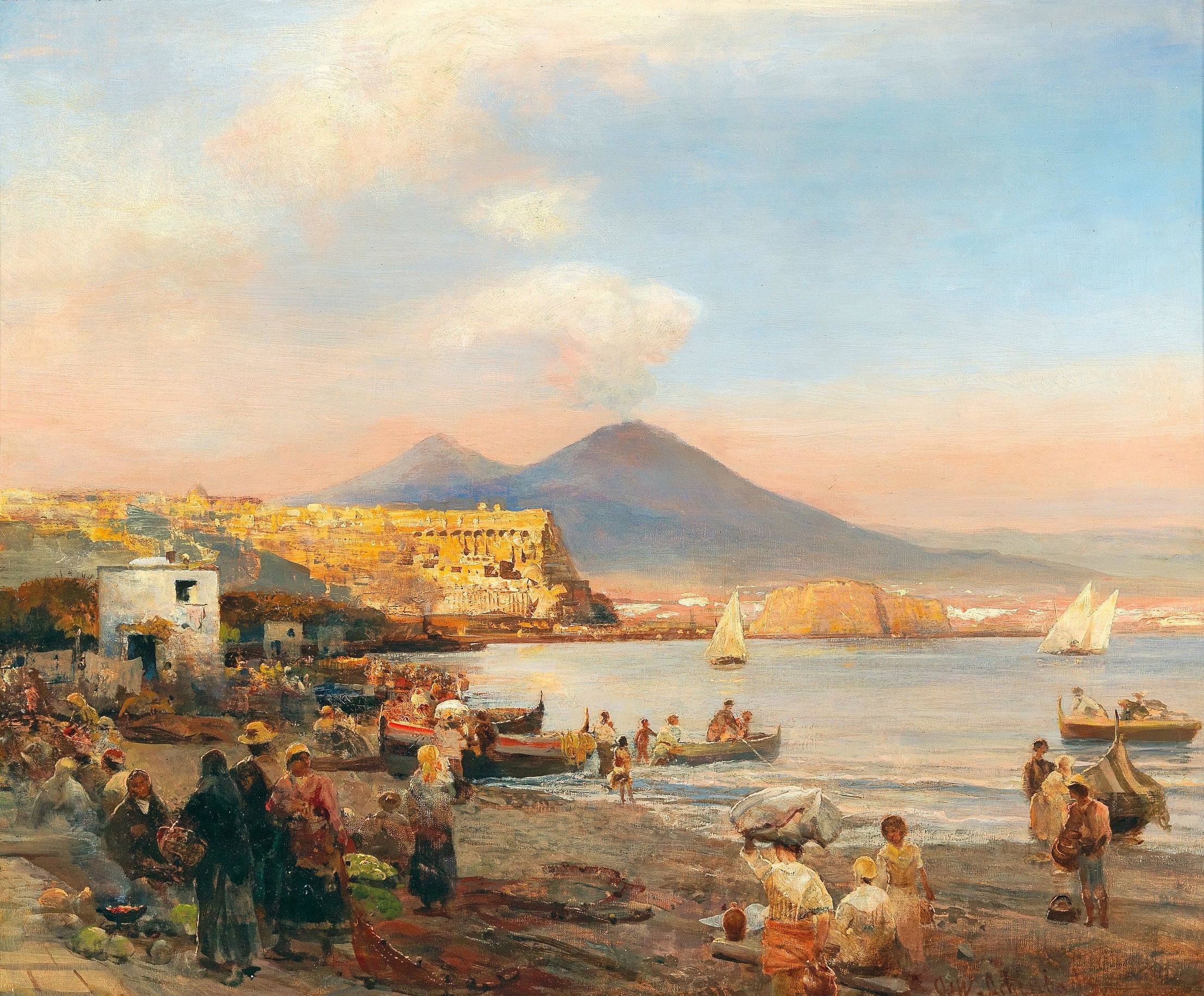
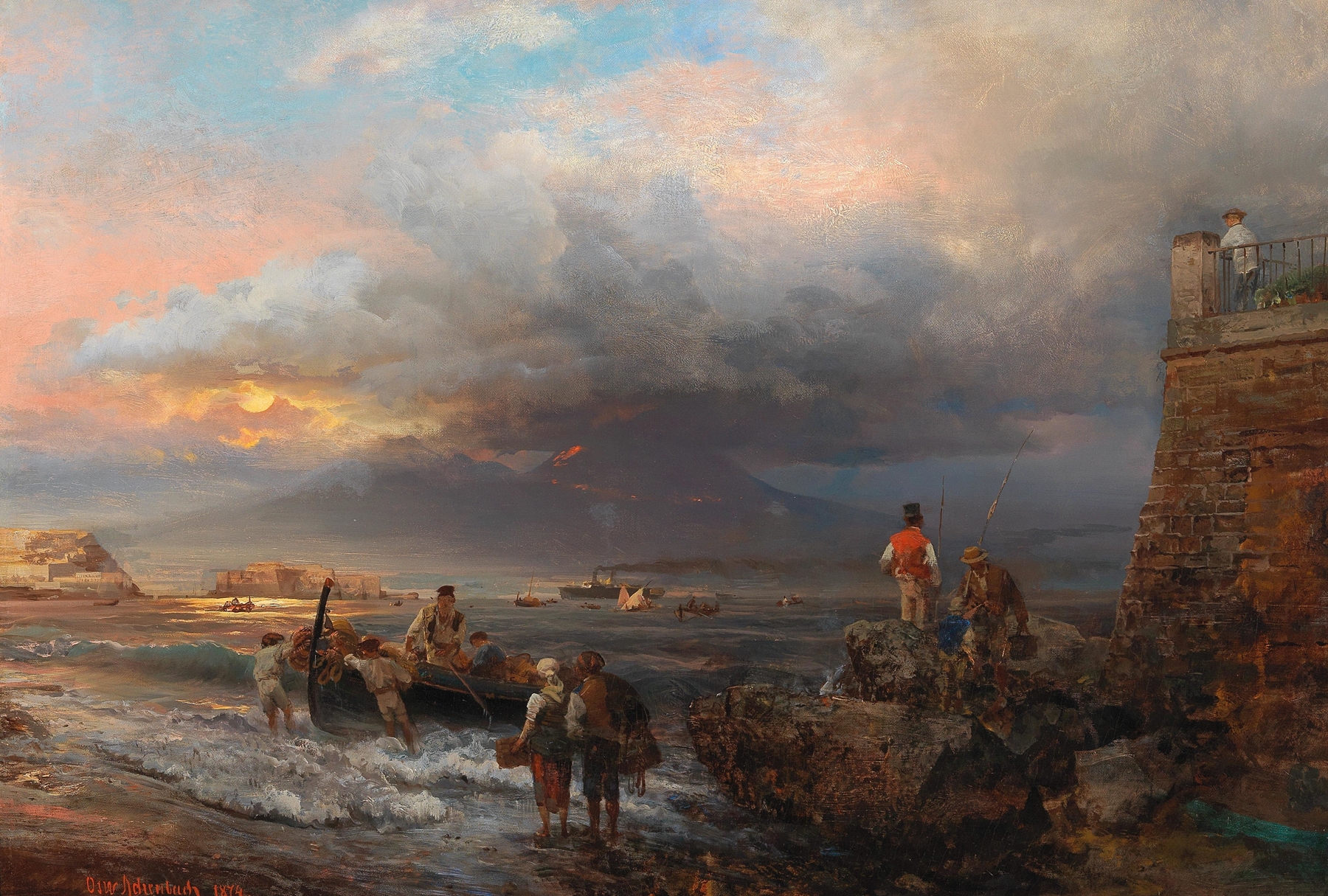
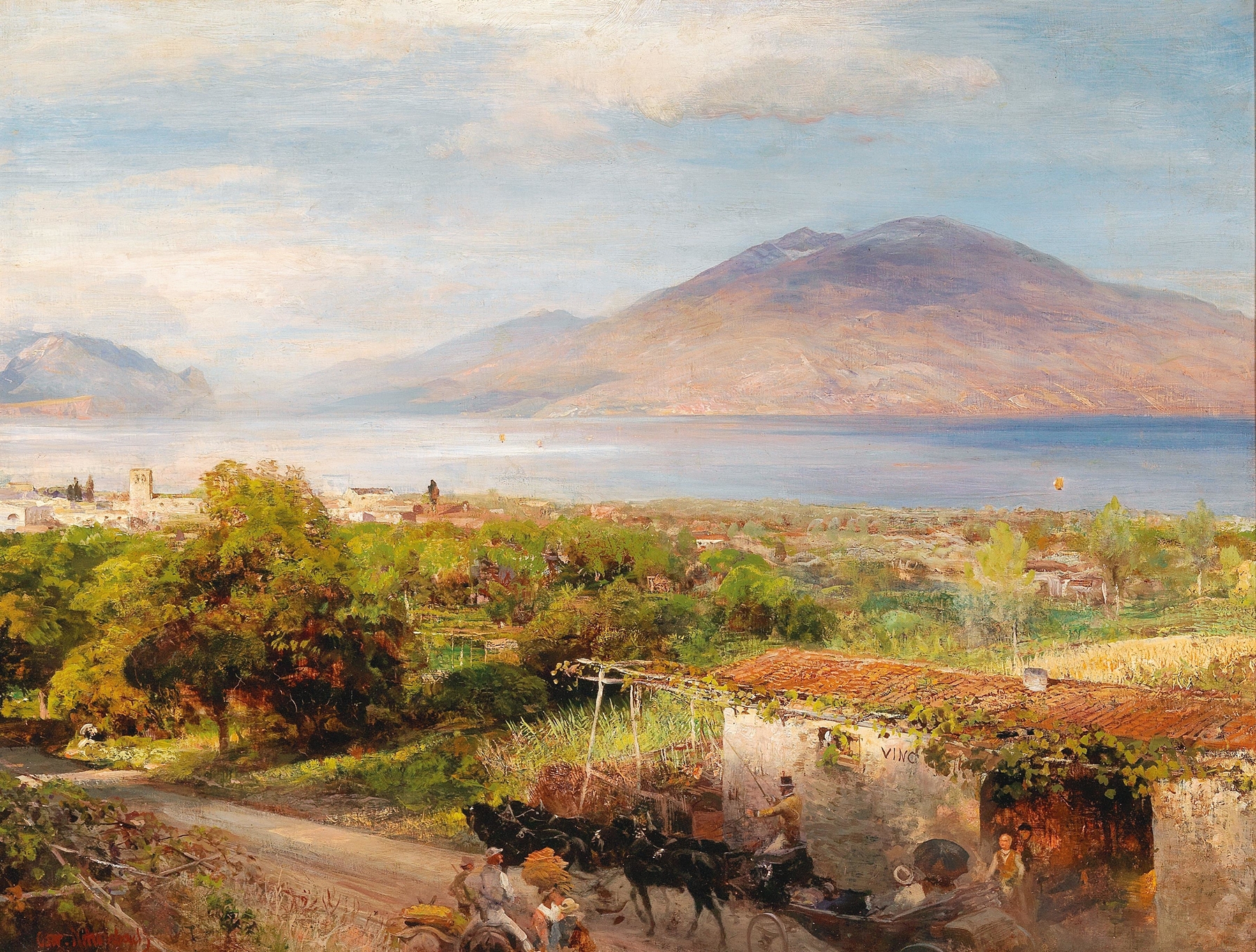
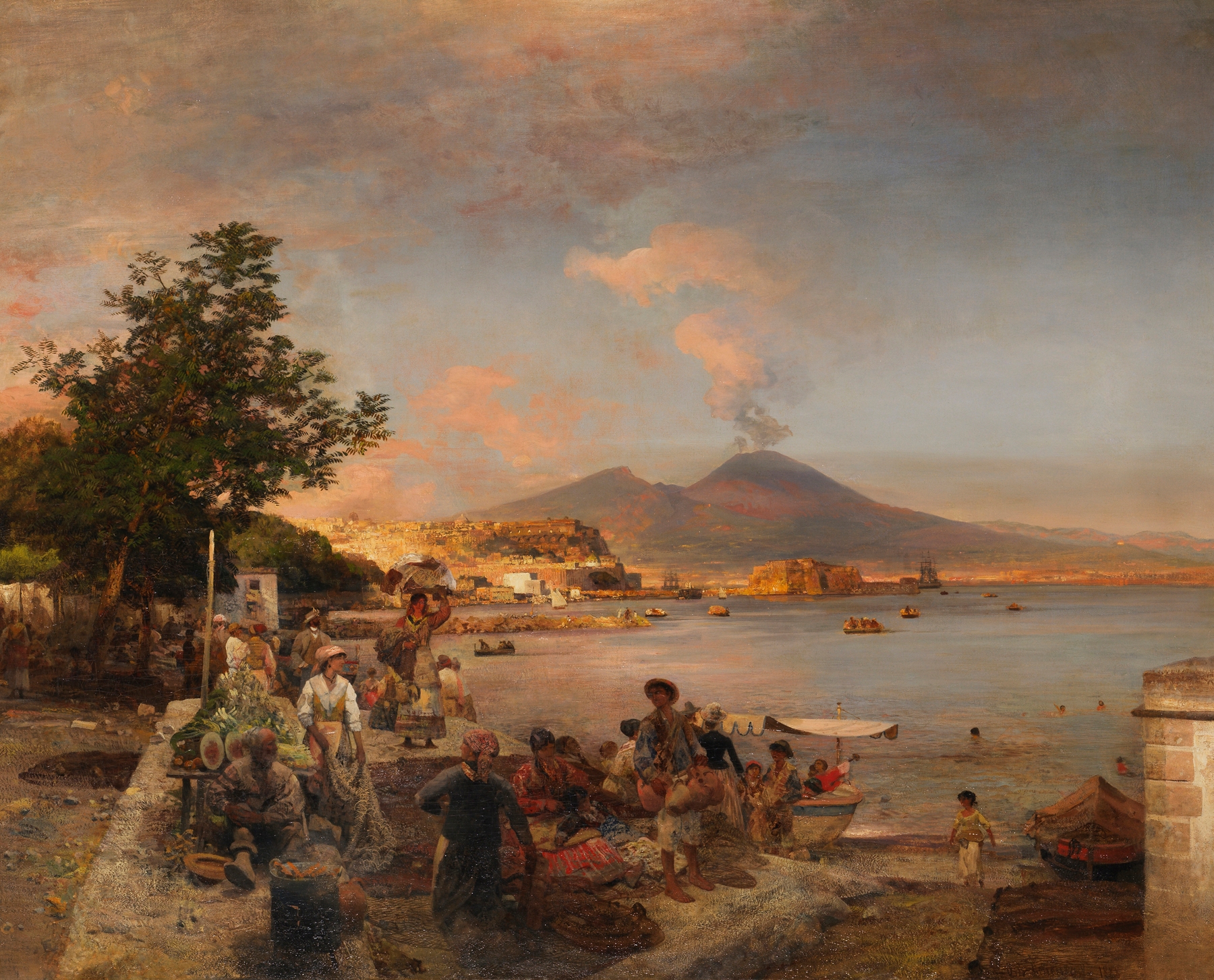
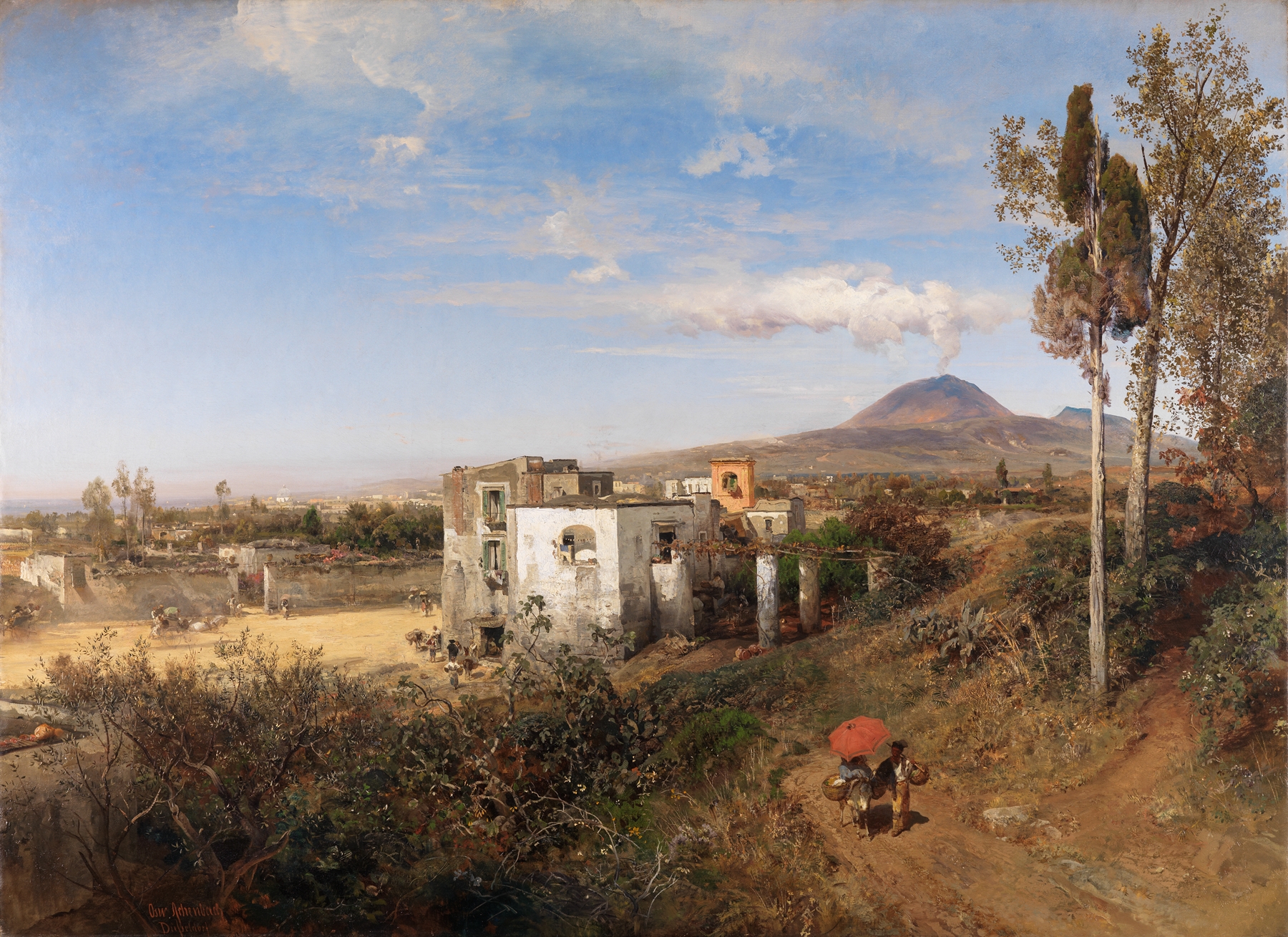
What if beauty was never meant to be finished? In Oswald Achenbach’s Die Bucht von Neapel mit Blick auf den Vesuv, a yearning for an unattainable perfection pulses through the canvas, echoing the allure of nature’s majesty. Look to the center where the vibrant blue of the bay meets the darker hues of the distant mountains. Achenbach masterfully balances light and shadow, drawing your gaze to the glistening water that reflects the sun's embrace.
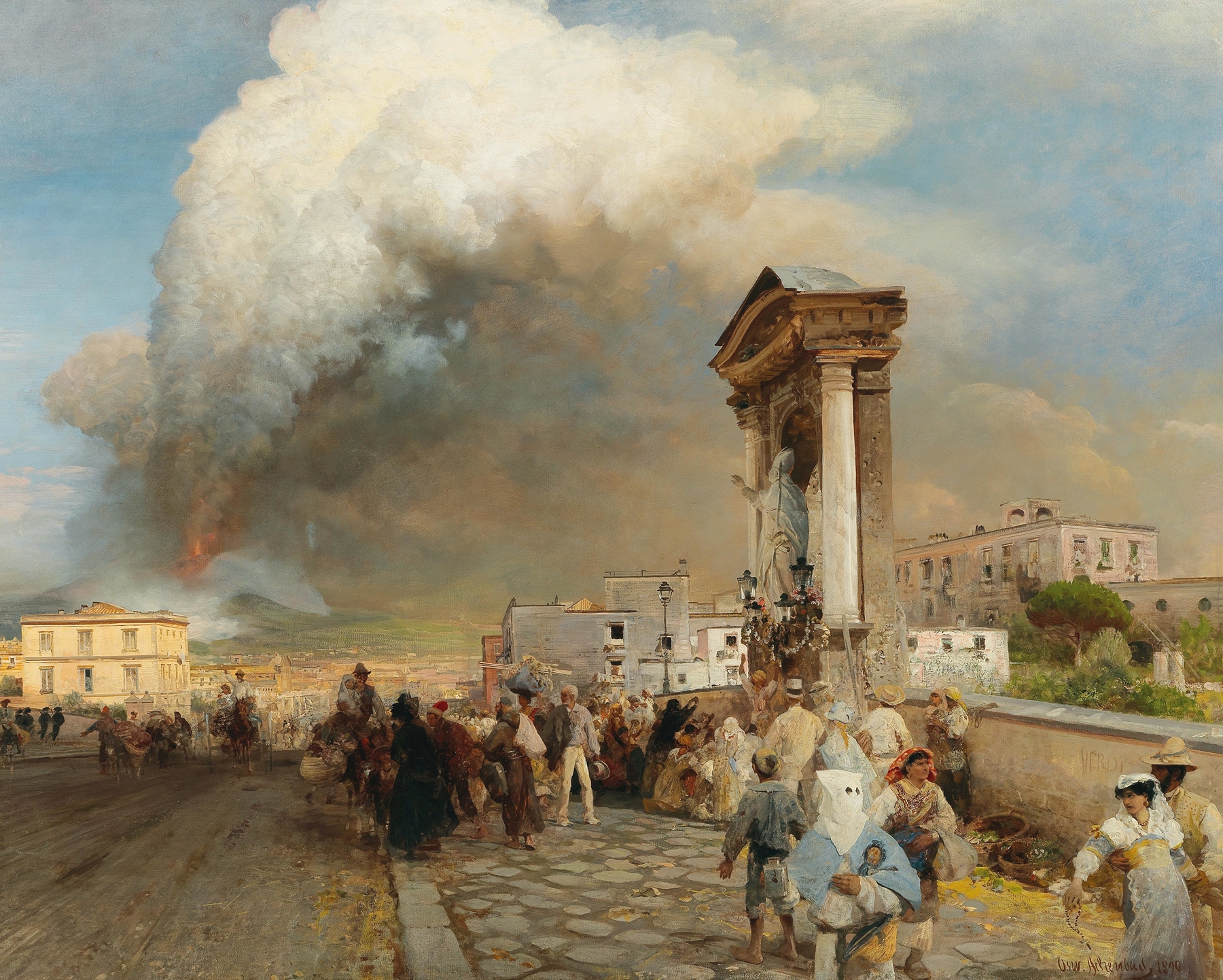
Notice how the soft brushstrokes convey the delicate dance of waves, and the clouds overhead—fluffy and white—contrast sharply with the looming silhouette of Vesuvius, hinting at both beauty and danger. Each stroke invites you to linger, as if you could step into the scene and breathe the salty air. Delve deeper, and you’ll find contrasts that resonate with emotional tension: the serene beauty of the bay juxtaposes the ominous presence of the volcano, a reminder of nature's unpredictability. The lush greenery on the cliffs speaks to life and vitality, while Vesuvius looms as a silent guardian, embodying a sense of impending drama.
This duality elicits a profound contemplation about the relationship between human aspiration and nature’s raw power, revealing an internal conflict that draws the viewer in. Achenbach painted this work in 1881 during a pivotal time in his career, living in Dusseldorf, where the Romantic movement flourished. As he engaged with the themes of landscape and light, the world around him was witnessing a shift towards Impressionism, yet his fidelity to realism remained. This piece demonstrates his unique ability to capture the sublime, reflecting both his artistic evolution and the zeitgeist of the era.