Dresden from the Right Bank of the Elbe, above the Augustus Bridge — History & Analysis
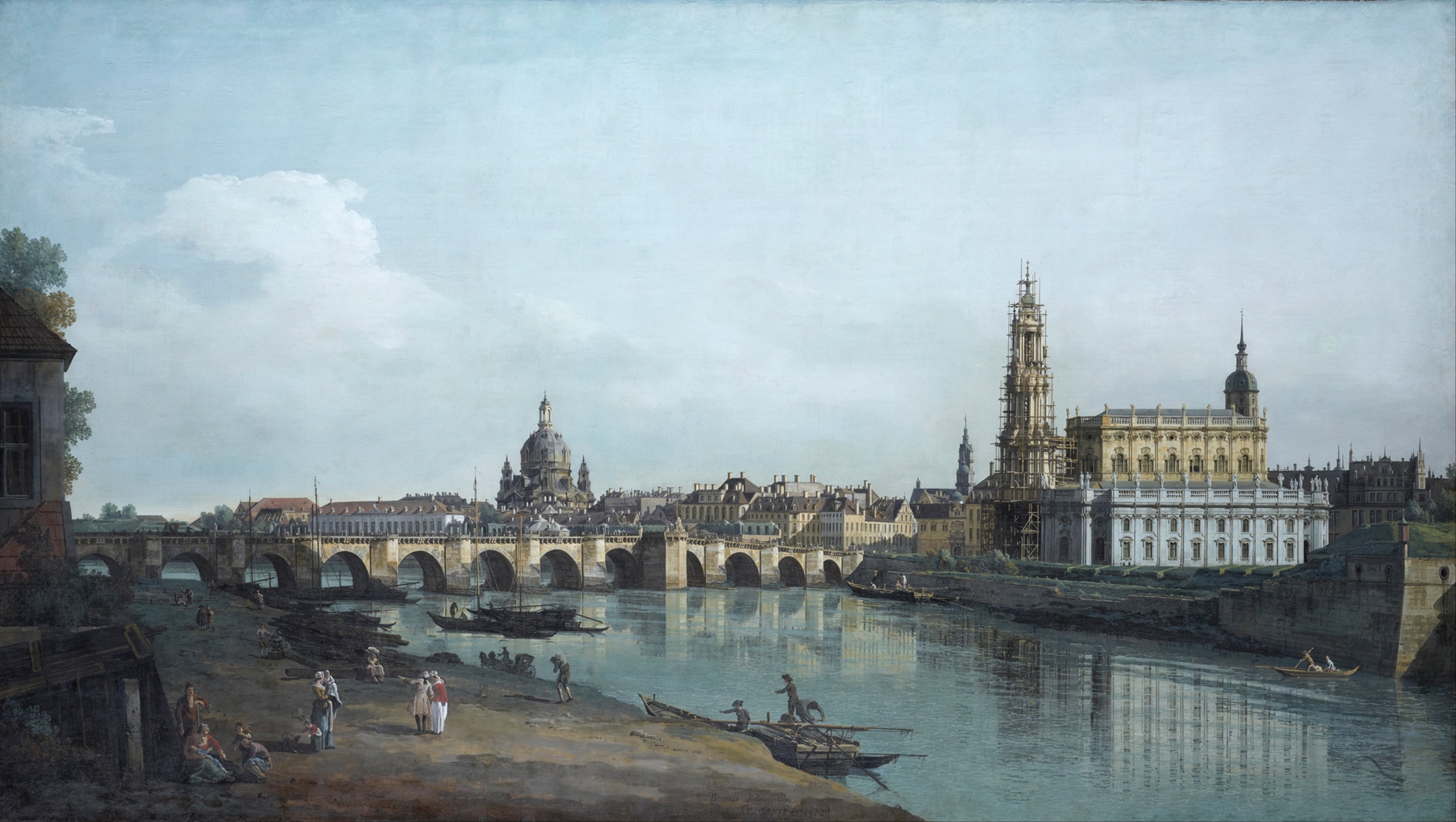
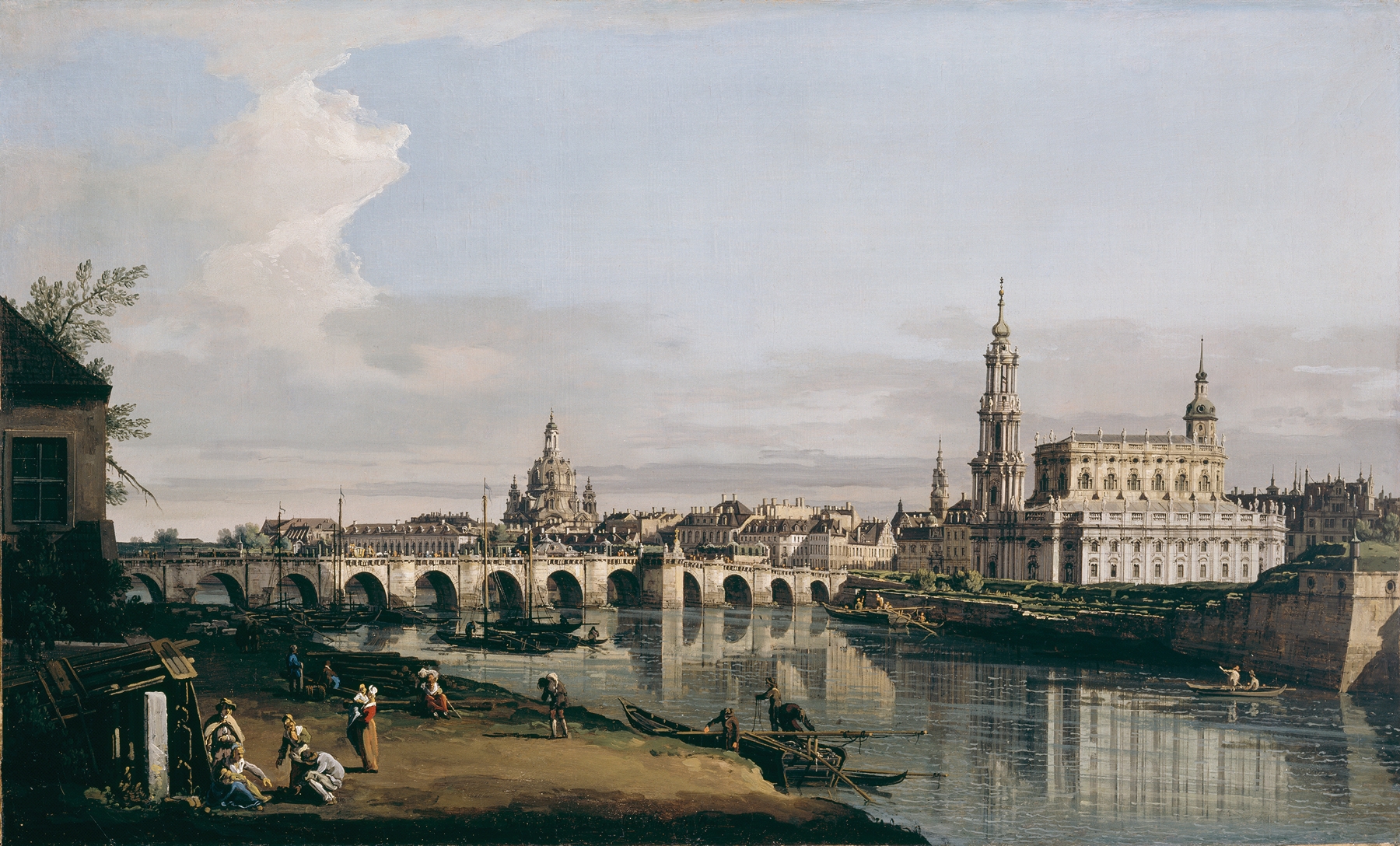
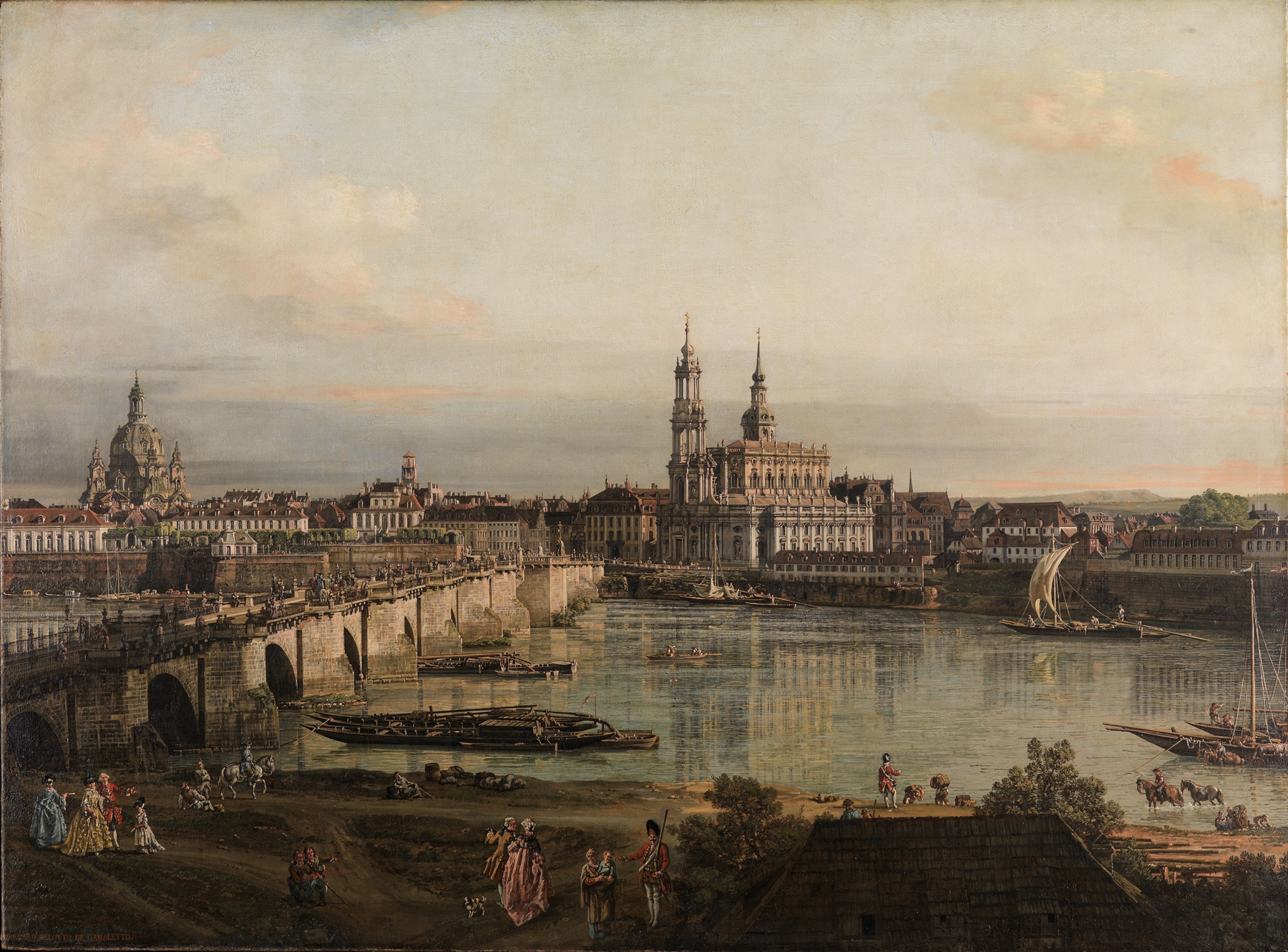
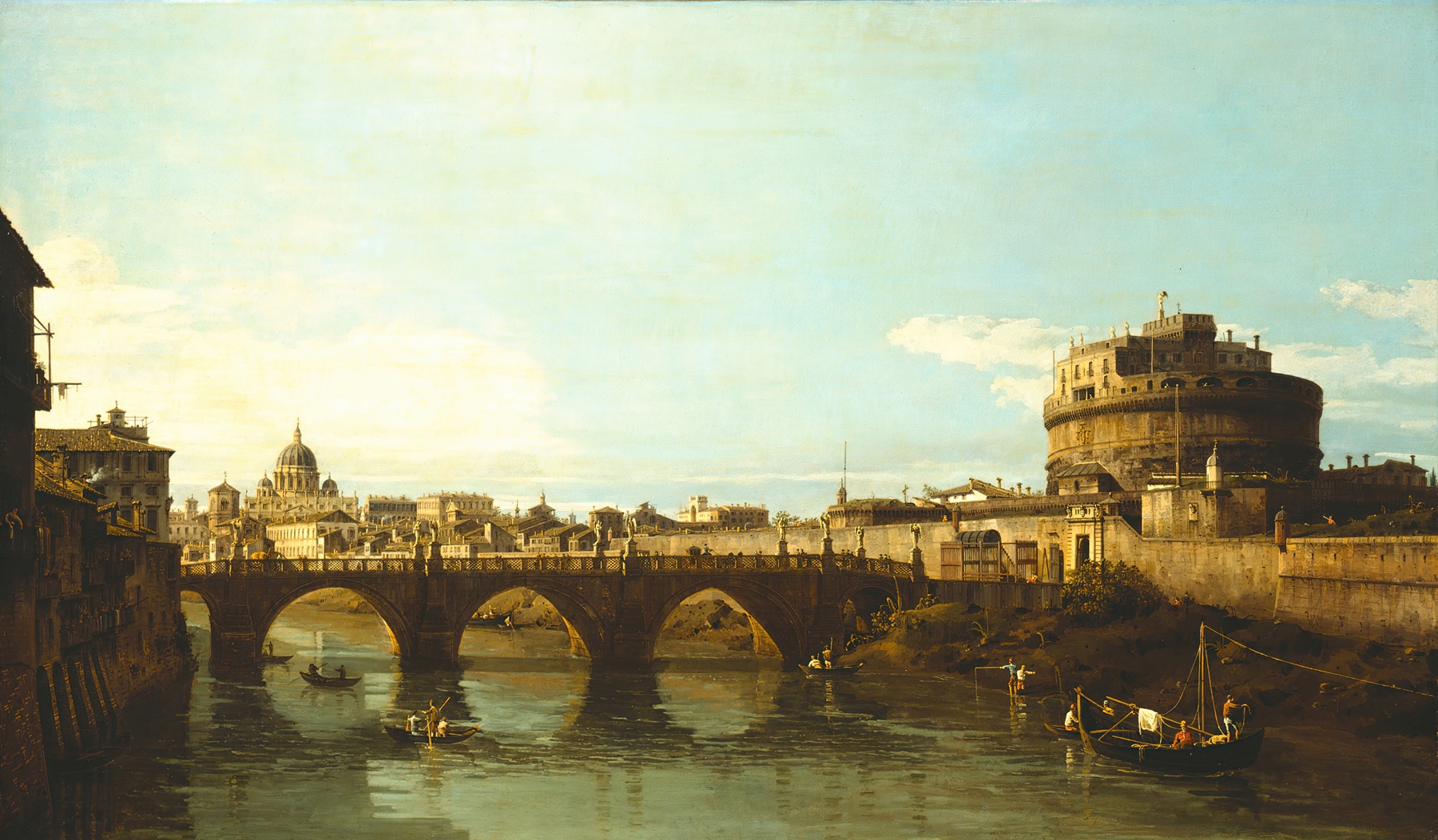
Could beauty survive in a century of chaos? In Dresden from the Right Bank of the Elbe, above the Augustus Bridge, a poignant answer resonates through graceful lines and serene expanses. Here, the city finds its expression amidst the tumult of the 18th century, suggesting a transcendence that seems almost miraculous in its elegance. Look to the left at the Augustus Bridge, its arches mirroring the gentle flow of the Elbe beneath.
Notice how the buildings rise majestically against the sky, their warm hues illuminated by a soft, golden light that bathes the scene in tranquility. The careful arrangement of the architecture leads the eye across the canvas, creating a rhythm that mimics the peaceful flow of water, while the soft clouds overhead weave a delicate narrative of light and shadow. As you delve deeper, consider the contrasts within the work: the stillness of the river against the bustling city, the balance between nature and man-made beauty. The intricacies of the architecture symbolize human ambition, while the expansive sky serves as a reminder of nature’s dominion.
Each brushstroke carries a whisper of resilience, suggesting that even amid the era's complexities, the spirit of beauty persists. Bernardo Bellotto painted this piece around 1750 while residing in Dresden, where he found himself deeply influenced by the city's Baroque architecture and the cultural currents of the time. This period was marked by both artistic flourishing and political upheaval, as Europe grappled with power struggles and the remnants of the Thirty Years' War. In this context, Bellotto's work stands as a testament to the enduring allure of art, transcending the chaos that surrounded it.