East Entrance, Room of Tiberius, Temple of Isis, Philae — History & Analysis
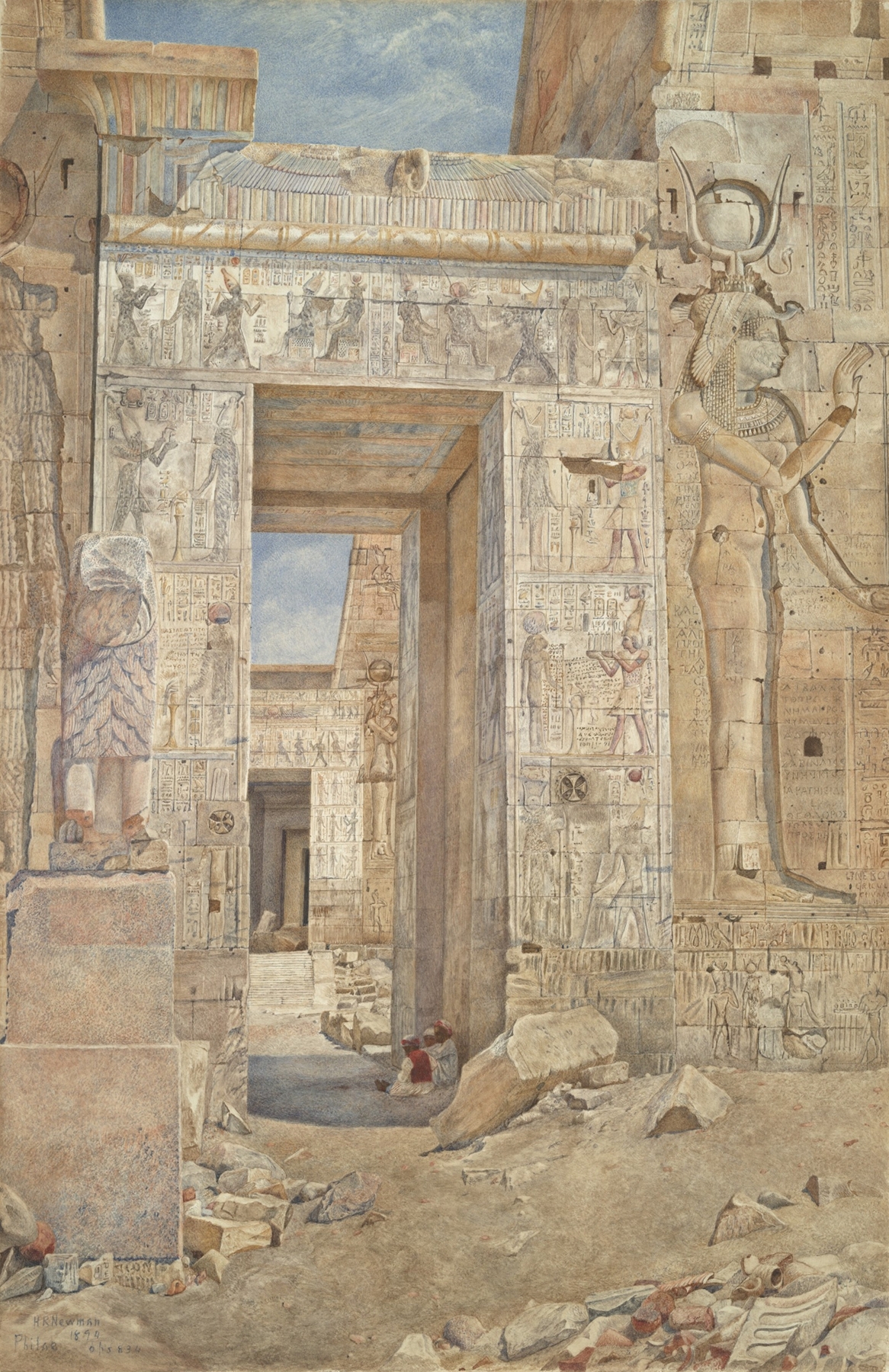
What if beauty was never meant to be finished? In the interplay of light and shadow, the viewer is invited to ponder the ephemeral nature of innocence, frozen in time yet ever elusive. Look to the left at the intricate architectural details, where the stonework seems to whisper stories from ages past. The soft, golden hues of sunlight stream through the entrance, casting delicate patterns across the cool stone floor.
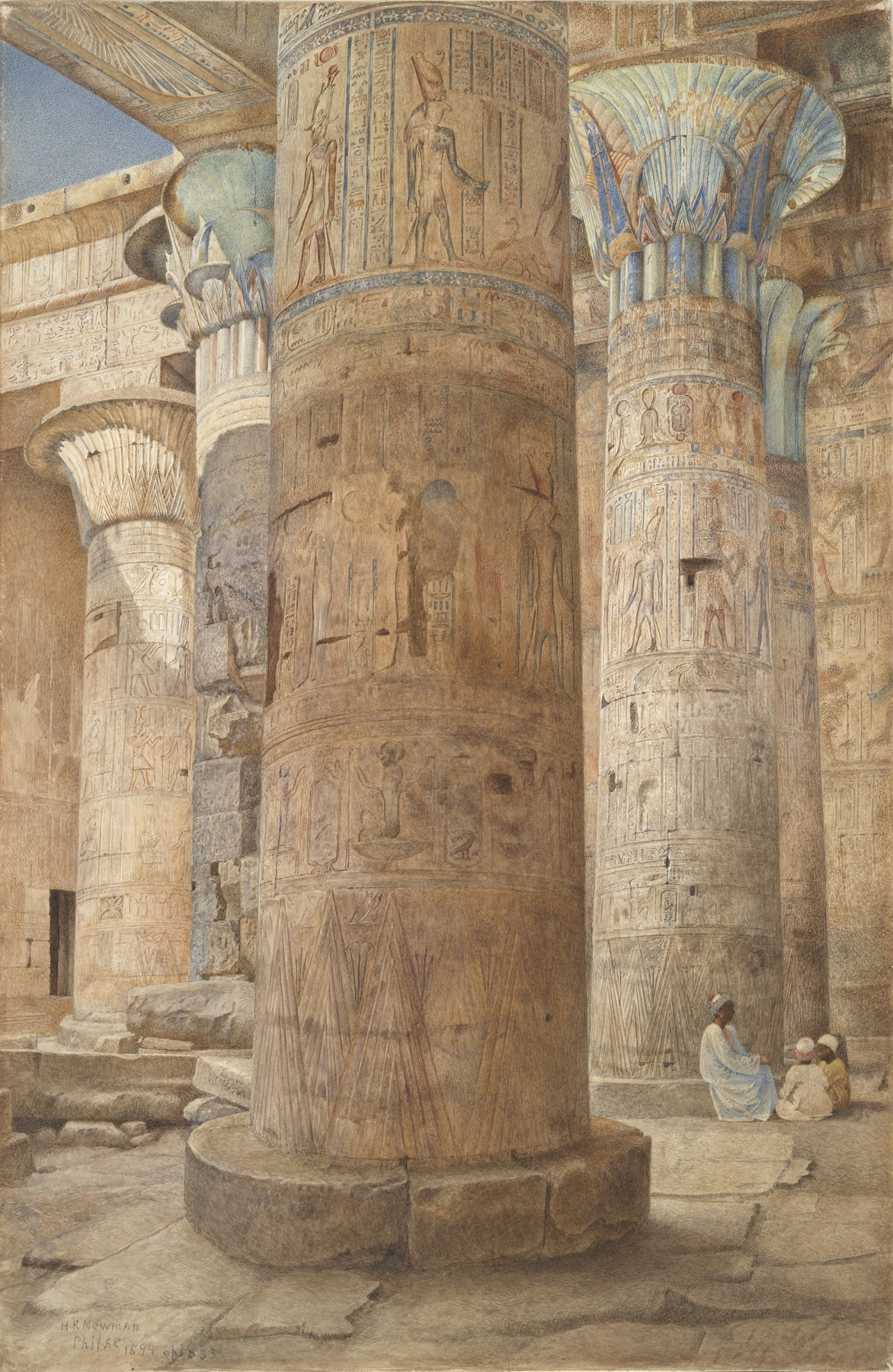
Notice how the artist has meticulously captured the texture of the weathered surfaces, each chisel mark telling a tale of both decay and endurance, illuminating the sacred space within the Temple of Isis. Within this composition, contrasts emerge: the fragile beauty of the sunlight against the steadfastness of ancient stone, the spiritual essence of the temple juxtaposed with the surrounding wilderness, which hints at nature's unrelenting march. The gentle interplay of light and dark captures a moment of serenity, suggesting that innocence, much like the temple, is both a refuge and a relic of a bygone era. Each element within the frame holds a significance that resonates with the viewer, evoking a sense of longing and nostalgia.
Henry Roderick Newman created this work in 1905, during a time when artists were increasingly drawn to the mystique of ancient civilizations. He sought to capture the haunting beauty of places steeped in history. At this period, he was living in England, where pre-Raphaelite influences merged with a growing fascination for the East. His exploration of ancient sites reflected not just a personal journey, but a broader artistic movement that sought to bridge the past with the present, capturing the innocence of beauty before it fades away.