Ein Arabisches Feldlager — History & Analysis
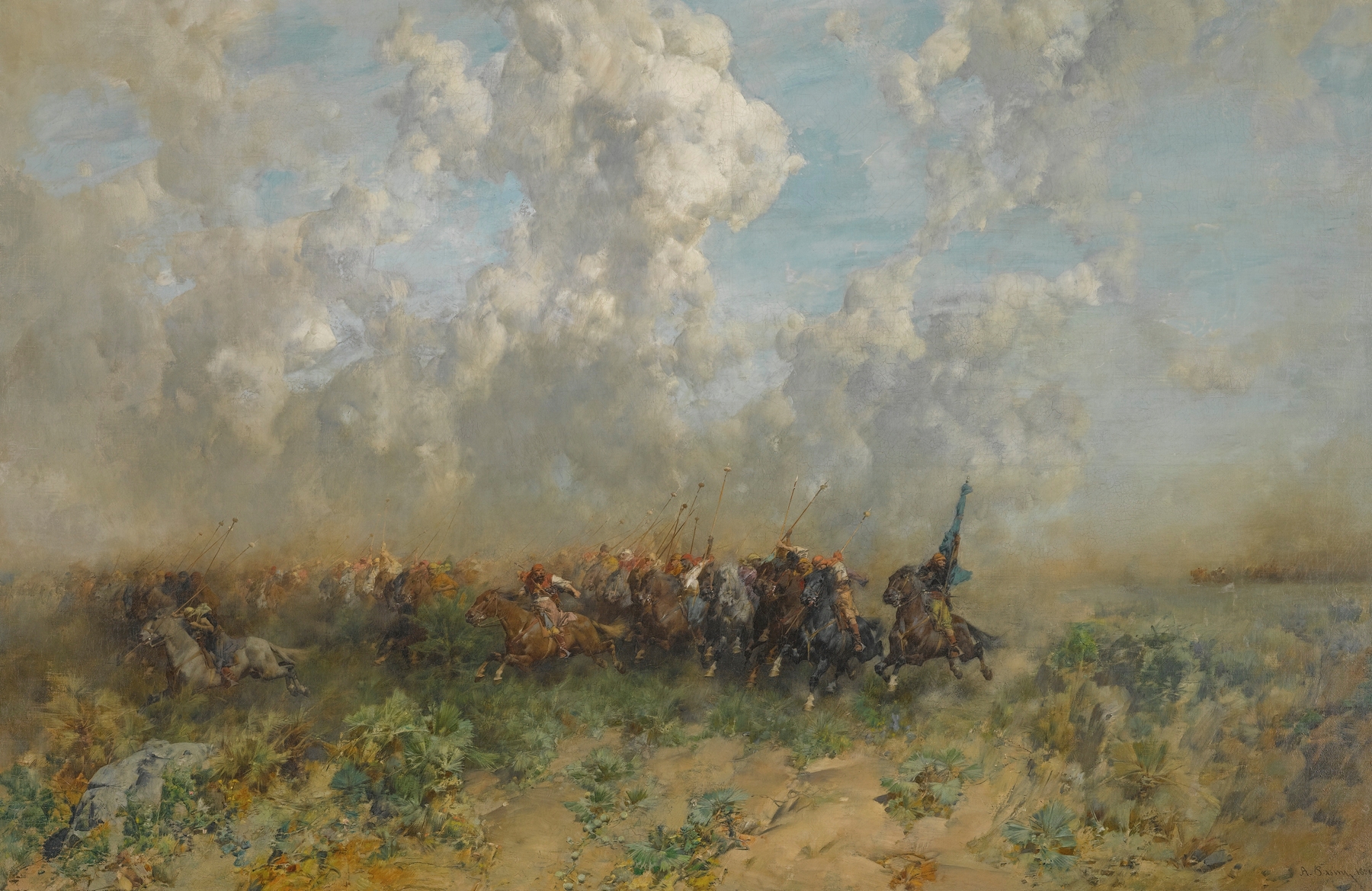
Where does light end, and longing begin? In the interplay of shadows and warmth, a haunting echo of desire lingers. Look to the center of the canvas, where a solitary campfire flickers amidst a sea of muted hues. The warm glow of the flames contrasts sharply with the cool blues and browns of the surrounding landscape, drawing the eye to the figures encircling it.
Notice how the artist expertly depicts the rough textures of the tents, suggesting the transient nature of their existence, while the gentle strokes of the sky above evoke an expansive sense of yearning, anchoring the moment in time. The juxtaposition of the flickering fire and the distant mountains embodies the tension between comfort and solitude, revealing the duality of human experience. Each figure's posture speaks of contemplation and rest, yet their gazes seem to stretch beyond the confines of the canvas, hinting at an unfulfilled desire for connection and home. The play of light and shadow further amplifies this sense of longing, creating a visual language that transcends mere representation.
Alberto Pasini, an Italian painter, created this work during a period marked by a fascination with Eastern landscapes and cultures. Though the precise date of Ein Arabisches Feldlager remains uncertain, it reflects his travels in the mid-19th century when Orientalism was a popular trend in the art world. This painting speaks to the artist's ability to blend authenticity with romanticized visions, encapsulating a moment that resonates with viewers far beyond its time.