Evening Landscape with Timber Wagon — History & Analysis
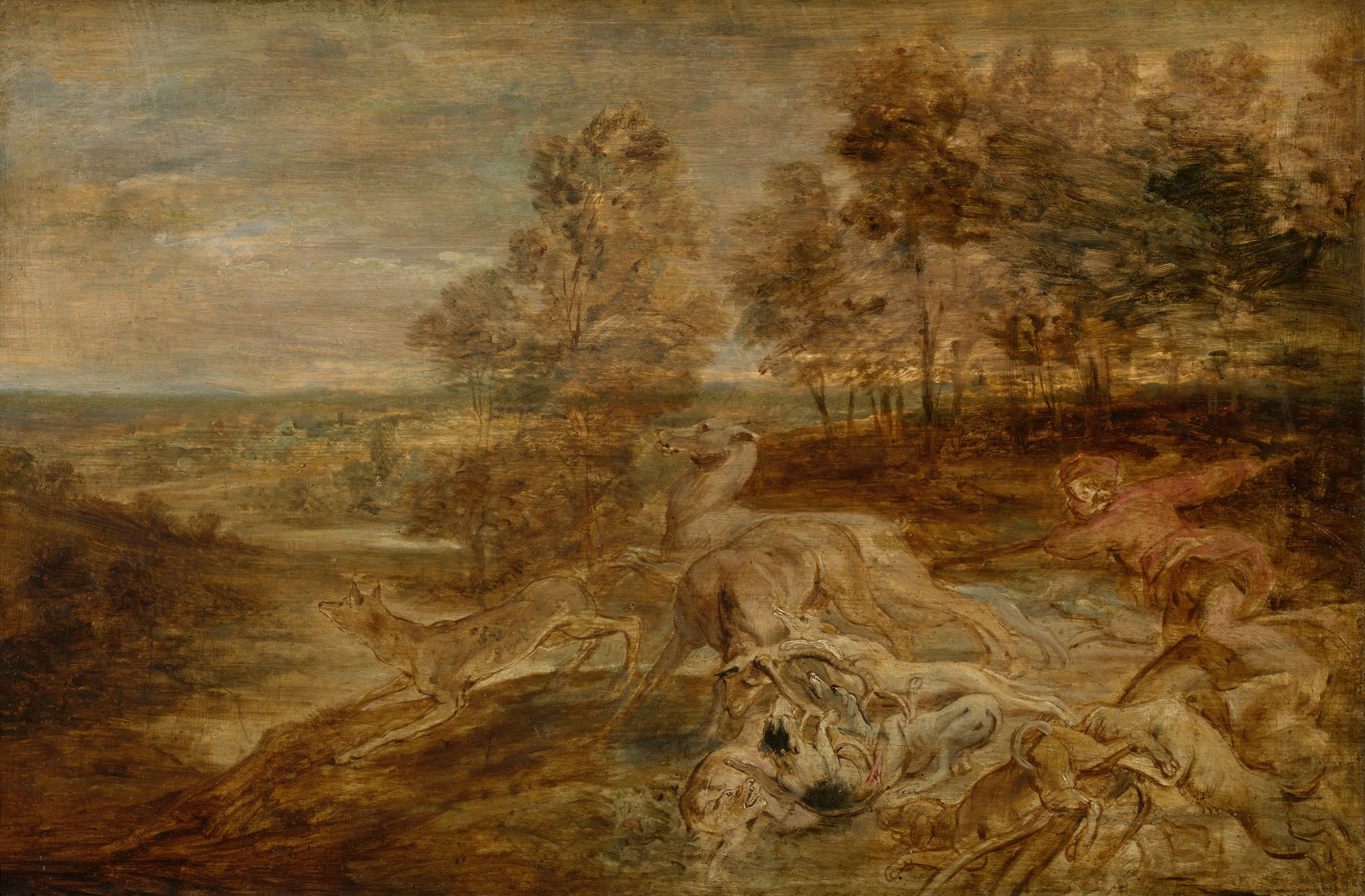
“Between color and silence, truth hides.” In the quiet solitude of dusk, landscapes whisper stories of melancholy and reflection. Rubens, with his masterful touch, invites us to linger in a moment suspended between day and night, where shadows deepen and colors soften. Look to the left at the gentle curve of the horizon, where rich greens and browns meld seamlessly into the twilight sky, kissed by hints of amber. The timber wagon rests, a solitary figure amidst the sprawling landscape, its earthy tones contrasting with the ethereal light. Notice how the trees, robust and imposing, frame the scene, directing the viewer's gaze toward the wagon, almost as if it carries the weight of solitude itself.
The brushwork is fluid yet assertive, giving the foliage a tactile quality, while the sky above transitions from vibrant to subdued, evoking a sense of longing. Beneath the serene surface lies a profound emotional tension. The wagon, emblematic of labor and journey, stands still, suggesting both a pause in life and the inevitability of passage. The muted palette conveys a wistfulness, hinting at stories left untold and dreams fading into the dusk.
Each stroke captures not just an image, but a narrative of human experience, reflecting the coexistence of beauty and melancholy inherent in nature. In the early 1630s, Rubens was at the height of his career in Antwerp, navigating the complexities of Baroque art amidst political turbulence. This period was one of transition in his personal life, marked by loss and renewal, influencing his exploration of themes like nature’s beauty intertwined with human emotion. The work serves as a testament to his ability to encapsulate the dualities of existence through the lens of the landscape genre.