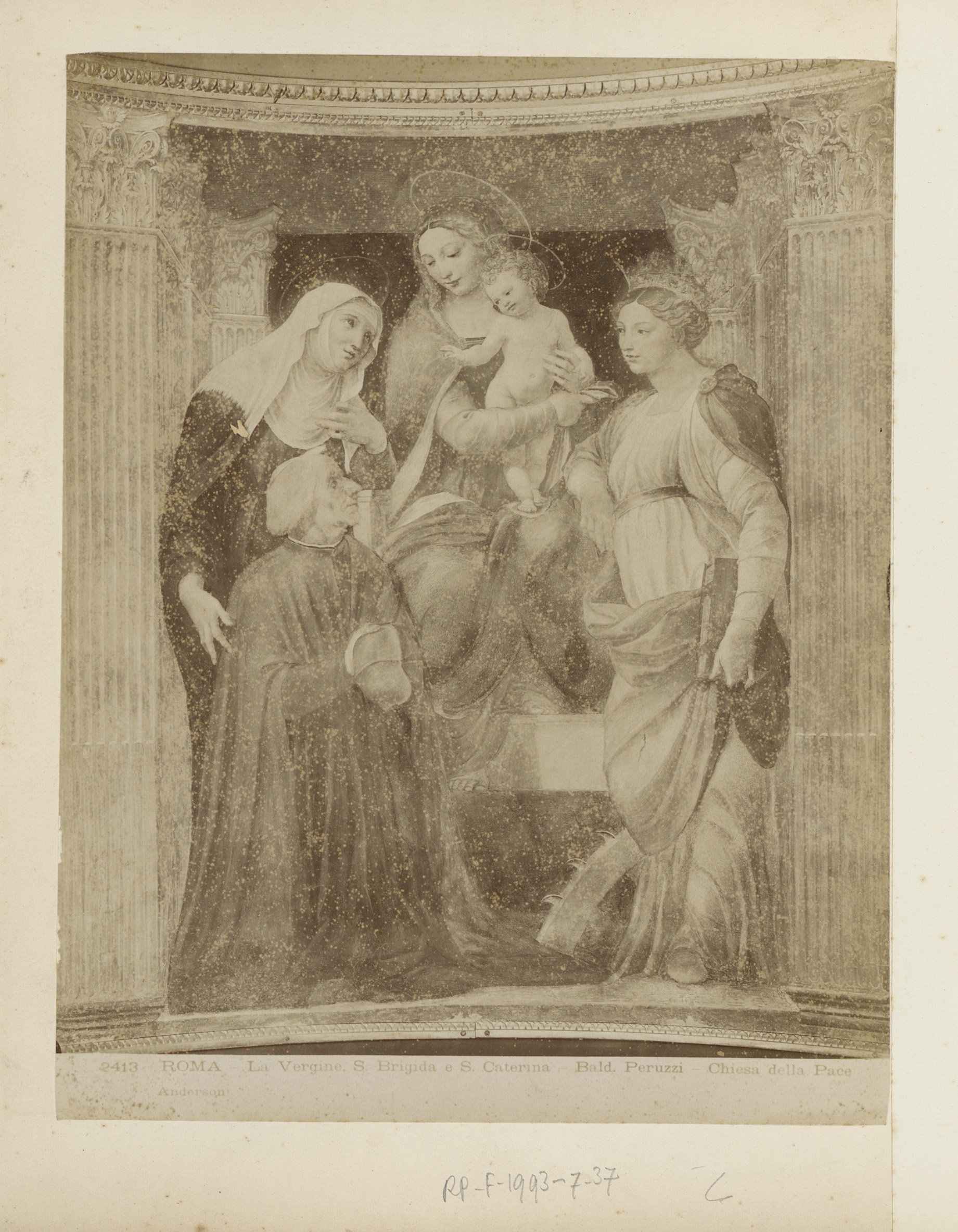
Fotoreproductie van schilderij Madonna del Rosario door Sassoferrato in de Santa Sabina te Rome — History & Analysis
“Every silence here is a confession.” The shadows stretch long and intimate, cradling the reverent figures in a delicate embrace, revealing truths hidden in the nuances of light. The interplay of darkness and illumination invites contemplation, urging the viewer to peer deeper into the psyche of the sacred. Look to the right at the serene face of the Madonna, her gaze tender yet powerful, a beacon in the dimness. Notice how the soft strokes of blue and gold flow seamlessly in her robe, creating an ethereal halo that contrasts sharply with the deep shadows surrounding her.
The composition draws the eye inward, guiding us to the rosary in her hands, each bead a heartbeat echoing through the silence of the sanctuary. Within this artwork lies a profound dialogue between light and shadow, allowing us to explore themes of faith and devotion. The chiaroscuro technique lends depth and intensity to the figures, encapsulating their spiritual struggle and the weight of their prayers.
The juxtaposition of the vibrant colors against the all-encompassing shadow speaks to the tensions of belief, hope, and the silent burdens we carry. James Anderson painted this piece between 1857 and 1875, a period of reflection for artists grappling with the transitions of the art world. Positioned amidst the echoes of Romanticism and the emerging influence of Realism, he found inspiration in sacred imagery, aiming to convey a timeless sense of spirituality that resonated with the viewer’s own journey.