Fulham — History & Analysis
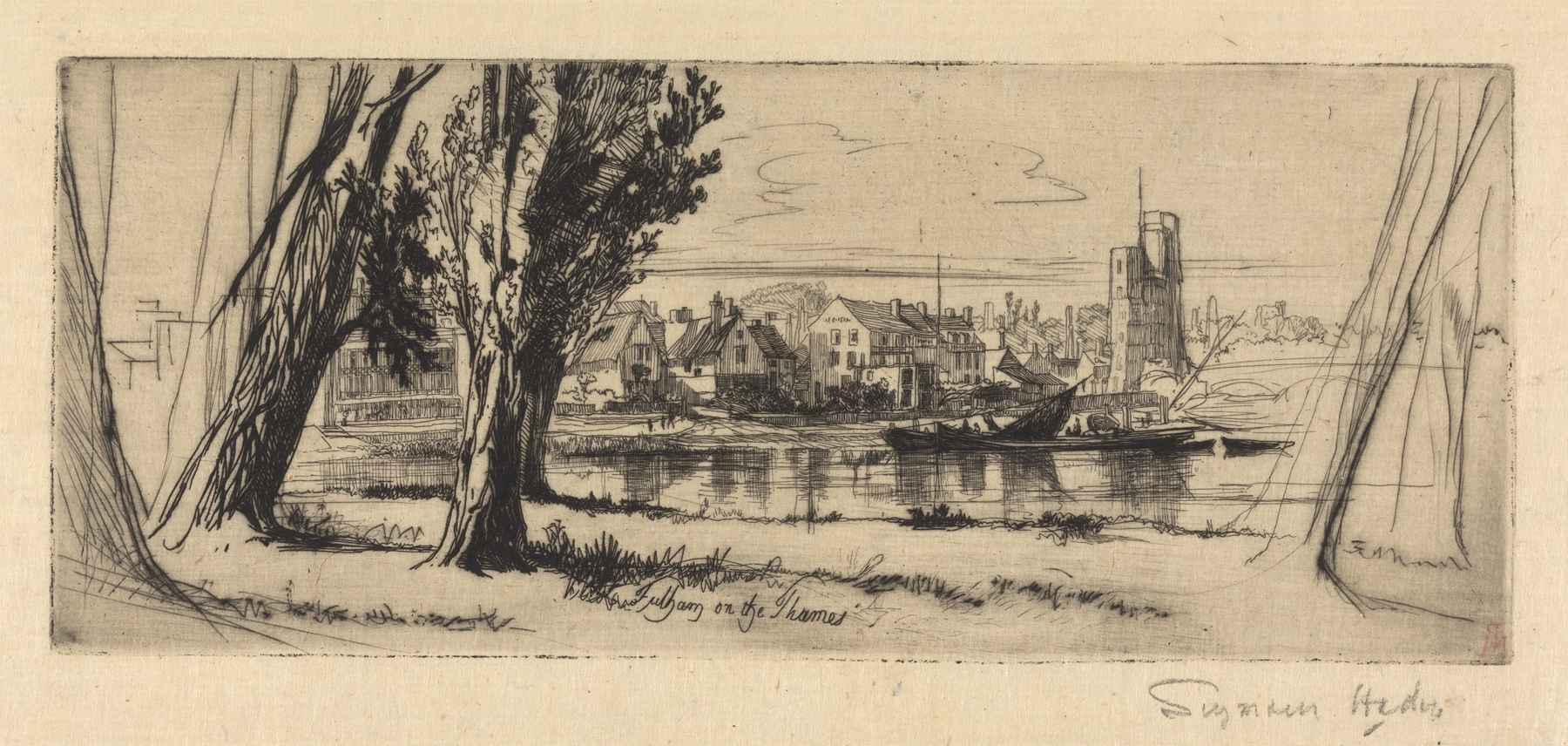
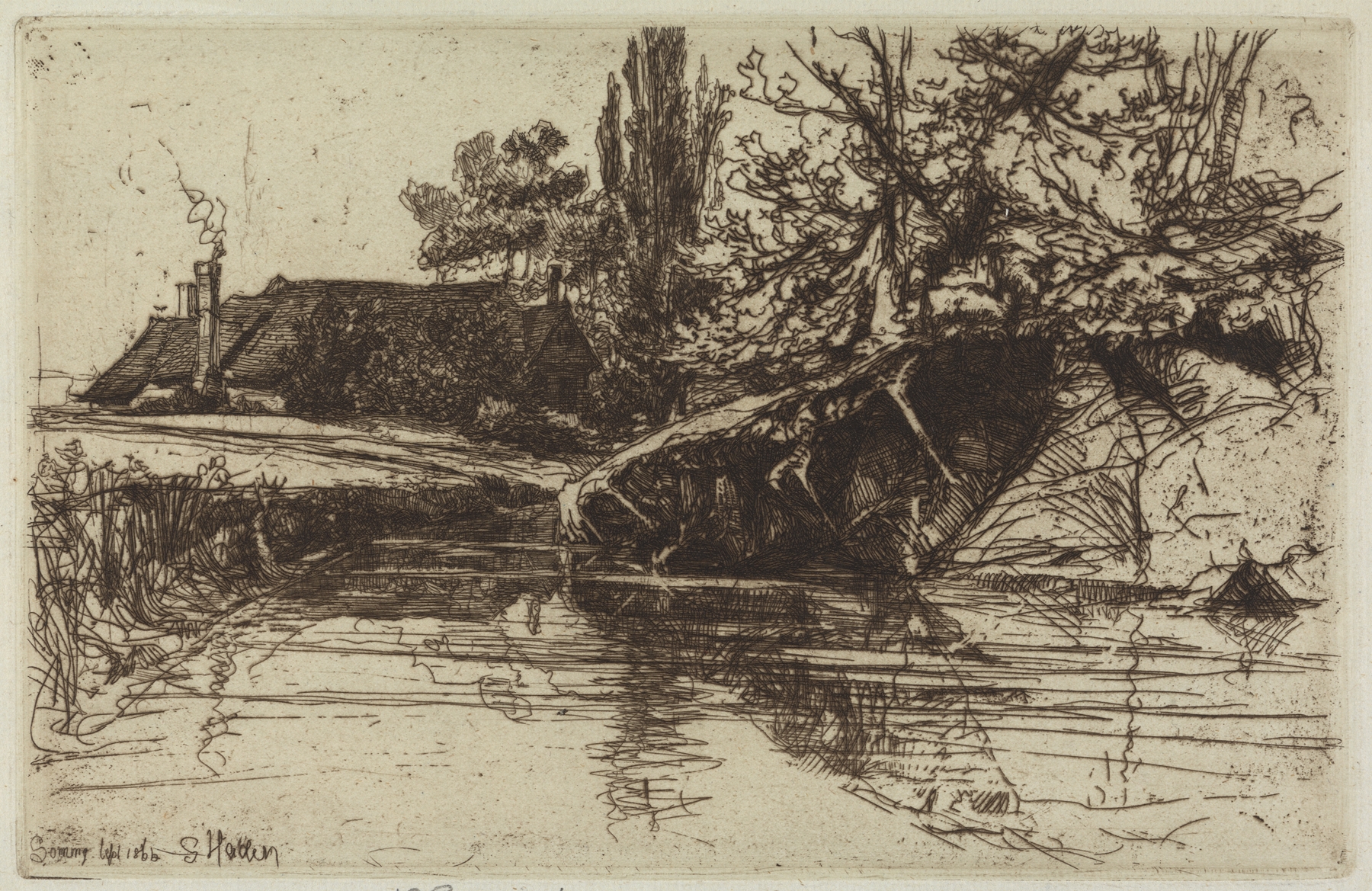
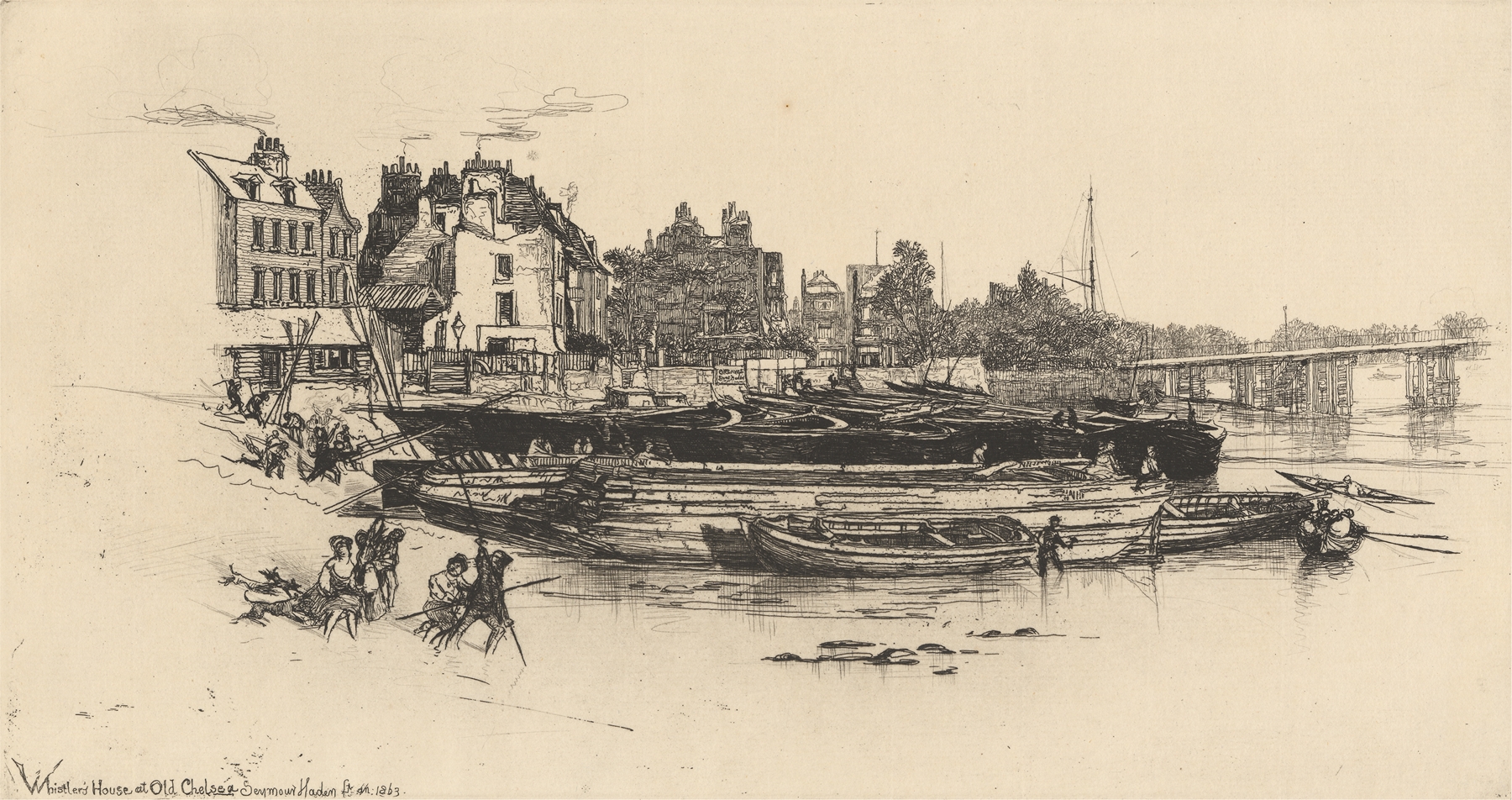
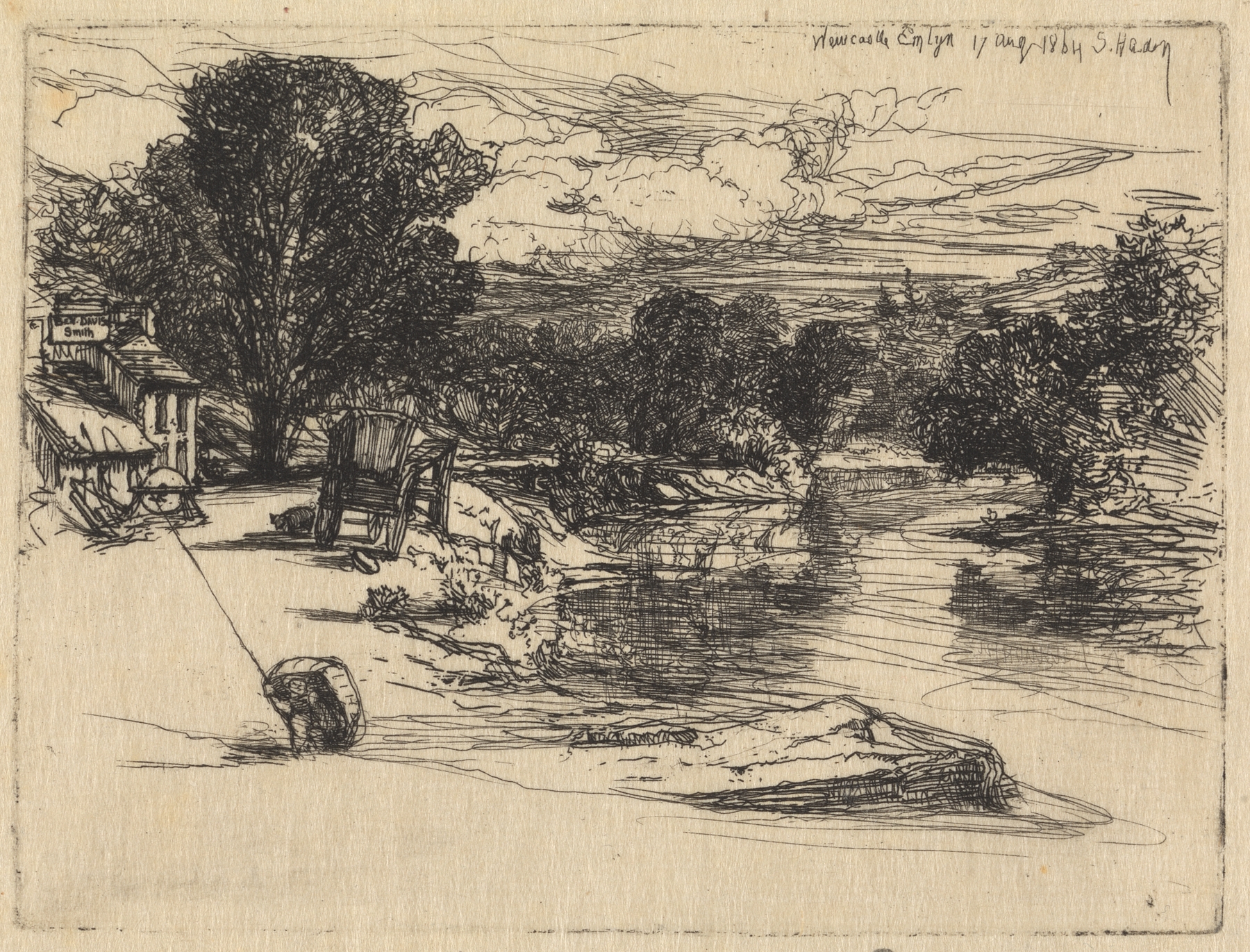
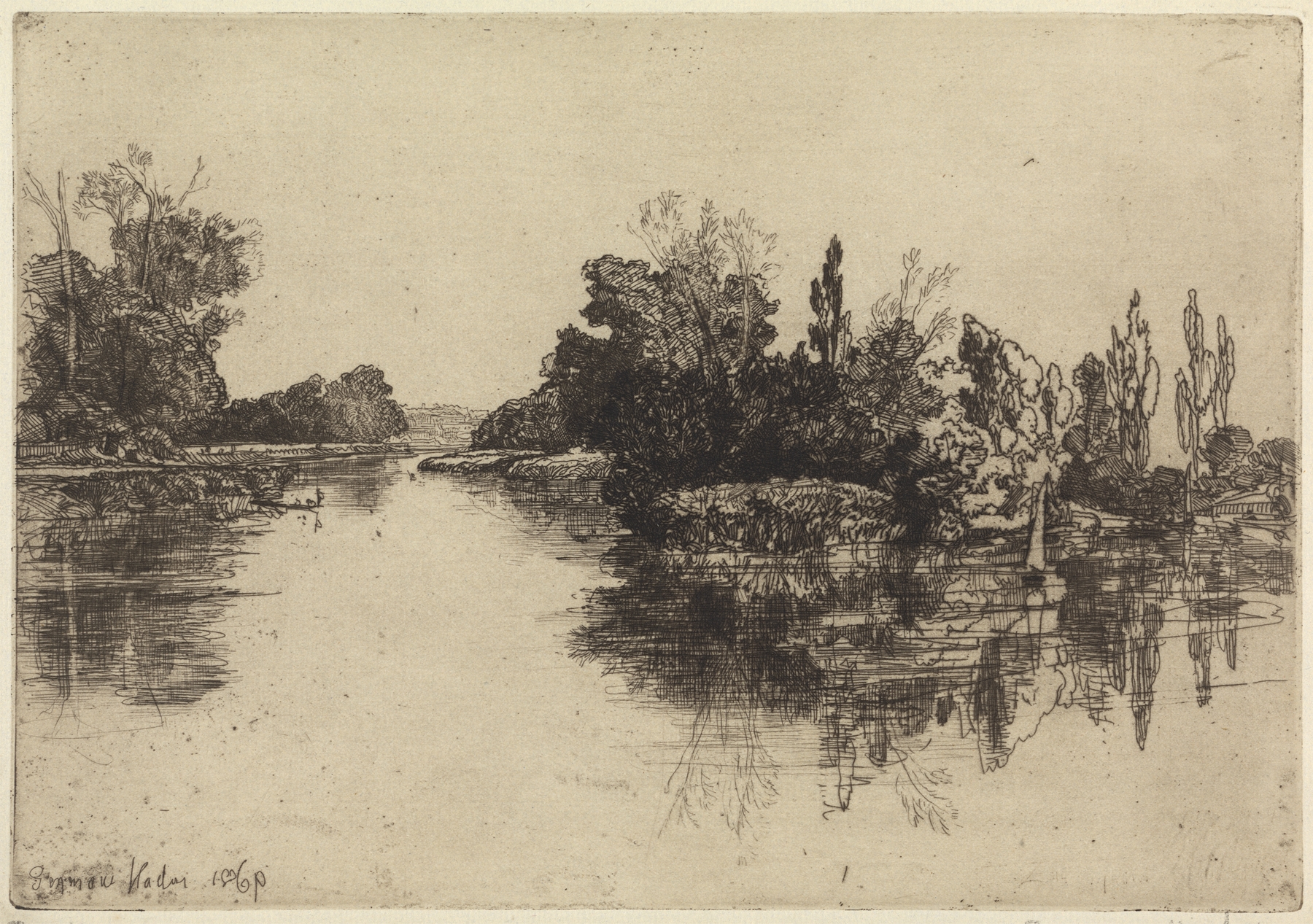
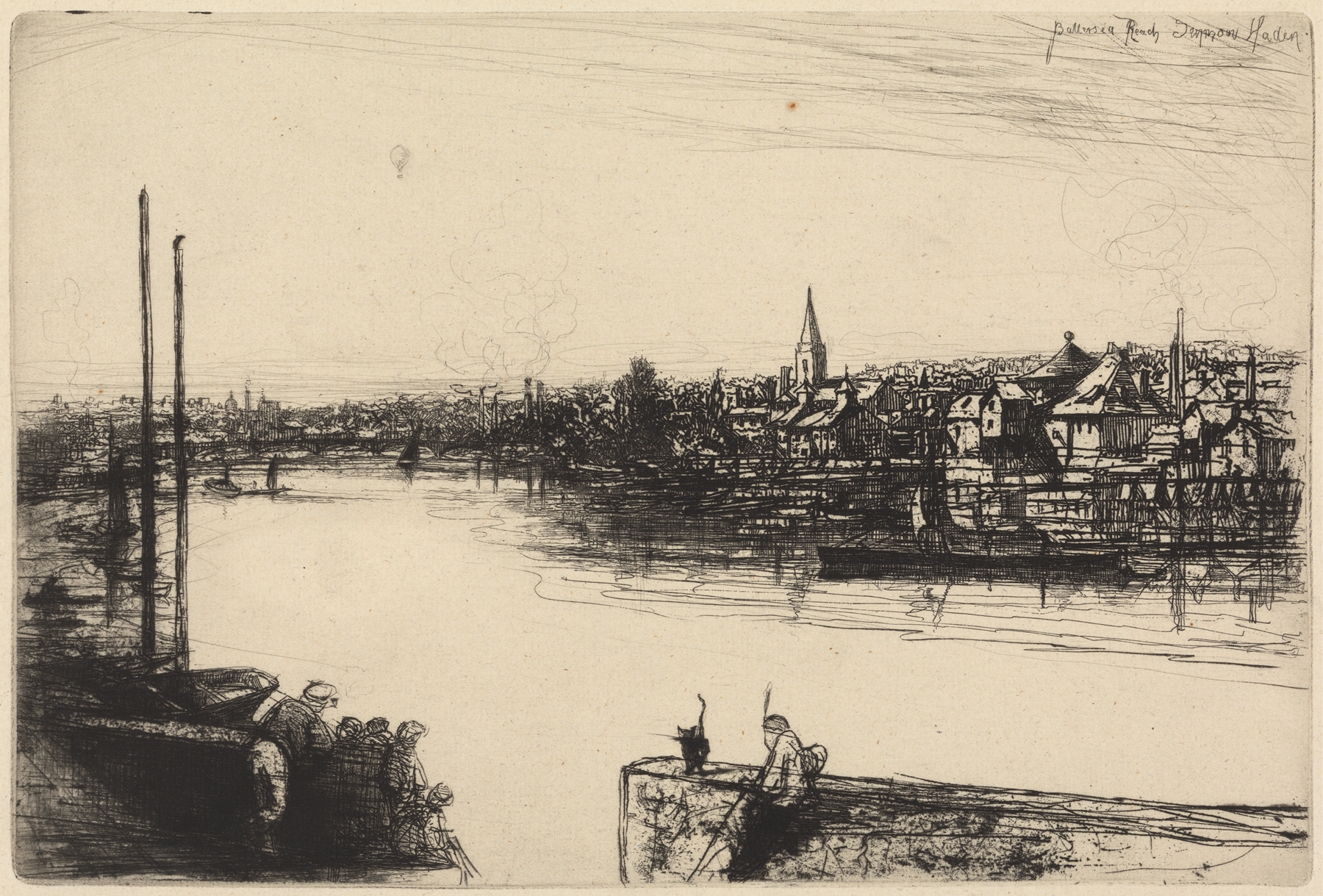
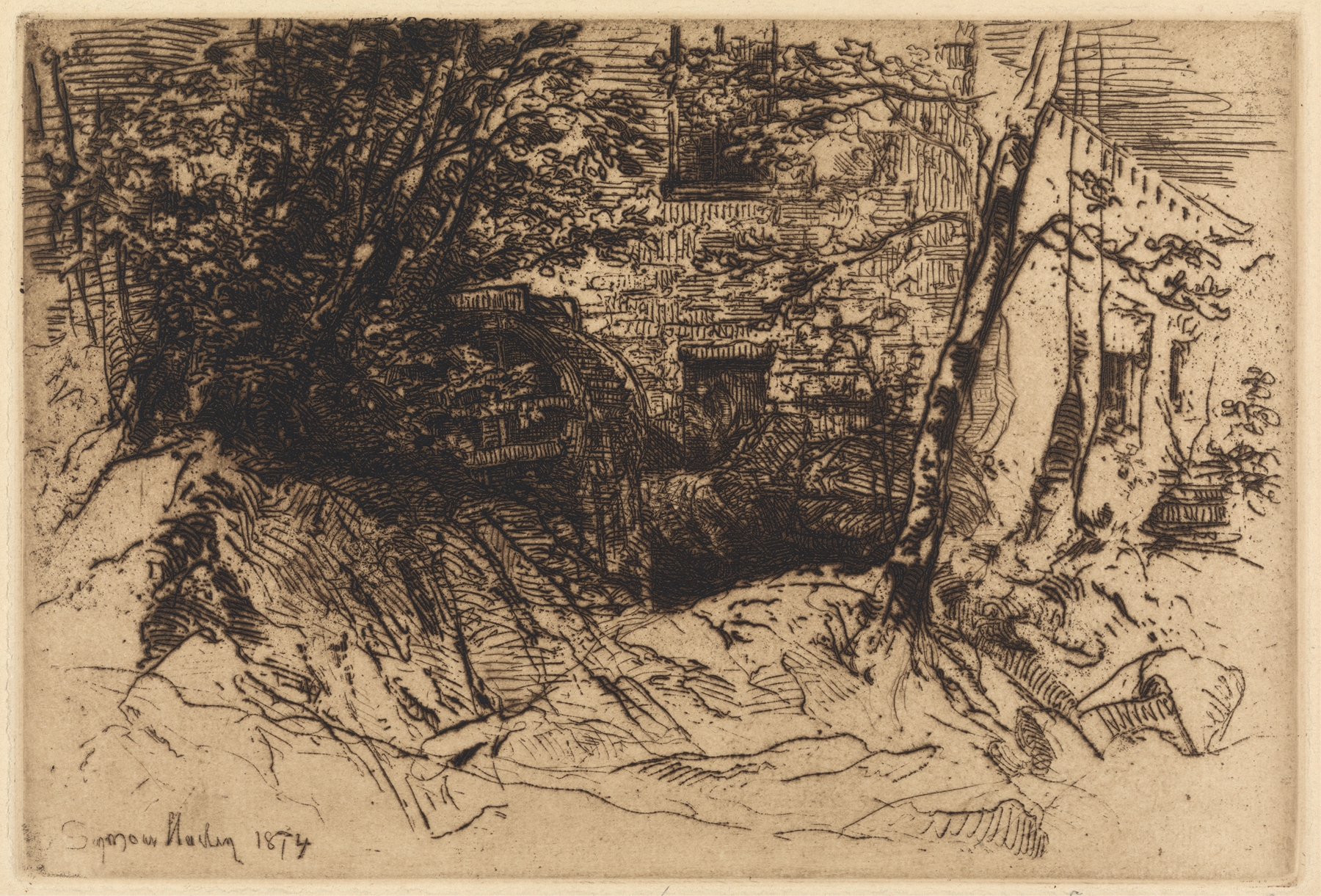
Could a single brushstroke hold eternity? In the delicate etching Fulham, silence envelops the viewer, inviting contemplation within its ephemeral beauty. Begin by focusing on the intricate details in the foreground. Notice how the soft lines and subtle shading depict the rippling waters of the Thames, reflecting a gentle, muted light. Haden’s technique captures the essence of movement with minimal yet deliberate strokes, drawing your gaze along the curving banks.
The trees arch gracefully, their wispy leaves suggestive of a breeze that only the viewer can feel, creating a tranquil harmony between nature and the water. As you delve deeper, consider the contrast between the stillness of the scene and the life teeming just beyond its borders. The muted tones evoke a sense of nostalgia, reflecting a moment frozen in time, while the absence of human presence whispers of solitude. Each line seems to resonate with unspoken stories—echoes of lives lived in the nearby town of Fulham.
The interplay of light and shadow suggests the passage of time, hinting at the transient nature of both beauty and existence. Francis Seymour Haden created Fulham after 1858, during a period of personal transition as he embraced etching as a refined art form. While living in London, he was part of a growing movement that sought to elevate printmaking to the status of painting. This work reflects not only his technical mastery but also his desire to capture the quiet moments that slip through the cracks of modern life.