Haus in Bosco — History & Analysis
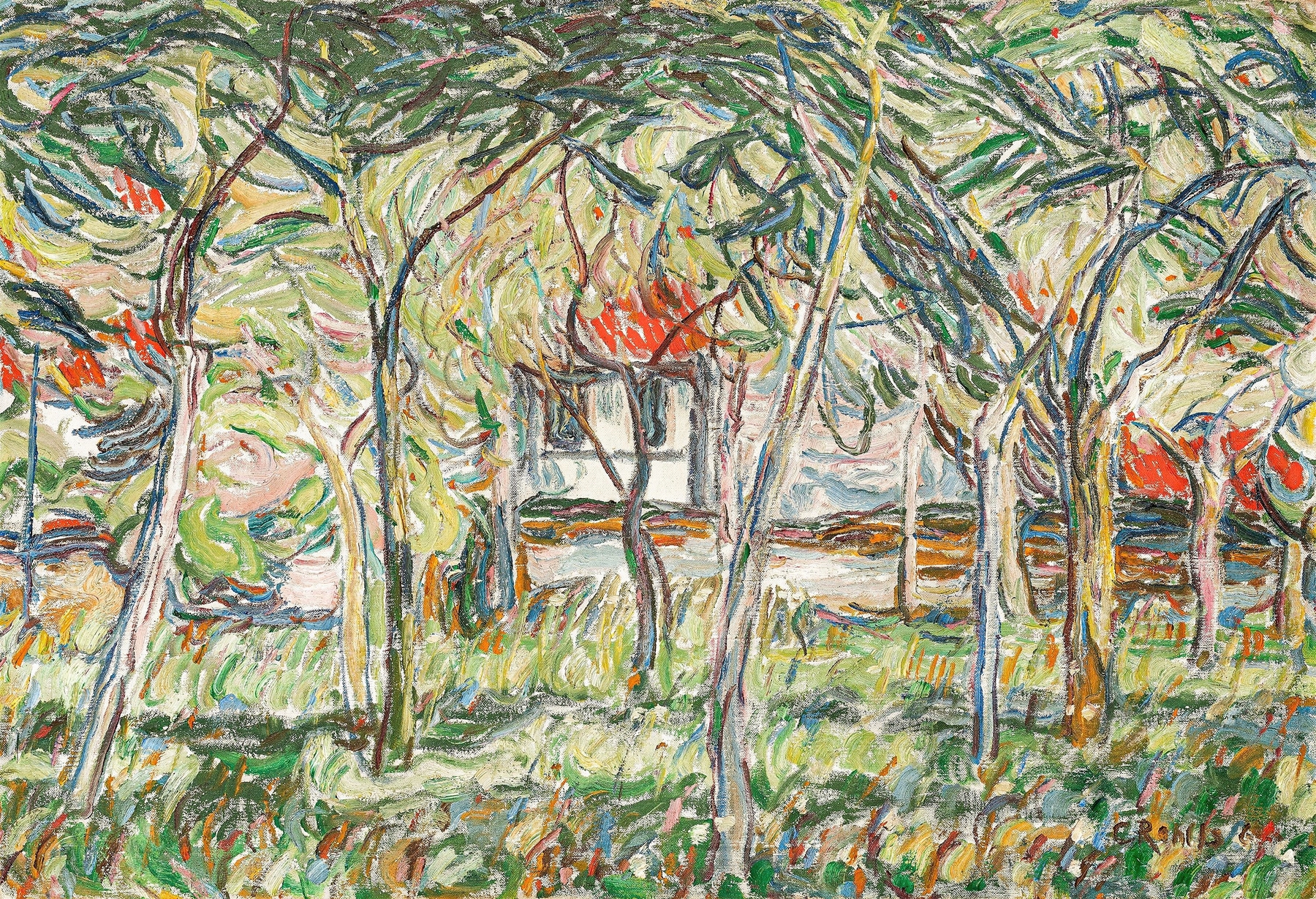
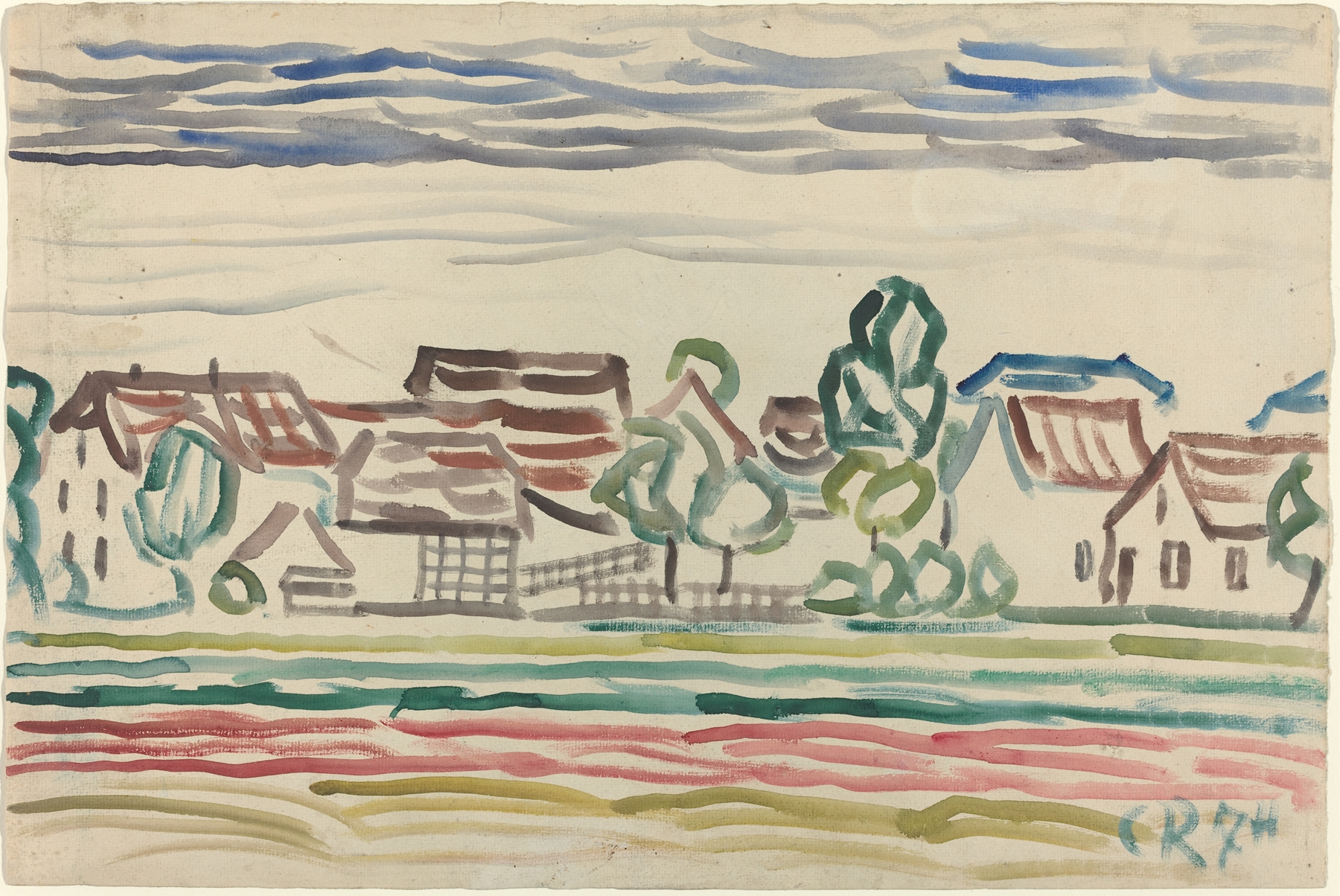
What secret hides in the quiet of the canvas? In Haus in Bosco, unease lurks beneath the surface, whispering of violence veiled by tranquility. Look to the left at the stark contrast between the deep shadows and the bright, vibrant greens that define the clearing. The house, nestled among the trees, stands as a refuge, yet its very presence feels like a confrontation between civilization and nature.
Notice how the angular lines of the structure clash with the soft, organic shapes of the forest, suggesting a tension that invites deeper scrutiny. Rohlfs employs bold brushstrokes and a palette that oscillates between serenity and fervor, drawing the viewer into a world that is both inviting and potentially perilous. The densely packed foliage evokes a sense of confinement, as if the house is encircled by a watchful, oppressive force. The vibrant greens seem almost too alive, pulsating with energy that could erupt into chaos at any moment.
This duality prompts contemplation on the fragility of peace; within this idyllic setting lies an undercurrent of hidden conflict and the potential for violence, reminding us that tranquility often carries its own shadow. Created in 1933, this work reflects Rohlfs' exploration of expressionism during a time of upheaval in Germany. As the rise of the Nazi regime began to reshape the cultural landscape, artists like him sought to convey the emotional truths of their environments. This painting, therefore, not only captures a moment of beauty but also embodies the tension and unease of a world teetering on the brink of despair.