Het martelaarschap van de Heilige Laurentius — History & Analysis
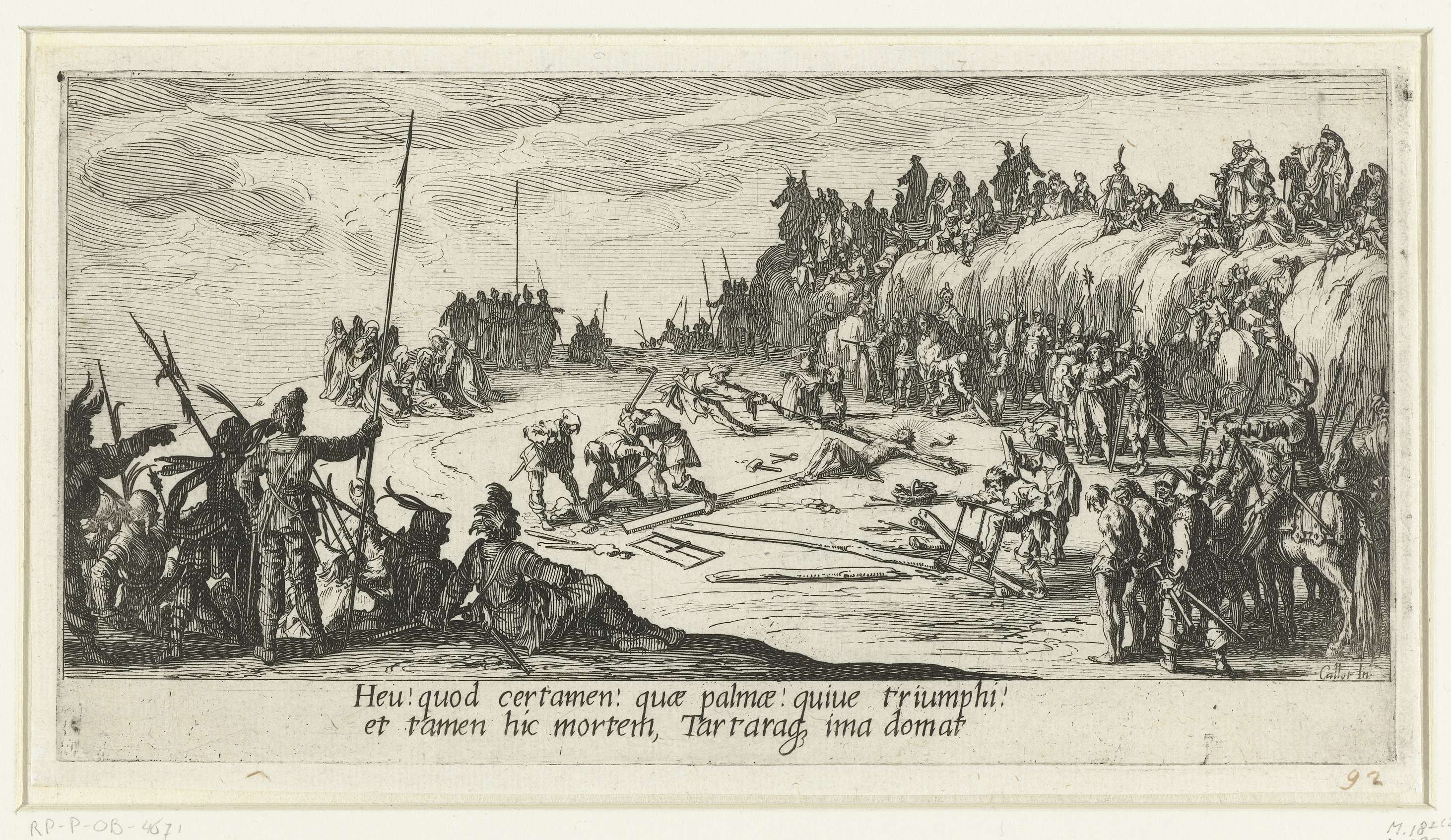
Can beauty exist without sorrow? In Het martelaarschap van de Heilige Laurentius, Jacques Callot invites us to explore the delicate balance between agony and aesthetic in a moment frozen in time. Look to the center of the composition, where the figure of Saint Lawrence is depicted with a haunting mixture of grace and torment. Callot's intricate lines draw the viewer’s gaze to the saint’s expressive face, revealing a depth of inner strength despite the horror surrounding him.
The chiaroscuro technique accentuates the dramatic interplay of light and shadow, emphasizing the anguish etched into his features while the surrounding figures remain cloaked in darkness. Within this striking scene lies a profound commentary on suffering and martyrdom. The flames that lick at Lawrence's body appear almost ethereal, juxtaposed against the raw brutality of his fate. Each detail, from the contorted forms of the onlookers to the delicate flame patterns, serves to highlight the obsessive admiration for sacrifice that permeates both the sacred and the profane.
Callot masterfully captures the tension of devotion and despair, inviting viewers to ponder the duality of beauty and pain. In 1626, Callot was deeply engaged in the Baroque art movement, having just returned to Nancy after a period in Florence. This work emerges against a backdrop of religious fervor and personal turmoil, reflecting the artist’s fascination with the macabre and the complexities of human emotion. At this time, the portrayal of saints and martyrdom was a significant theme in European art, and Callot’s interpretation adds a unique, dynamic perspective to the dialogue surrounding faith and suffering.