Hünengrab in der Heide — History & Analysis
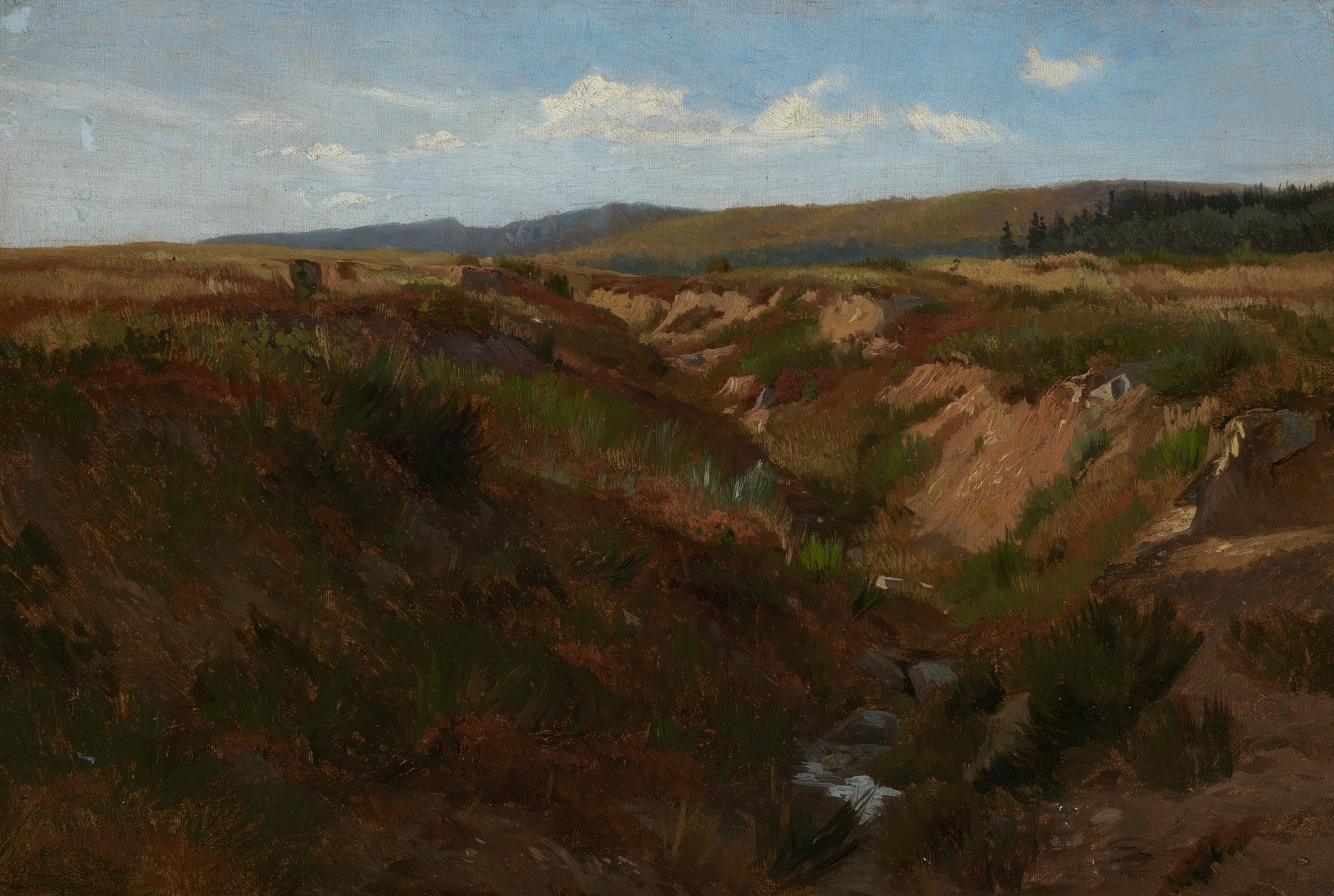
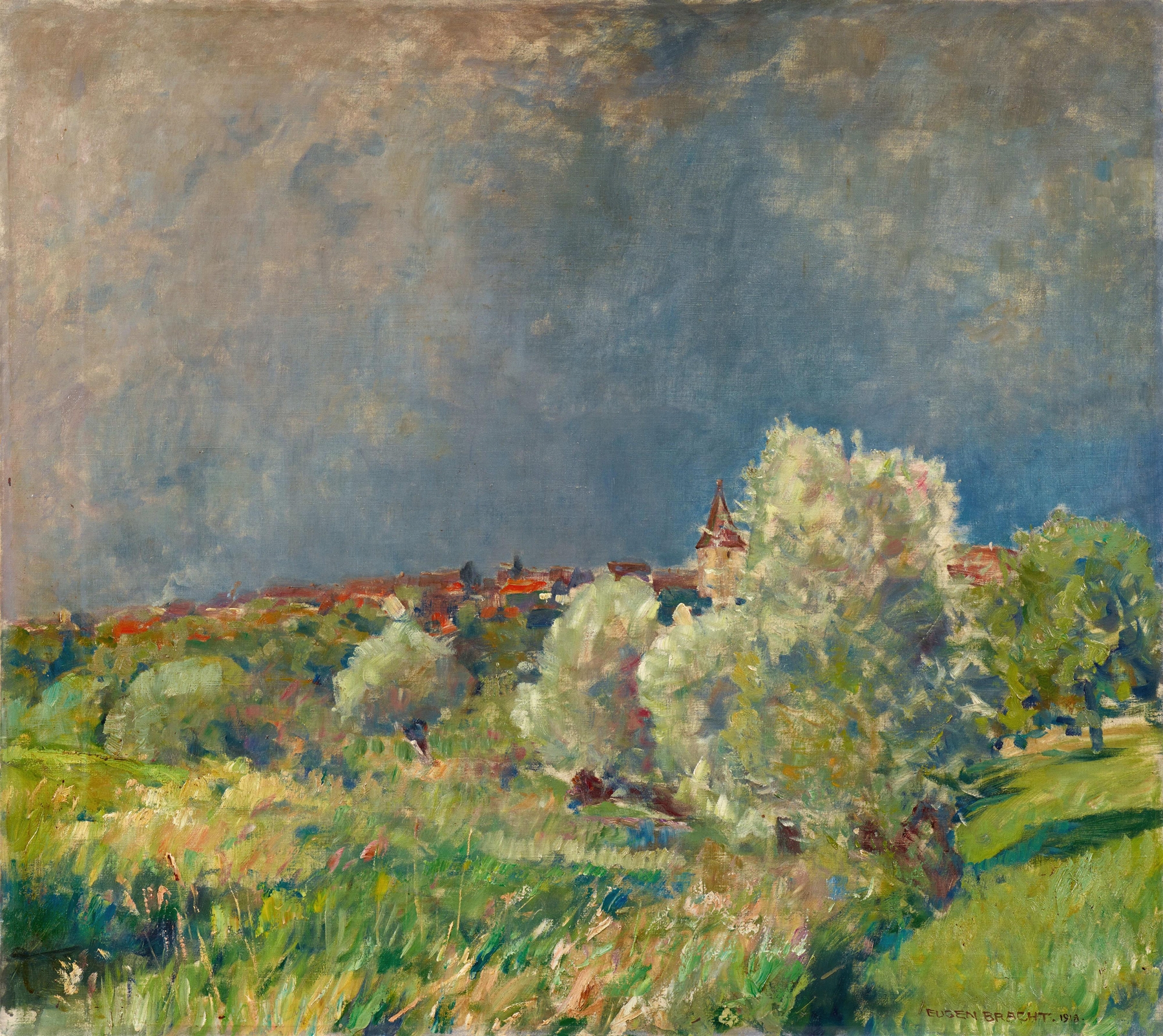
Where does light end, and longing begin? In Hünengrab in der Heide, a quiet expanse beckons, whispering of history and the unseen forces that shape our existence. Look to the center of the canvas, where a solitary burial mound rises, draped in the soft hues of dawn. The artist captures the subtle interplay of light and shadow, with warm tones illuminating the earth while cool colors recede into a misty background. Notice how the grasses sway gently, their delicate forms suggesting both life and decay.
The distant landscape, painted in muted greens and blues, recedes into the horizon, creating a sense of depth and isolation. Bracht’s choice of a burial site—a monument to time and memory—evokes a profound emotional tension. The mound, though a symbol of death, is embraced by nature’s vibrant palette, hinting at the cycle of life that persists beyond the grave. The horizon line, low and expansive, accentuates the enormity of existence, drawing the viewer into a shared contemplation of mortality and longing.
The stillness of the scene invites introspection, suggesting that within the void of loss lies the potential for remembrance and connection. In 1878, Eugen Bracht was situated within the burgeoning German Romantic movement, characterized by a return to nature and introspective themes. Painting in his studio in Berlin, Bracht drew inspiration from the surrounding landscapes and the remnants of Germany’s prehistoric past. At this time, there was a growing interest in the relationship between humanity and the natural world, as well as a sense of nostalgia for ancient traditions, reflected poignantly in this work.