Blick auf Herzogenhorn und Kaiserberg — History & Analysis
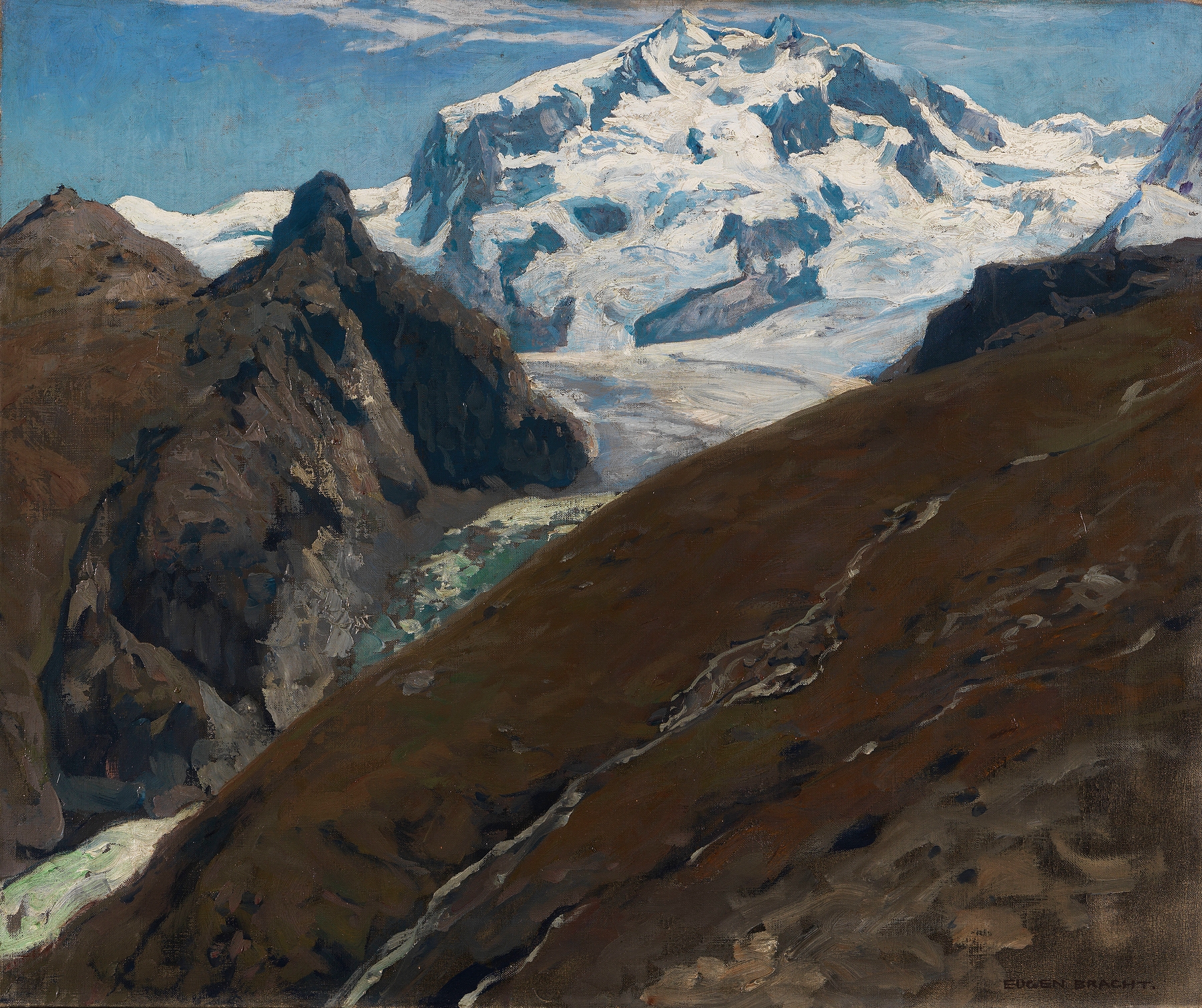
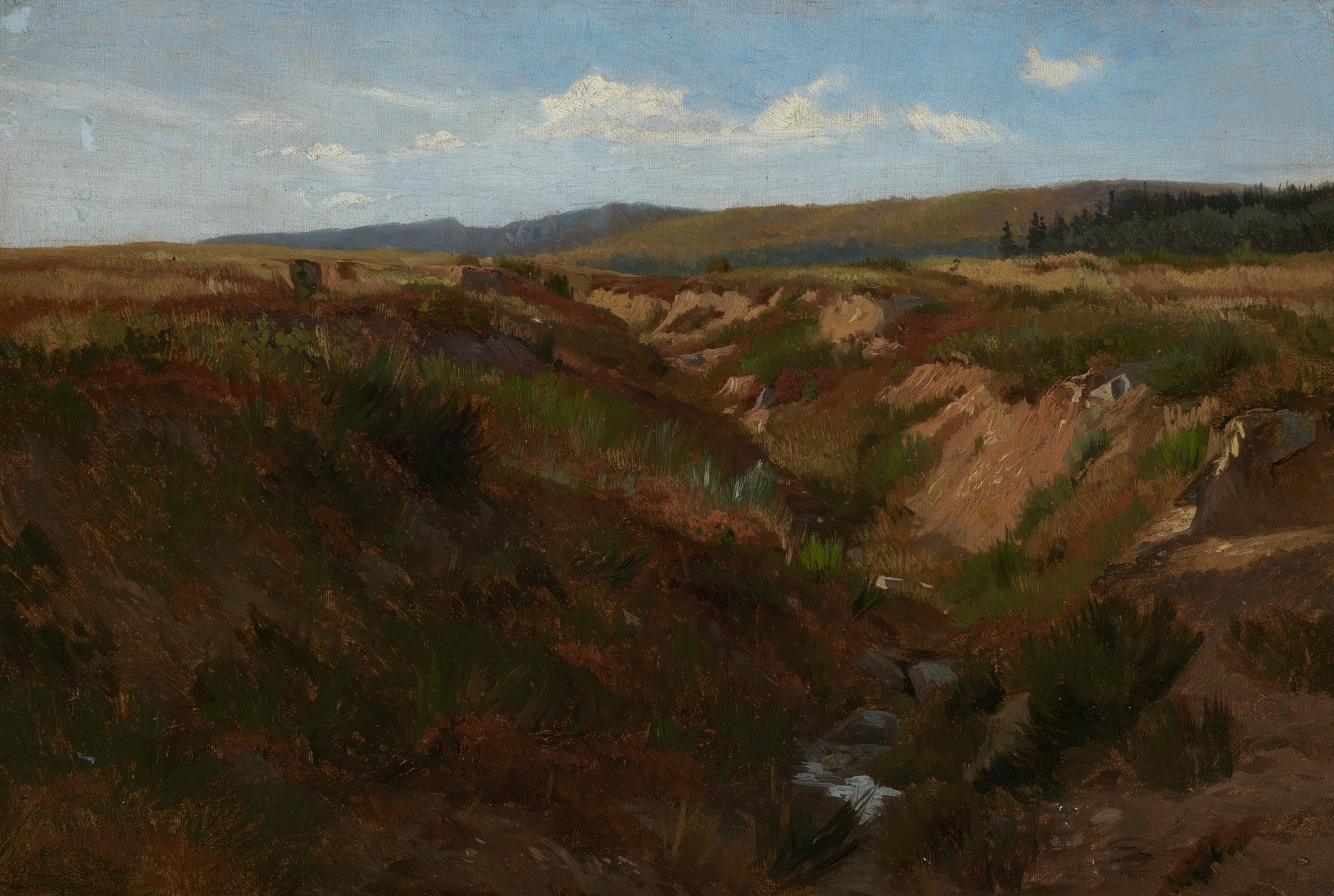
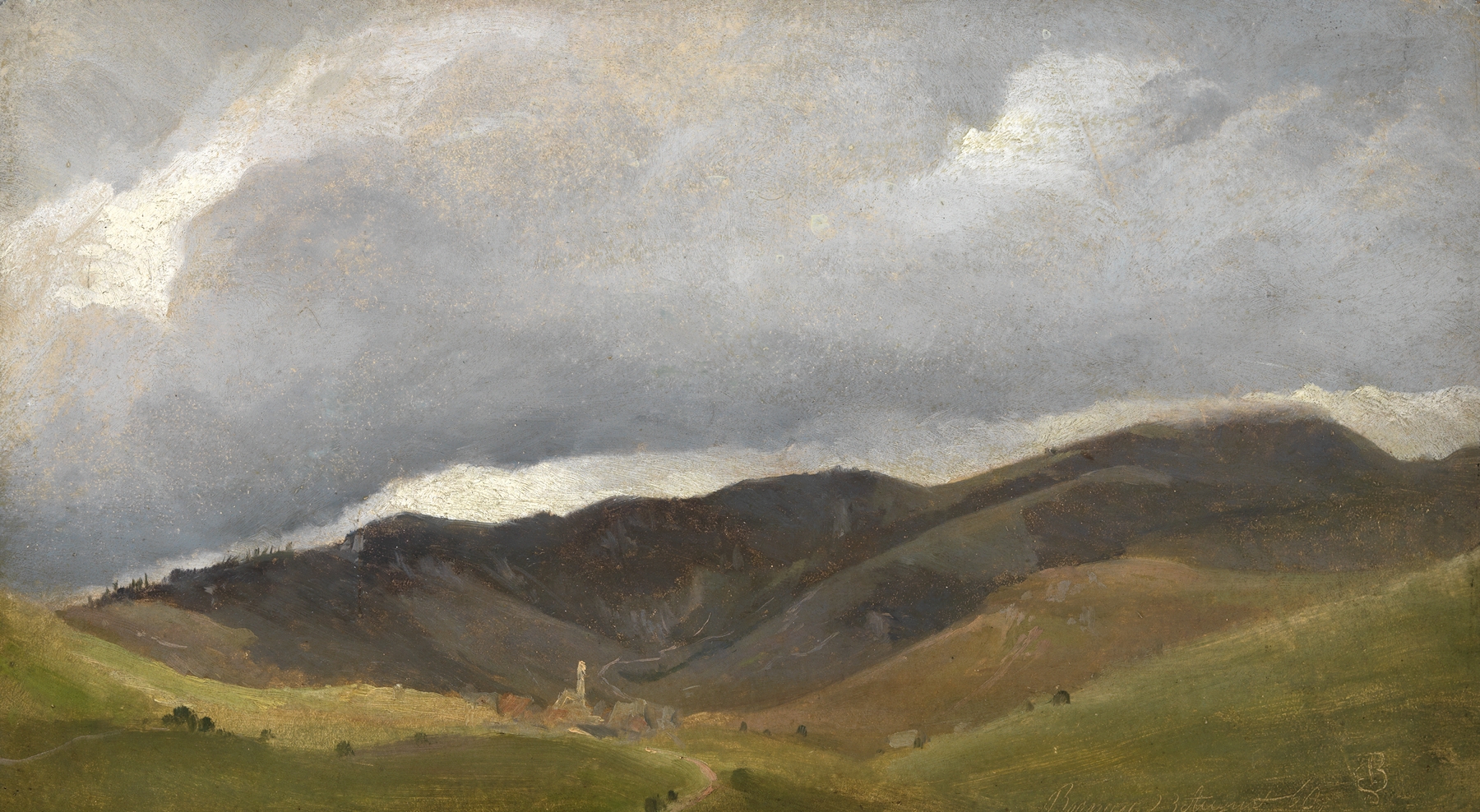
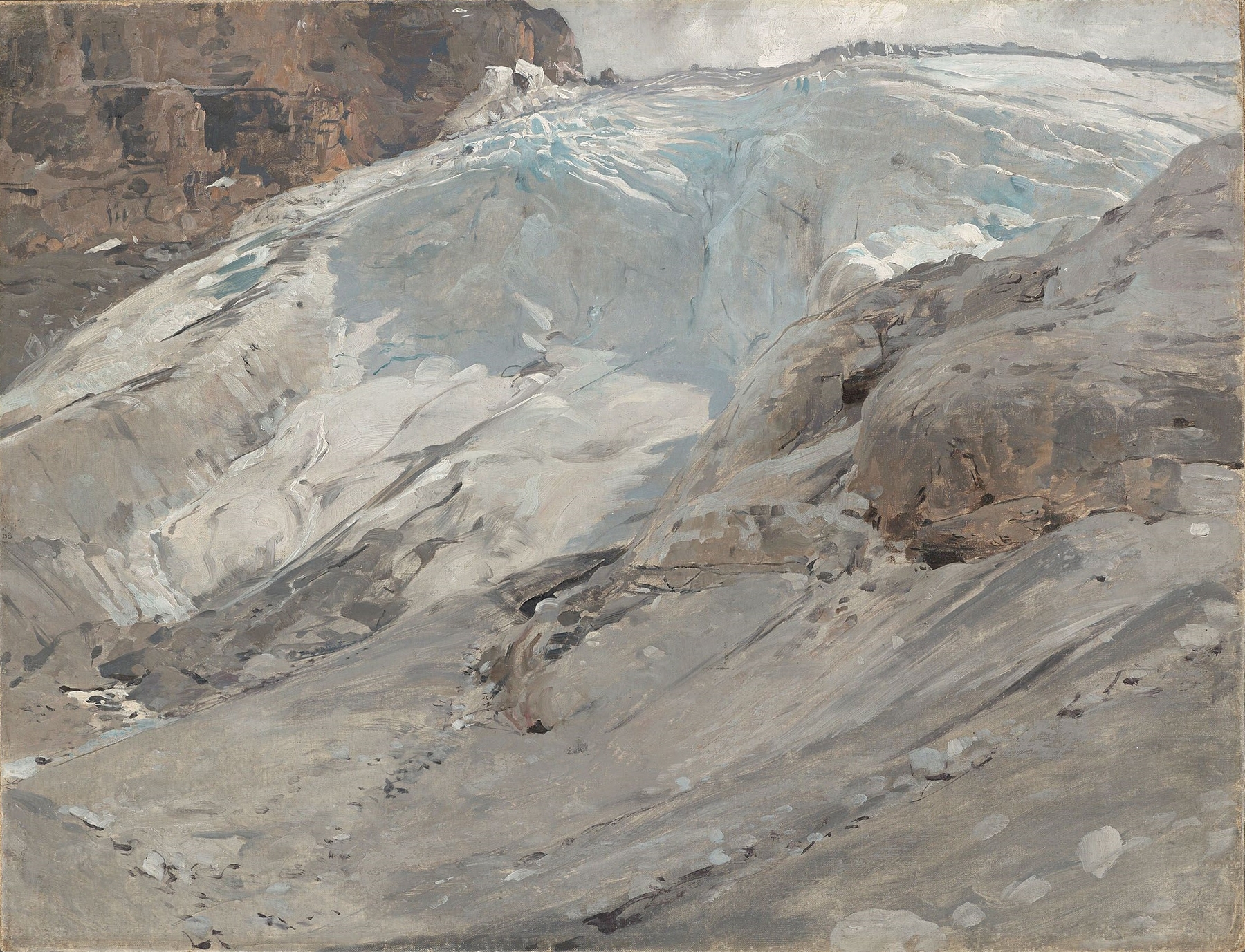
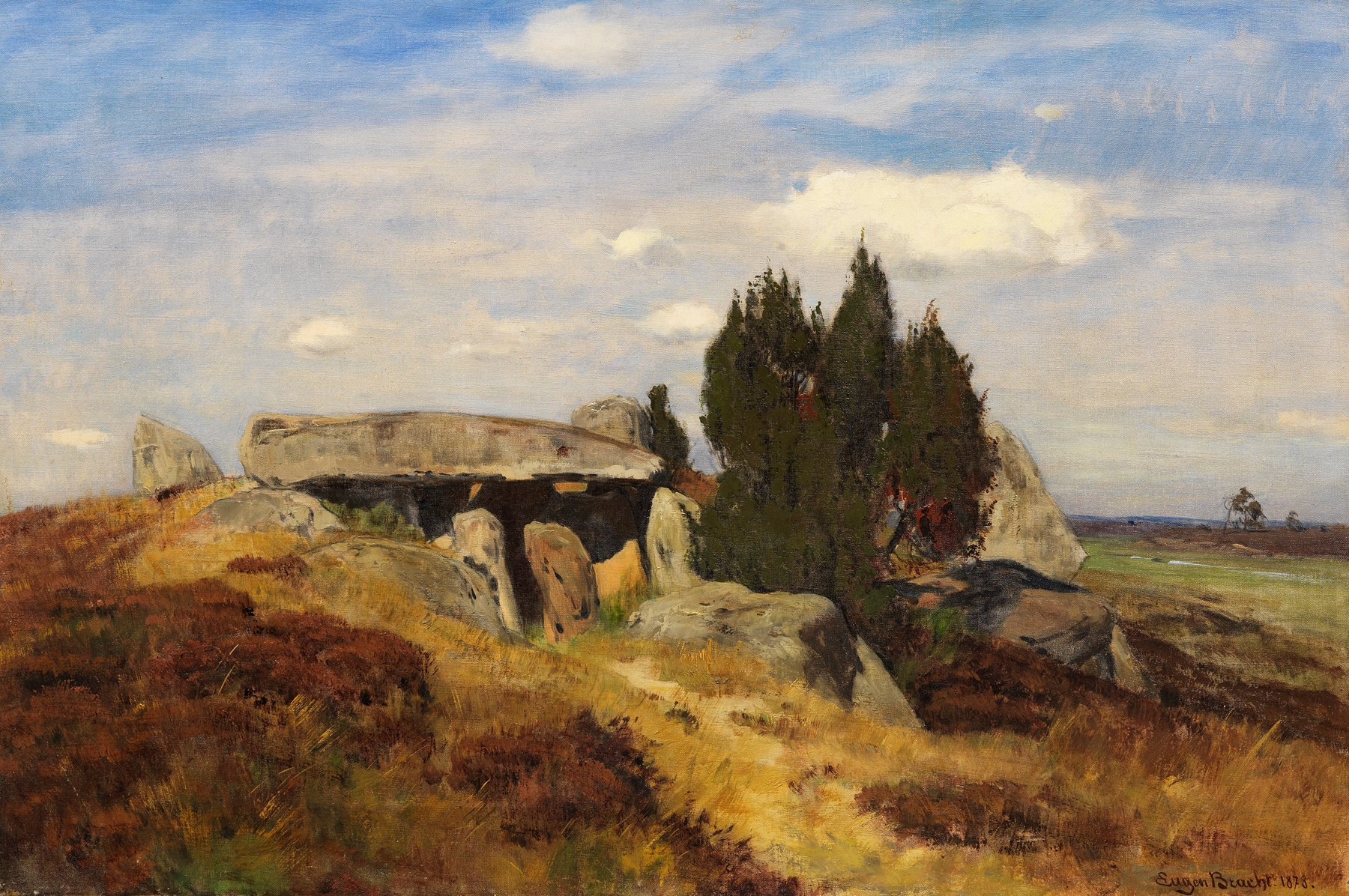
What secret hides in the quiet of the canvas? The interplay of light and shadow invites a contemplation of nature's vastness and the tranquility it holds. Look to the left at the gentle silhouette of the mountains, their peaks kissed by a soft glow that suggests the sun’s early embrace. Focus on the delicate gradation of blue in the sky, transitioning smoothly into the inviting greens below, where the landscape breathes with life.
Notice how the light bathes the foreground, drawing your attention to the rolling hills, their textures rendered with a delicate touch that brings depth and dimension while simultaneously inviting you into this serene world. Bracht's mastery lies in the subtle contrasts between the illuminated areas and the shadows that hint at depth and mystery. The calmness of the scene juxtaposes the ruggedness of the mountains, suggesting a dialogue between strength and serenity. Each brushstroke seems deliberate, holding the viewer in a moment of introspection, encouraging a connection with the landscape that transcends mere representation.
During the time when this piece was created, the artist was likely influenced by the Romantic movement's deep appreciation for nature and its sublime qualities. The exact date of completion is uncertain, but Bracht was active in the late 19th century, a period marked by a shift towards portraying landscapes as reflections of human emotions. His canvases often explore a blend of realism and impressionism, revealing his fascination with light and atmosphere, integral to the evolving art scene of his time.