Blick auf den Monte Rosa, Westseite — History & Analysis
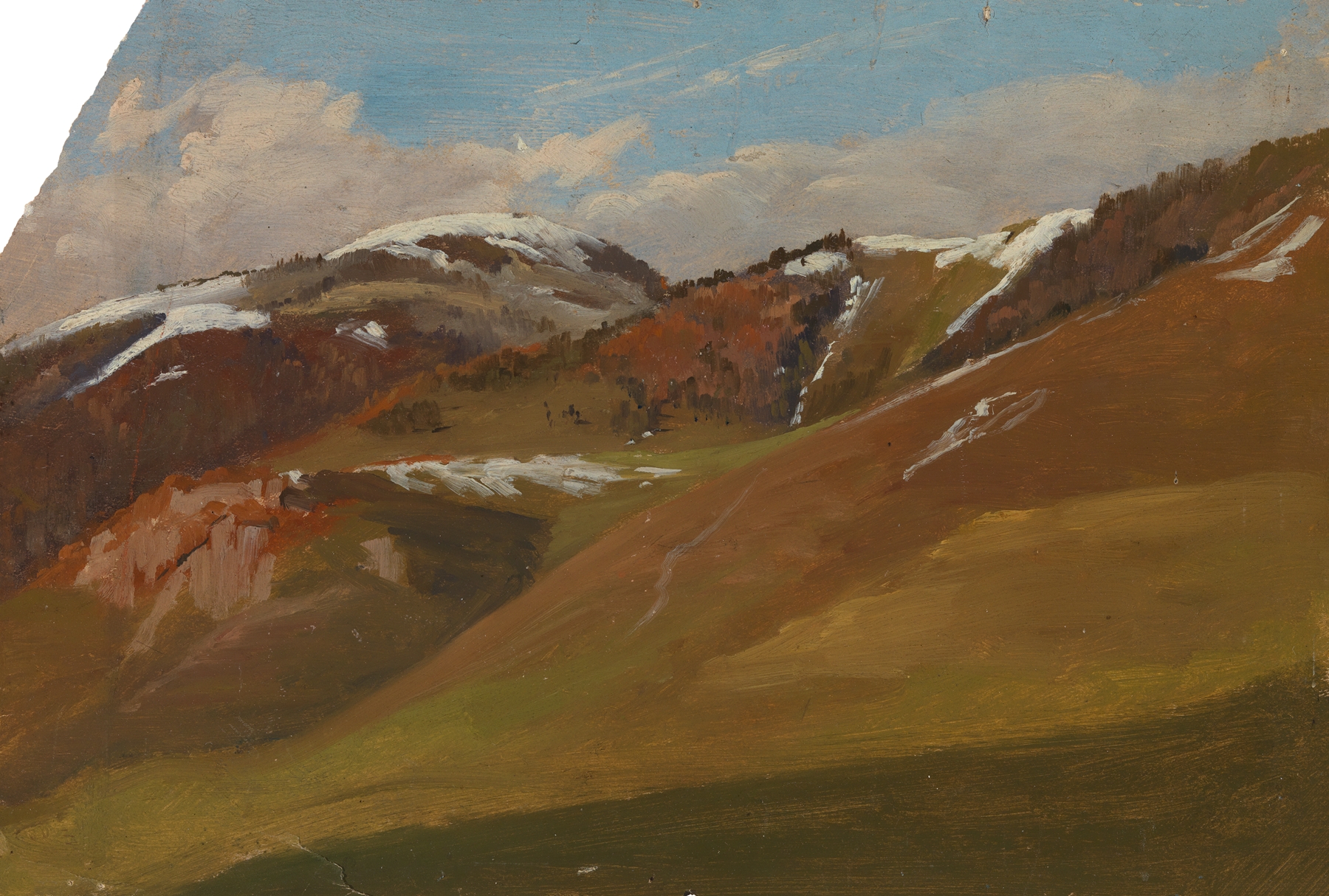
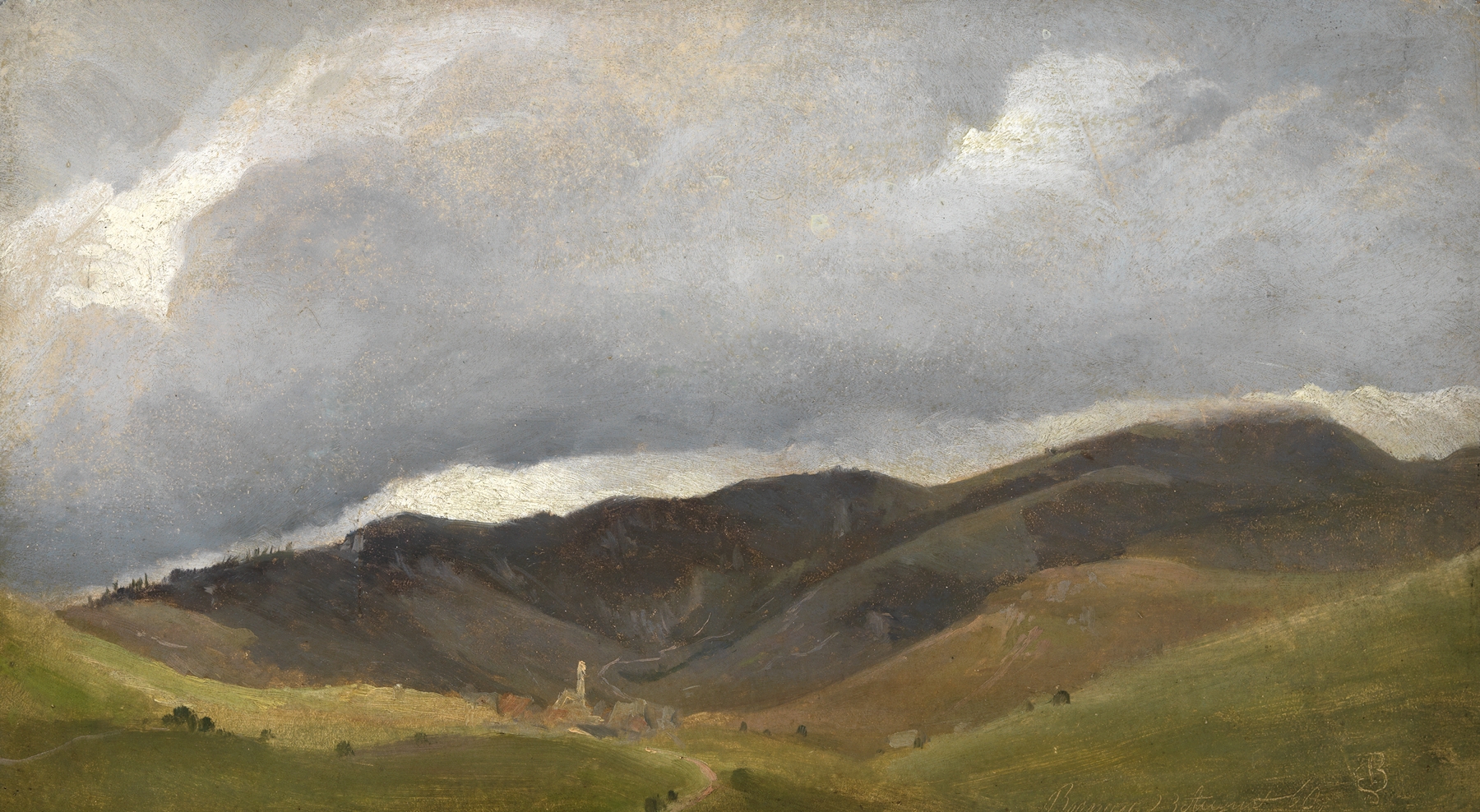
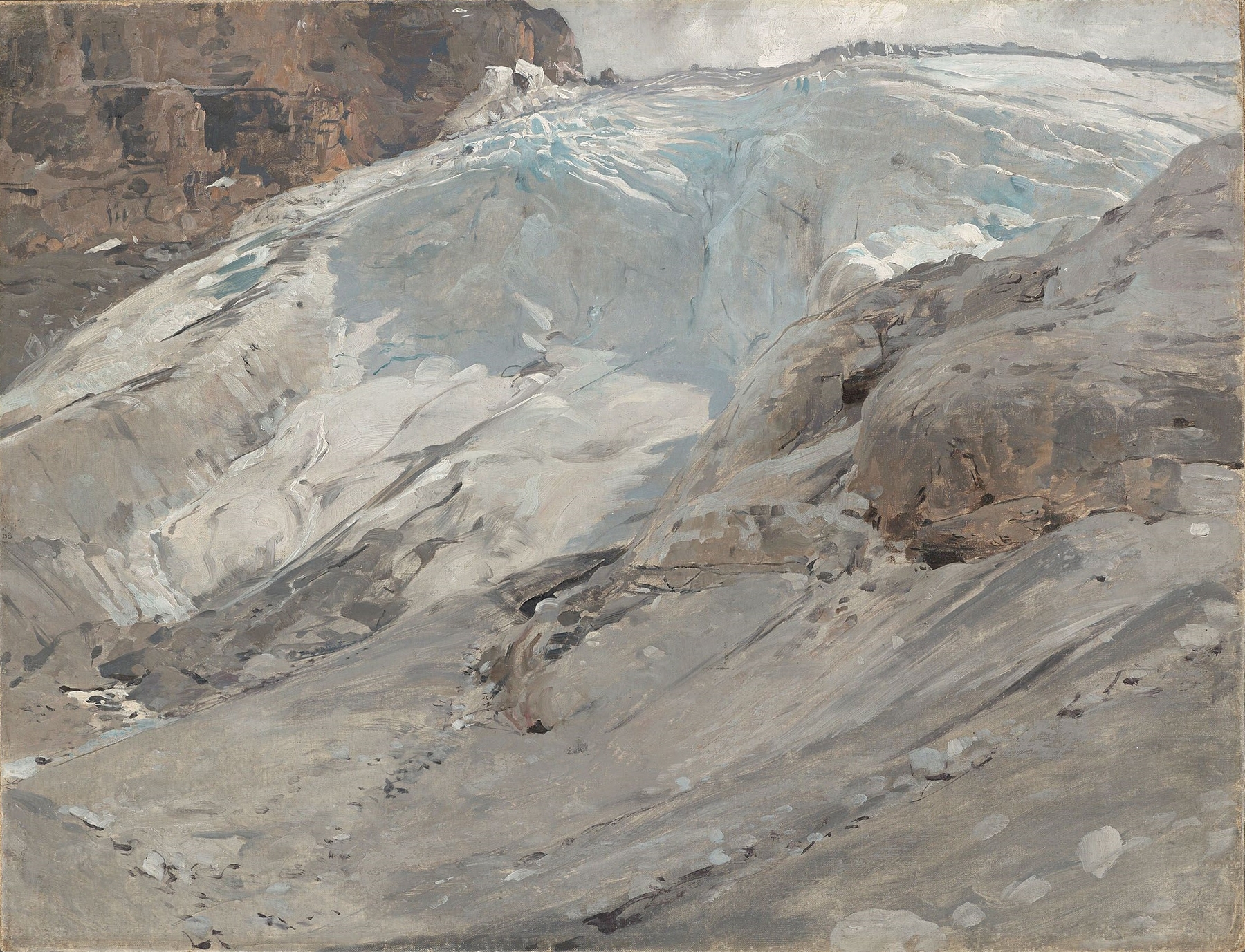
“Under the brush, chaos becomes grace.” In Blick auf den Monte Rosa, Westseite, the majestic mountains unfurl before us like a symphony of movement, capturing nature's raw power and delicate beauty. Look to the left at the formidable peaks, their jagged edges cutting against a soft, cerulean sky. The artist employs a masterful palette of blues and whites, with gentle strokes suggesting the wind's caress on the snow-capped summits. Notice how the sunlight dances across the landscape, creating a vibrant interplay between shadow and light, as if the mountains themselves are breathing, alive in their grandeur.
The subtle transitions between hues invite your gaze to wander across the canvas, allowing you to feel the elevation and depth of this serene yet dynamic scene. At first glance, the painting presents a tranquil vista, yet deeper examination reveals the juxtaposition of stillness and motion—mountains that loom immovably yet evoke the sense of time passing. The clouds, wispy and ephemeral, appear to race above the peaks, suggesting an eternal struggle between the enduring earth and the ever-changing sky. This tension serves as a reminder of nature's duality, celebrating both stability and transience in a single frame.
In 1906, when this piece was created, Bracht was immersed in the German Romantic tradition, celebrating the natural world's sublime qualities. He worked in his studio, drawing inspiration from the Alps, a place that profoundly influenced many artists of his time. The early 20th century was a period of exploration in art, with movements embracing new perspectives, yet Bracht's dedication to the timeless beauty of nature remained steadfast, allowing him to capture the essence of the Mont Rosa with profound tenderness.