Heide im Soonwald — History & Analysis
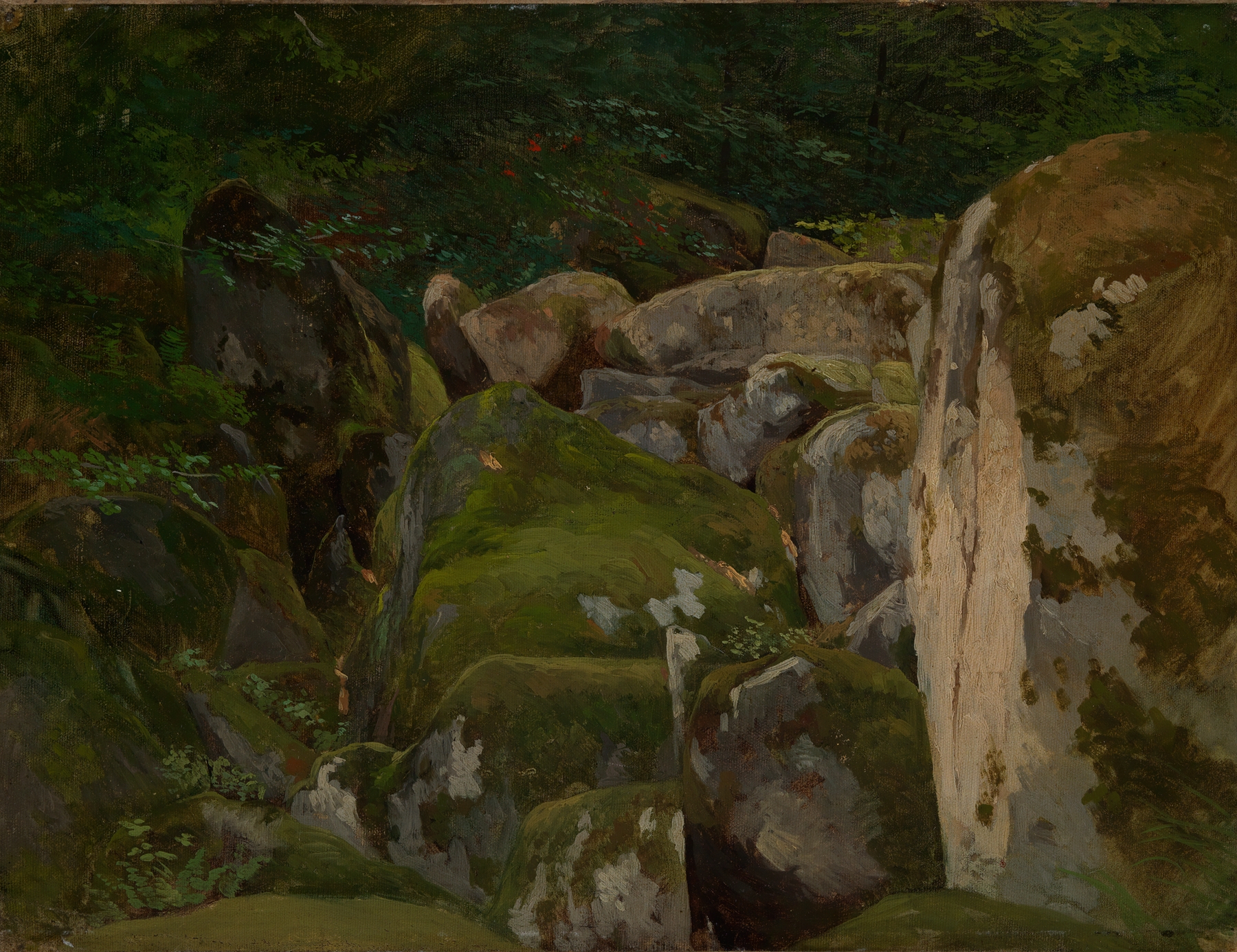
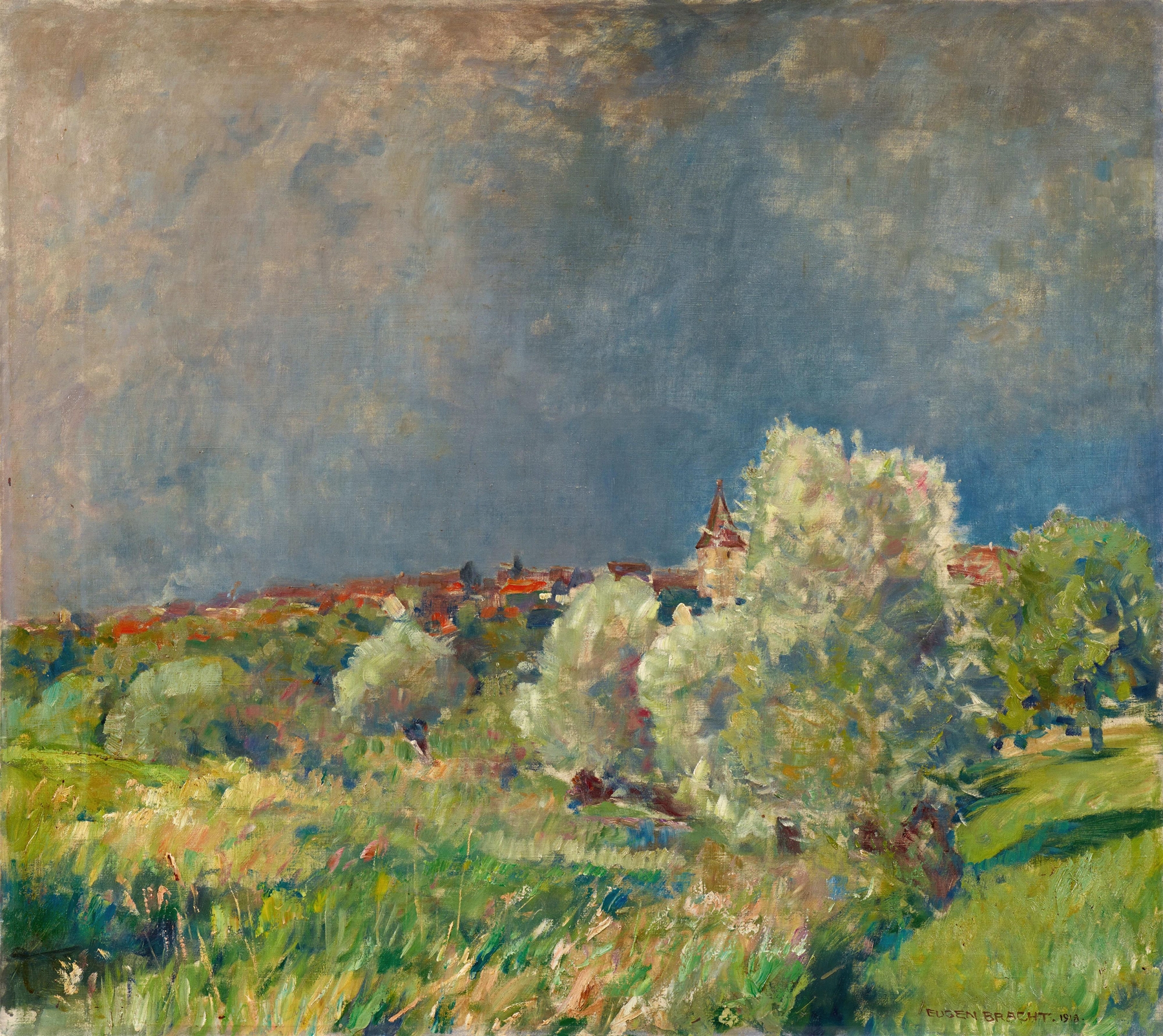
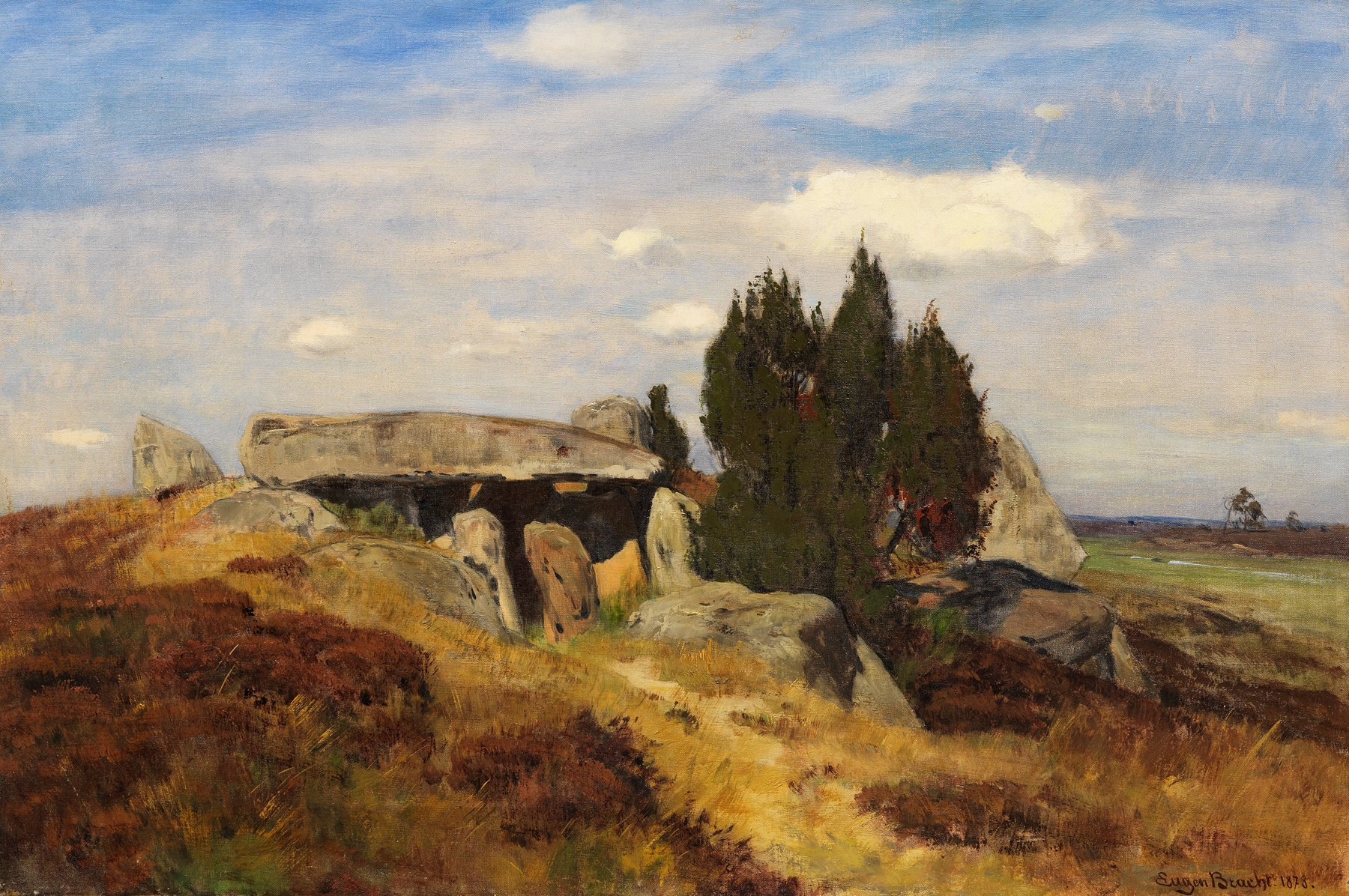
When did color learn to lie? In Heide im Soonwald, vibrant hues tell a tale of longing, whispering to the heart through the landscape. Look to the foreground, where a carpet of heather blooms in rich purples and deep greens, inviting the viewer into a world steeped in tranquility. Notice how the light dances across the petals, creating a delicate interplay that draws your gaze toward the distant trees.
The soft brushstrokes convey a sense of movement, as if the whispering breeze beckons you to explore the hidden depths of the forest beyond. Within this idyllic scene lies a poignant contrast: the beauty of nature intertwined with an undercurrent of solitude. The expansive sky, painted in soft pastels, hints at the vastness of unfulfilled desires, while the solitary figures near the horizon seem dwarfed by the landscape’s grandeur. This tension between the intimate and the infinite leaves an impression of yearning, as if the viewer is left searching for something just beyond reach.
Eugen Bracht painted Heide im Soonwald in 1861 during a period of personal and artistic exploration. At this time, he was based in Düsseldorf, immersed in a world shifting towards Romantic ideals, where artists sought to evoke deep emotions through nature. This painting reflects Bracht’s fascination with the German countryside, capturing both its beauty and the profound sentiments it inspires.