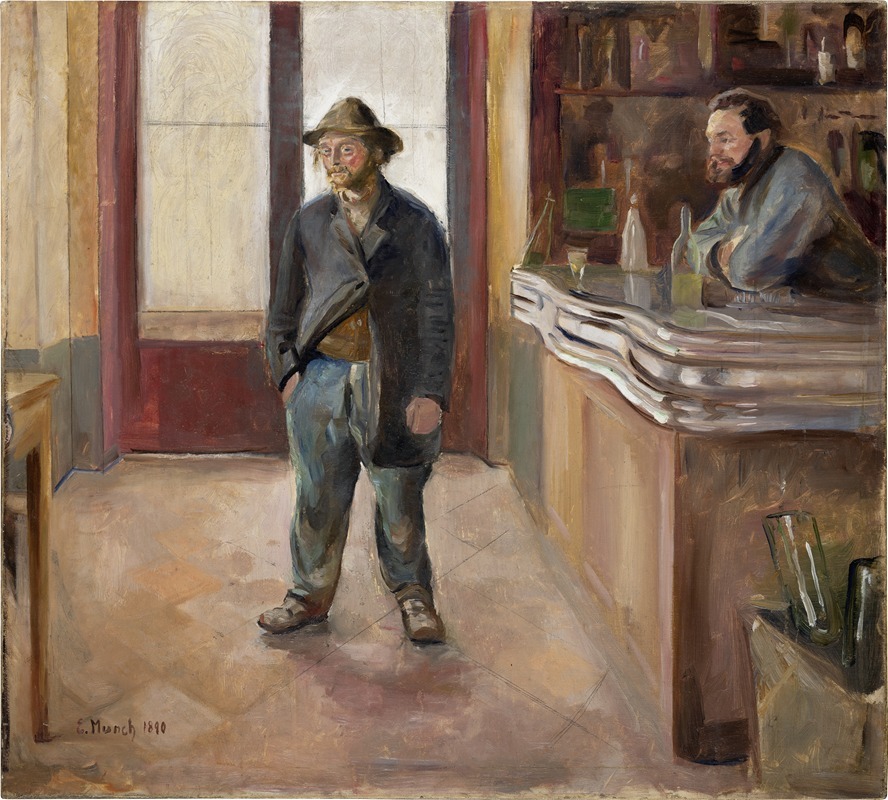
“Under the brush, chaos becomes grace.” In *In the Tavern*, this sentiment echoes through Munch's masterful manipulation of color and form, illuminating the complexities of human emotion and the undercurrents of betrayal. Focus on the tumultuous energy that hangs in the air, where figures huddle together yet remain profoundly isolated in their own thoughts. Look to the right at the cloaked figure slumped over the table, their posture steeped in a palpable sense of defeat. Notice how the tumultuous reds and deep blacks blend, reflecting the oppressive atmosphere of the space — a vibrant yet somber reminder of the chaos that lingers in human relationships. In this composition, the juxtaposition of light and shadow reveals deeper emotional tensions. The vibrant colors seem to infect the faces of the patrons, hinting at the quiet despair that often accompanies revelry. Each character carries their own story of betrayal, a silent acknowledgment of lost trust and unspoken regrets. The swirling forms and distorted features create a sense of disorientation, suggesting that the tavern serves as a refuge, yet simultaneously, a prison of their own making. Munch painted *In the Tavern* in 1890 during a tumultuous period in his life, marked by personal loss and existential angst. Living in Norway, he grappled with themes of intimacy and isolation, influenced by the Symbolist movement and his own experiences that often bled into his artwork. By this time, he had developed a distinctive style that combined emotional depth with an exploration of the human psyche, setting the stage for the masterpieces that would follow.