Isaak zegent Jakob — History & Analysis
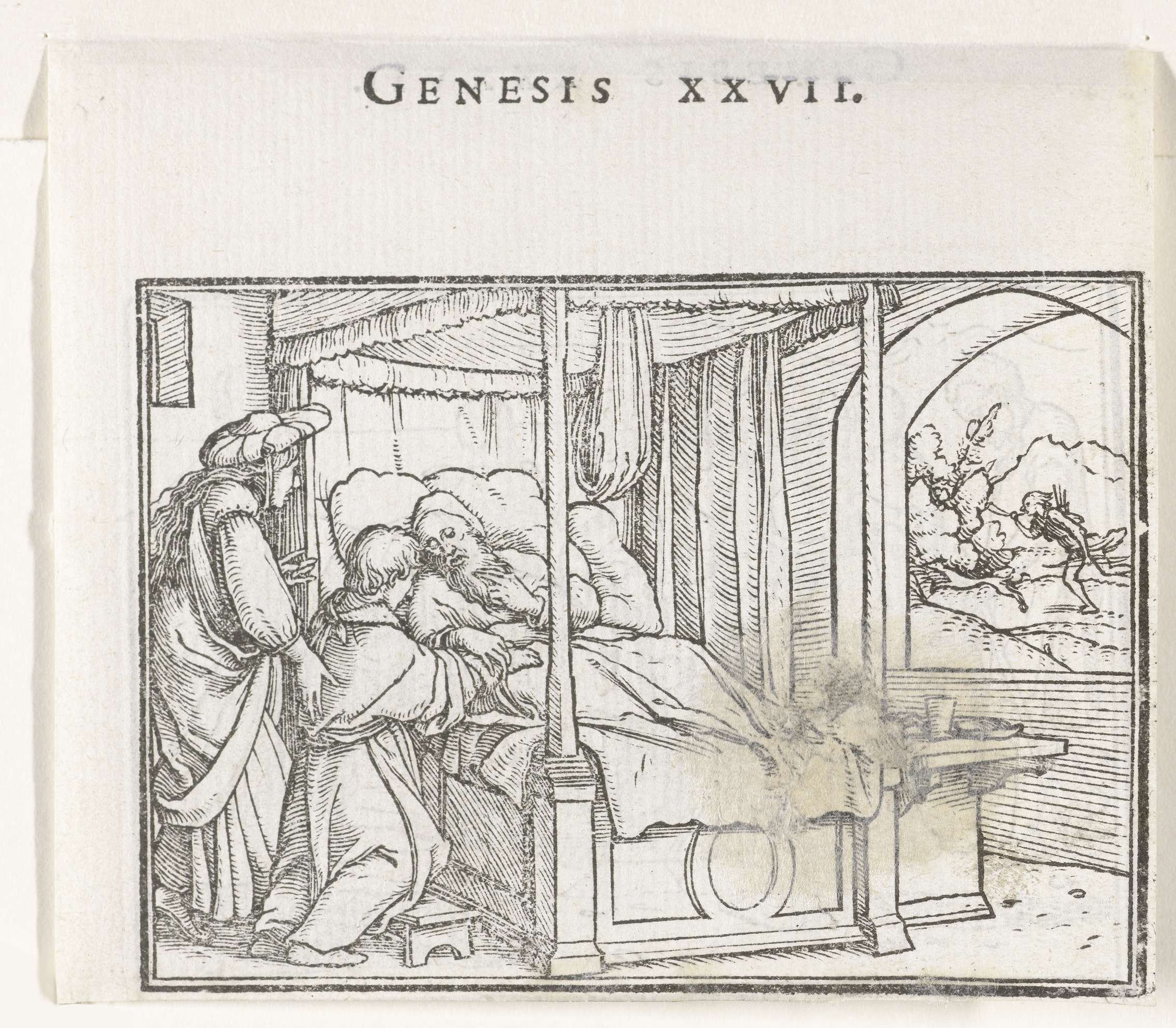
Who listens when art speaks of silence? In Isaak zegent Jakob, a palpable stillness envelops the moment, revealing not just the act of blessing but the weight of unspoken histories shared between a father and son. Look to the center, where the figure of Isaac appears, his aged face illuminated with a gentle glow, embodying both wisdom and tenderness. The intricate folds of his garments, rendered in rich earth tones, contrast sharply with the lighter hues surrounding Jakob.
Notice how the light falls upon the outstretched hand, emphasizing the sacredness of the gesture, while the shadows create an intimate atmosphere that invites the viewer to reflect on the quiet power of paternal love and legacy. Delve deeper into the details: the watchful eyes of the figures in the background, hinting at familial ties and unvoiced sentiments, evoke a sense of anticipation and reverence. The subtle interplay of light and shadow not only defines the physical space but also mirrors the emotional tension—the struggle between the weight of tradition and the aspiration for individuality. The serenity of this moment becomes a vessel for understanding the complexities that lie beneath familial bonds.
Completed in 1538, Holbein painted this work during a time of significant political and religious upheaval in Europe. Living in England at the court of Henry VIII, he was deeply engaged in capturing the essence of his subjects while navigating the tensions of a changing world. This piece reflects not only the artist’s technical prowess but also his ability to weave narrative depth into the silence that surrounds moments of profound human connection.