Joshua Commanding the Sun to Stand Still Upon Gibeon — History & Analysis
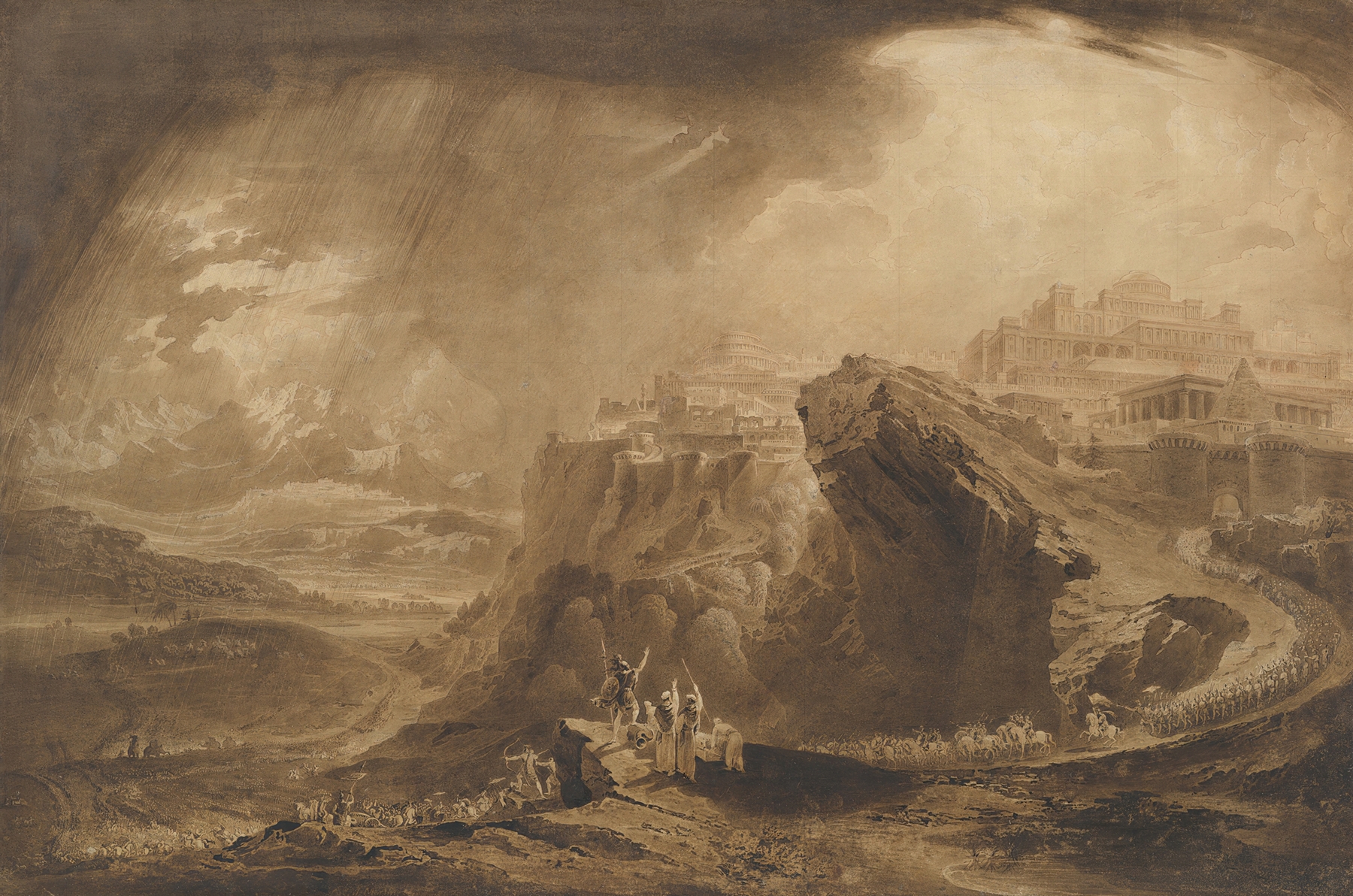
What secret hides in the quiet of the canvas? The stillness captured in Joshua Commanding the Sun to Stand Still Upon Gibeon invites the viewer to explore an extraordinary moment of divine intervention and human determination, a serene pause in the chaos of battle. Look to the center where Joshua stands, arms raised to the heavens in a powerful gesture of command. The sunlight streams from above, illuminating the figure in stark contrast to the darkened landscape surrounding him.
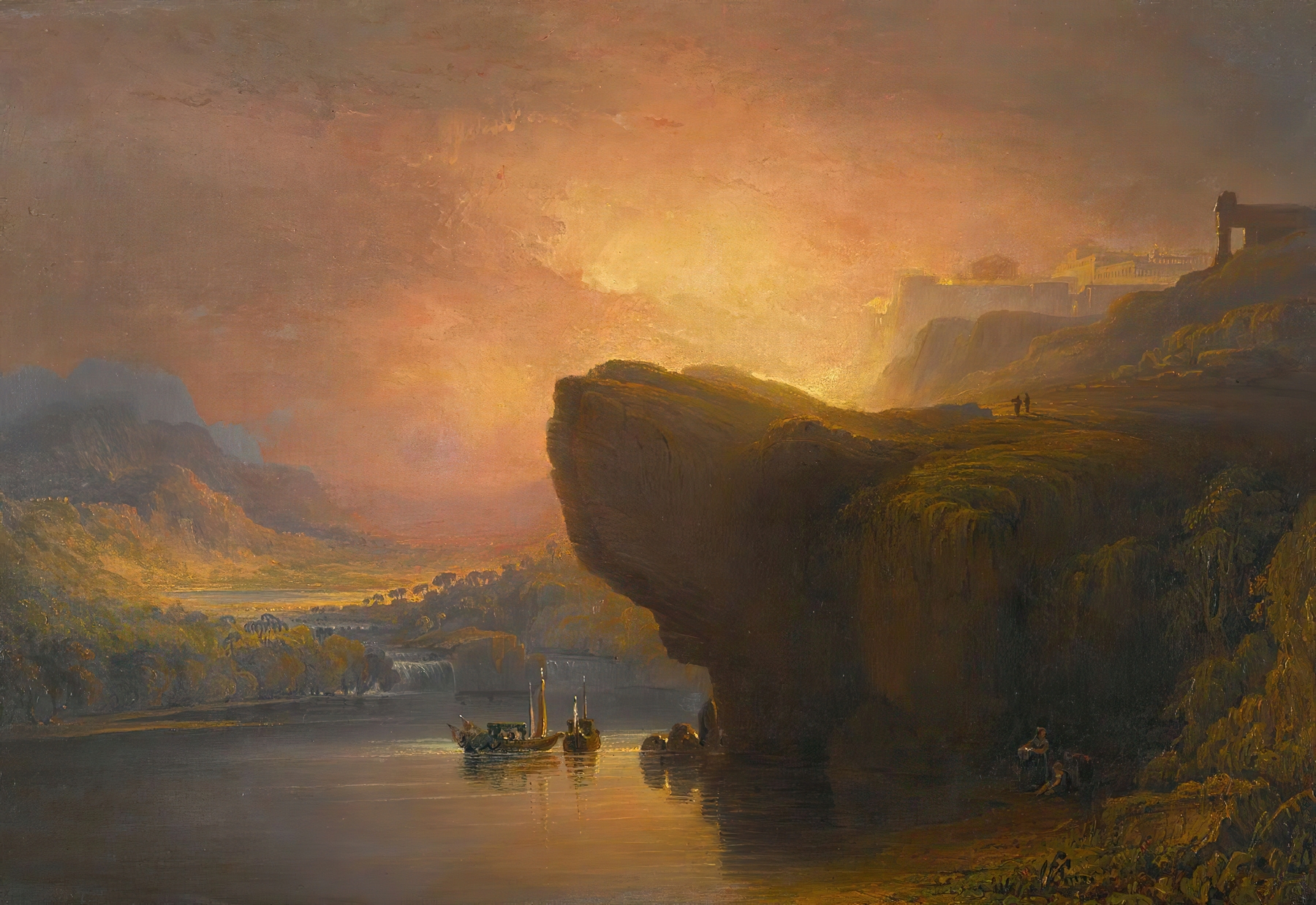
Notice how the vibrant colors of the sky—rich golds and deep blues—merge seamlessly, creating a sense of tranquility amidst impending turmoil. The swirling clouds evoke movement, yet the scene itself feels grounded, as if time has been suspended, reflecting the tension between nature and divine will. In the foreground, the soldiers of Israel are poised, caught in a moment of awe, their expressions revealing a blend of fear and reverence. The juxtaposition of the earthly struggle against the dramatic celestial display speaks to a deeper dichotomy between humanity's frailty and the boundless power of the divine.
Each brushstroke conveys the weight of this moment, where faith and nature collide, offering a quiet yet profound reflection on the relationship between man and the cosmos. John Martin painted this monumental work in 1822 while living in England, a time when Romanticism was shaping the artistic landscape. He was increasingly drawn to themes of biblical epic and the sublime, elevating the emotional impact of his subjects. In a period marked by industrial progress and socio-political upheaval, Martin's dramatic interpretations of ancient stories offered both escapism and spiritual reflection, capturing the imagination of his contemporaries.