Sadak in Search of the Waters of Oblivion — History & Analysis
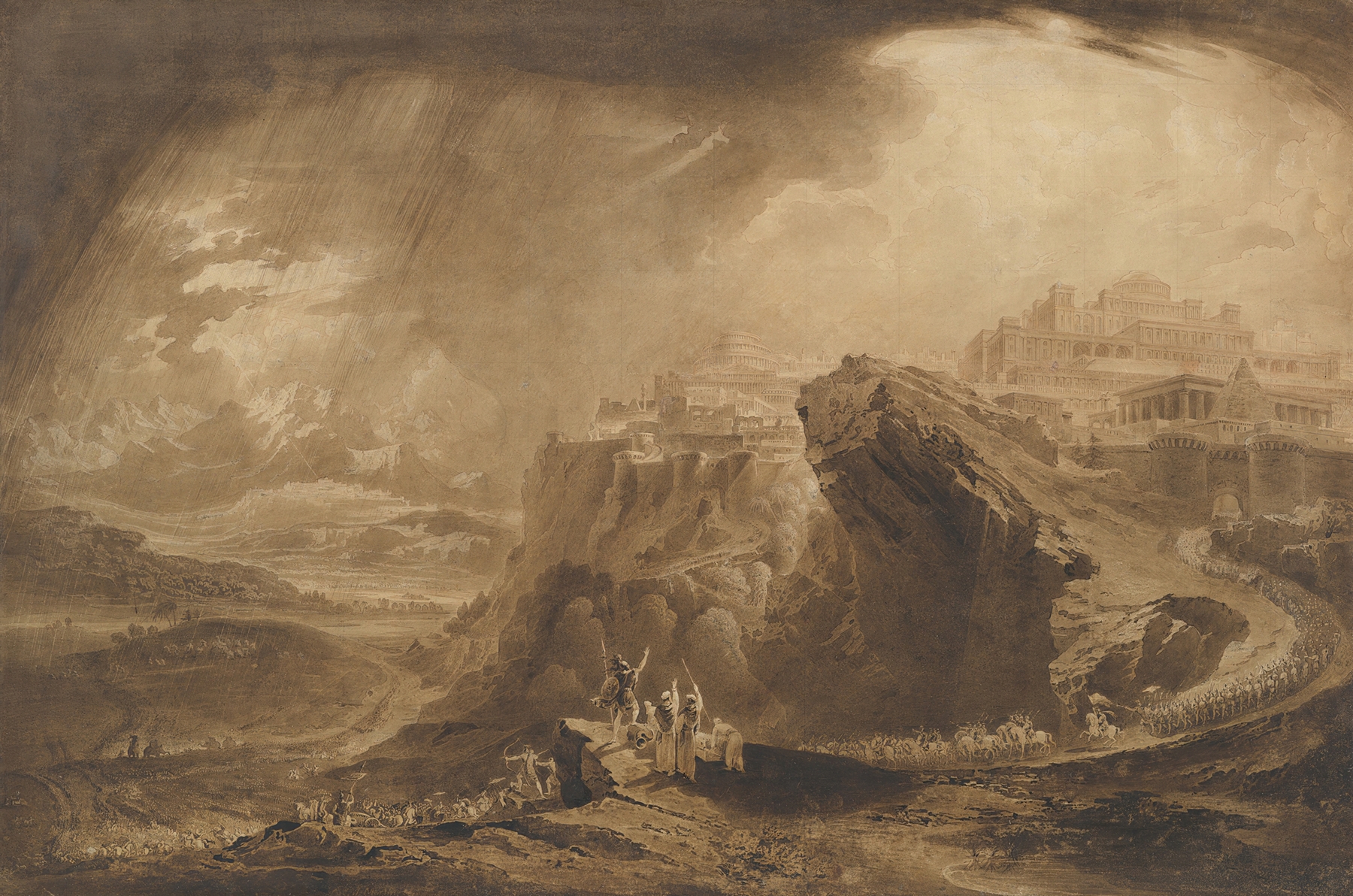
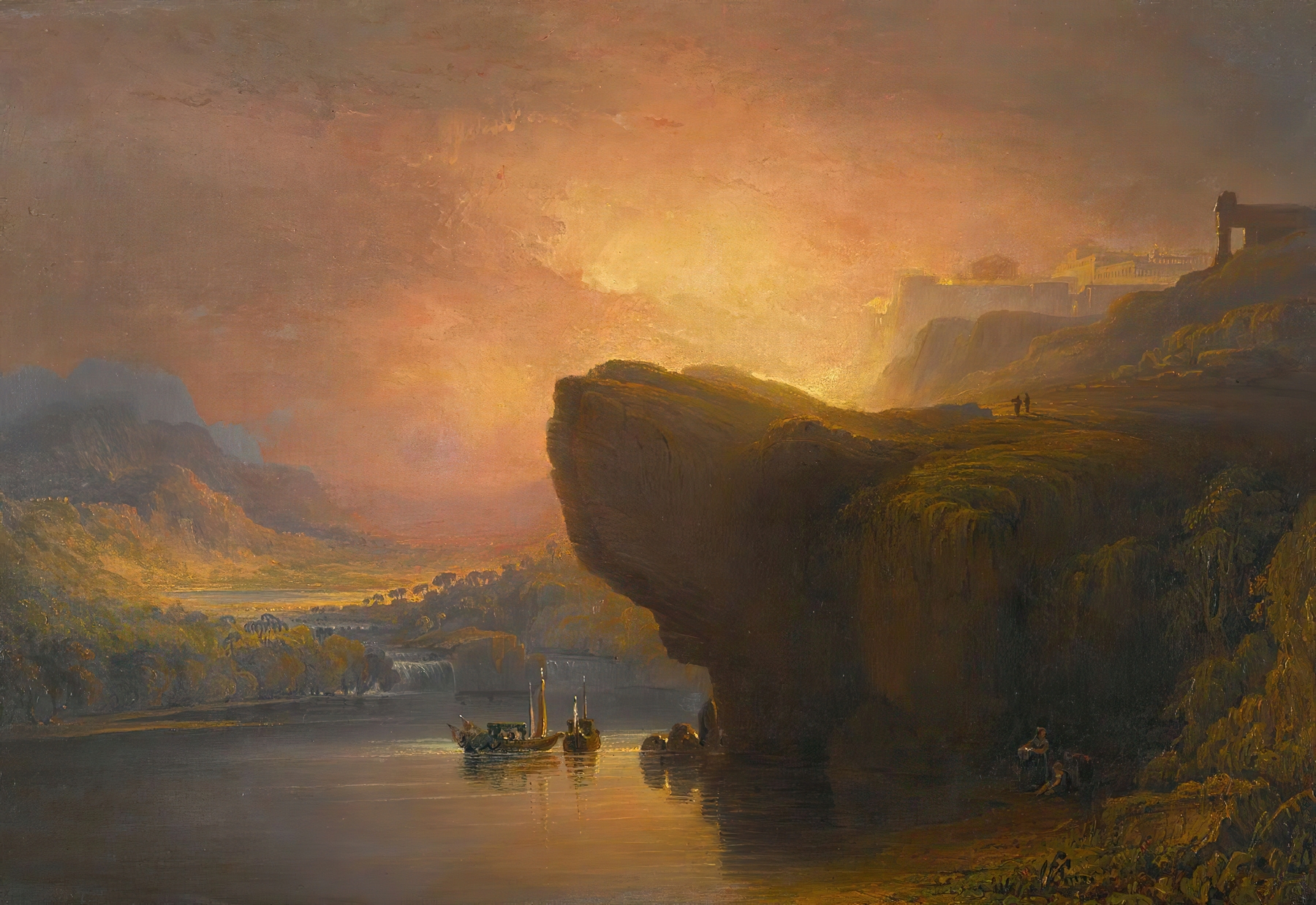
Can paint confess what words never could? In Sadak in Search of the Waters of Oblivion, John Martin captures the essence of a truth that transcends verbal expression, inviting the viewer into a profound emotional landscape. Focus first on the center of the composition, where Sadak stands poised on a rocky precipice. The vast, tumultuous skies loom above him, painted in swirling tones of gray and ochre, as lightning crackles through the clouds. The intricate detailing of the rock formations leads the eye to the figure below, his posture conveying both desperation and determination.
The stark contrast between the dark, foreboding landscape and the ethereal light illuminating the distant waters evokes a deep sense of longing and hopelessness. Delve deeper into the contrasts at play between light and shadow, hope and despair. The shimmering waters of oblivion glisten just out of reach, symbolizing unattainable truth, while the harsh terrain represents the struggle one faces in the quest for understanding. Sadak's gaze is fixated on the waters, reflecting a yearning that resonates with anyone who seeks solace from their own challenges.
This poignant tension reveals the universal human condition, confronting the viewer with the stark reality of existence. In 1812, Martin created this masterpiece during a transformative period in his career, establishing himself as a leading Romantic painter. The industrial revolution was reshaping society, stirring a fascination with nature and the sublime in British art. As Martin explored themes of the sublime and the human experience, Sadak in Search of the Waters of Oblivion emerged as a powerful commentary on the search for understanding in a world that often feels chaotic and unforgiving.