The City Of God And The Waters Of Life — History & Analysis
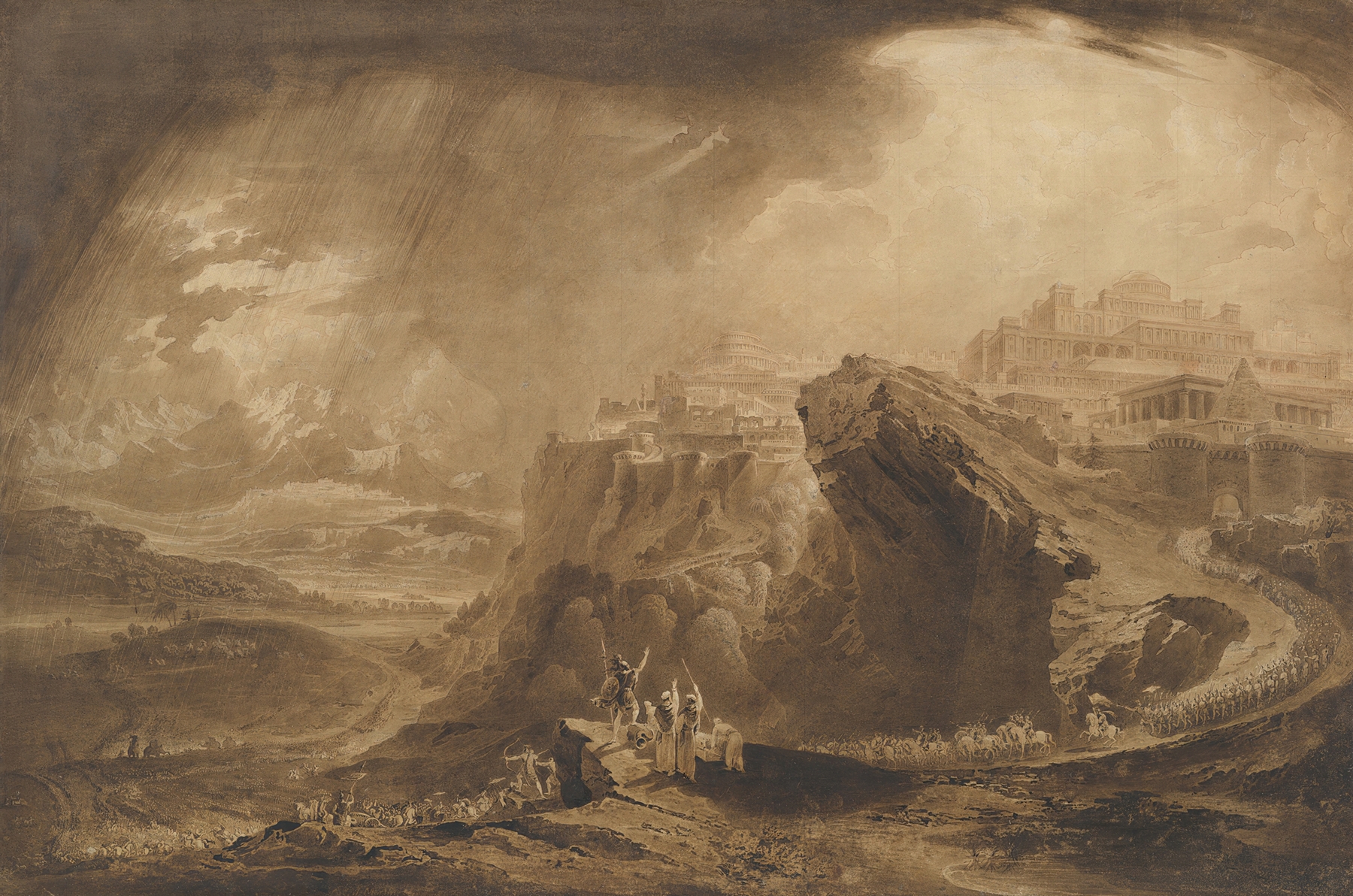
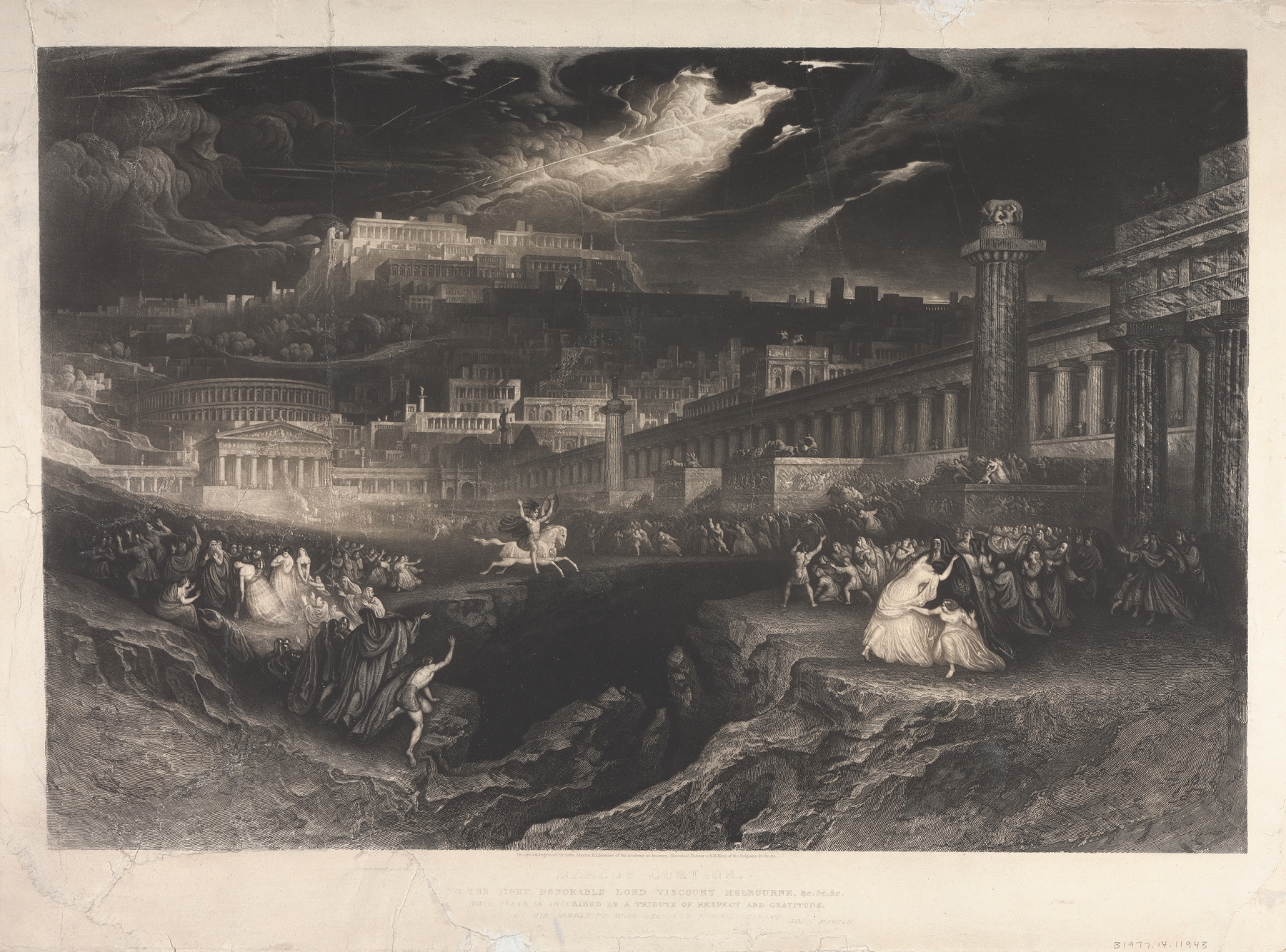
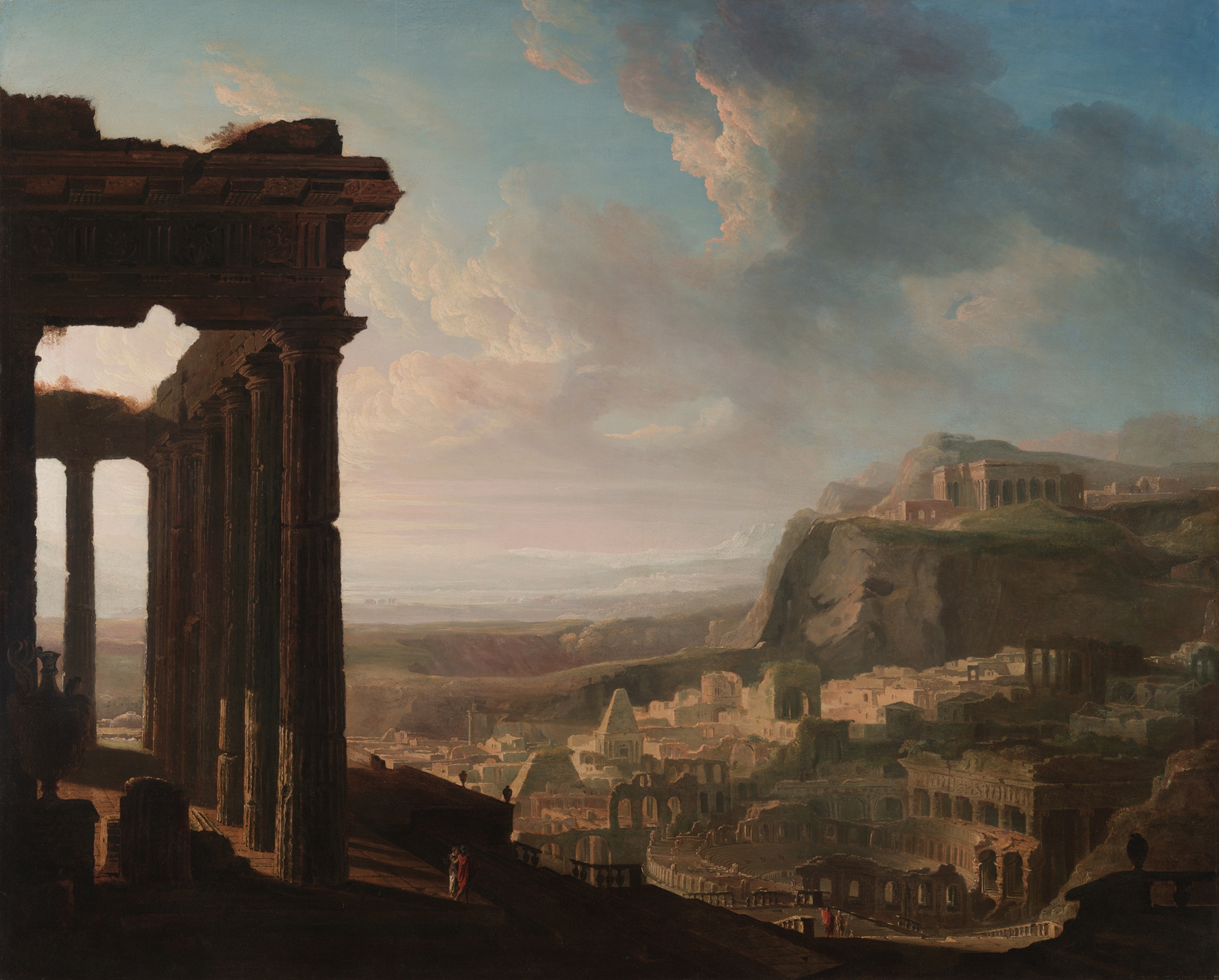
Where does light end, and longing begin? The City Of God And The Waters Of Life invites us to ponder this profound question amidst a backdrop of transformation and revolution. Look to the center of the composition, where towering structures rise majestically against a tumultuous sky. Martin’s use of contrasting light and shadow draws your gaze towards the shimmering waters that flow at the city’s base, embodying both abundance and vitality.
The palette of ethereal blues and fiery oranges creates a sense of movement, as if the very essence of life is rushing forth from the heart of this divine metropolis. Beneath the grandeur lies a narrative of duality. The harmonious interplay of light and dark suggests the constant struggle between hope and despair, while the swirling clouds hint at impending upheaval. The delicate figures near the water’s edge, almost dwarfed by their surroundings, evoke a sense of fragility and yearning for connection in a world that teeters on the brink of chaos.
This tension resonates with the viewer, urging them to reflect on their own relationship with the elements of creation and destruction. John Martin painted this monumental piece during a time when Europe was rife with social and political unrest. Working in the early to mid-19th century, he was influenced by the Romantic movement, which celebrated nature's power and humanity's awe before it. Martin sought to capture the sublime, and in doing so, he created not just an artwork but a commentary on the tumultuous landscape of his era, mirroring the longing for stability amid chaos.