Karawane In Der Wüste — History & Analysis
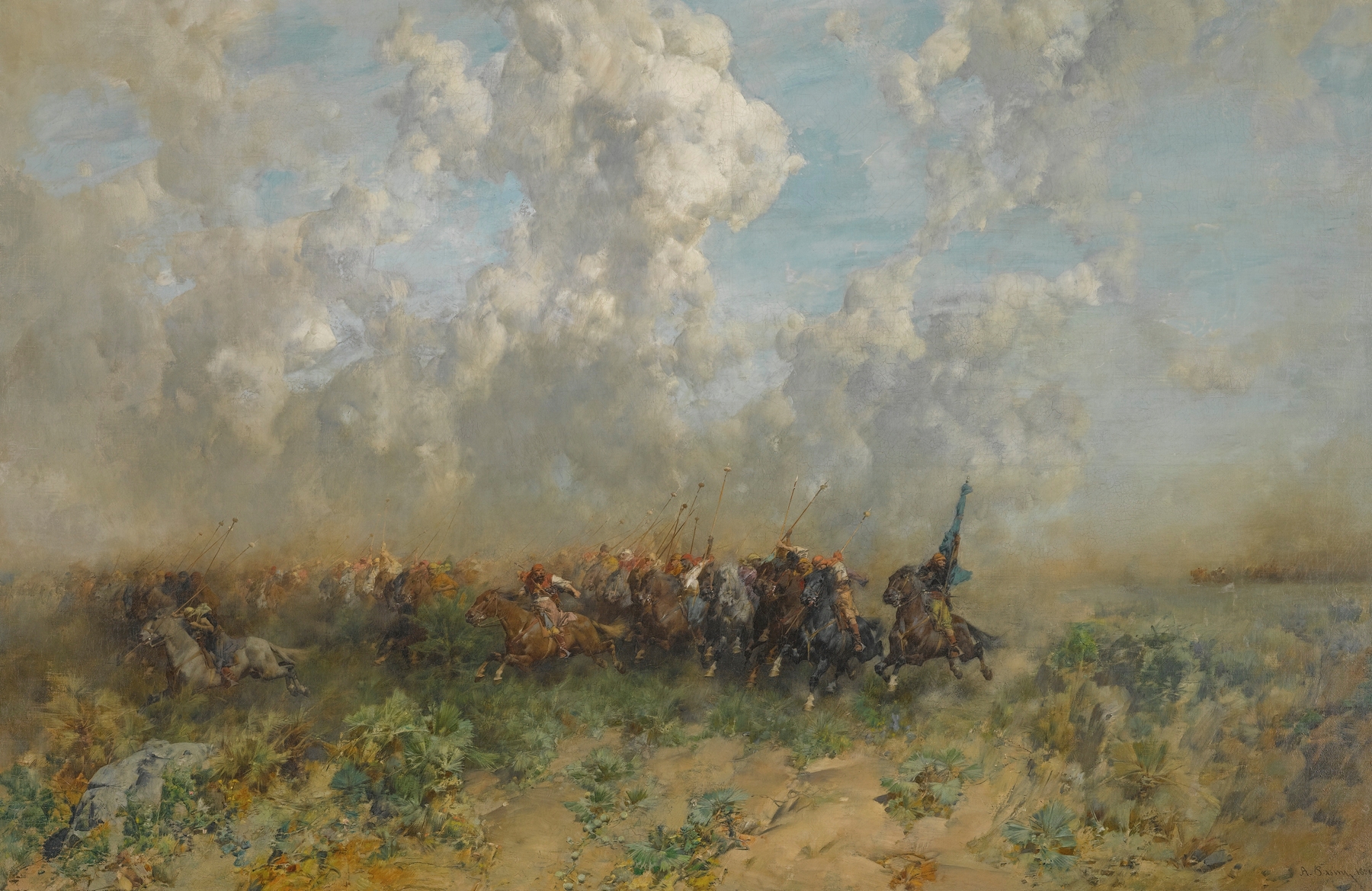
“Every brushstroke is a heartbeat remembered.” What compels an artist to capture the essence of a fleeting moment in relentless pursuit? In Karawane In Der Wüste, the answer lies scattered like grains of sand across a vast, unforgiving landscape. Look to the horizon where warm ochres and deep siennas melt into the sun-baked hills, creating a gradient that draws the eye towards the distant caravan. The figures, draped in flowing robes, dominate the foreground with purposeful strides, their shadows stretching languidly across the ground.
Notice how the soft, hazy light envelops the scene, lending warmth to the cool blue shadows that cradle the camels — a delicate balance of color that evokes both movement and stillness. The emotional tension here is palpable, as the caravan, caught in the throes of its arduous journey, embodies the universal quest for purpose and belonging. Each detail, from the grains of sand swirling in the arid air to the subtle expressions on the travelers’ faces, speaks to an obsession with the passage of time and the human spirit's resilience. The caravanners seem to be both part of and apart from their environment, thrusting forward while the desert remains an eternal witness.
In 1867, Alberto Pasini was immersed in the vibrant art scene of 19th-century Europe, a time marked by fascination with exoticism and adventure. Living in Paris, he drew inspiration from his travels to North Africa, where he painted this work. The juxtaposition of his tightly controlled brushwork against the wild vastness of the desert reflects his struggle to capture the essence of the landscapes and peoples he so passionately observed, revealing his own artistic obsession with the interplay of light and life.