Koopman en de Dood — History & Analysis
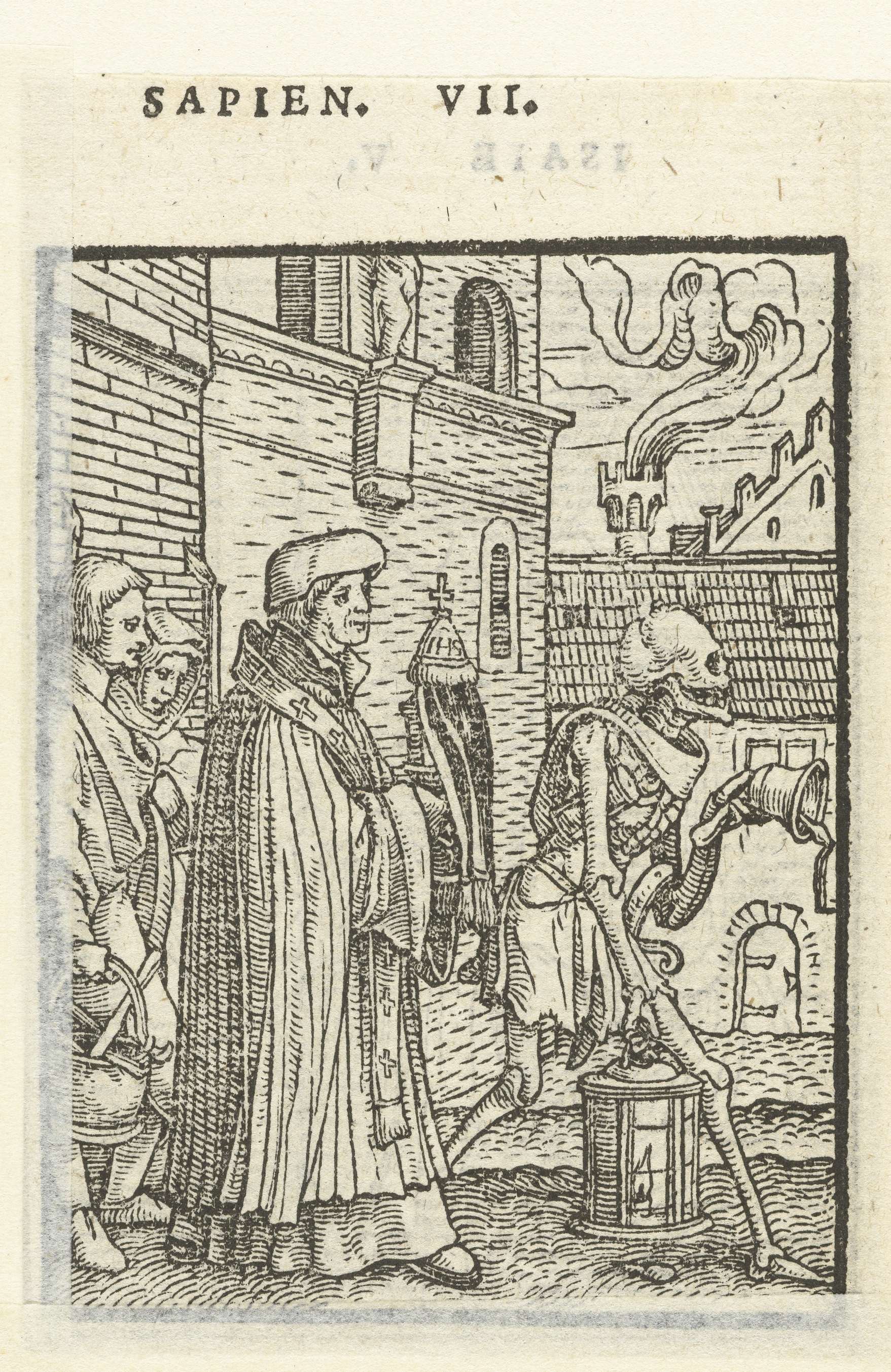
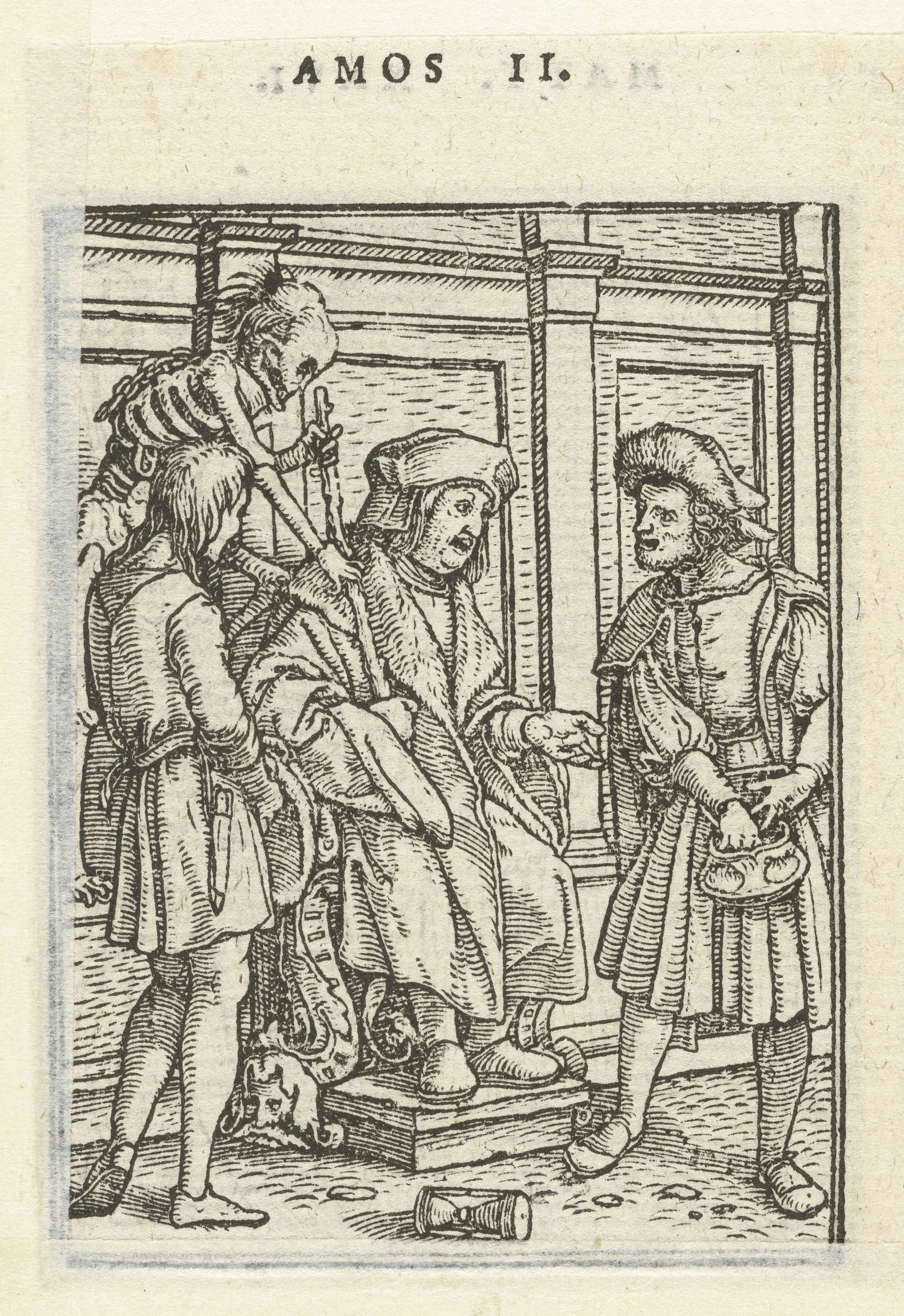
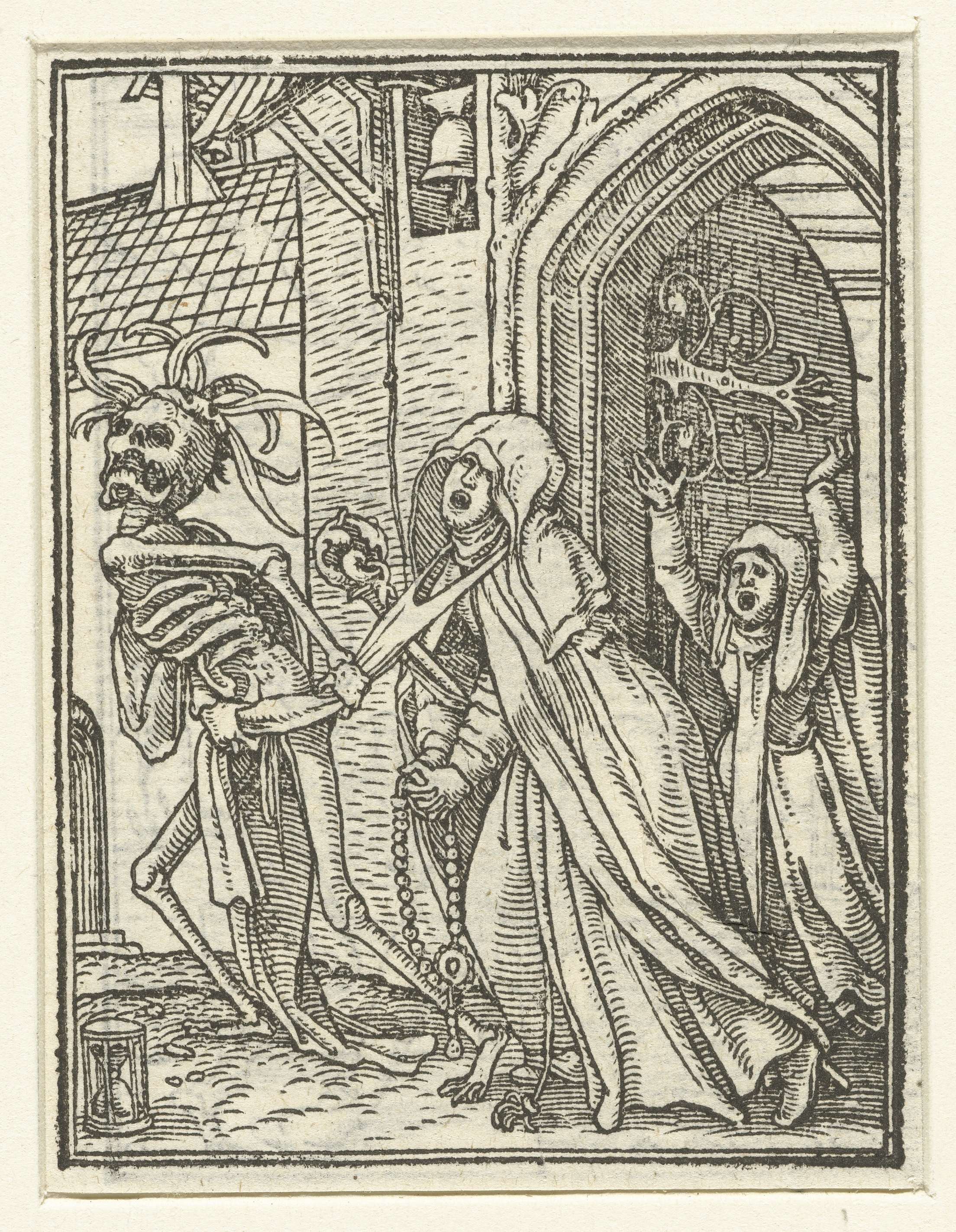
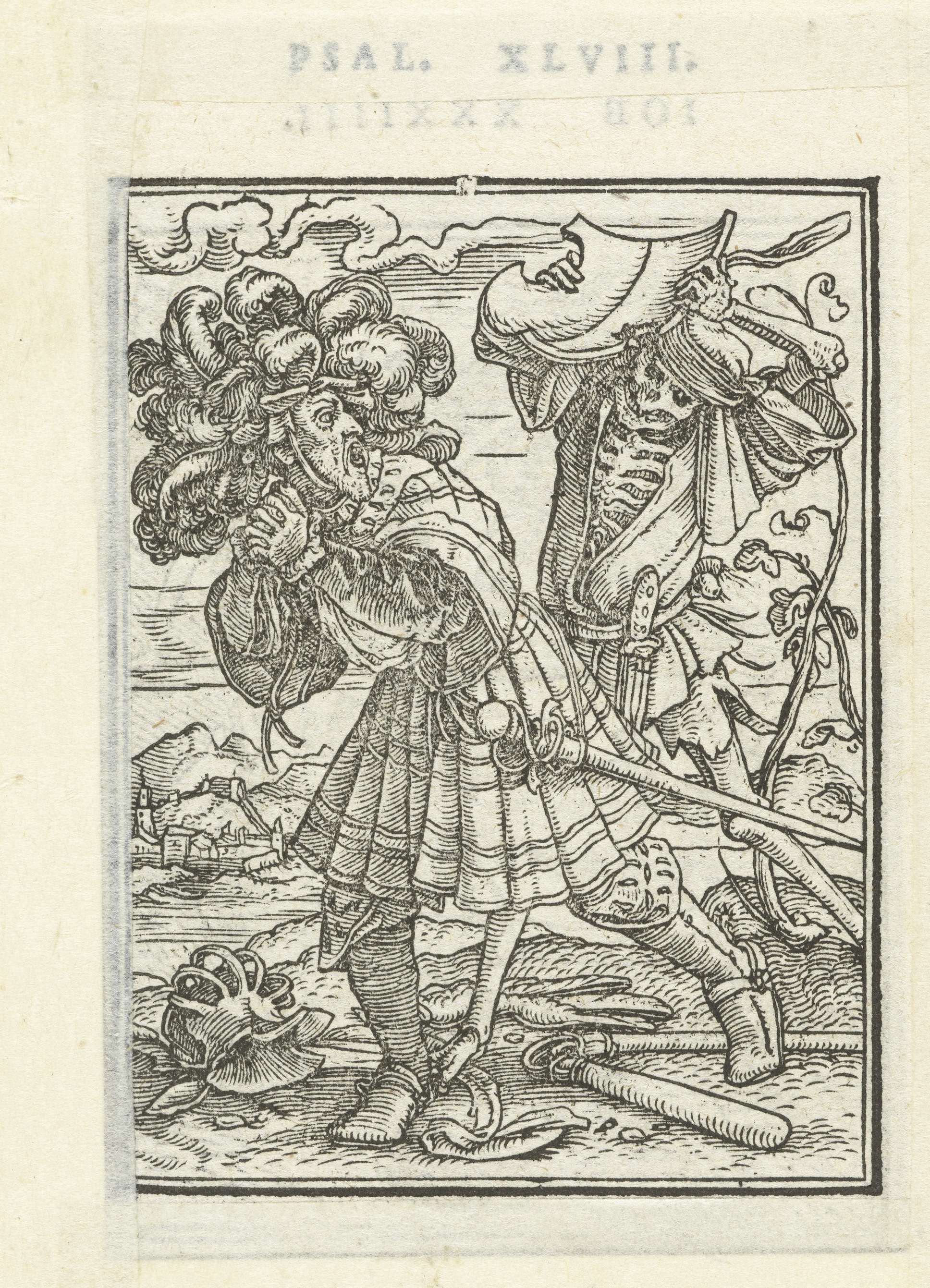
Could a single brushstroke hold eternity? In Koopman en de Dood, the boundaries between life and mortality unravel in a poignant confrontation that transcends time. Look to the left, where the merchant stands in resplendent attire, his gaze unwavering and solemn as if he is facing an inevitable truth. The stark contrast of the dark, looming figure of Death, rendered in muted tones, casts a long shadow over the bustling life that surrounds him. Notice how the light softly caresses the textures of his clothing, illuminating the richness of his existence while the figure of Death remains strangely detached, invoking a tension that grips the viewer.
The careful attention to detail showcases Holbein's masterful technique, with each stroke revealing the complexity of human experience. Delve deeper into the symbolism embedded in this work. The hourglass in the merchant's hand serves as a reminder of the fleeting nature of time, while the skull at Death's feet signifies the inescapable fate awaiting all. The juxtaposition of wealth and mortality speaks to the universal human condition, where material success is ultimately overshadowed by the specter of death.
This emotional tension resonates, prompting reflections on the value of life and the burden of inevitability. In 1538, Holbein created this evocative piece while residing in England, amid the cultural shifts of the Renaissance. As he garnered fame in the court of Henry VIII, he explored profound themes that transcended the era's aesthetic pleasures. This work reflects both his artistic prowess and his preoccupation with the fragility of existence, embodying a moment where art becomes a vessel for contemplating our shared mortality.