La rue Quesnoy, Saint-Valéry-sur-Somme — History & Analysis
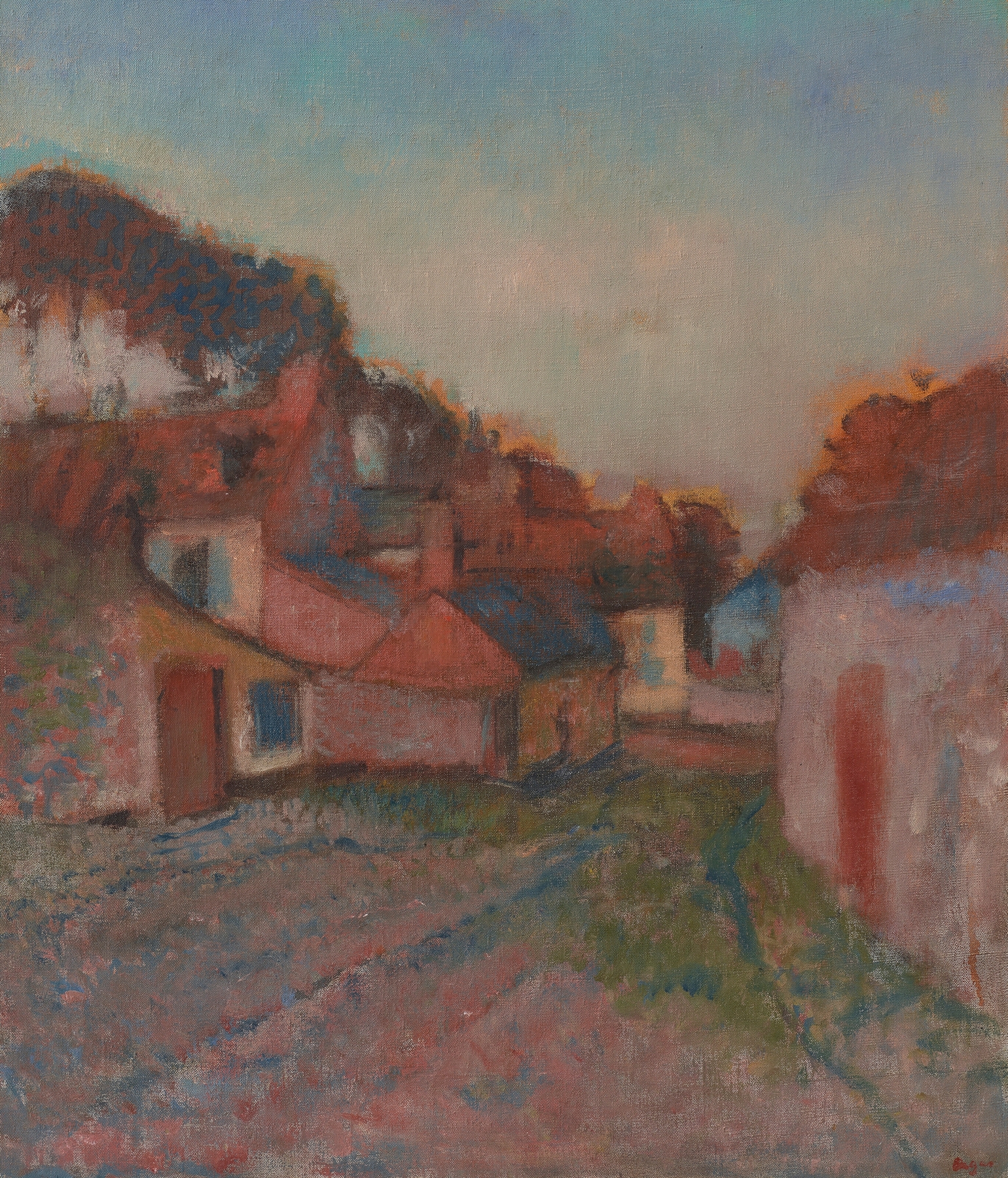
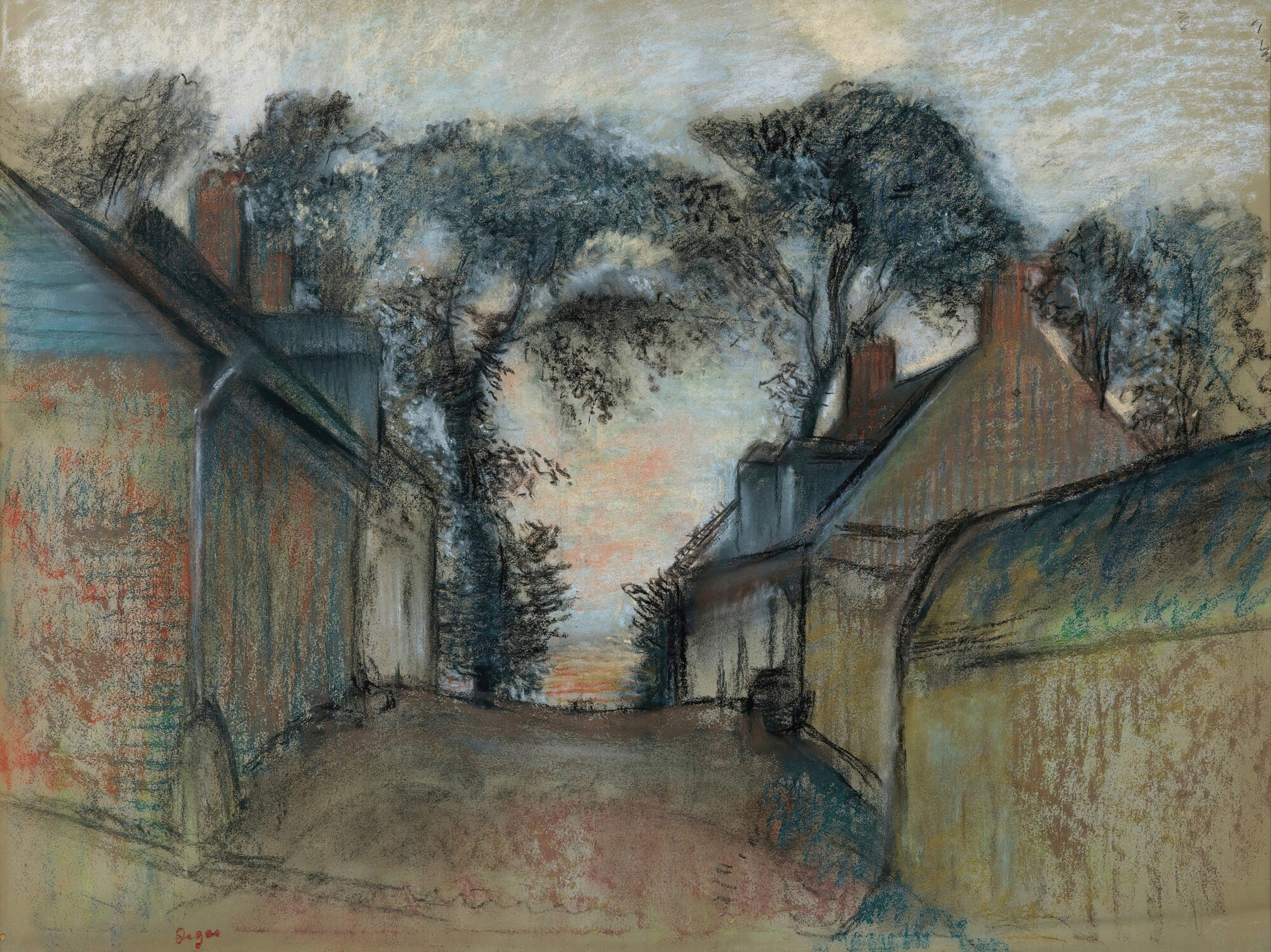
When did color learn to lie? In the depths of a quiet street, the hues whisper secrets of nostalgia, evoking a melancholy that lingers like a fading memory. Look to the left at the faded charm of the buildings, their angles soft and blurred, almost dreamlike. Notice how the gentle blues and ochres blend seamlessly, creating a sense of both familiarity and distance.
The composition draws the eye down the street, where shadows deepen and the light dances delicately upon the cobblestones, inviting you to walk further into the scene. Degas’s masterful brushwork gives texture to the surfaces, while his palette captures the essence of a moment suspended in time. Delve deeper into the contrasts: the warmth of the sunlight juxtaposed with the cool shadows hints at an unspoken sadness beneath the surface. The figures, though present, seem absorbed in their own realms, embodying a solitude that speaks of longing.
Each brushstroke carries the weight of forgotten stories, as the quiet street becomes a reflection of the artist's own introspections, revealing his struggle with isolation in a rapidly changing world. During this period, the artist was exploring the suburban life of France, capturing moments that felt both intimate and distant. Although the exact date of creation remains uncertain, Degas's focus on the everyday, characterized by a sense of melancholy, aligns with his broader oeuvre as he grappled with the burgeoning modernity around him and his place within the evolving landscape of art.