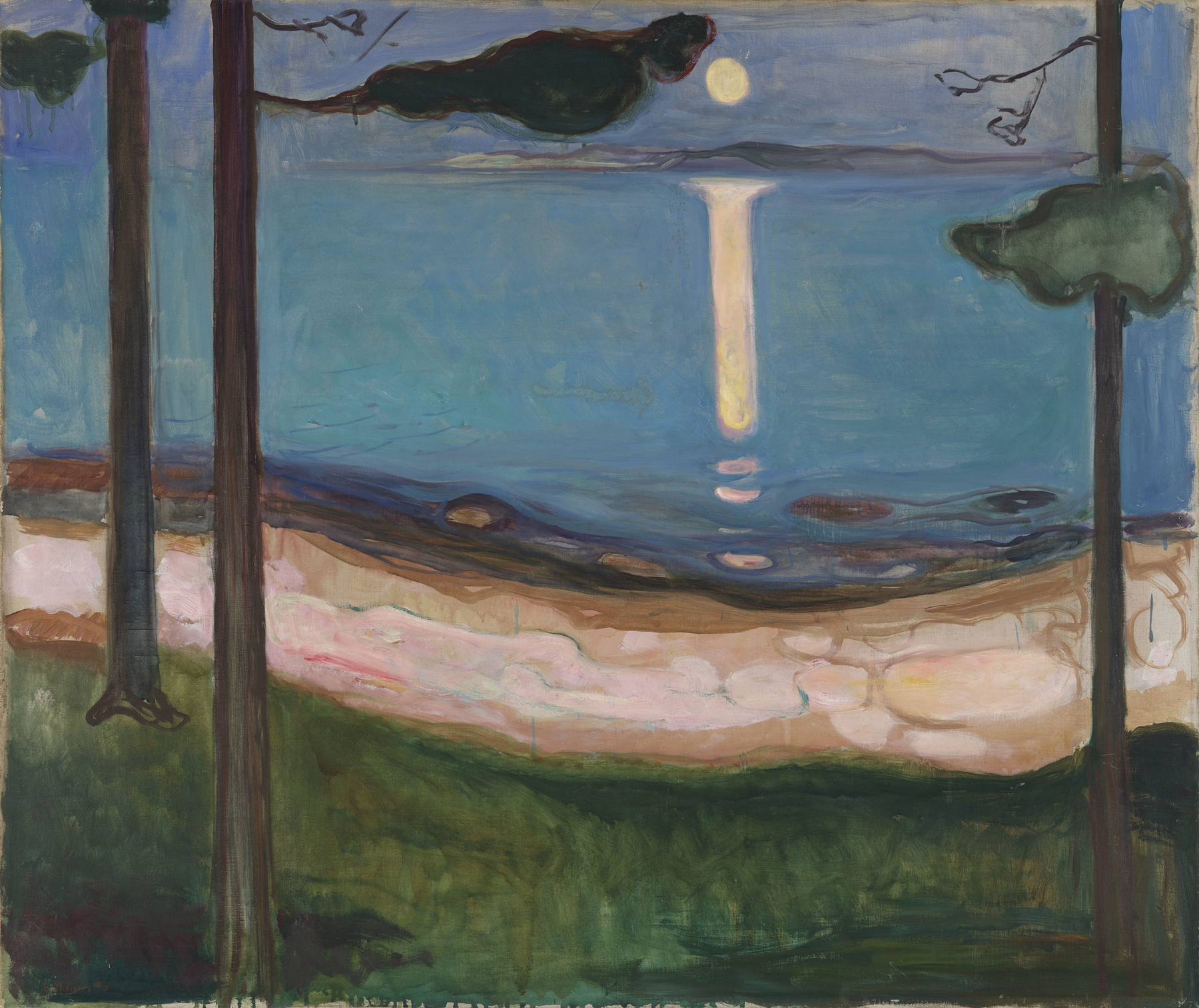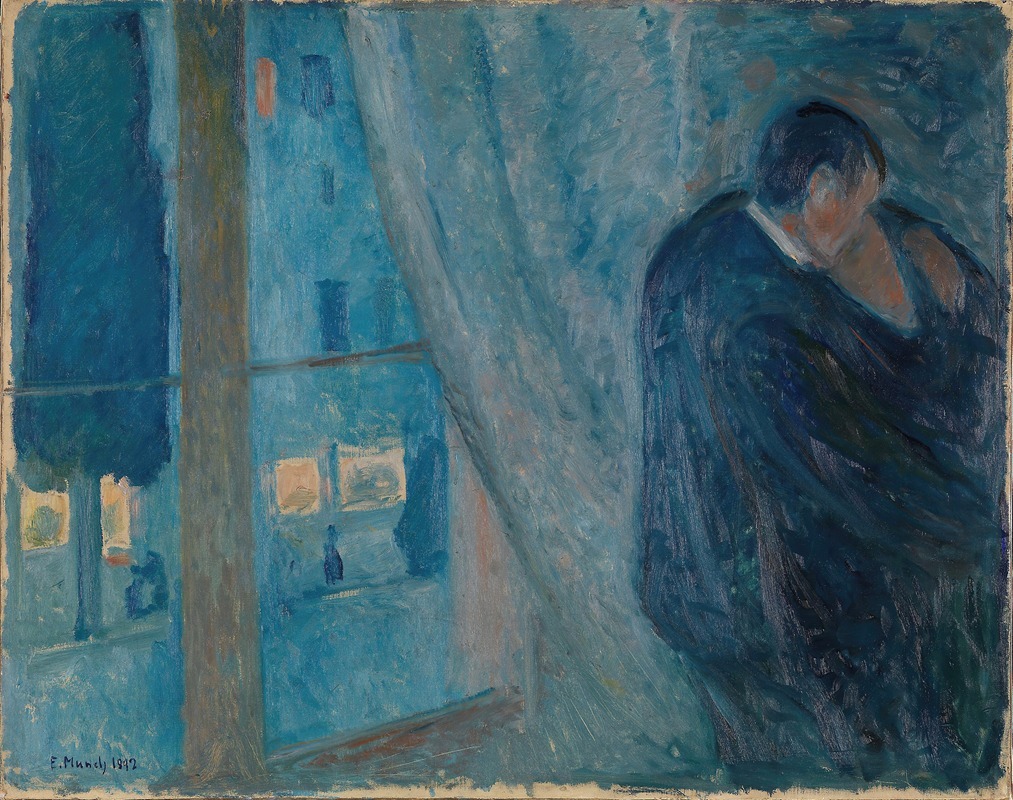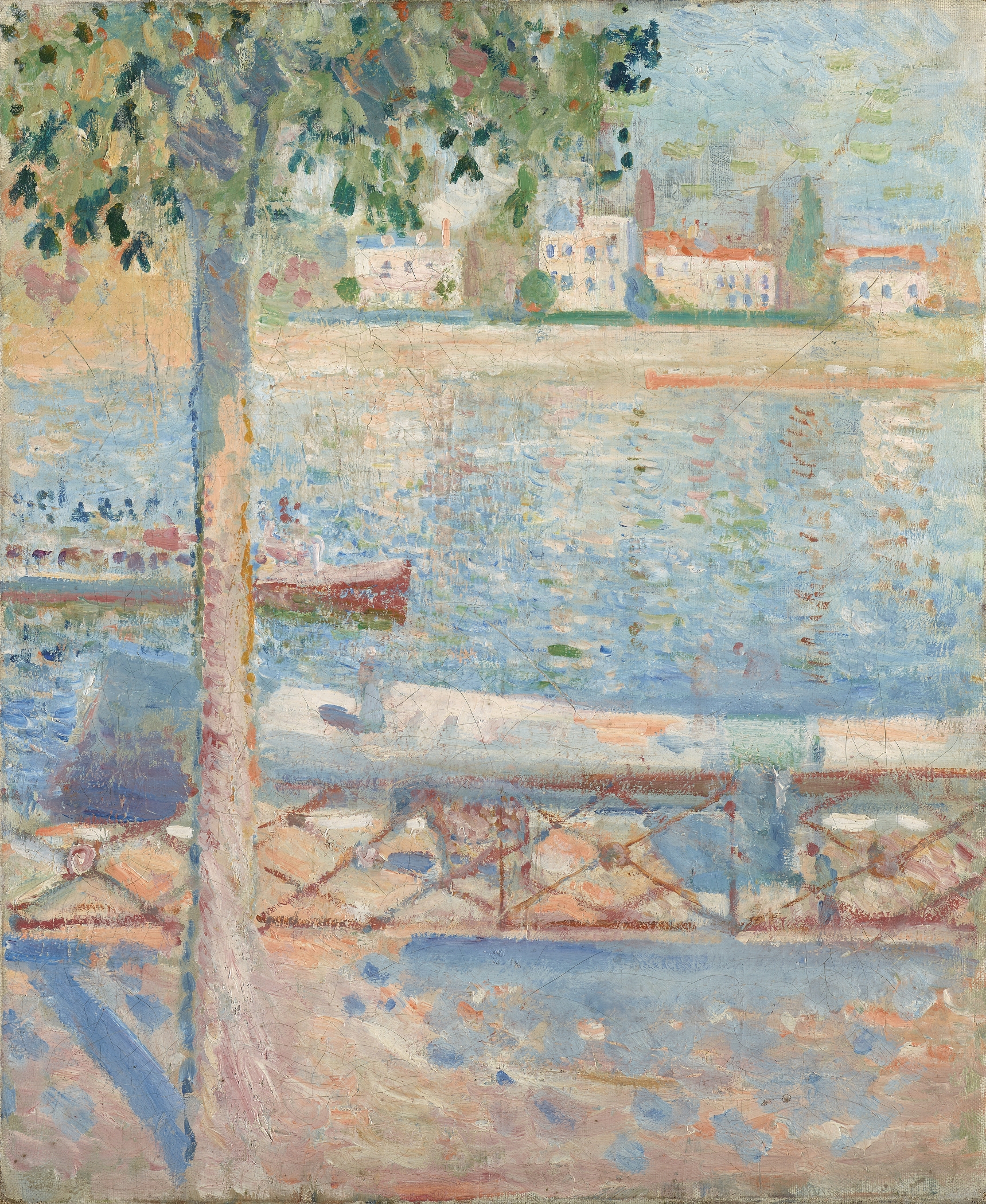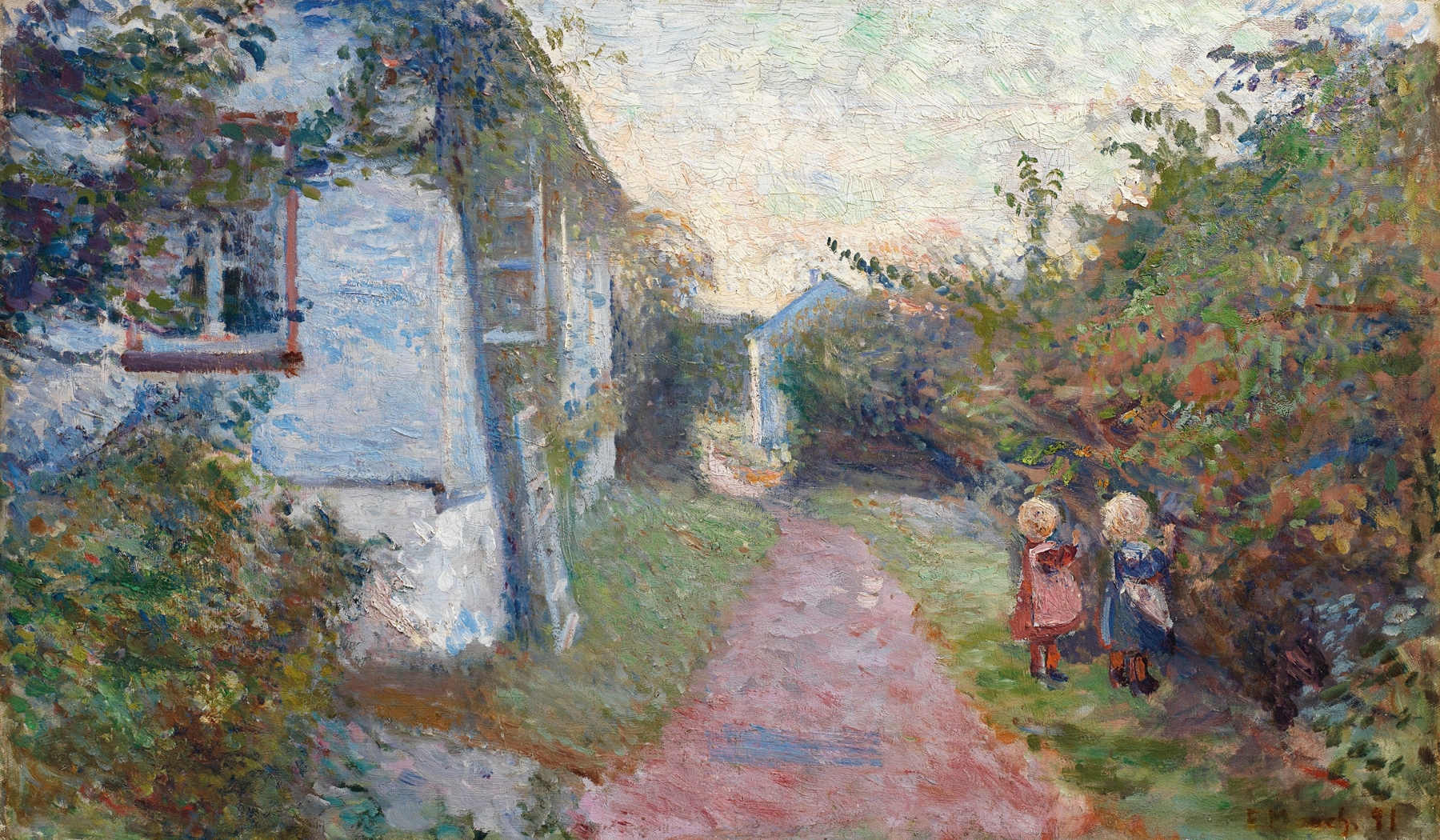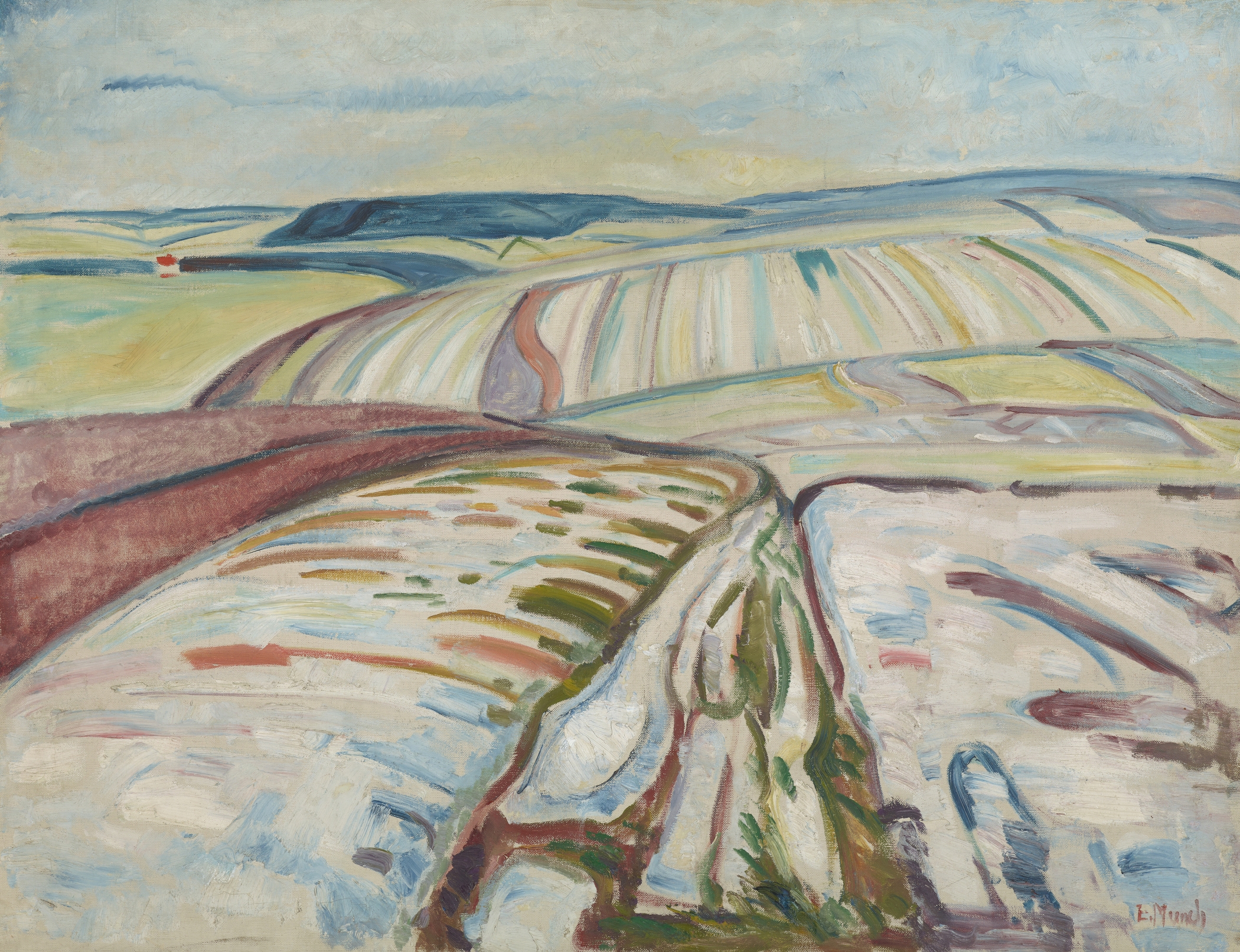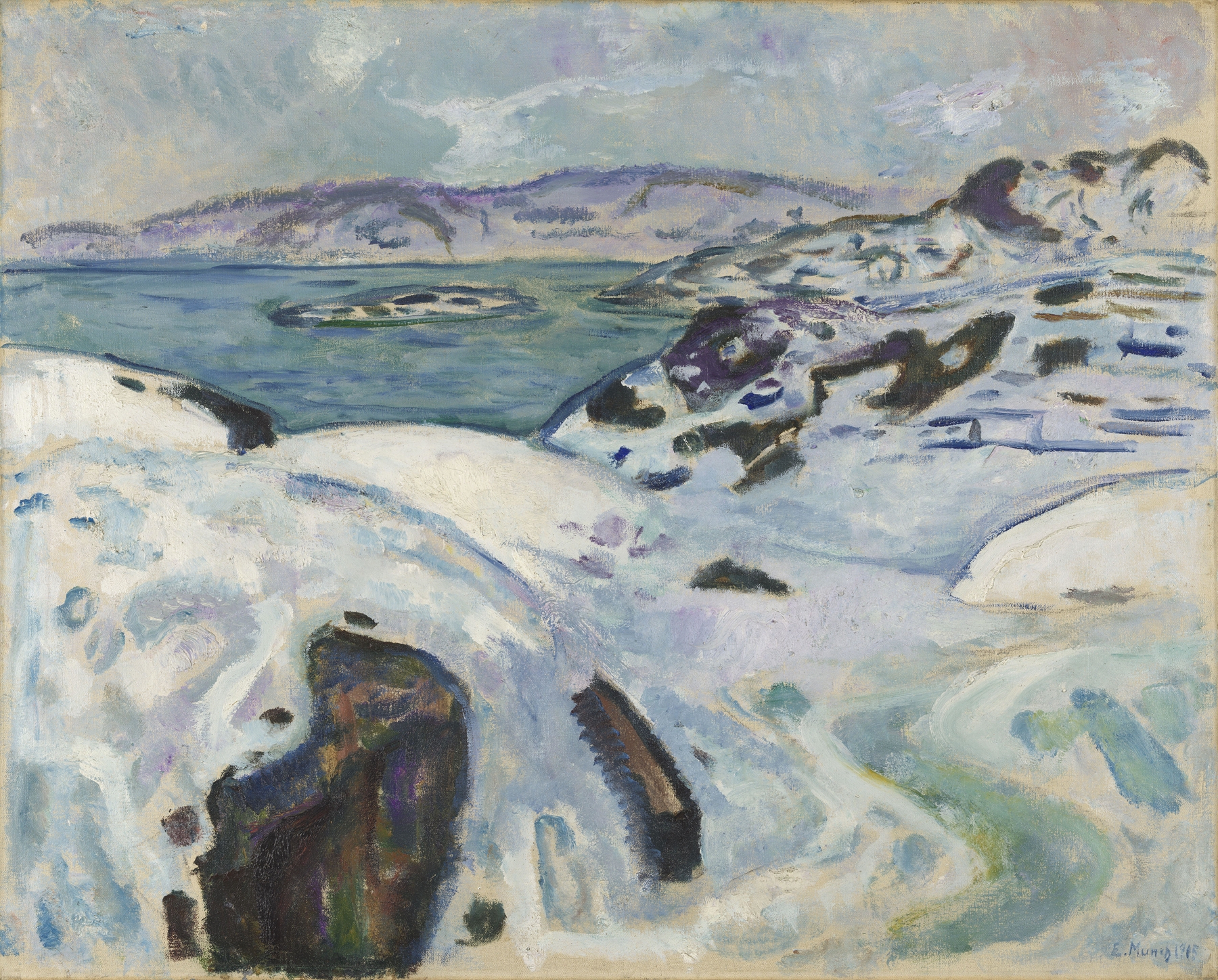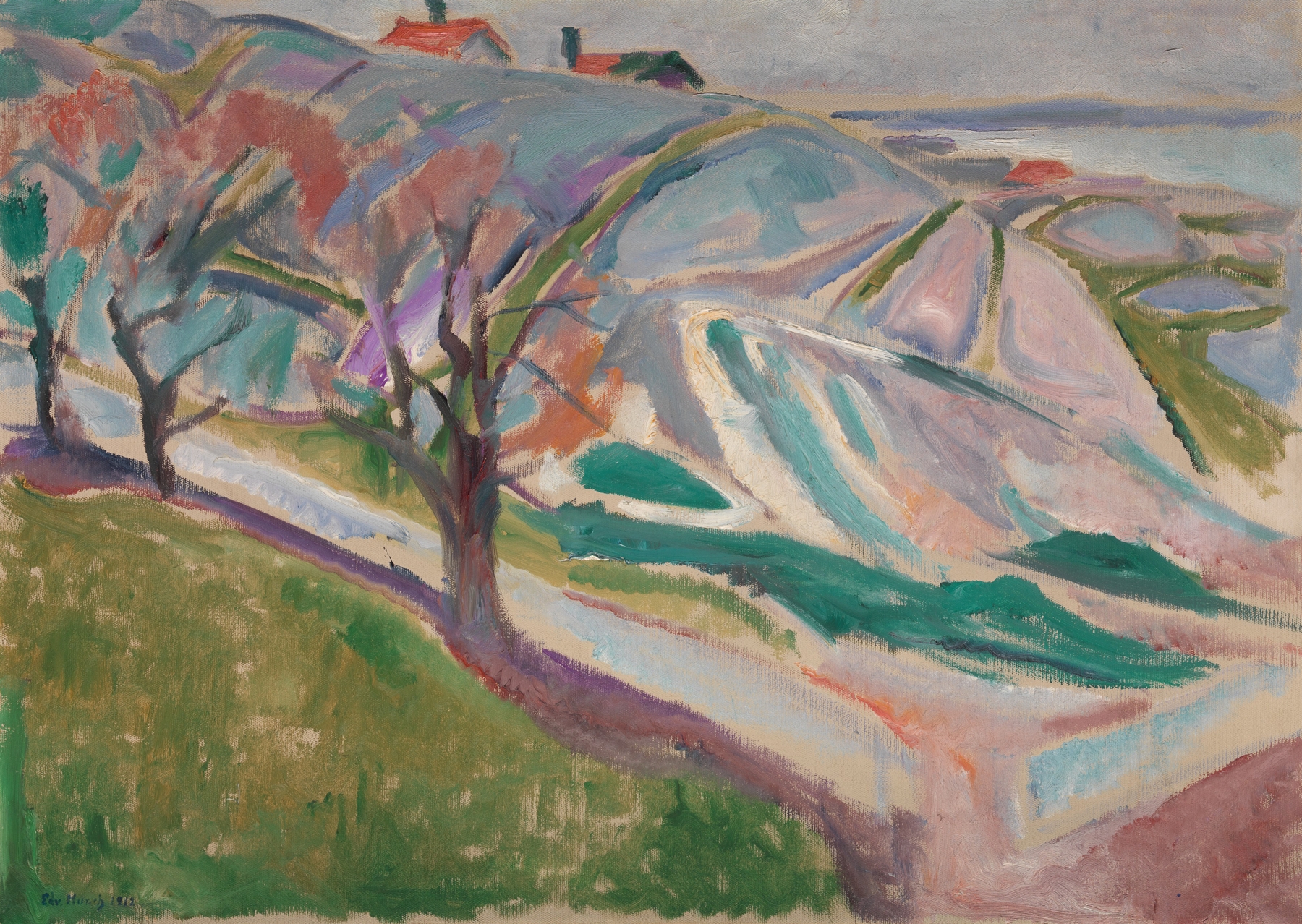
“The canvas doesn’t lie — it simply waits.” In a world where divine beauty often eludes us, the act of capturing nature can feel like an embrace of the sacred. Edvard Munch’s *Landscape, Kragerø* invites viewers to contemplate the interplay between the mundane and the ethereal, revealing a landscape that resonates with spirituality. Look to the horizon, where rolling hills converge with a kaleidoscope of color; the vibrant greens and blues seem to pulse with life. Notice how the light spills over the scene, bathing the trees and water in a soft luminescence, as if the very air is imbued with a celestial glow. The brushwork, both expressive and delicate, carries you through the undulating forms of the landscape, drawing you closer to the beating heart of nature itself. Yet beneath this tranquil facade lies a complexity that speaks to the artist's inner turmoil. The swirling clouds overhead, heavy with shadow, contrast with the glowing landscape, symbolizing the tension between despair and hope. Each stroke conveys not just the physicality of the scene but also an emotional depth, a reminder of how beauty can coexist with melancholy. The distant shoreline beckons, hinting at an unreachable paradise, while the foreground splashes of color pull you back to the reality of existence. Munch created *Landscape, Kragerø* in 1912 while living in Norway, amidst a burgeoning movement that sought to explore the psychological dimensions of art. This period was characterized by a growing interest in expressionism, reflecting his personal struggles and desires. The tension between the divine and the earthly in his work was a mirror of the complexities in both his life and the world around him, as he sought to convey the profound emotions that arise from the natural world.