Langlois Bridge at Arles — History & Analysis
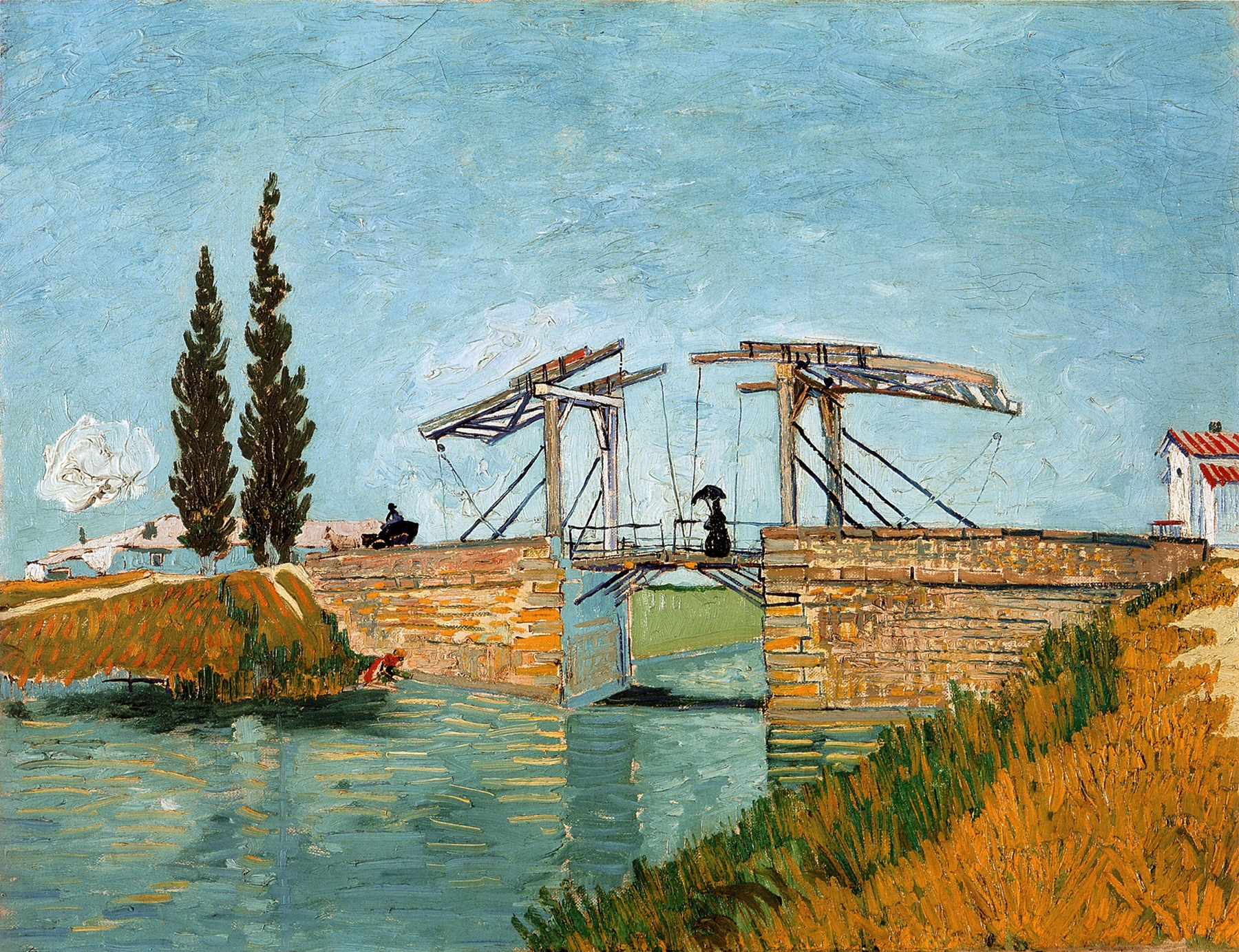
Could a single brushstroke hold eternity? In Langlois Bridge at Arles, the vibrant colors and swirling forms capture a fleeting moment that resonates with the solitude of the human experience. Van Gogh's brush dances across the canvas, suggesting a longing intertwined with the beauty of the world around him. Look to the left at the bridge, its graceful arch dominating the composition, inviting the eye to follow the path that leads into the distance. Notice how the golden yellows and deep blues contrast in the foliage and water, creating a harmonious yet disquieting atmosphere.
The energetic brushstrokes convey both movement and stillness, as if time itself hesitates in this tranquil yet poignant scene. The sky's tumultuous clouds reflect the artist's inner turmoil, pushing viewers to confront the complexity beneath the serene surface. Hidden meanings unfold in the delicate interplay between light and shadow. The bright colors may evoke a sense of vitality, yet beneath them lies a palpable loneliness, as the empty landscape suggests isolation amidst nature's grandeur.
The figures painted in the distance, rendered small and insignificant, mirror the artist’s own feelings of alienation, transforming the bridge into a symbol of both connection and separation. In 1888, Van Gogh was deeply immersed in his artistic journey in Arles, seeking refuge and inspiration. This was a period of prolific output, marked by intense emotional struggles and a quest for belonging. The vibrant landscapes he created during this time reflect not only the beauty of the Provençal region but also his longing for companionship and understanding in a world that often felt isolating.