Lavandières au bord du Loup — History & Analysis
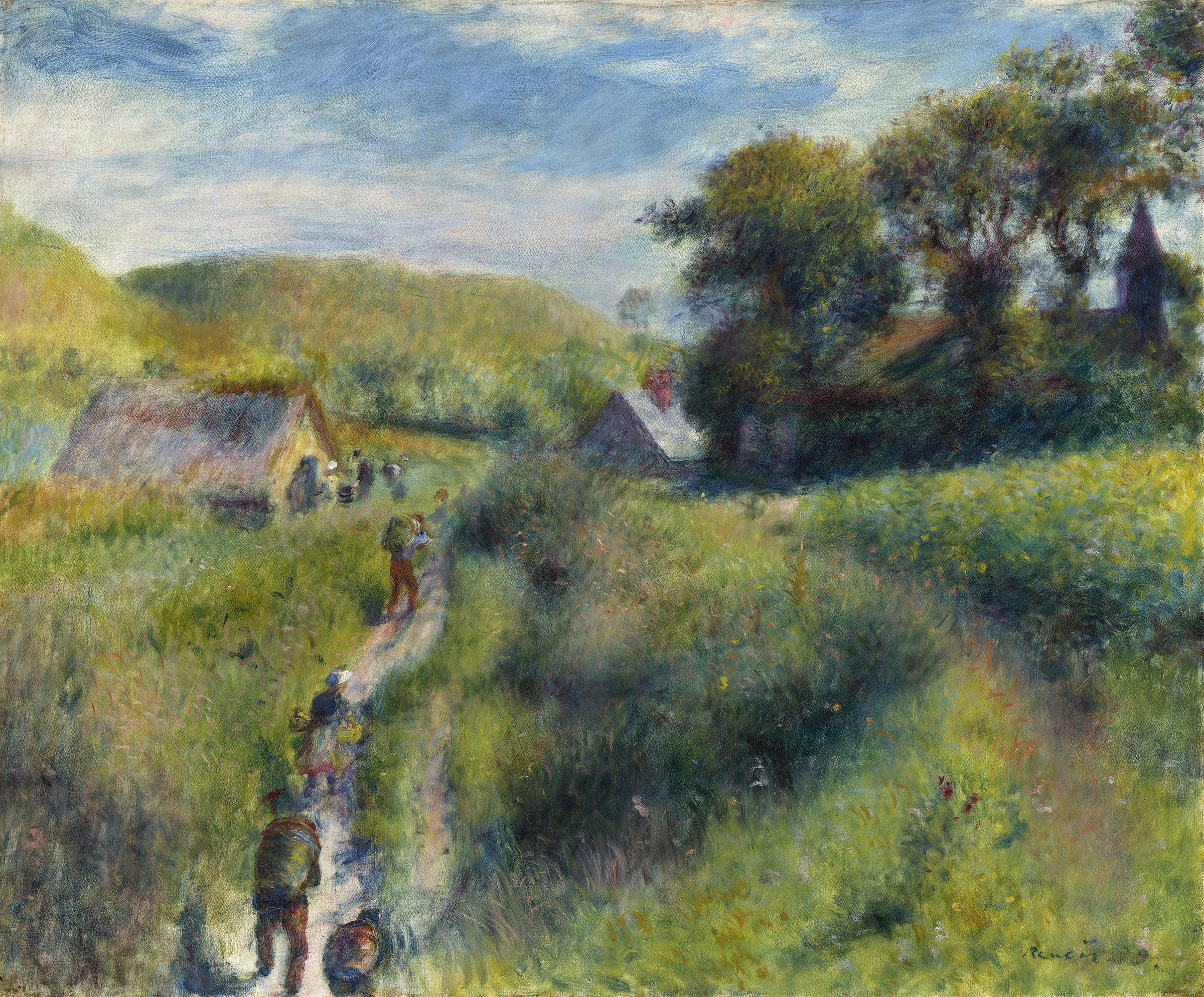
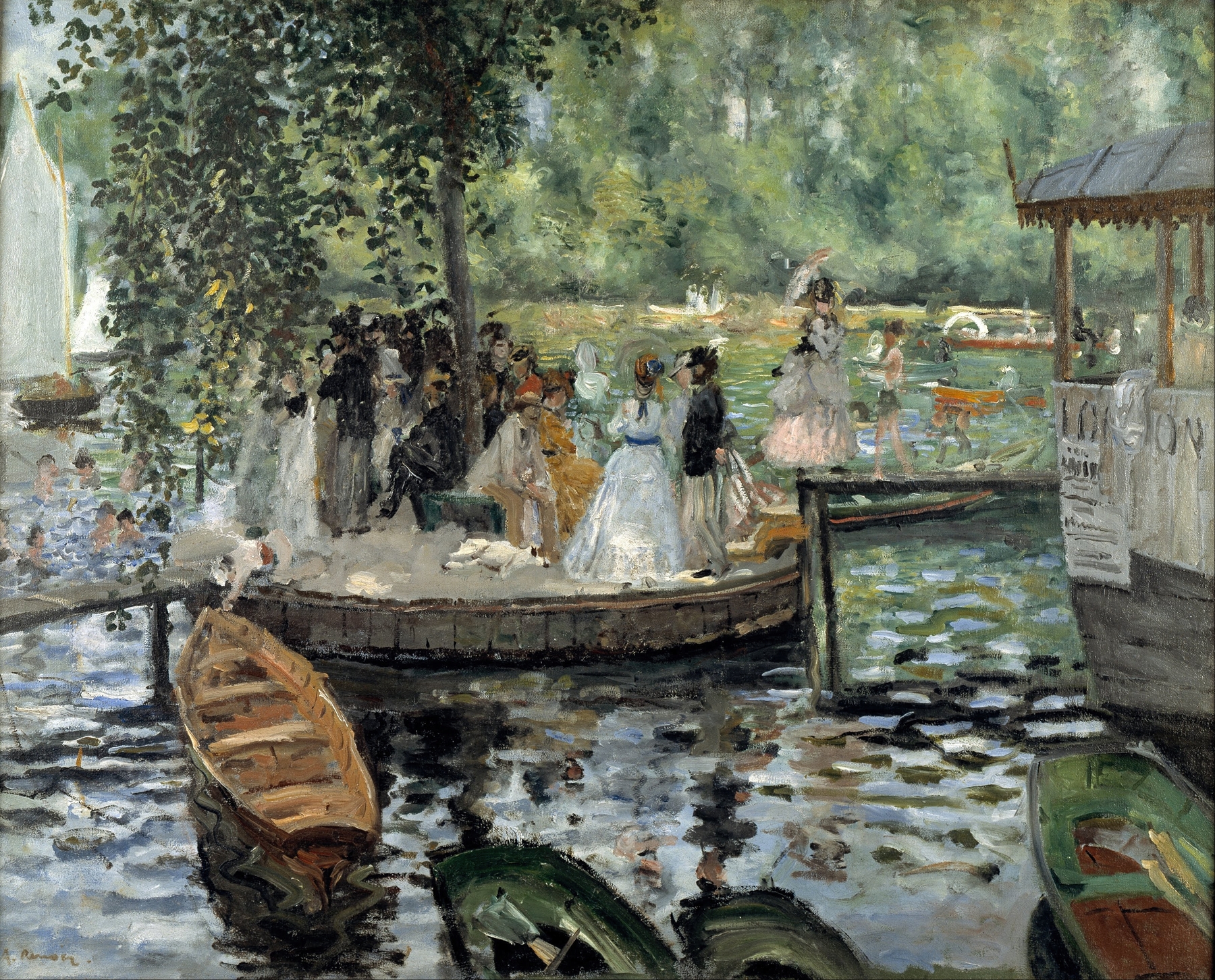
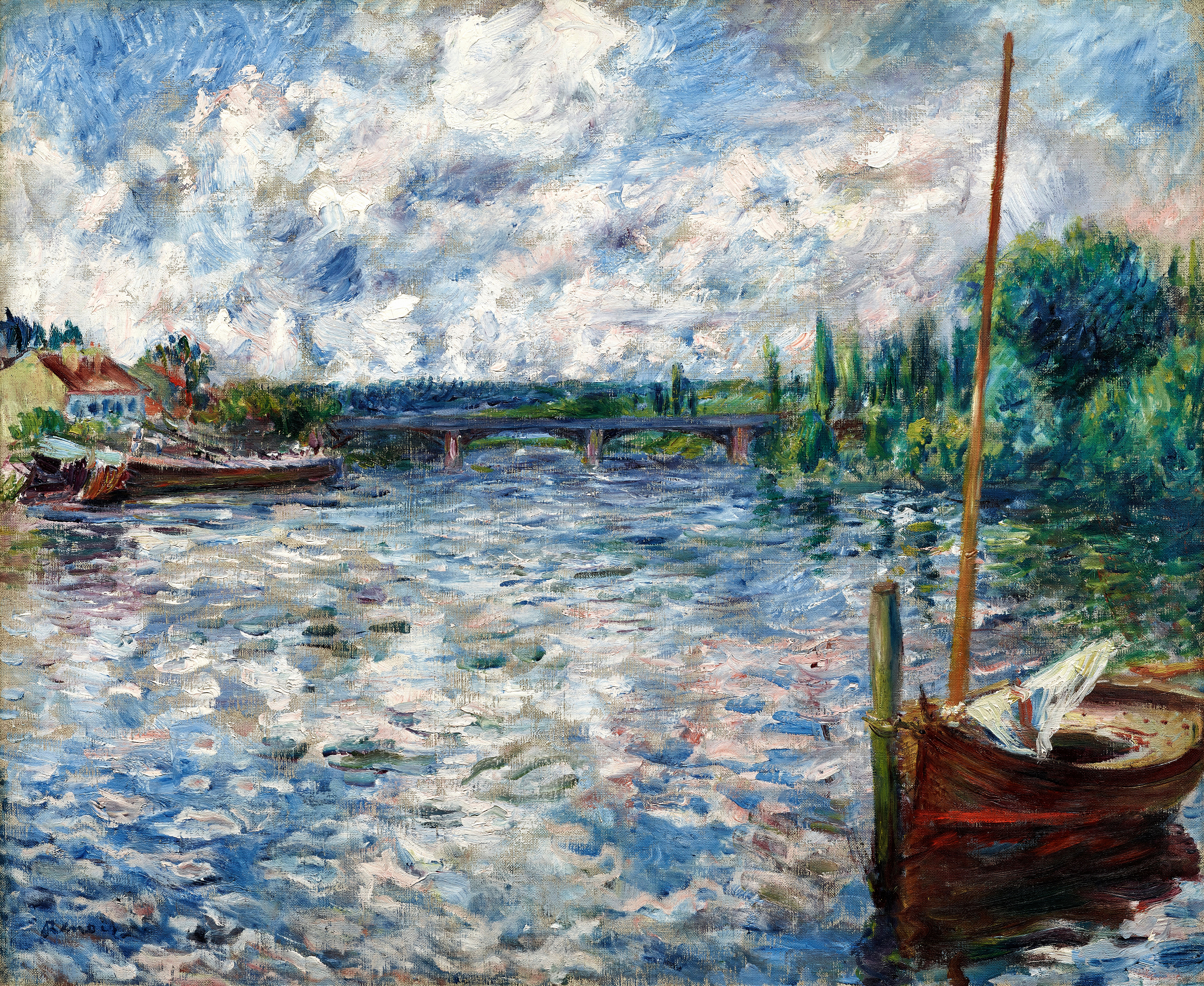
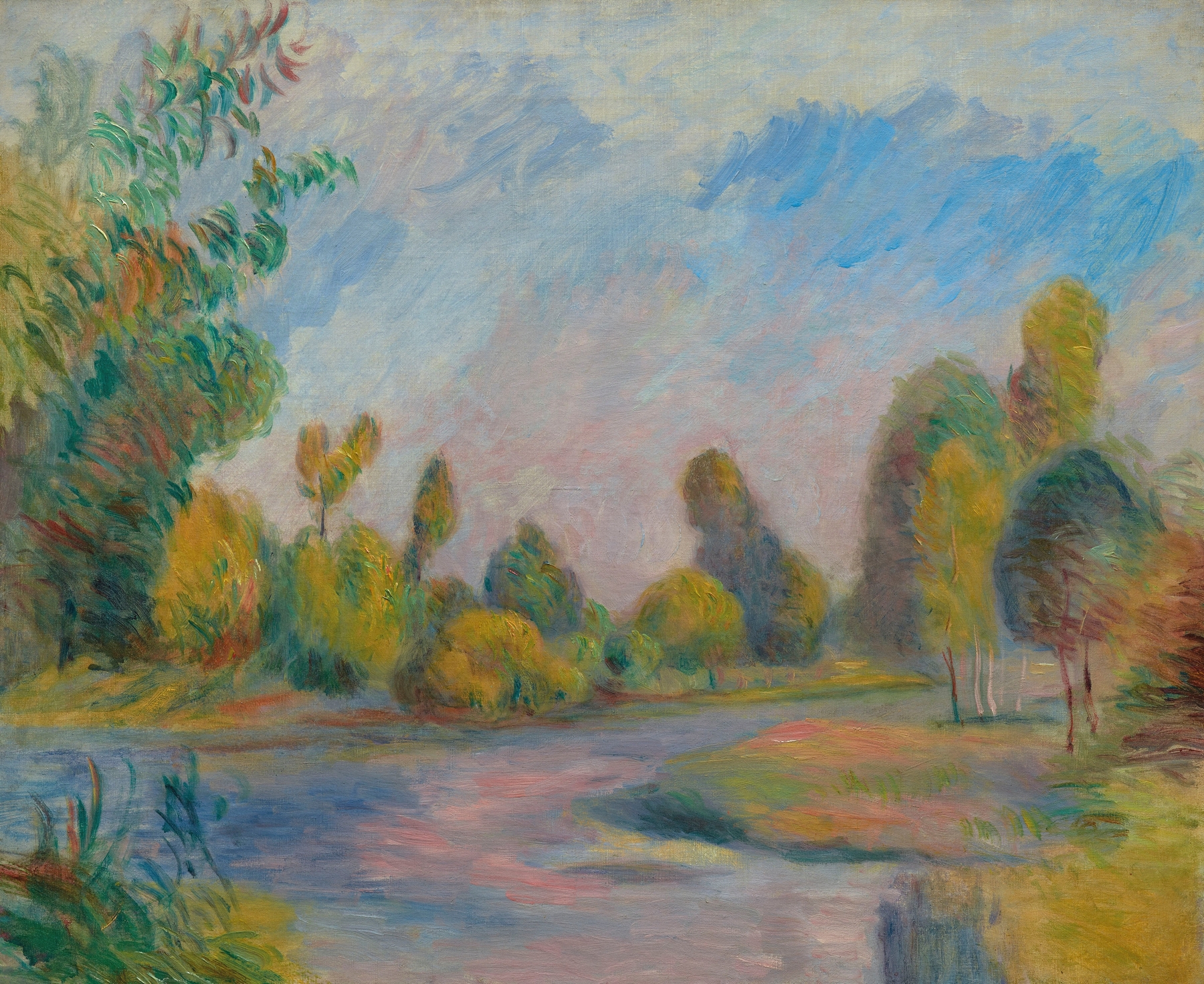
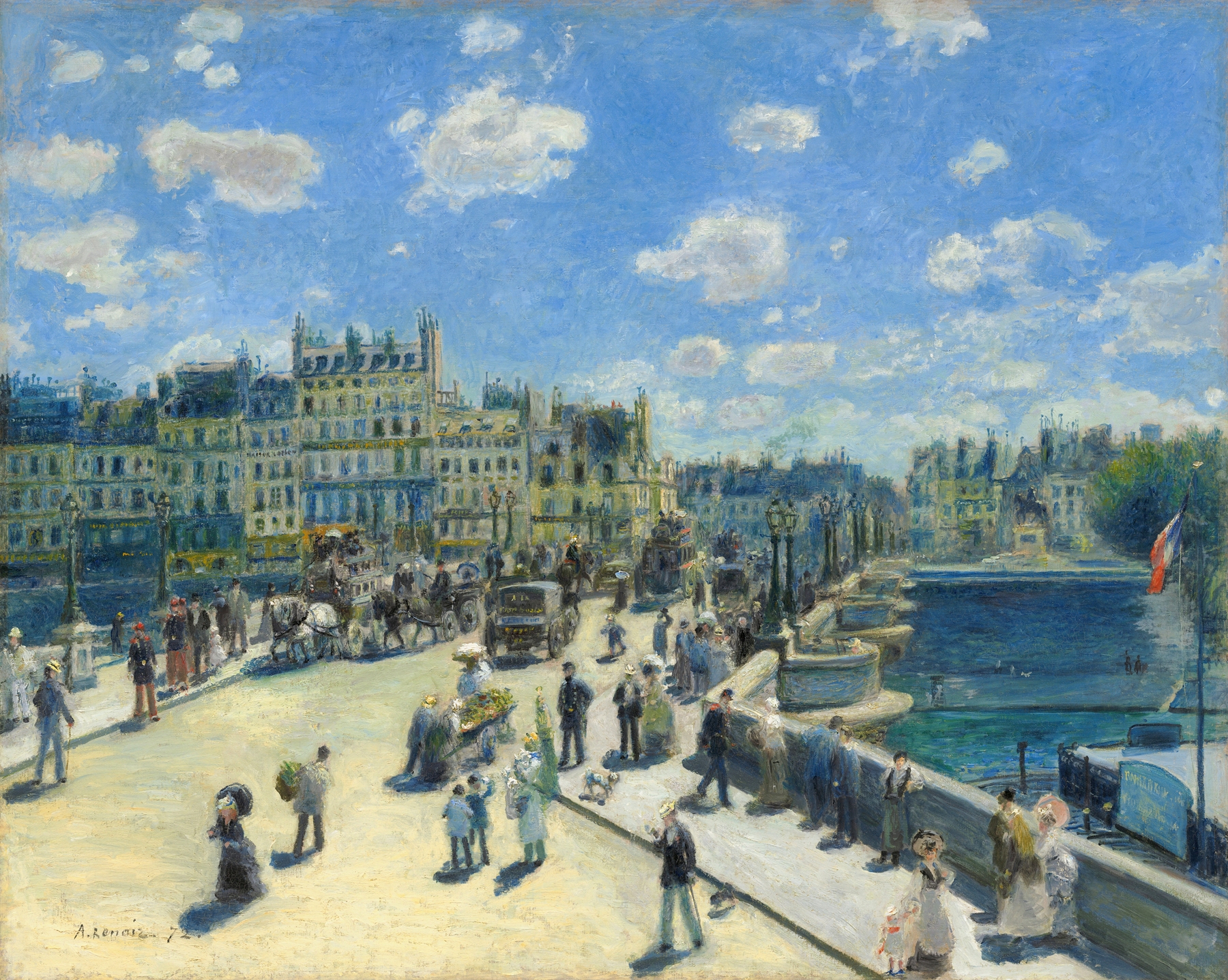
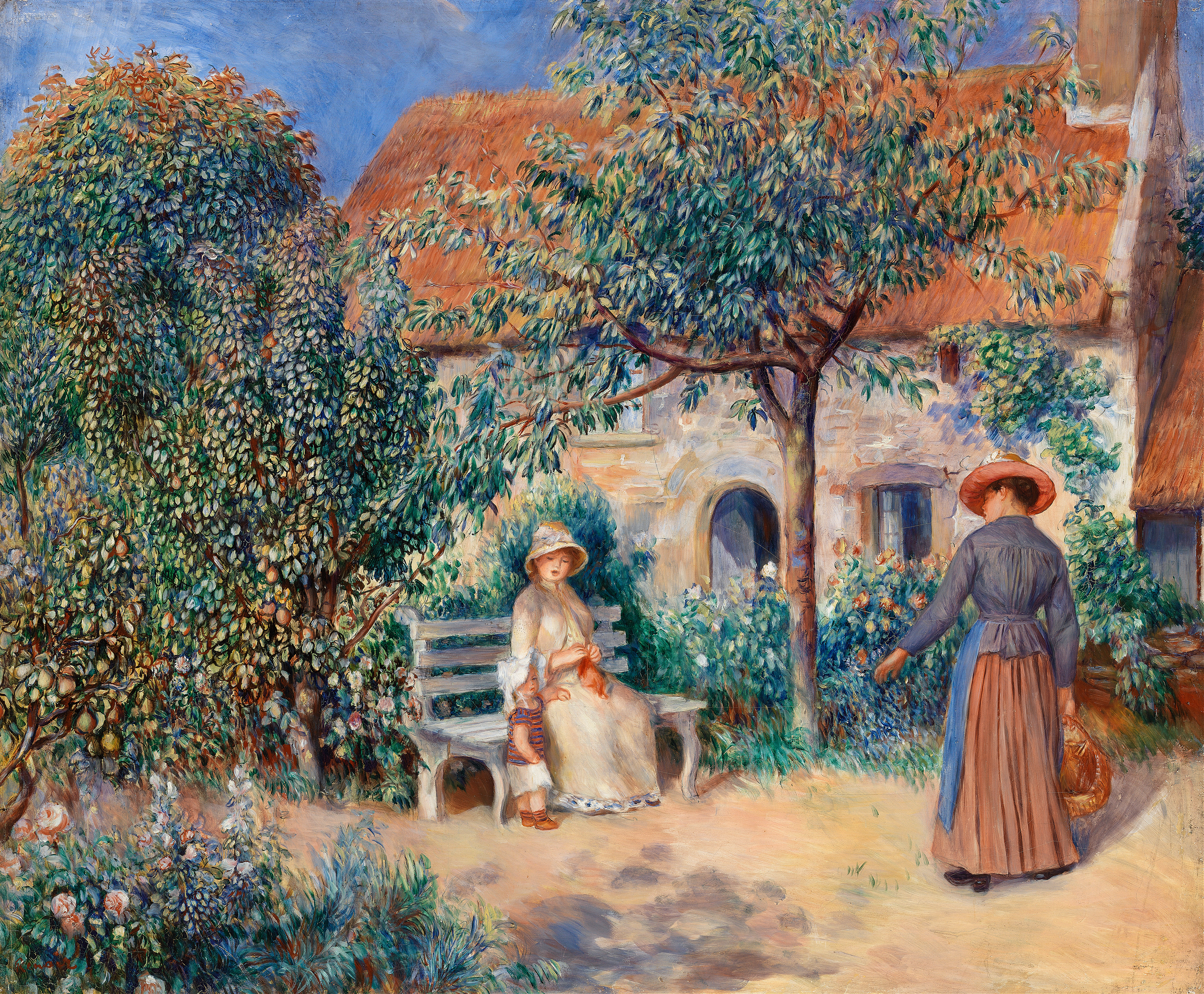
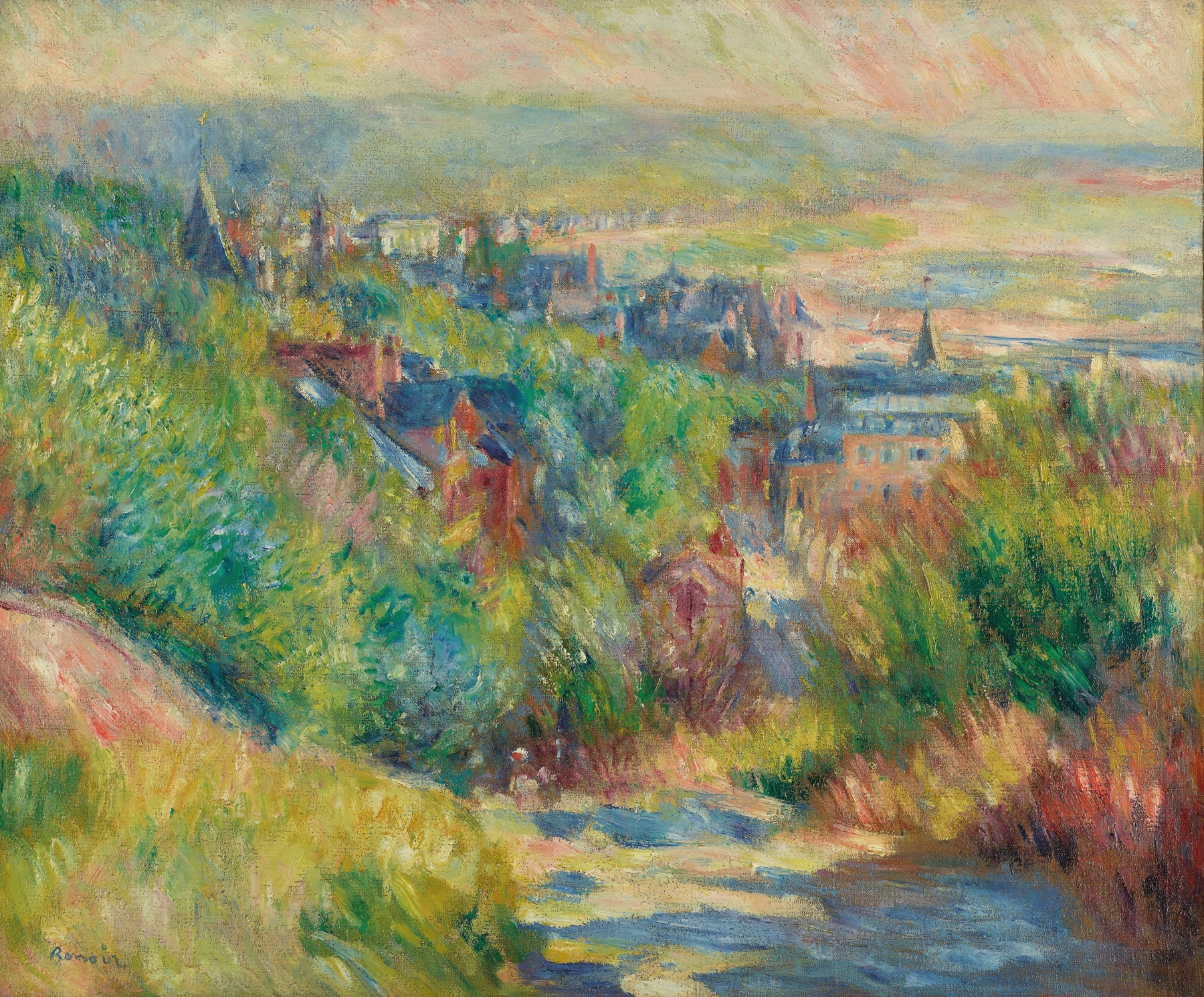
Did the painter know this moment would outlive them? In Lavandières au bord du Loup, the essence of daily life, steeped in the simplicity of the mundane, transforms into a dreamlike reverie. Look to the bottom left where the figures of the washerwomen are nestled in the grassy bank beside the river. Their bodies twist and lean over the water, which shimmers with soft hues of blue and green.
Notice how the sunlight dappled through the trees casts a gentle glow, enveloping the scene in an ethereal warmth. Renoir’s brushwork captures every ripple and reflection, creating a fluidity that breathes life into these figures and their surroundings, inviting the viewer to linger in this tranquil moment. Delve deeper into the contrast between the serene landscape and the laborious task at hand. The vibrant colors of the women’s dresses stand in stark contrast to the muted earth tones of the riverbank, suggesting the tension between nature's beauty and the toils of daily life.
Each woman carries a sense of purpose, yet their expressions hint at the camaraderie and shared stories woven into their work. It’s a snapshot of peace amidst toil, a fleeting connection to the past that echoes through time. Renoir painted this scene in 1917, a time when he was living in Cagnes-sur-Mer, where he found respite from the turmoil of the world. This period marked his late career, transitioning towards a softer, more impressionistic style, as he sought to capture the fleeting moments of joy and harmony despite the backdrop of war and uncertainty enveloping Europe.