Le Colisée à Rome — History & Analysis
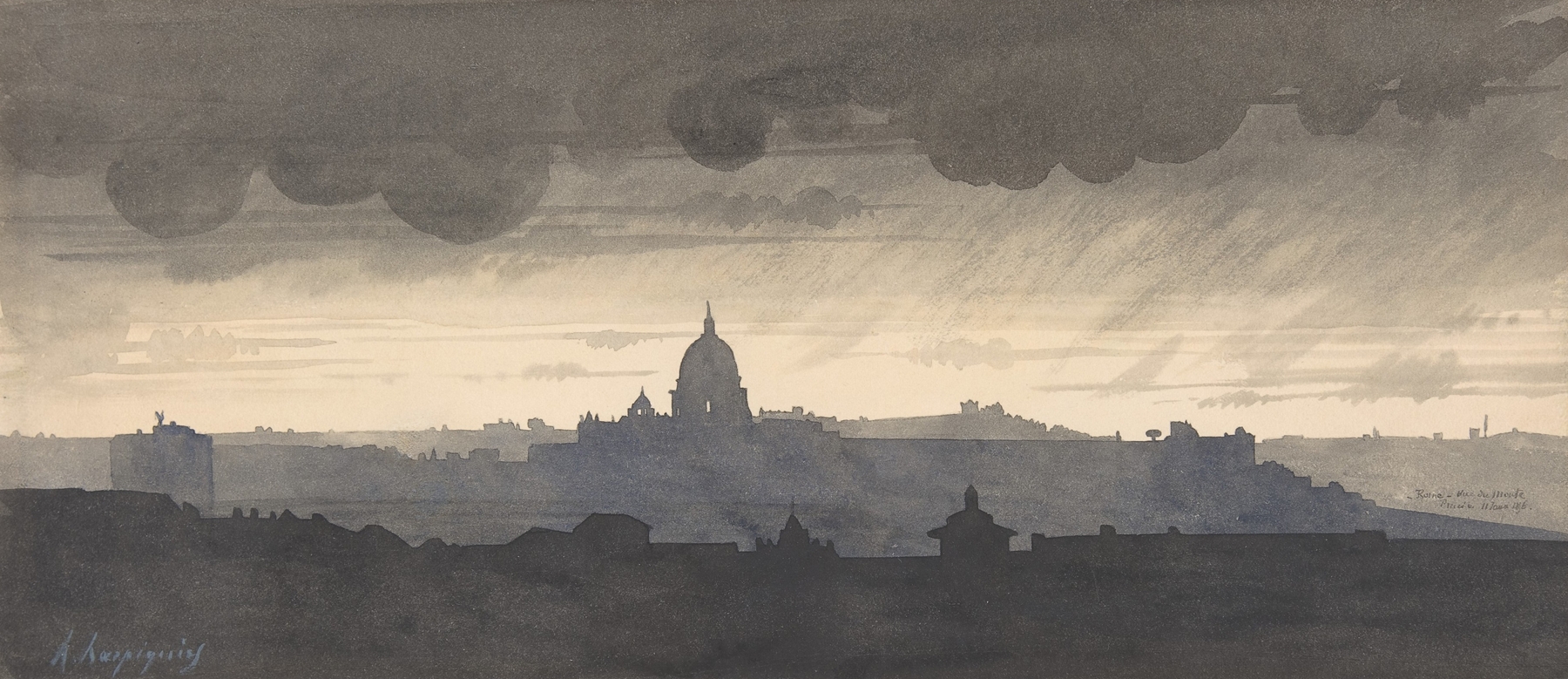
What secret hides in the quiet of the canvas? An ancient structure stands strong, yet its silence whispers the fears of the past, echoing through time. Focus on the magnificent arches that dominate the foreground, their weathered stones capturing the golden hues of a setting sun. The artist employs a delicate interplay of light and shadow, drawing your eye to the contrasting patterns that dance across the Colosseum’s facade.
Notice how the soft brushstrokes evoke a sense of nostalgia, inviting viewers to explore the depth of history etched into every crevice. As you delve deeper, consider the haunting emptiness that envelops the scene. The Colosseum, once a vibrant hub of life and spectacle, now stands deserted, prompting reflections on mortality and the passage of time. The rugged texture of the stone exudes both strength and vulnerability, creating a poignant tension that highlights humanity's transient existence.
The fear of obsolescence lingers in the air, reminding us that even the mightiest structures are not impervious to decay. In 1878, Harpignies painted this monumental work while residing in France, amidst a growing fascination with plein air painting. His engagement with the natural world and architectural grandeur was evident during a time when artists sought to capture the essence of places that were both idyllic and historically rich. This work is a testament to a period where art began to explore the interplay between human achievement and the inexorable march of time.