Le peuplier, effet de soleil, Villeneuve-sur-Yonne — History & Analysis
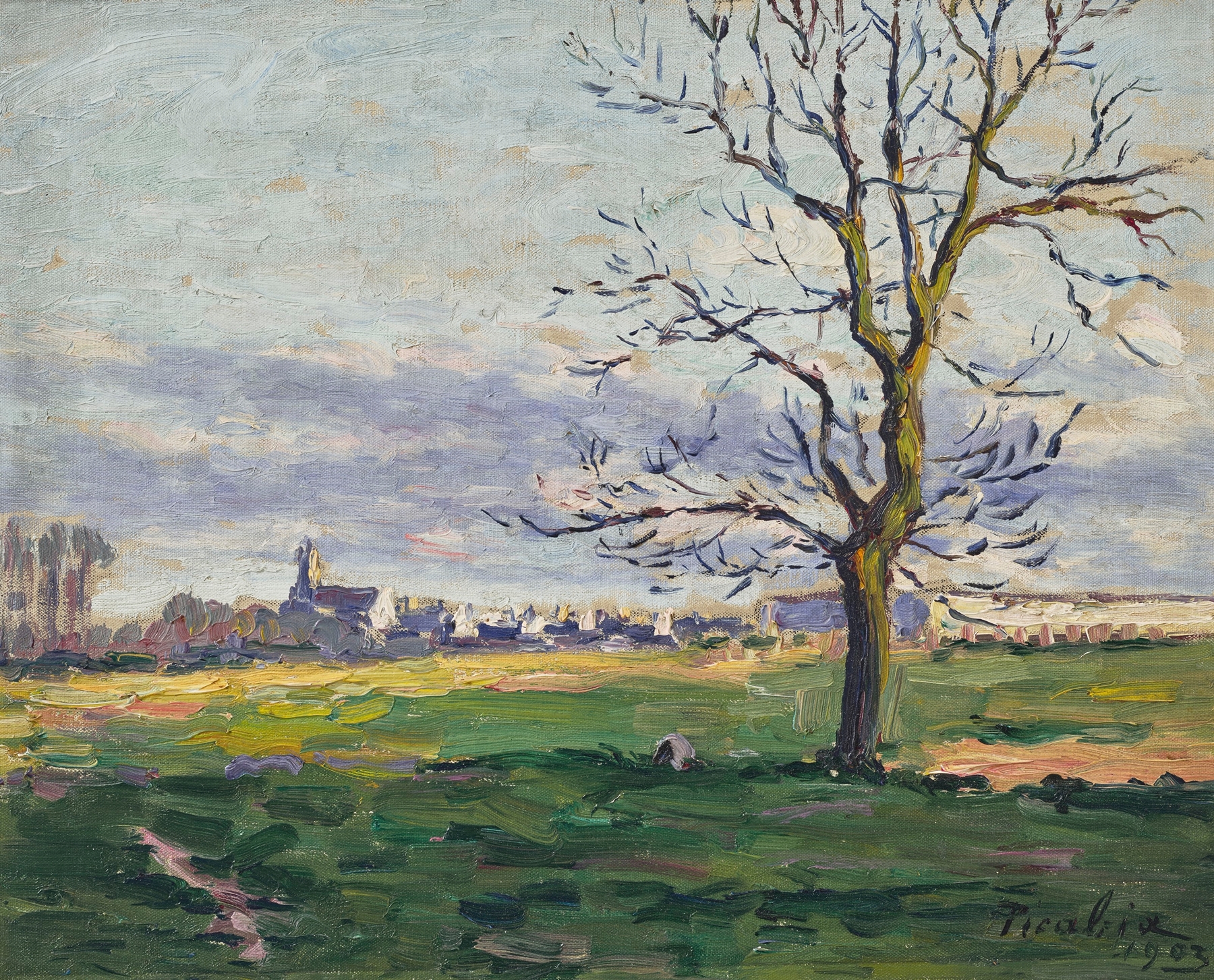
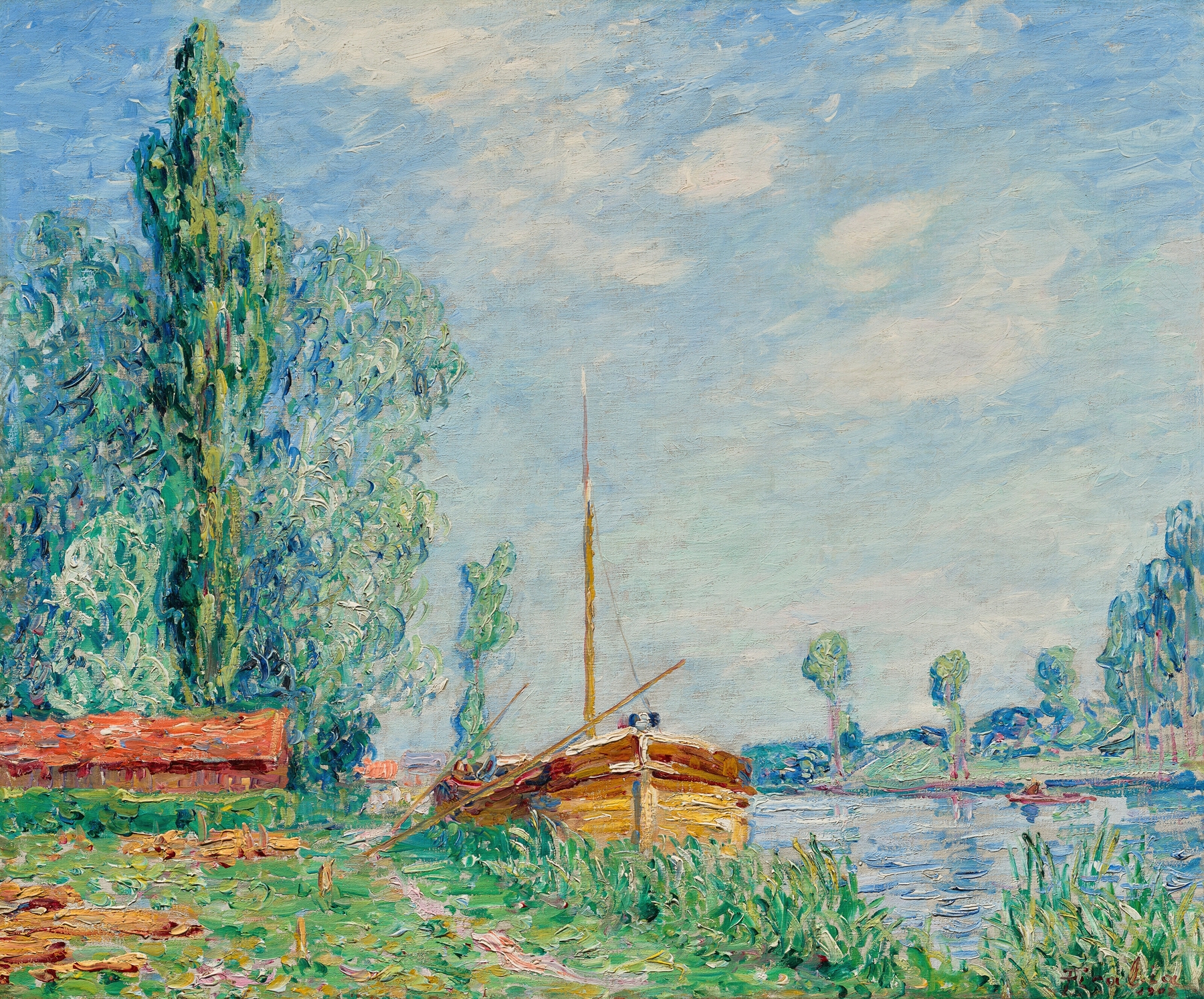
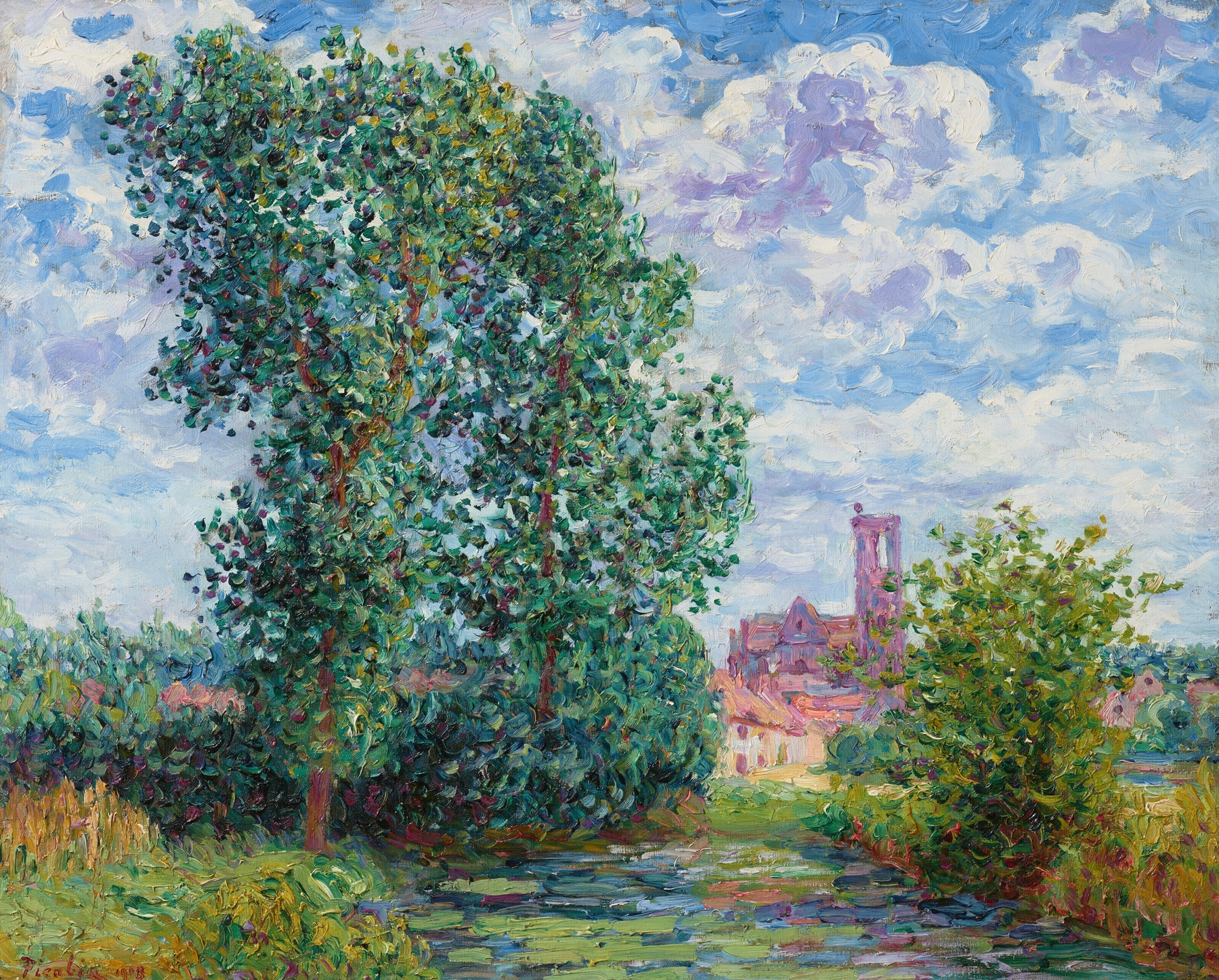
Can beauty exist without sorrow? This question resonates deeply within the vibrant brushstrokes of a scene where light dances across the landscape, casting shadows that evoke both nostalgia and hope. Look to the left at the towering poplars, their slender forms reaching skyward. The golden sunlight filters through the leaves, creating a kaleidoscope of greens and warm yellows that vibrate with life. Here, brushwork blurs the boundaries between trees and sky, merging them into a harmonious dialogue.
This deliberate choice of color and texture draws the viewer’s eye, anchoring them in the serene moment while simultaneously inviting exploration of the canvas's rich nuances. Within this picturesque composition, a tension emerges. The interplay of light and shadow suggests fleeting moments—the joy of witnessing nature’s beauty paired with the inevitable passage of time. Notice the way the sunlight softly caresses the poplar trunks, illuminating their rough bark, hinting at the resilience required to endure life's storms.
Each element, from the gentle swell of the horizon to the vibrant color palette, evokes a quiet longing, a reminder that beauty often exists in the delicate balance between joy and melancholy. Francis Picabia created this piece in 1906, during a period marked by rapid changes in the art world, as Impressionism was giving way to more radical movements. Working in Villeneuve-sur-Yonne, Picabia was exploring new ways to capture light and emotion on canvas, reflecting both his personal experiences and the shifting artistic landscape around him. This work stands as a testament to his ability to convey profound sentiments through dynamic color and form.