Paysage maritime — History & Analysis
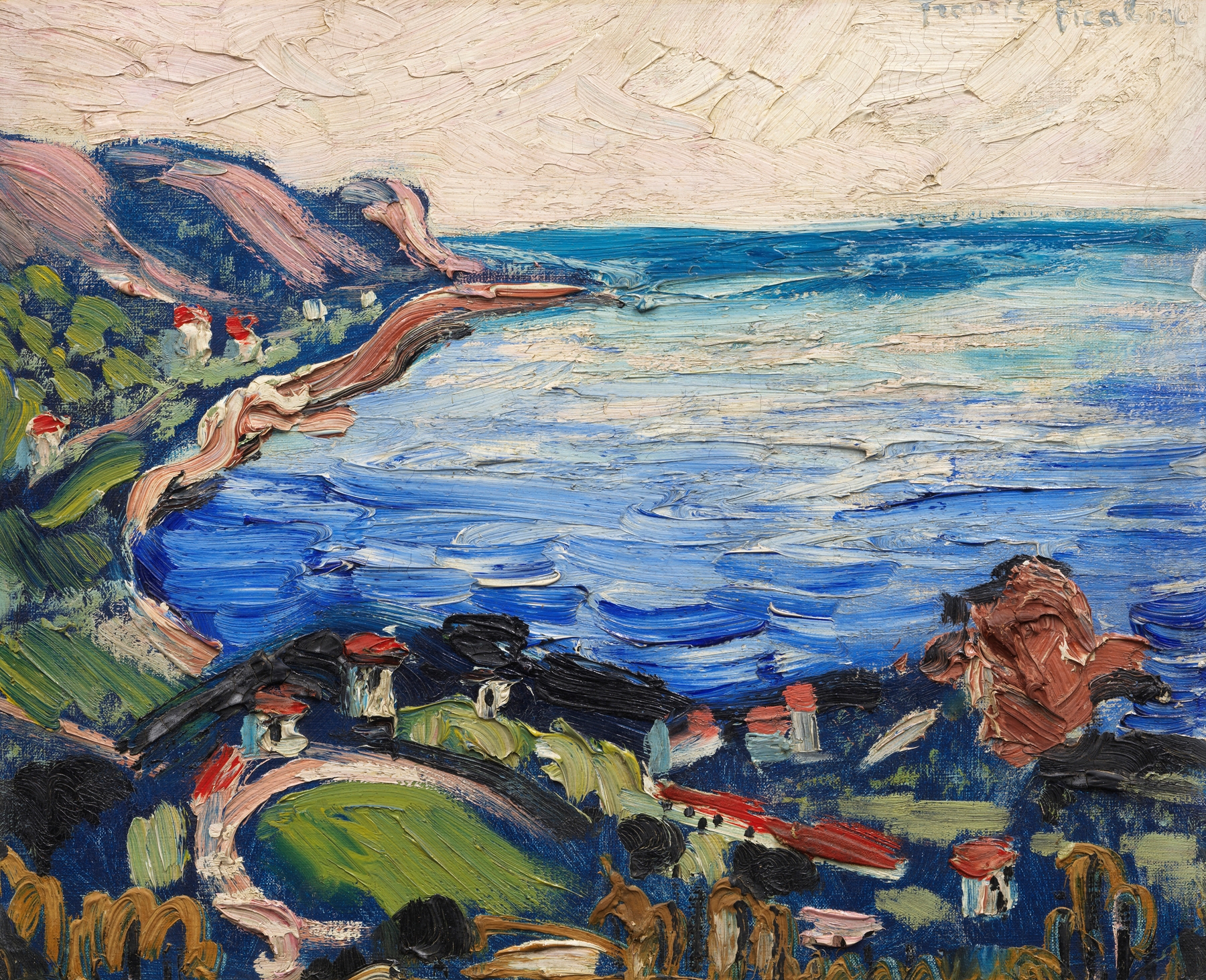
Is this a mirror — or a memory? In Paysage maritime, Francis Picabia invites us to confront the transient nature of existence and the possibility of rebirth. Look to the vibrant blues that dominate the canvas, creating a visceral sense of a seaside horizon. Notice how the bold brushstrokes intertwine, forming waves that seem to dance and ripple with life.
The interplay of light and shadow draws your eye across the surface, leading you through the layered depths of the scene, as if beckoning you to step closer and immerse yourself in the ocean's embrace. Yet, beyond its surface beauty lies a complex emotional tension. The crashing waves symbolize both chaos and renewal, evoking a sense of struggle that contrasts with the serene blues of the sky. Hidden within the layers are hints of human presence—perhaps a touch of nostalgia or longing for connection.
This duality captures the essence of life’s constant ebb and flow, resonating with the idea of rebirth and the cyclical nature of existence. In 1938, Picabia created this work during a period of profound change in the art world, marked by the rise of modernism and the tumultuous backdrop of global unrest. Living in the heart of Paris, he was influenced by the shifting avant-garde movements that sought to redefine artistic expression. Paysage maritime reflects his desire to explore new horizons, merging abstraction with elements of the familiar, allowing viewers to contemplate their own memories and the potential for transformation.