Les Parasols — History & Analysis
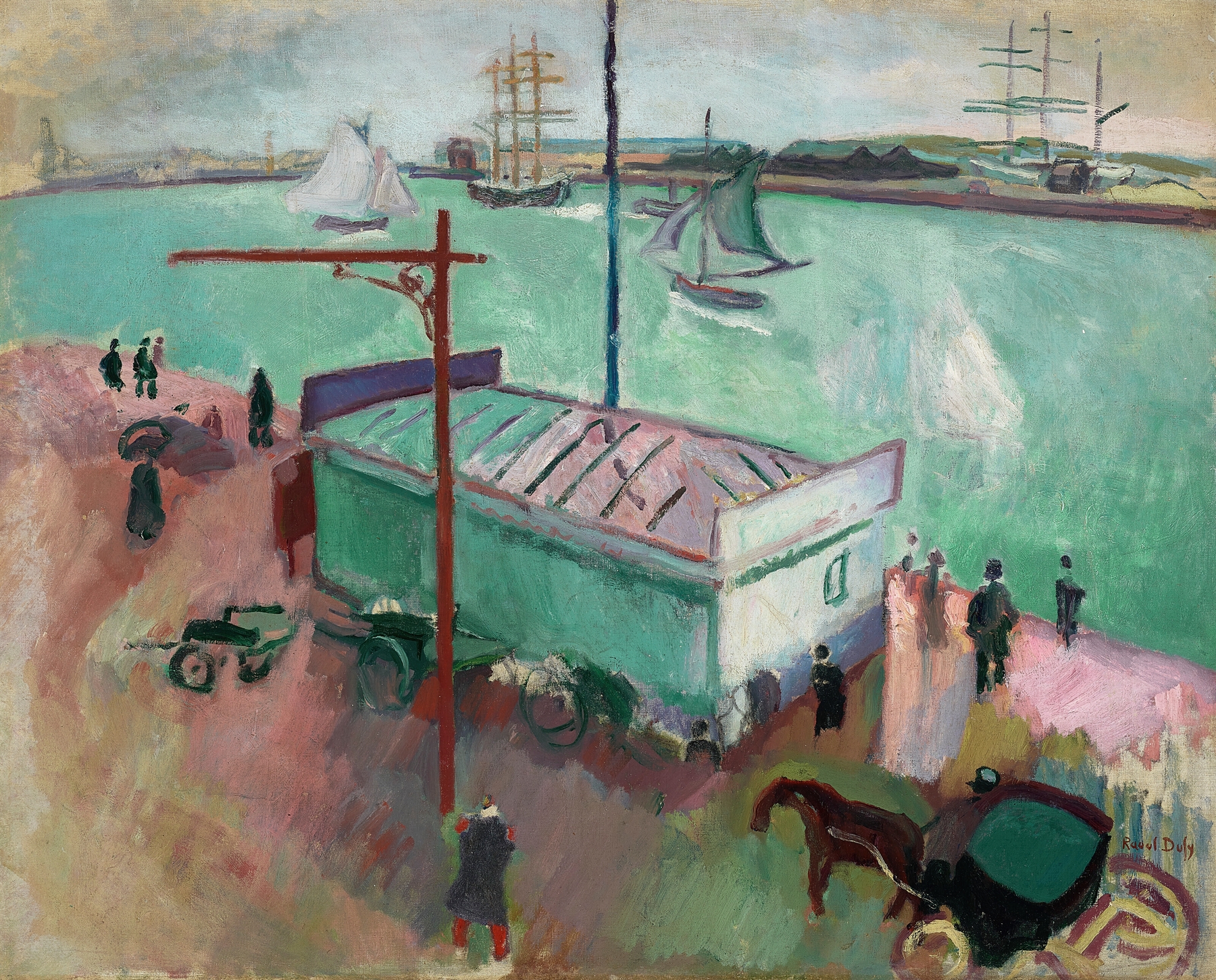
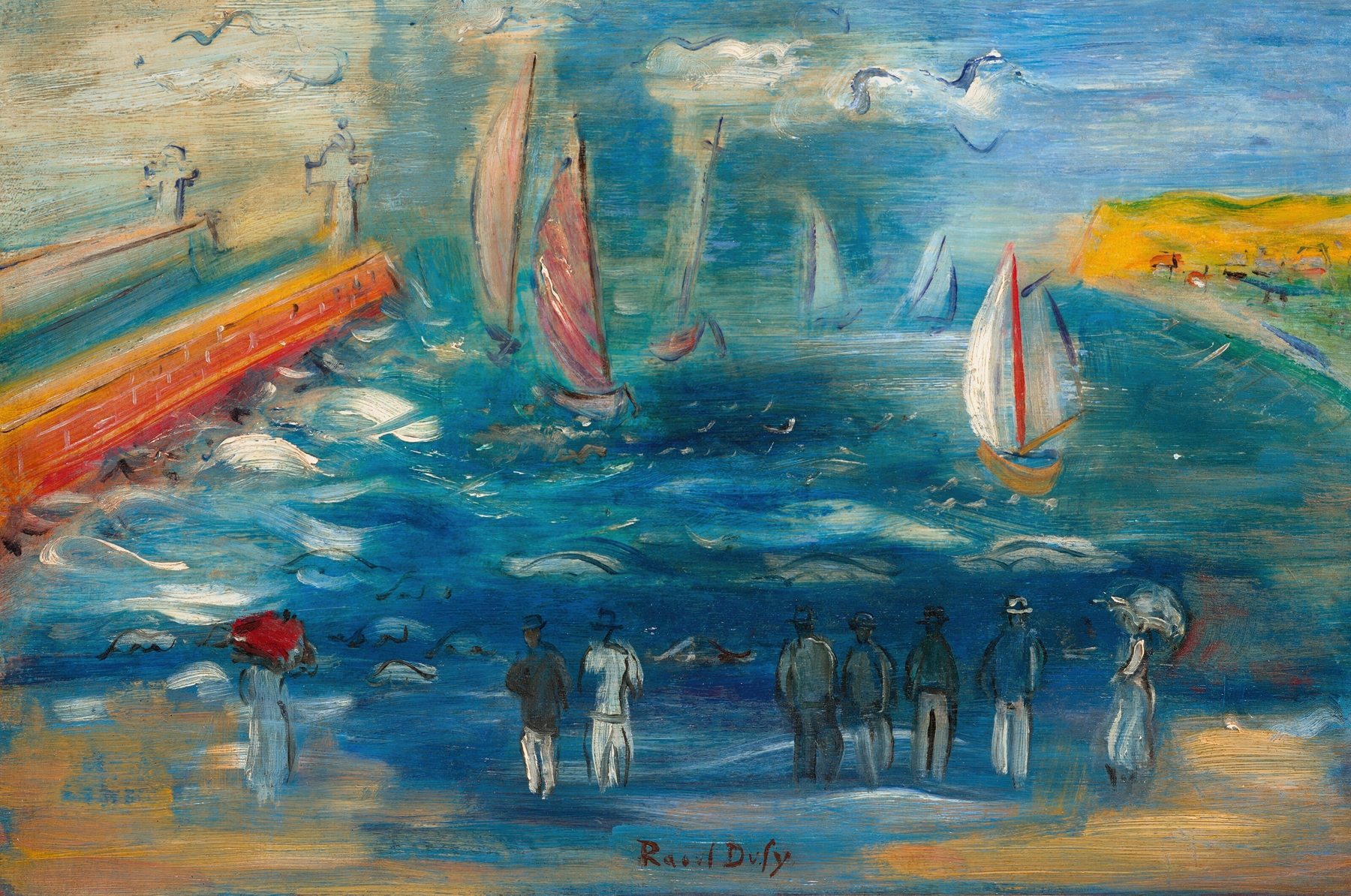
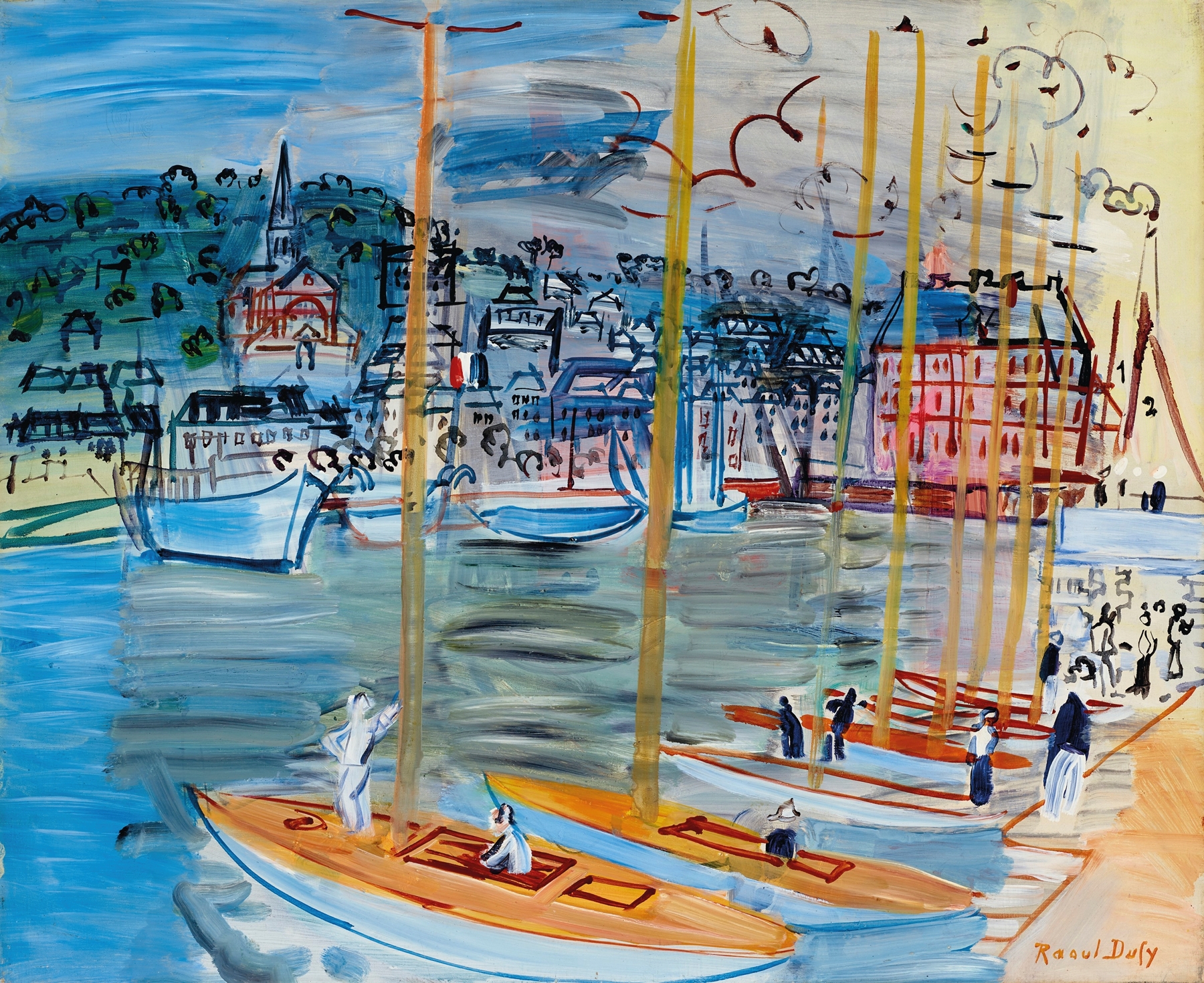
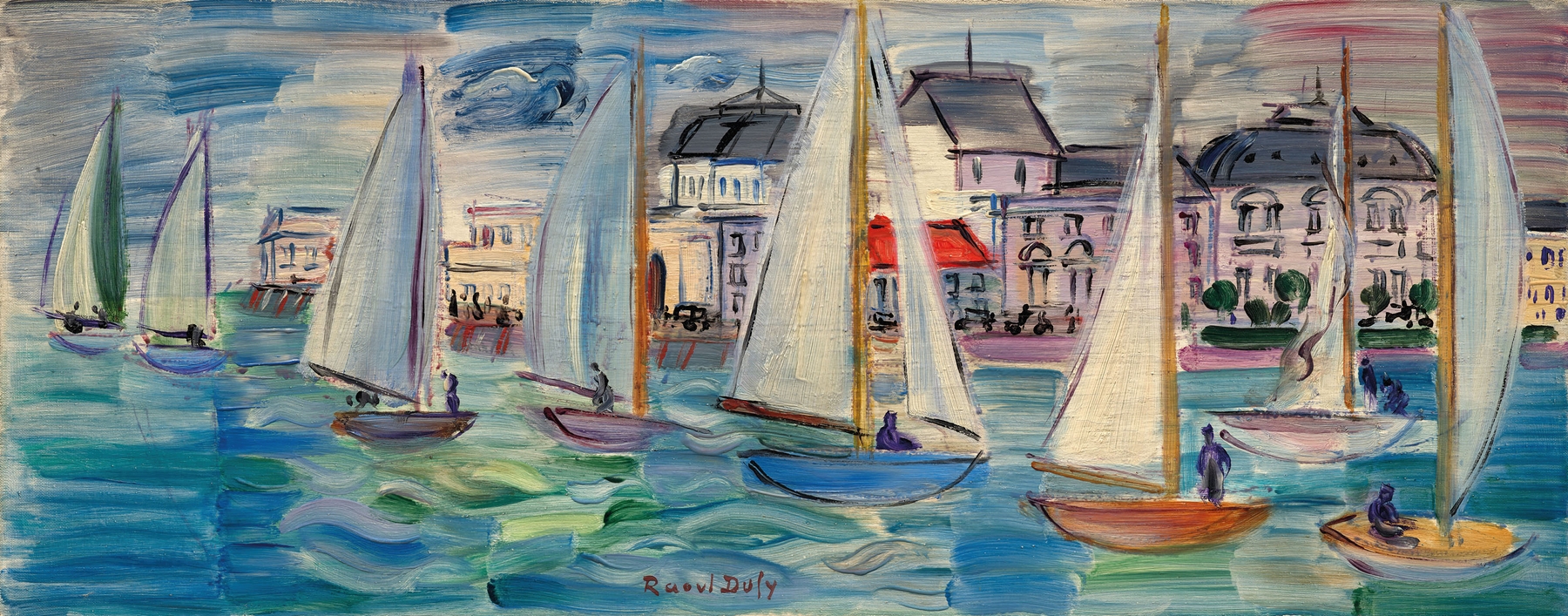
“Every brushstroke is a heartbeat remembered.” In a world laden with voids, how does one capture the essence of fleeting moments? Look to the bottom left, where vibrant hues of sunlit yellow and soft azure dance across the canvas. The umbrellas, each an individual entity, bloom like flowers against a backdrop of gentle waves. Notice how Dufy contrasts the warm colors of the sun-drenched landscape with the cool, refreshing tones of the sea, bringing a sense of harmony and joy to the scene.
Your eyes will be drawn to the rhythmic swirls that evoke a lively breeze, inviting you to feel the air between the figures and the umbrellas. Beneath this cheerful façade lies a deeper layer of longing – the playful interaction between the figures suggests an ephemeral connection while the void implied by the absence of backgrounds speaks to the transient nature of joy. The bright umbrellas, seemingly the focal point, also portray a yearning for shelter from an unpredictable world, transforming them into symbols of both protection and isolation. The composition exudes a sense of celebration, yet hints at the impermanence of moments shared under the sun.
In the spring of 1905, Dufy painted this piece in the coastal town of Le Havre, where he found inspiration amidst the shifting light and vibrant life of the seaside. This was a time when the Fauvist movement was gaining momentum, with artists exploring bold colors and emotional resonance. Dufy, in this fertile atmosphere, was not only honing his unique style but also contributing to the dialogue of art that sought to capture human experience in its purest form.