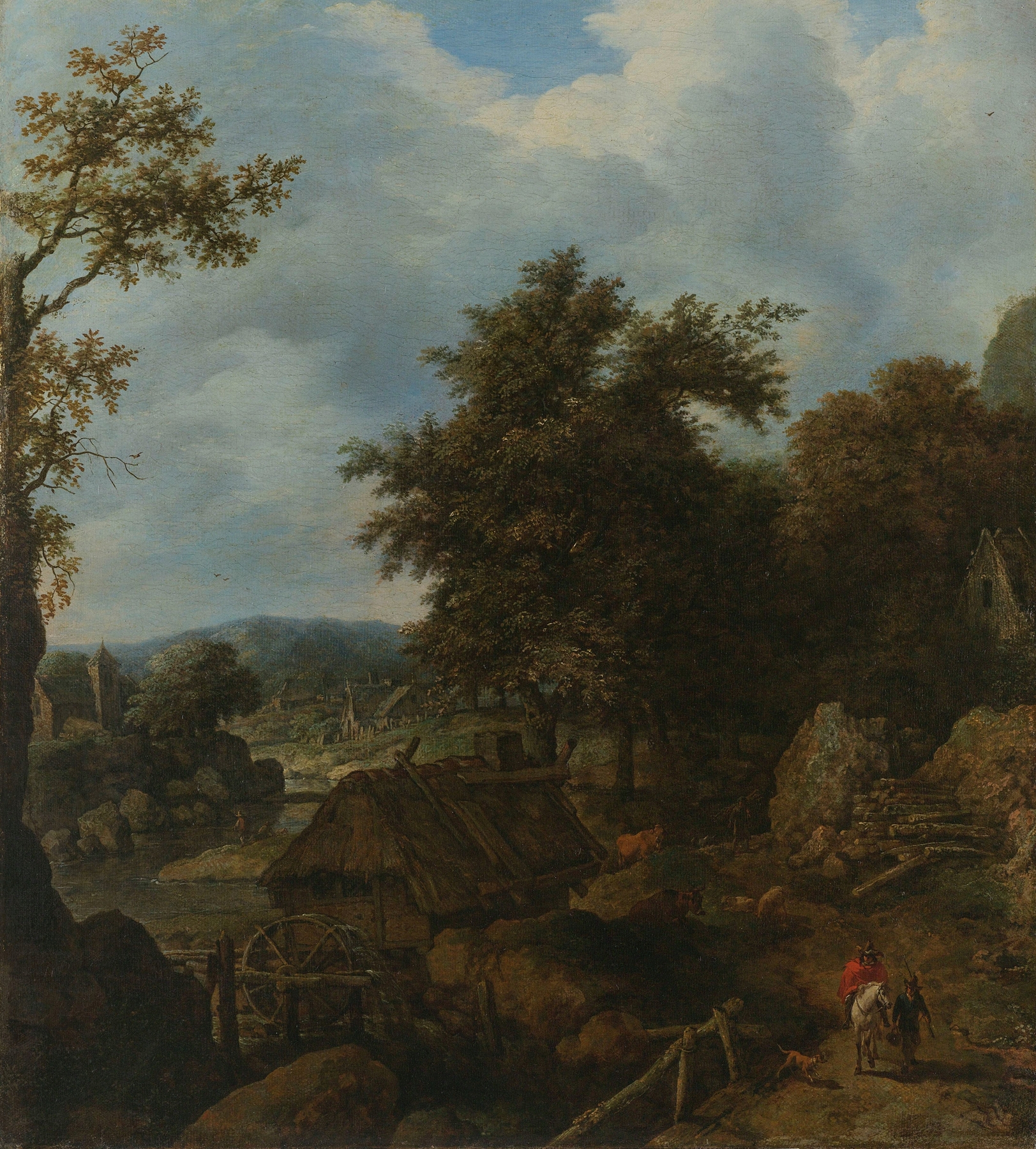
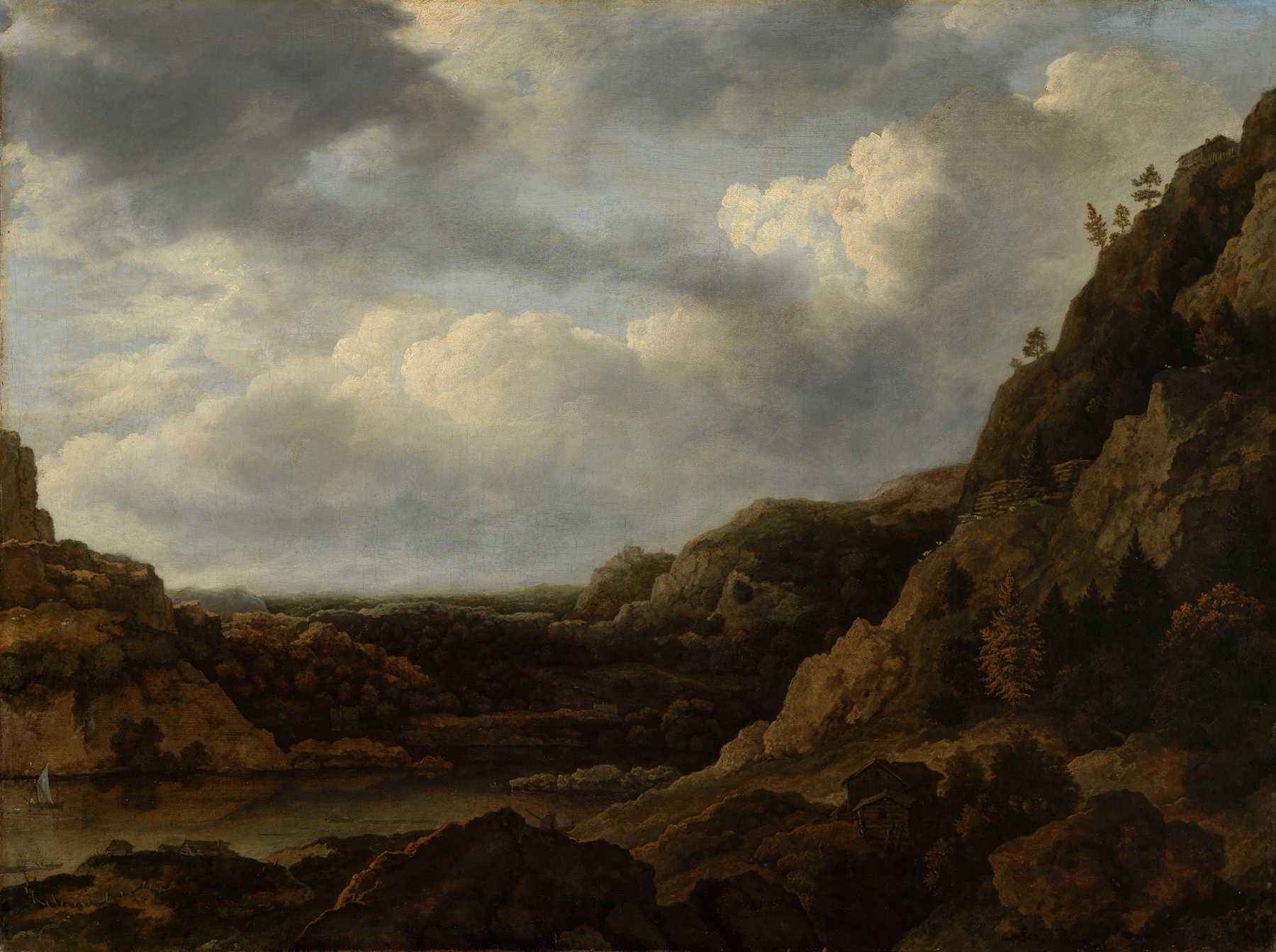
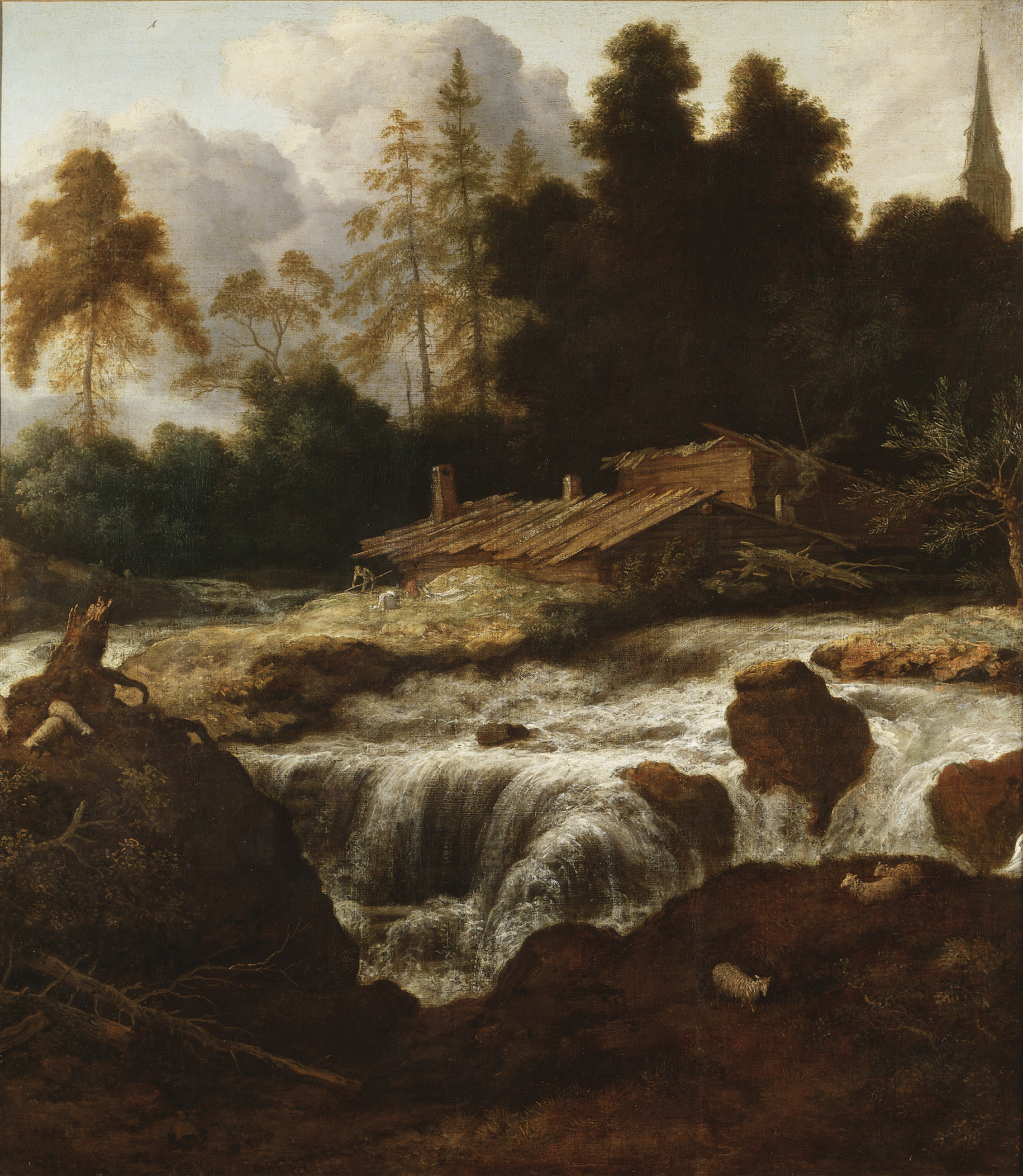
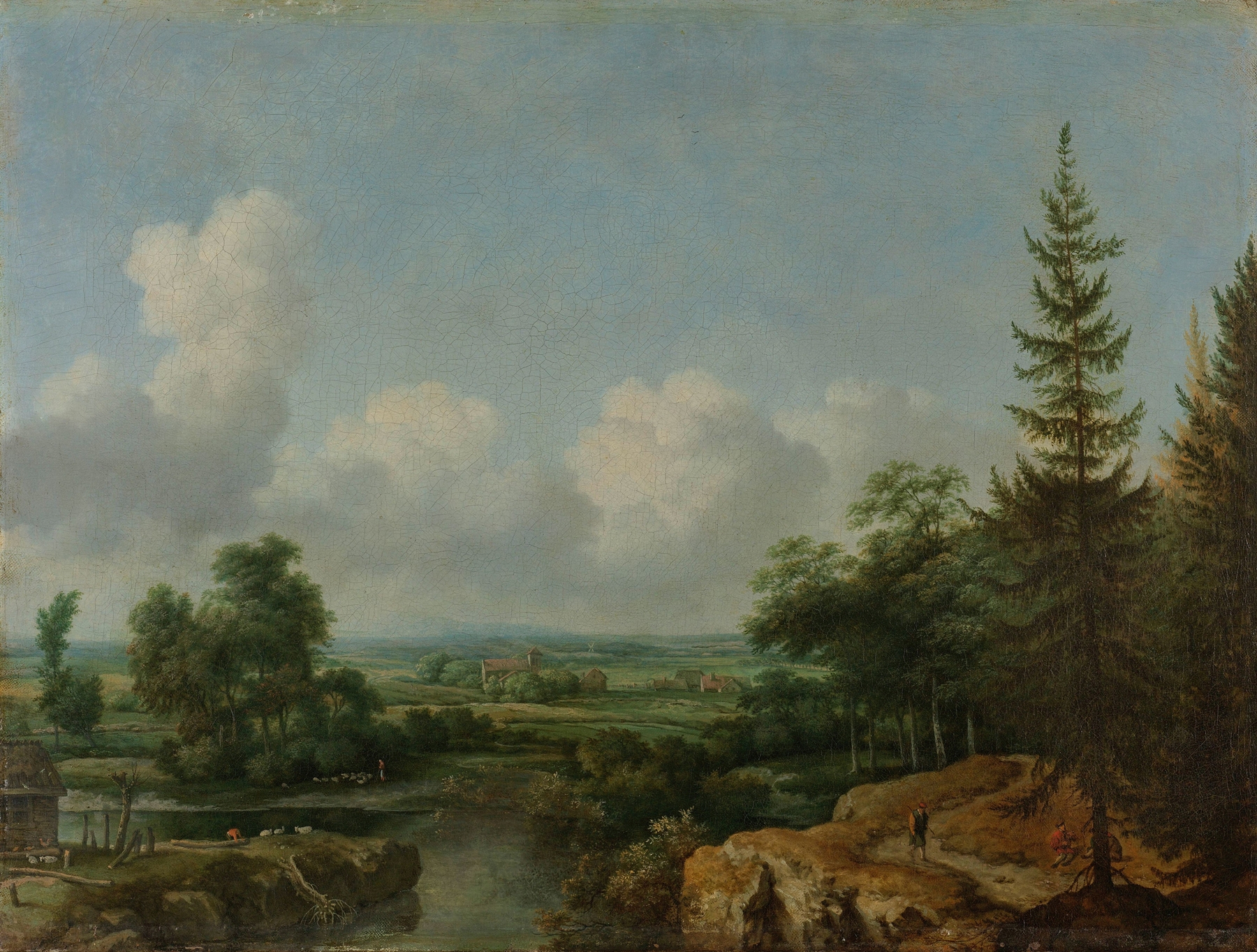
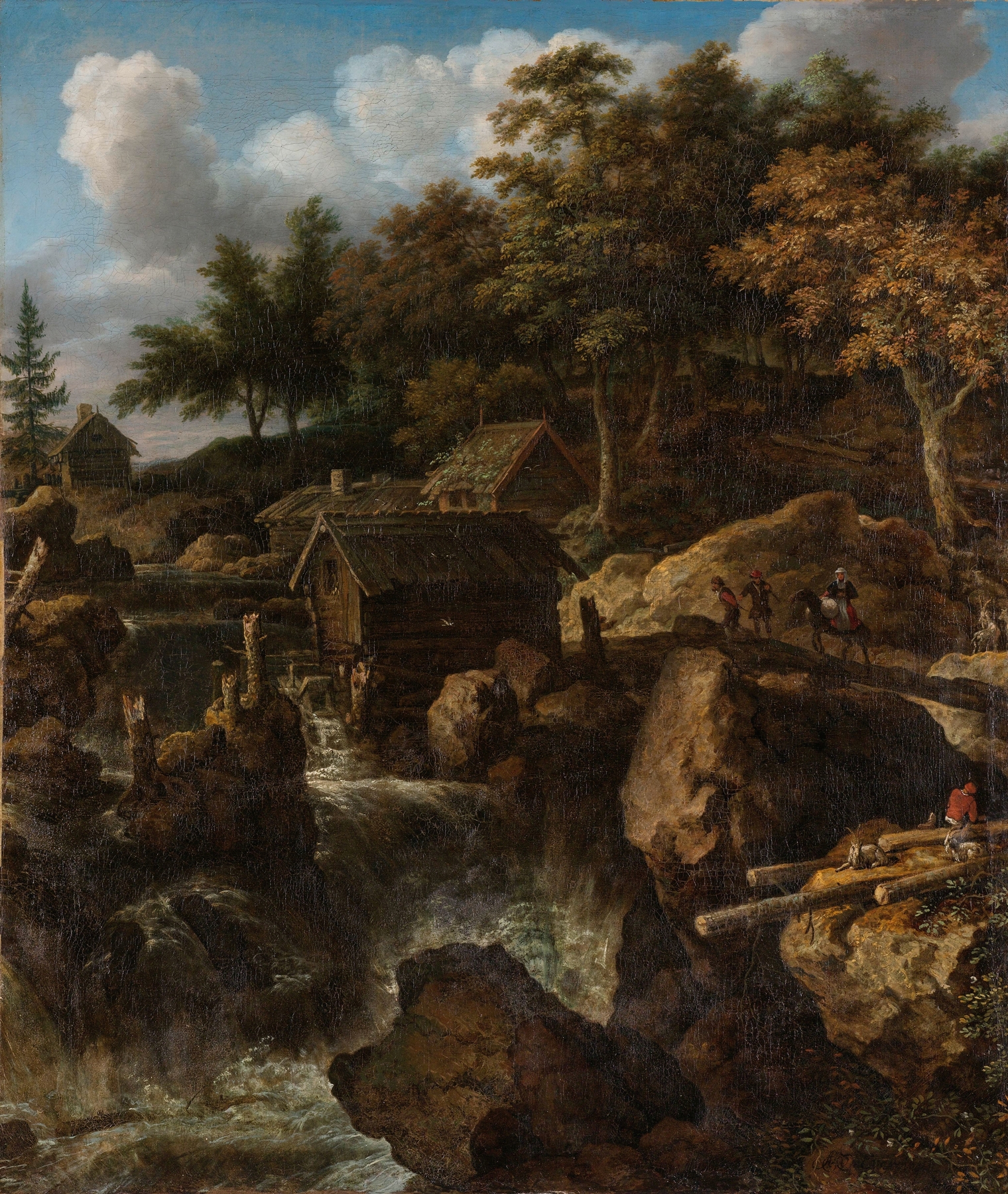
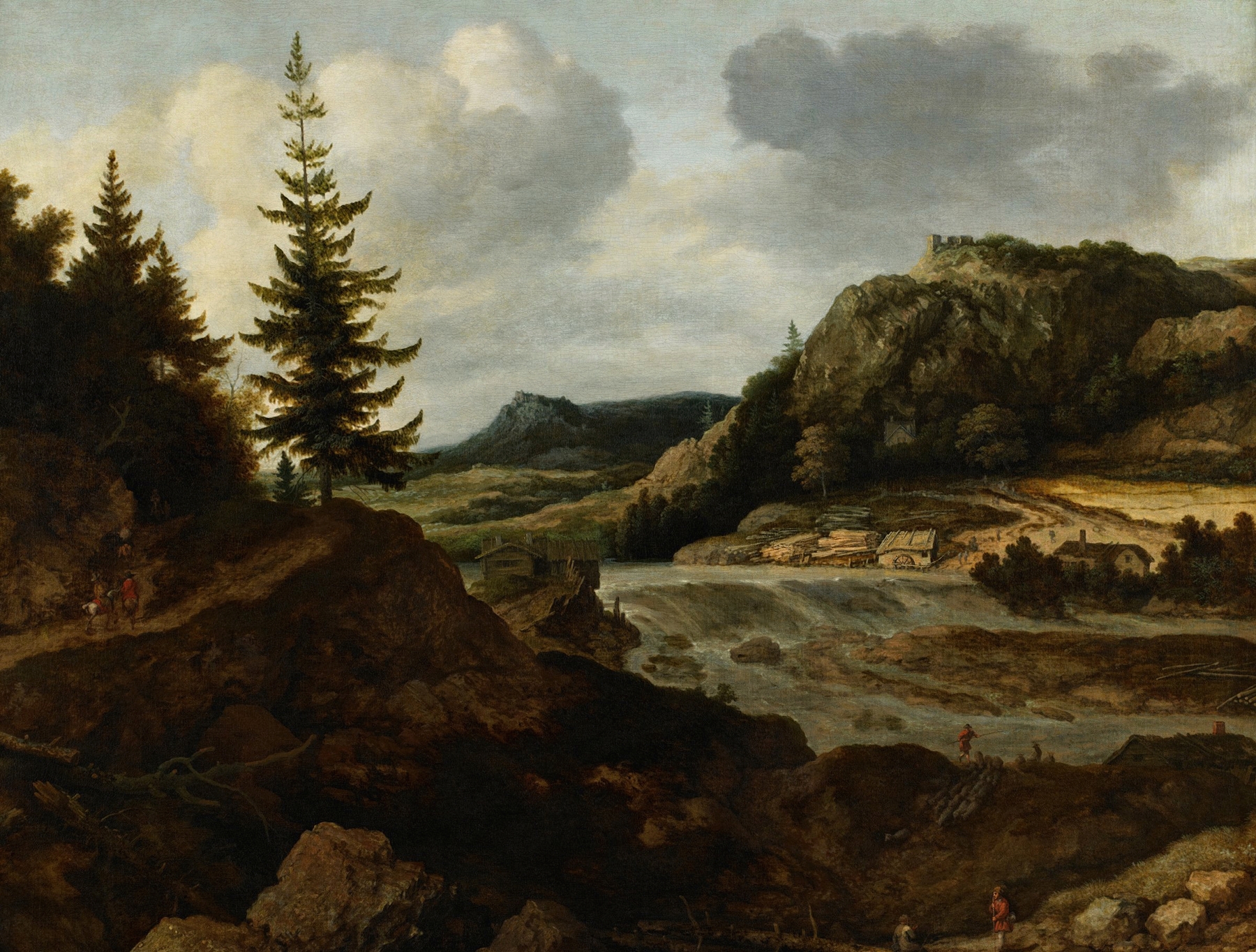
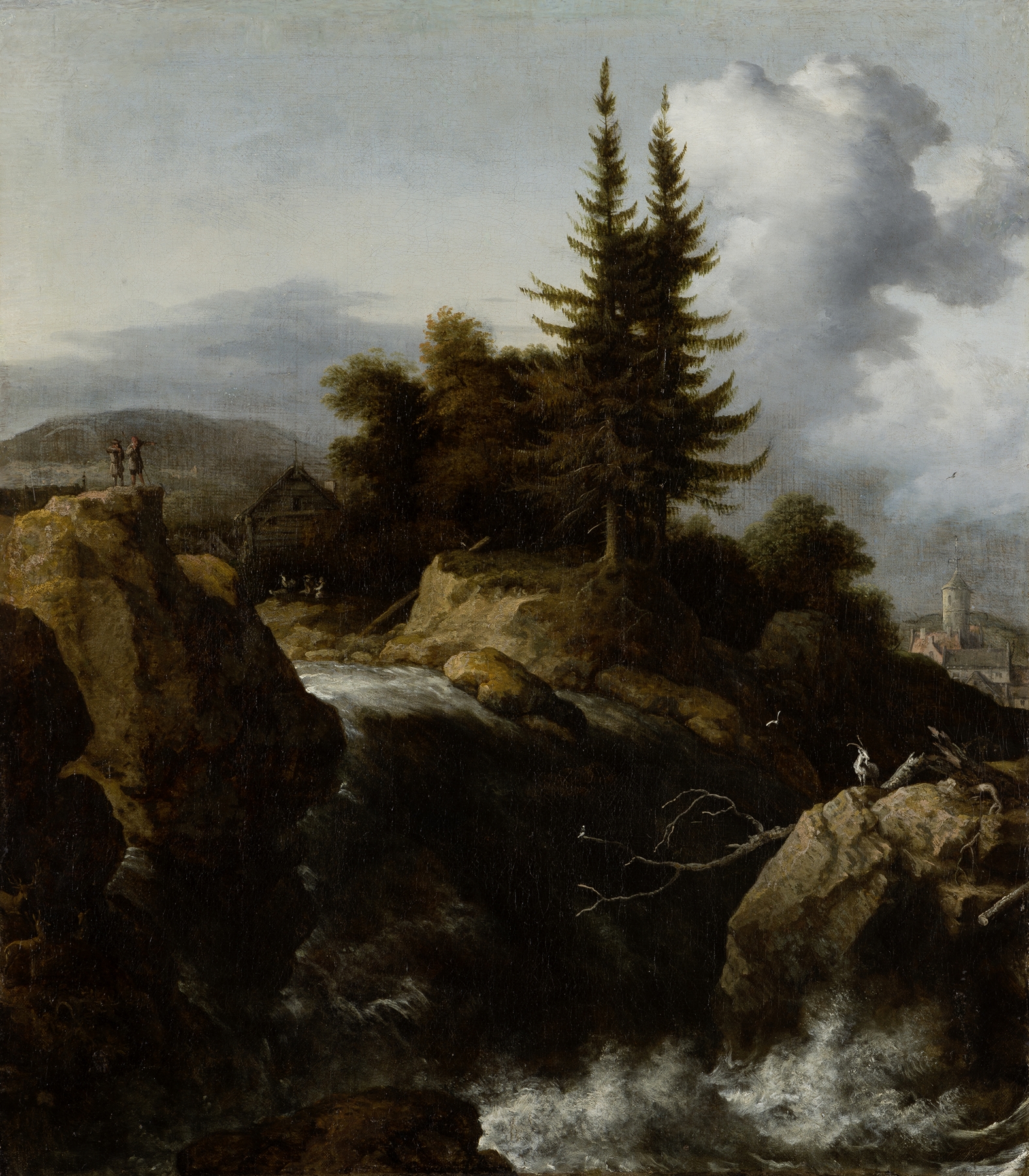
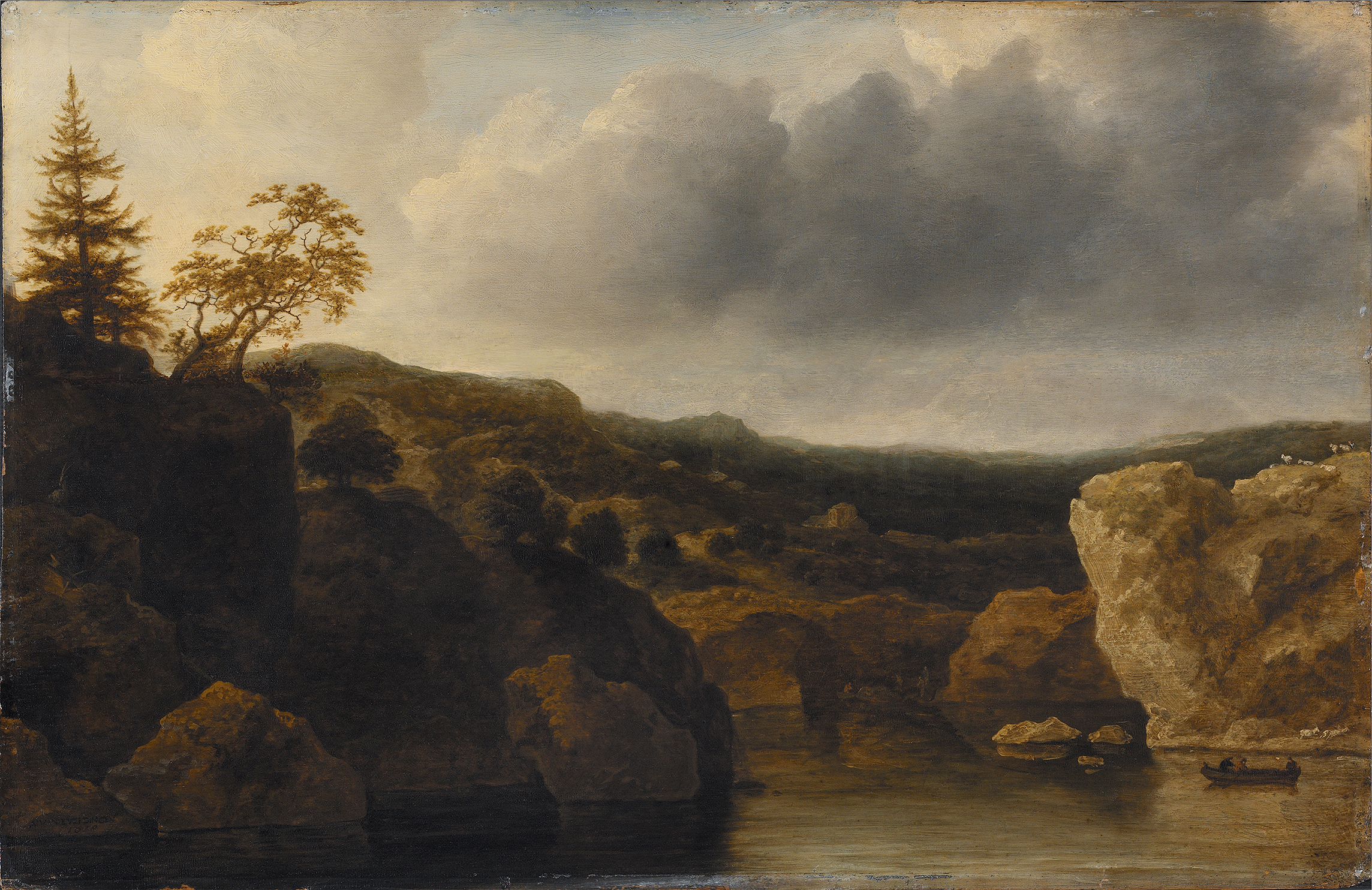
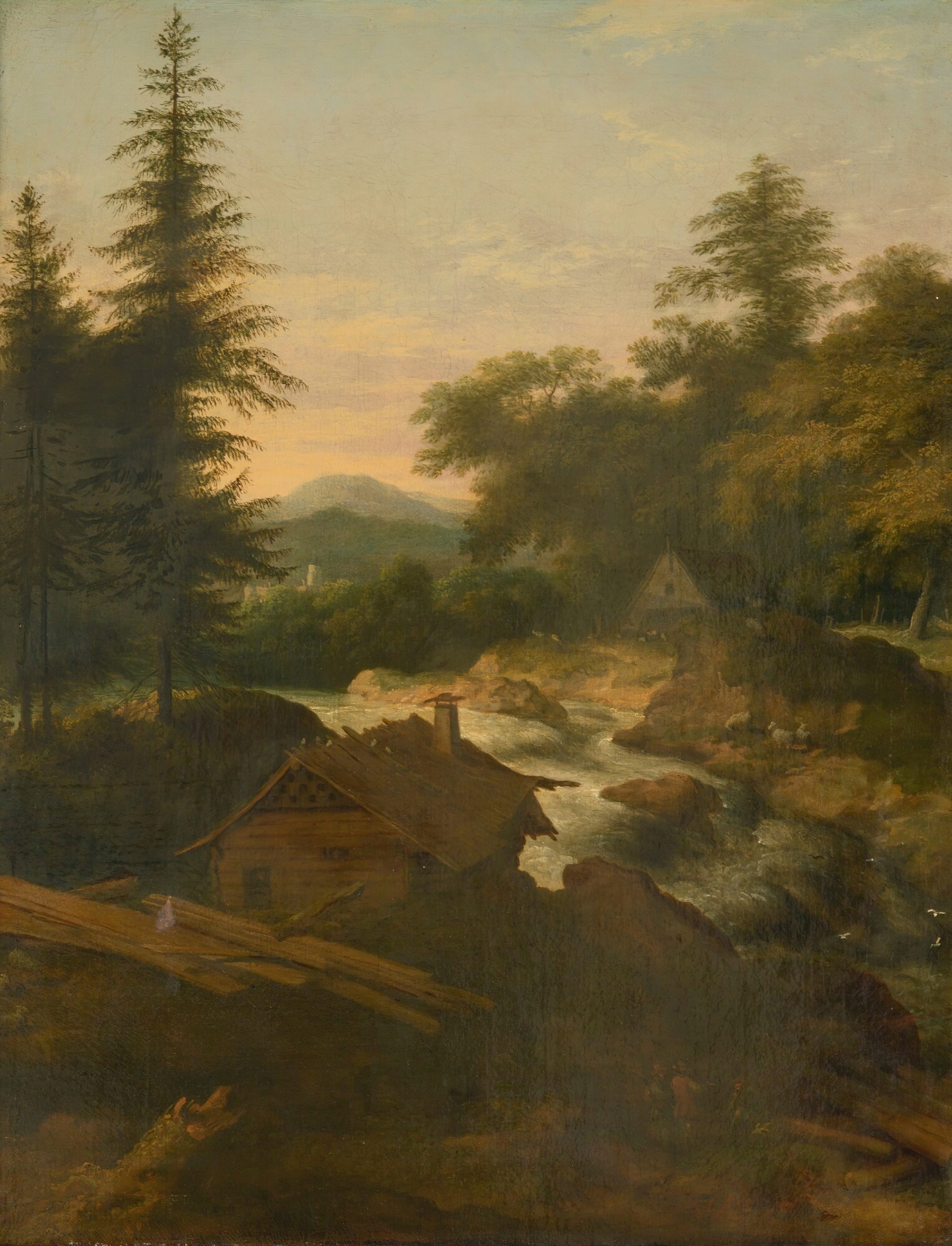
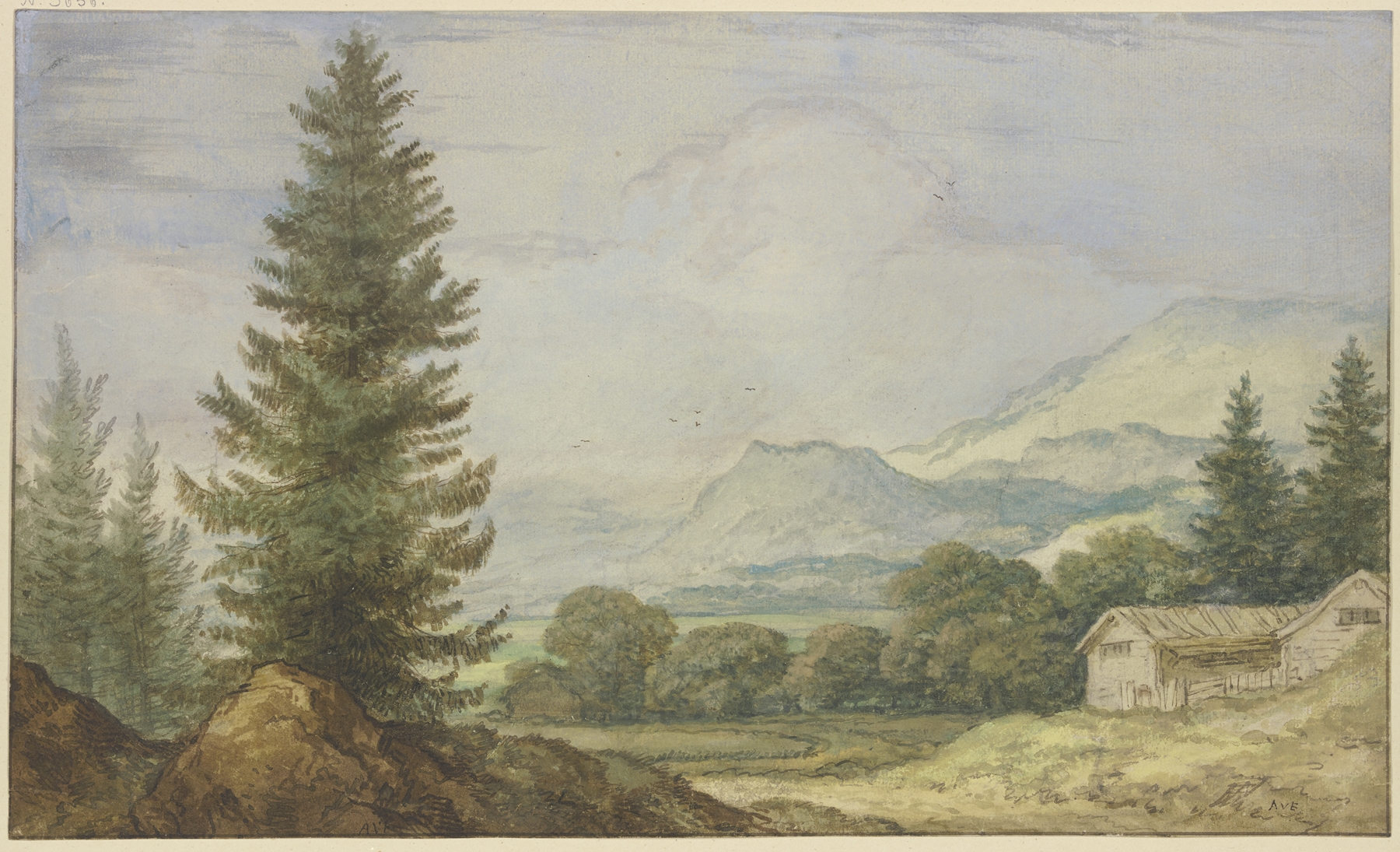
Links hohe Felsen mit Tannen, rechts auf hohen Felsen eine Burg, über dem Bach eine steinerne Brücke — History & Analysis
“The canvas doesn’t lie — it simply waits.” In its stillness, it invites us to explore the intertwining of reality and illusion, as nature and architecture merge seamlessly. Look to the right at the imposing castle perched atop the rocky cliff, a fortress carved out of the earth itself. The artist employs a rich palette of greens and browns, the deep hues of the surrounding pines contrasting with the warm, sunlit stones of the bridge. Notice how the delicate strokes capture the glistening water below, each ripple reflecting the grandeur above, drawing the eye toward the tranquil yet commanding convergence of land and structure.
Within this serene landscape lies a tension between the natural and the man-made; the lush, wild foliage enchants while the castle looms, a testament to human ambition. The stone bridge, arching gracefully over the bubbling brook, bridges two worlds, creating a dialogue between the organic and the crafted. The interplay of light and shadow adds depth, suggesting both the passage of time and the enduring presence of history, where every element holds a whisper of stories untold.
Created during a period when the Northern Renaissance was flourishing, the artist found himself in a world ripe with exploration and artistic innovation. An active member of the Dutch Golden Age, the artist navigated a rich cultural landscape, focusing on the grandeur of nature and architecture. His work reflects the era’s burgeoning fascination with landscape painting, where illusion and reality danced together on the canvas, each brushstroke a testament to the beauty of both.