Madame Roulin Rocking the Cradle (La berceuse) — History & Analysis
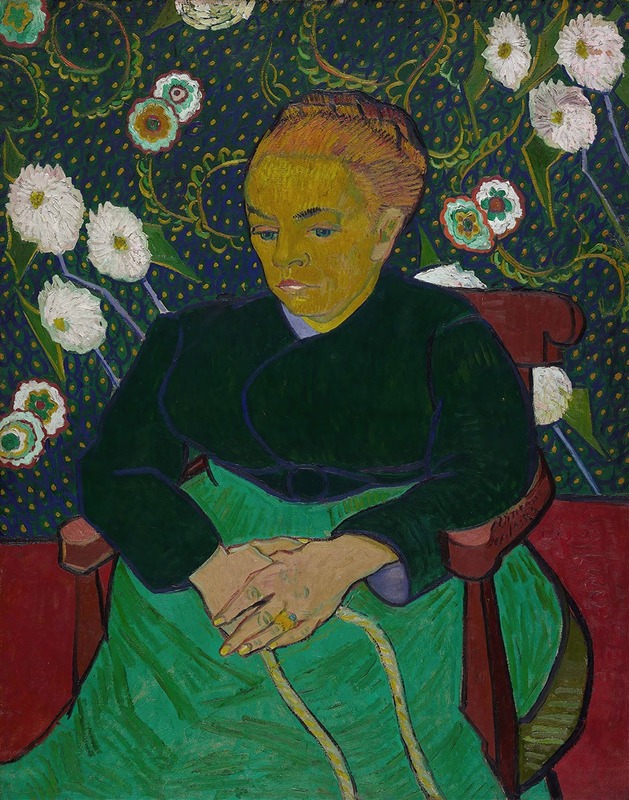
What if beauty was never meant to be finished? In Madame Roulin Rocking the Cradle, the viewer encounters a moment suspended in time, where the grace of motherhood intertwines with the artist’s vivid imagination. Look to the left at the serene figure of Madame Roulin, cradling her child, her gentle hands a delicate contrast to the swirling colors that envelop her. The warmth of ochres and soft blues creates an inviting atmosphere, inviting us into the intimate space of home. Notice how the brushstrokes pulse with life, each line capturing both movement and stillness, as if the air itself vibrates with the love that fills the room.
The light seems to dance across her face, illuminating her features with a tender glow, while the background, a riot of color, hints at the chaos and vibrancy of life beyond this quiet moment. Yet hidden within the comfort of this scene lies a tension between reality and illusion. The swirling patterns evoke a dreamlike quality, blurring the lines between the actual and the imagined. The cradle, while anchored in the foreground, feels almost ethereal, suggesting that the safest of havens can also be fragile.
The mother’s gaze, both protective and distant, raises questions about the nature of connection and the ephemeral joys of motherhood. In 1889, while in the Saint-Paul-de-Mausole asylum in Saint-Rémy-de-Provence, the artist created this work amidst personal turmoil and artistic exploration. During this period, he sought solace in the beauty of everyday life, transforming it into a poignant expression of his inner world. This painting not only reflects his profound emotional state but also his relentless pursuit of capturing beauty in its raw, unfinished form.