Memory of a Wooded Island in the Baltic Sea — History & Analysis
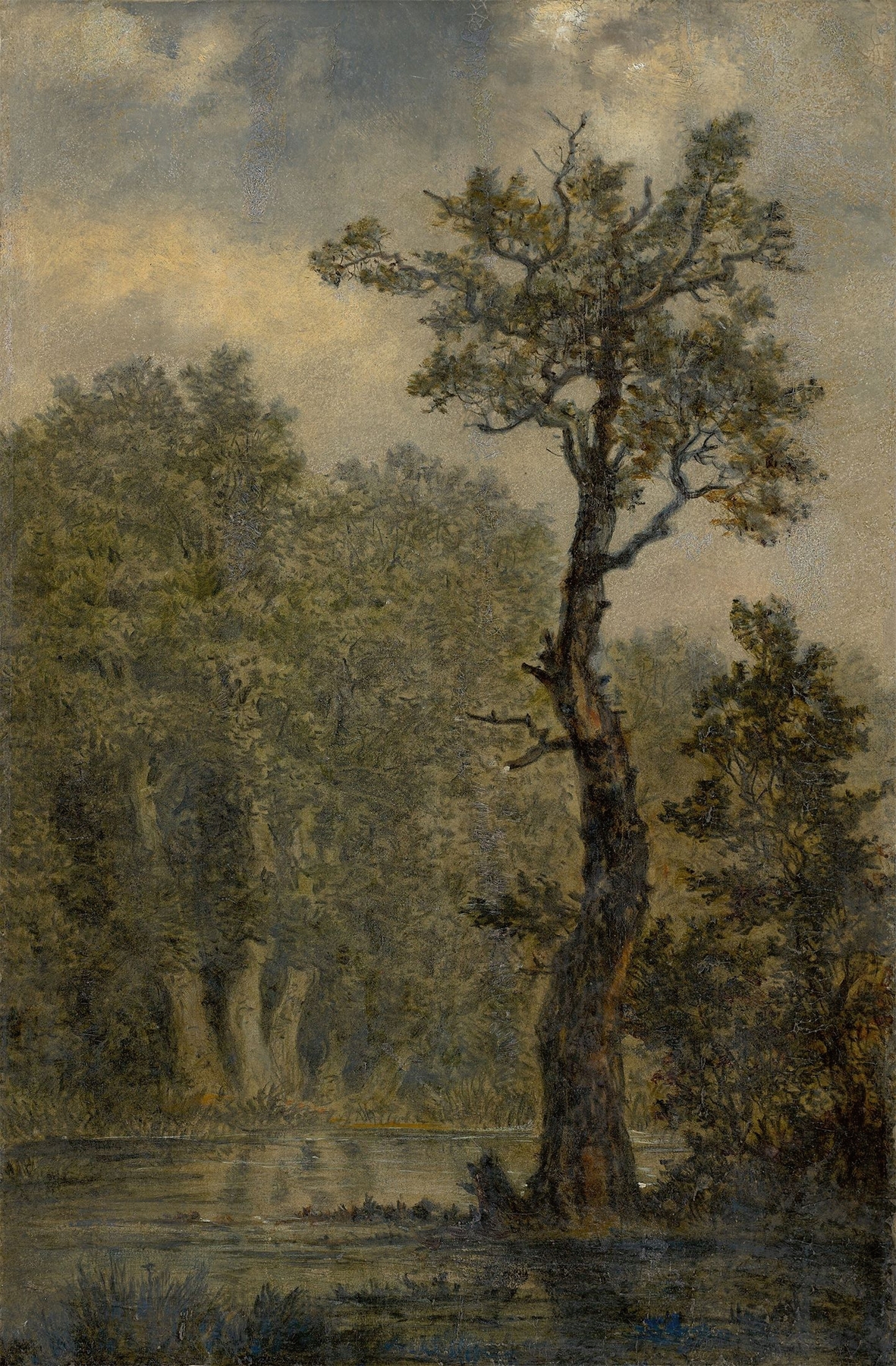
Who listens when art speaks of silence? In Memory of a Wooded Island in the Baltic Sea, the stillness acts as a powerful voice, echoing the sentiments of a world on the brink of revolution, capturing both nature's serene beauty and humanity's restless spirit. Look closely at the tranquil waters, where the soft greens and blues blend seamlessly, creating an invitation for the eye to wander. Notice how the oak trees stand tall along the shore, their intricate branches interlacing with the sky, a guardian of the secrets held within the foliage.
The delicate play of light filtering through the leaves adds an ethereal quality, casting dappled shadows that dance upon the ground, enhancing the sense of depth and inviting contemplation. Beneath this peaceful veneer, there lies a tension between nature's calm and the underlying currents of change. The trees, steadfast and enduring, symbolize resilience amidst a time of upheaval, perhaps hinting at the struggles that lie ahead. The juxtaposition of the serene landscape against the potential for discord mirrors the complexities of the human spirit—where solitude and community often coexist in a delicate balance.
Carl Gustav Carus painted this piece in 1835 during a time of significant change in Europe, as the revolutions of 1848 loomed on the horizon. Living in Dresden, he was influenced by the Romantic movement, which emphasized emotion and nature, reflecting the broader cultural shifts of his era. This artwork stands not just as a visual delight but as a poignant reminder of the societal tensions that shaped his world.