
Moonlight — History & Facts
In the haunting stillness of a nighttime landscape, Munch invites us to witness the unraveling of the soul beneath the moon’s watchful gaze. Look to the center where the moon spills its silver light, illuminating the silhouette of a figure poised at the water's edge. The stark contrast of deep blues and muted blacks creates a dreamlike quality, while the swirling brushstrokes evoke a sense of movement in the otherwise tranquil scene. The figure’s slight lean and outstretched arms suggest yearning, perhaps for connection, yet the surrounding darkness feels oppressive, a reminder of isolation. As you delve deeper, notice the decay embodied in the barren trees reaching towards the sky, skeletal in form, echoing themes of loss and melancholy.
The rippling waters reflect not just light but the weight of unspoken thoughts—an interplay of hope and despair. This tension between the serene night and the foreboding atmosphere captures the fragility of existence, inviting introspection about what lies beneath the surface of our own lives. Created during a time of personal turmoil for the artist, this piece emerged in 1893, reflecting Munch’s exploration of emotional depth in art. Living in Norway, he was grappling with his own anxieties and existential fears, as well as the broader themes of modernity and alienation spreading across Europe.
This work, borne of a restless spirit, solidified Munch's reputation as a master of emotional expression, carving a path for modern art.
More Artworks by Edvard Munch

The Scream
Edvard Munch

The Scream (1910 version)
Edvard Munch

Despair
Edvard Munch

The Day After
Edvard Munch
The Sick Child
Edvard Munch
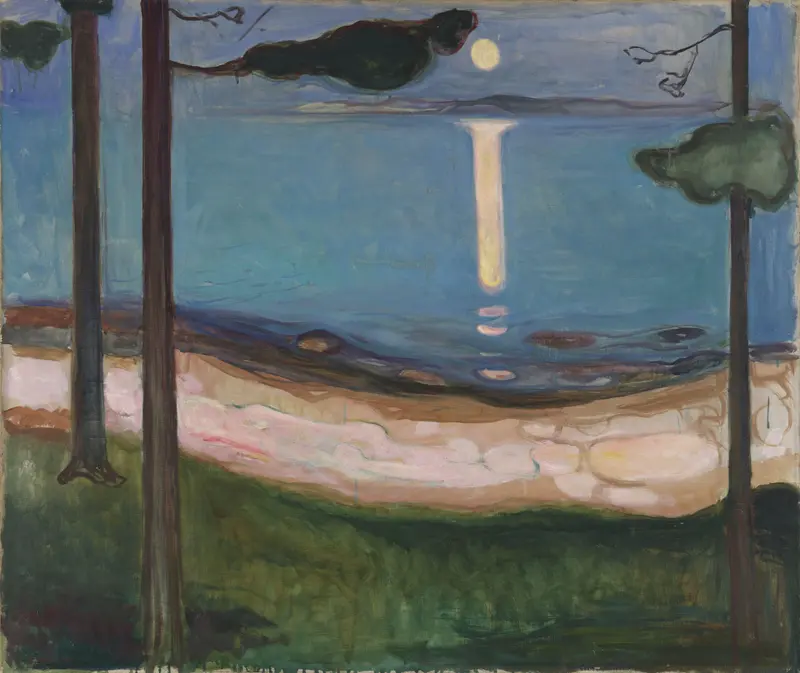
Moonlight
Edvard Munch
The Kiss
Edvard Munch
Two Women on the Shore
Edvard Munch
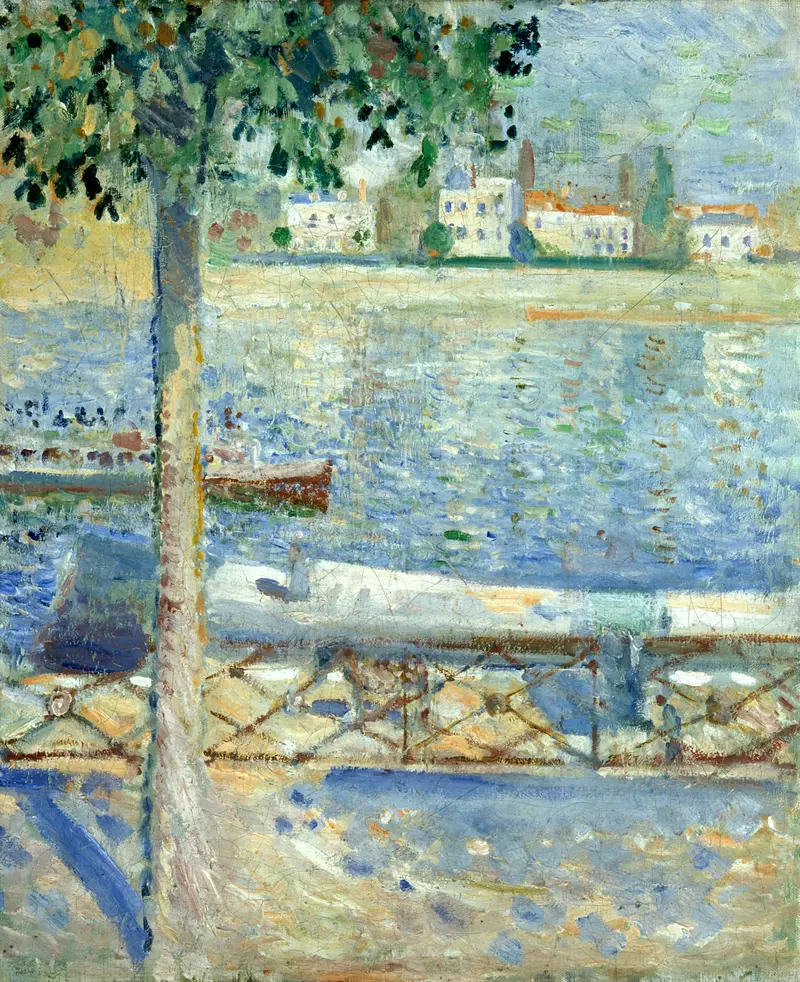
The Seine At Saint-Cloud
Edvard Munch
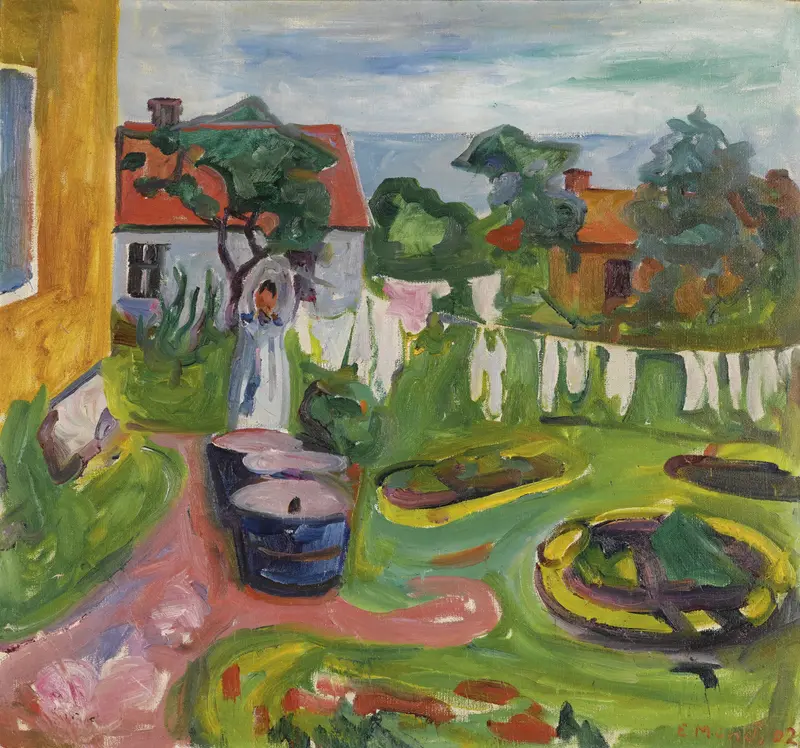
Klestørk I Åsgårdstrand (Clothes On A Line In Åsgårdstrand)
Edvard Munch
More Landscape Art

The Starry Night
Vincent van Gogh

View of Delft
Johannes Vermeer

Water Lilies
Claude Monet

The Grand Canal, Venice, looking north-west from the Ca' Corner to the Ca' Contarini degli Scrigni, with the campanile of Santa Maria della Carità
Canaletto

Windsor Castle
Canaletto

The Grand Canal looking North-East from the Palazzo Dolfin-Manin to the Rialto Bridge
Canaletto