Mount Siabod from Tyn-y-Coed near Capel Curig — History & Analysis
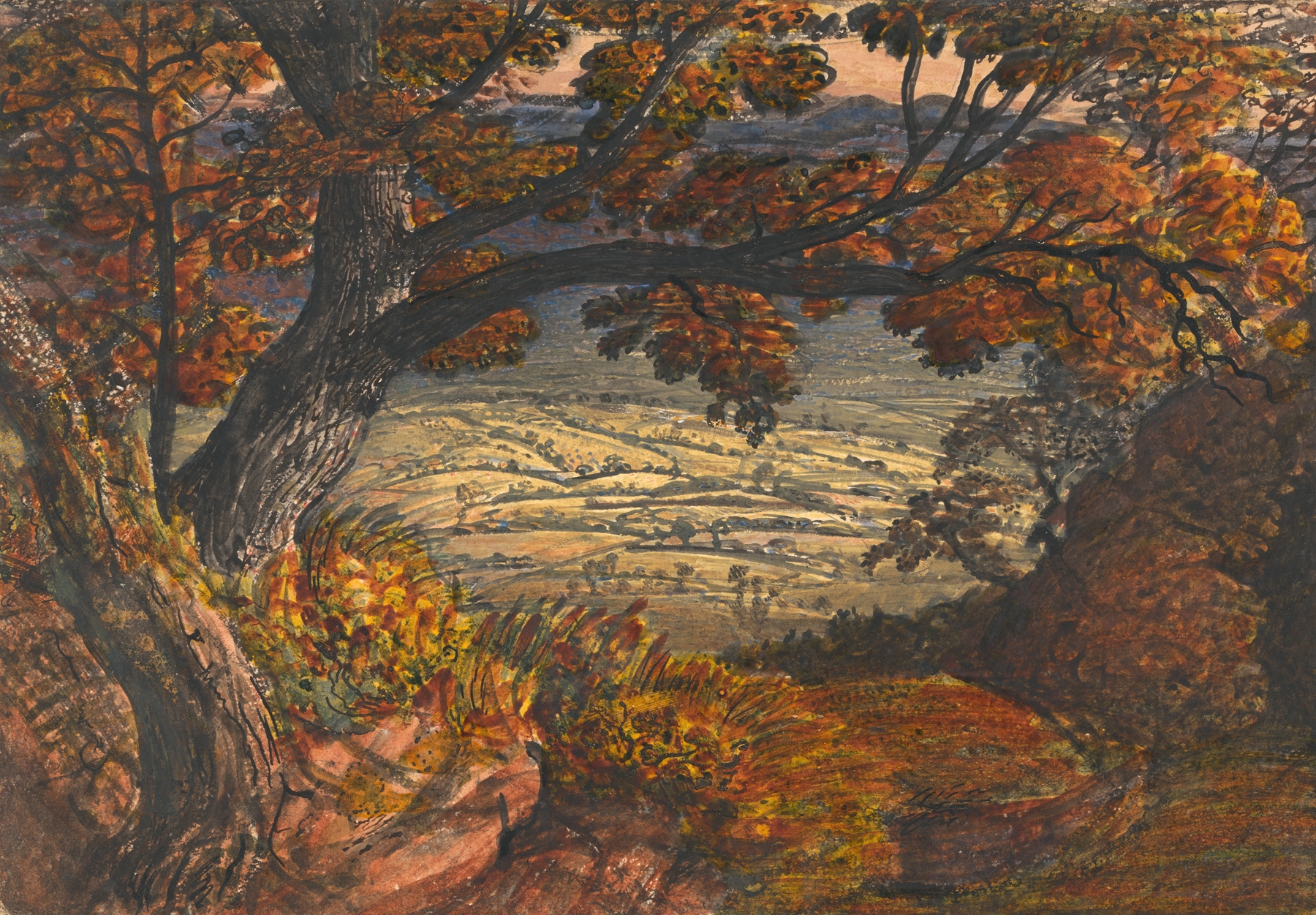
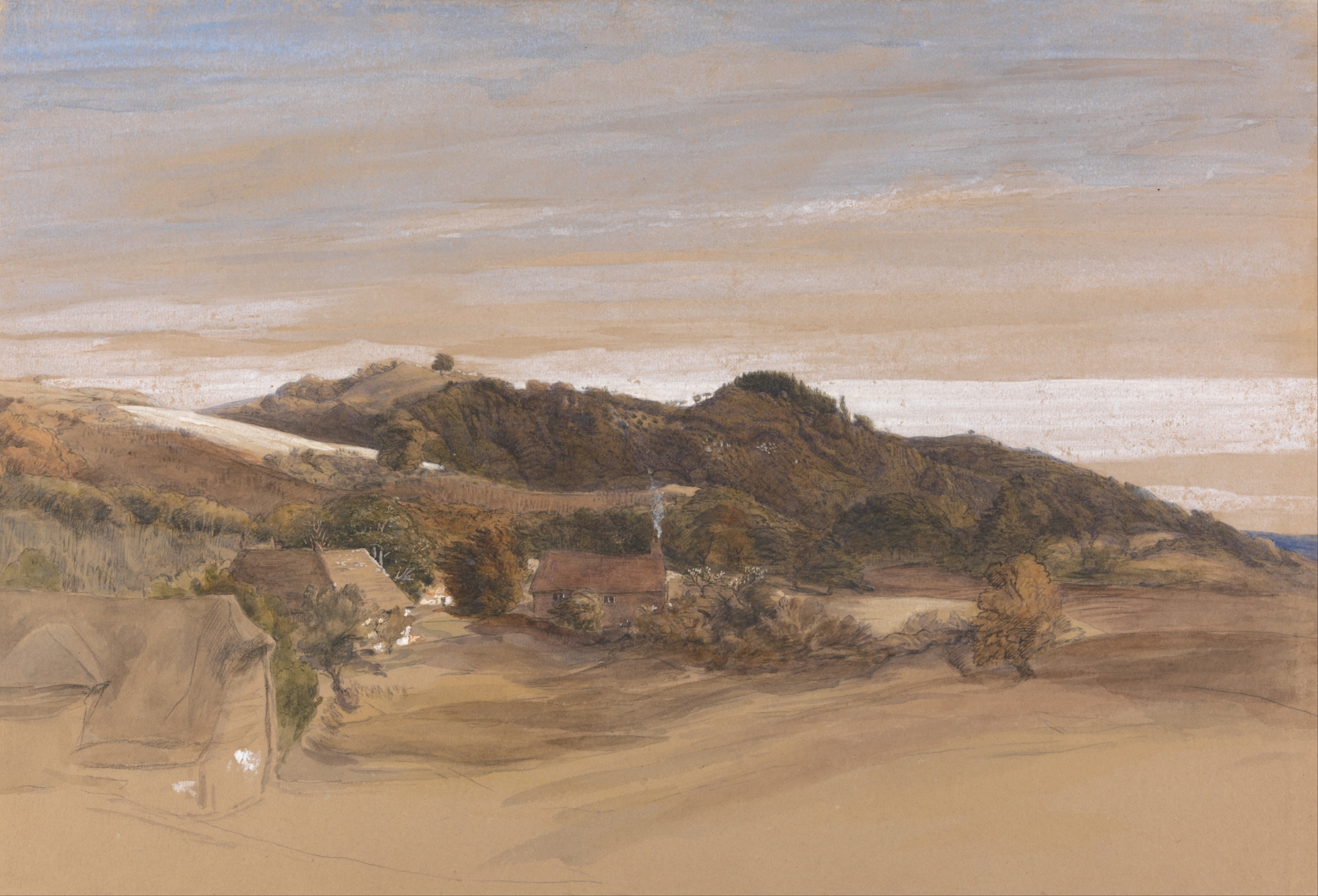
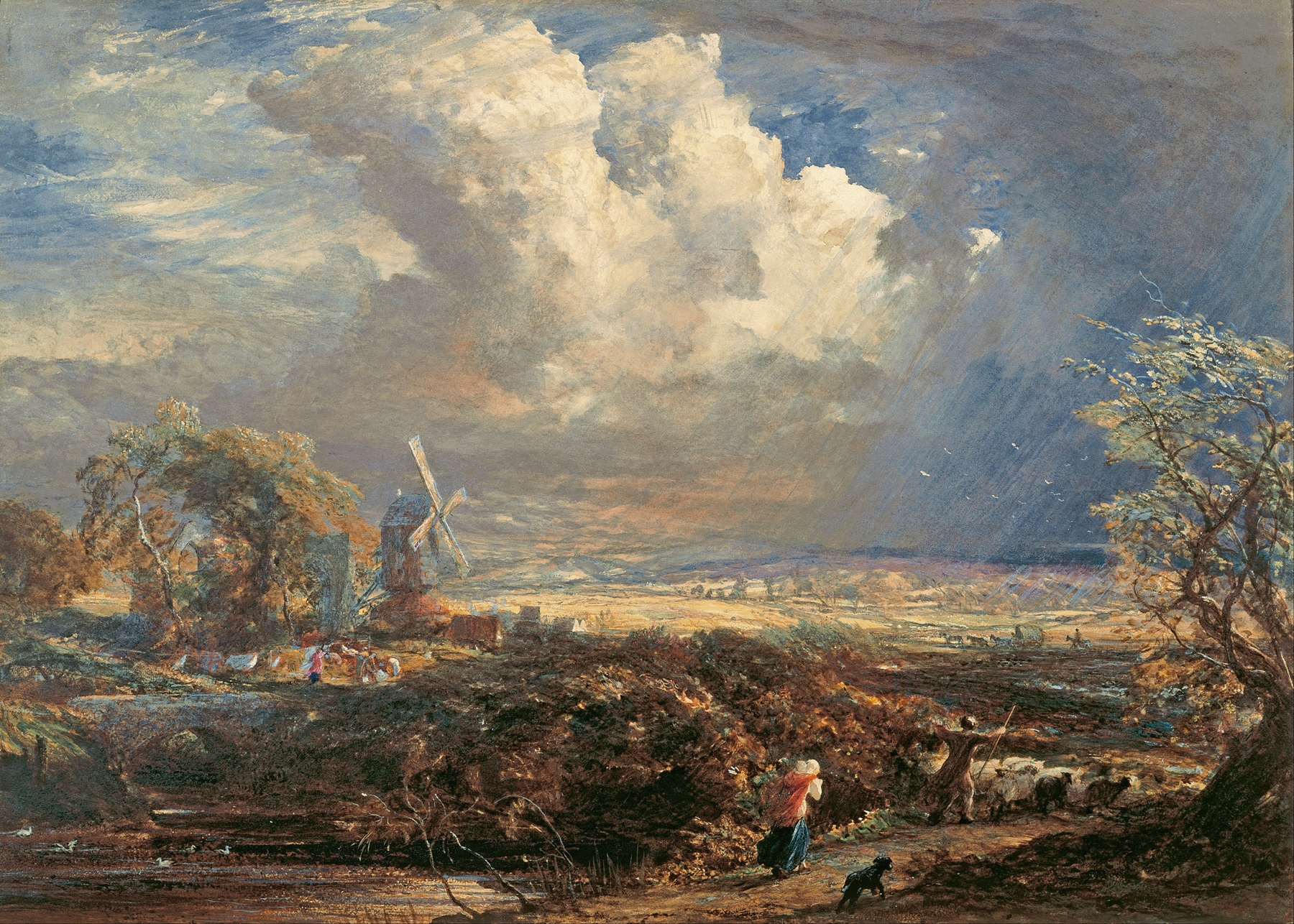
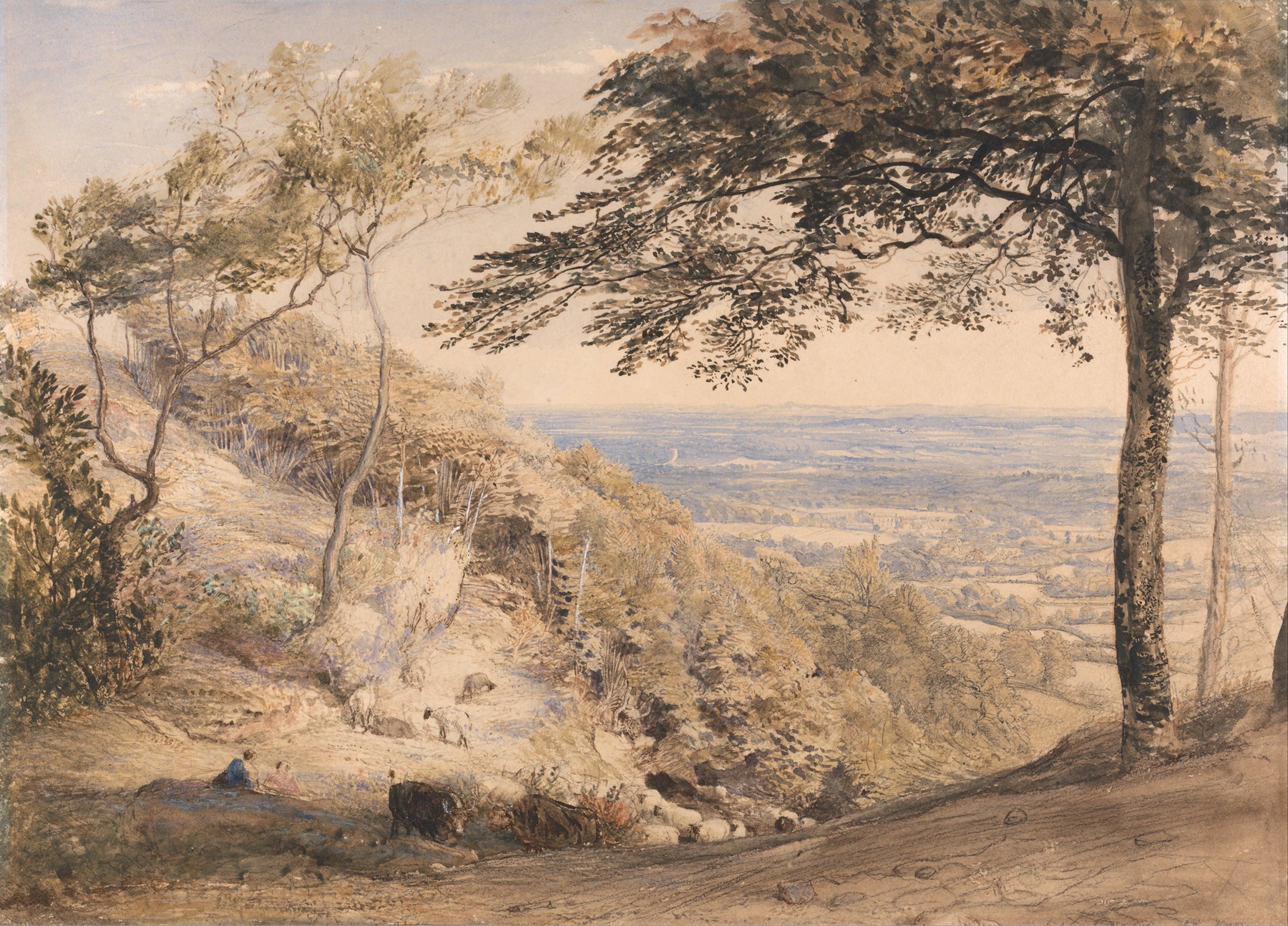
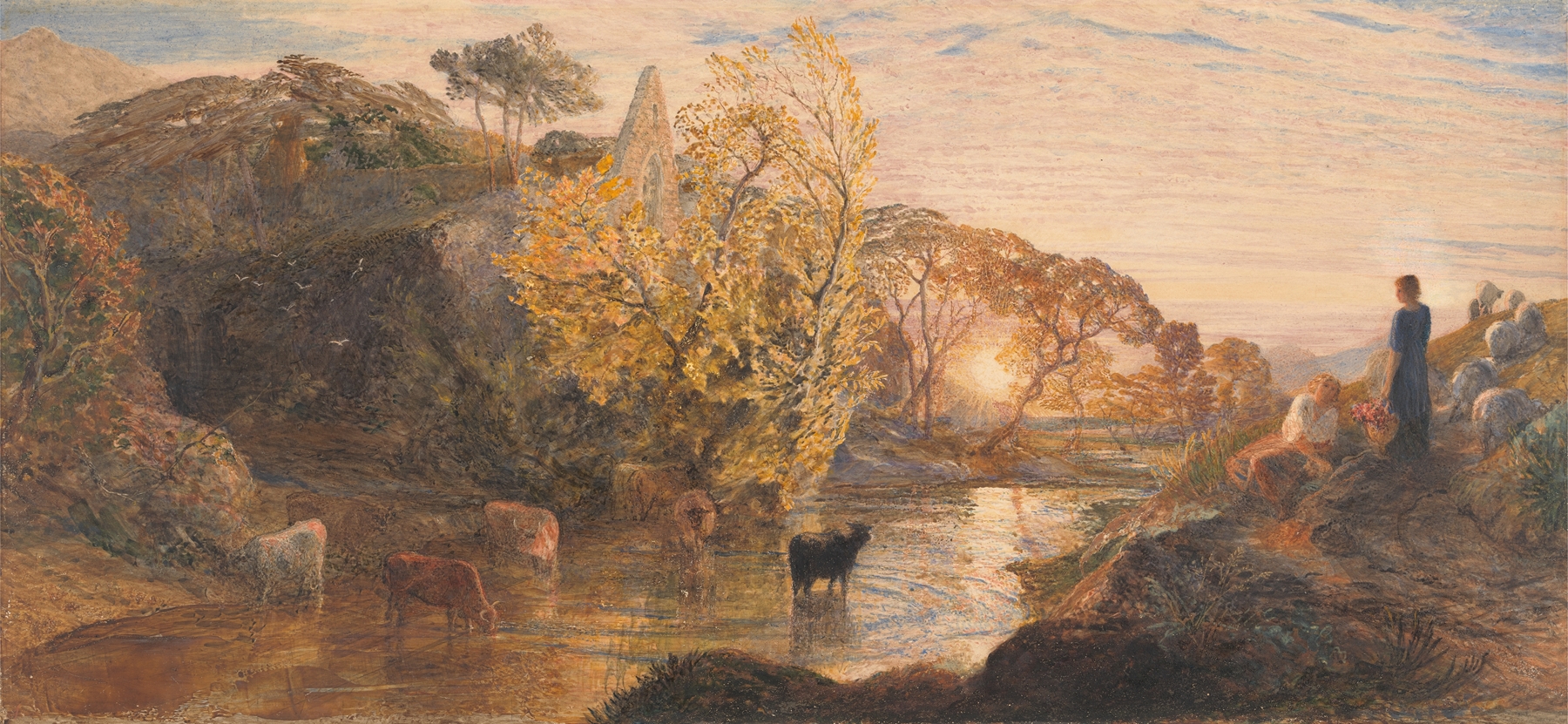
Art reveals the soul when the world turns away. In the stillness of twilight, where reality fades and dreams take form, Mount Siabod from Tyn-y-Coed near Capel Curig invites viewers to transcend the mundane and explore the depths of nature’s spirit. This work captures not just a landscape but an experience, an echo of the sublime that resonates within. Look to the foreground, where a gentle stream winds its way through a lush, verdant landscape. The meticulous strokes create depth, drawing the eye toward the imposing silhouette of Mount Siabod.
Notice how the soft, warm hues of orange and gold in the sky contrast with the cool blues and greens of the land, giving life to the atmosphere. Palmer's use of light, with the sun casting elongated shadows, not only enhances the layers of the scenery but also suggests an ethereal quality, almost inviting viewers to step into this serene world. Delve deeper, and consider the juxtaposition of the serene stream and the majestic mountain behind it. This interplay speaks to the tension between humanity and nature, urging us to find harmony and understanding within the chaos of existence. The delicate details, like the fluttering leaves and the swirling clouds, embody a longing for connection, both to the landscape and to something greater than ourselves.
It’s a reminder that within nature’s embrace lies the potential for transcendence. Samuel Palmer created this work during a time of significant personal and artistic exploration, likely between the late 1820s and early 1830s. Residing in London, he was influenced by the Romantic movement, seeking solace in the pastoral landscapes of Wales. This painting reflects his pursuit of a deeper emotional truth, as he grappled with the complexities of modern life while yearning for the sublime beauty found in nature’s untouched realms.