Niagara Falls in the Snow, seen from Goat Island — History & Analysis
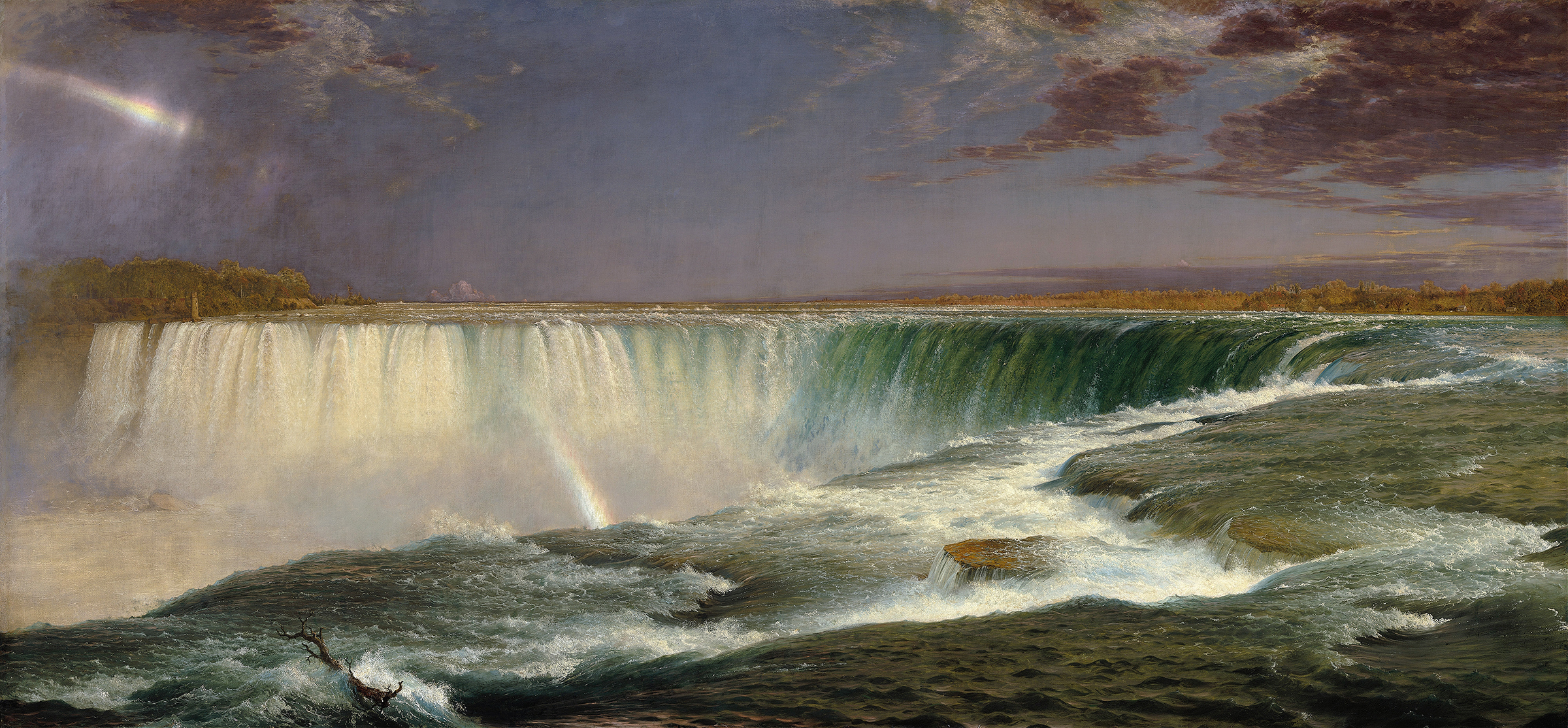
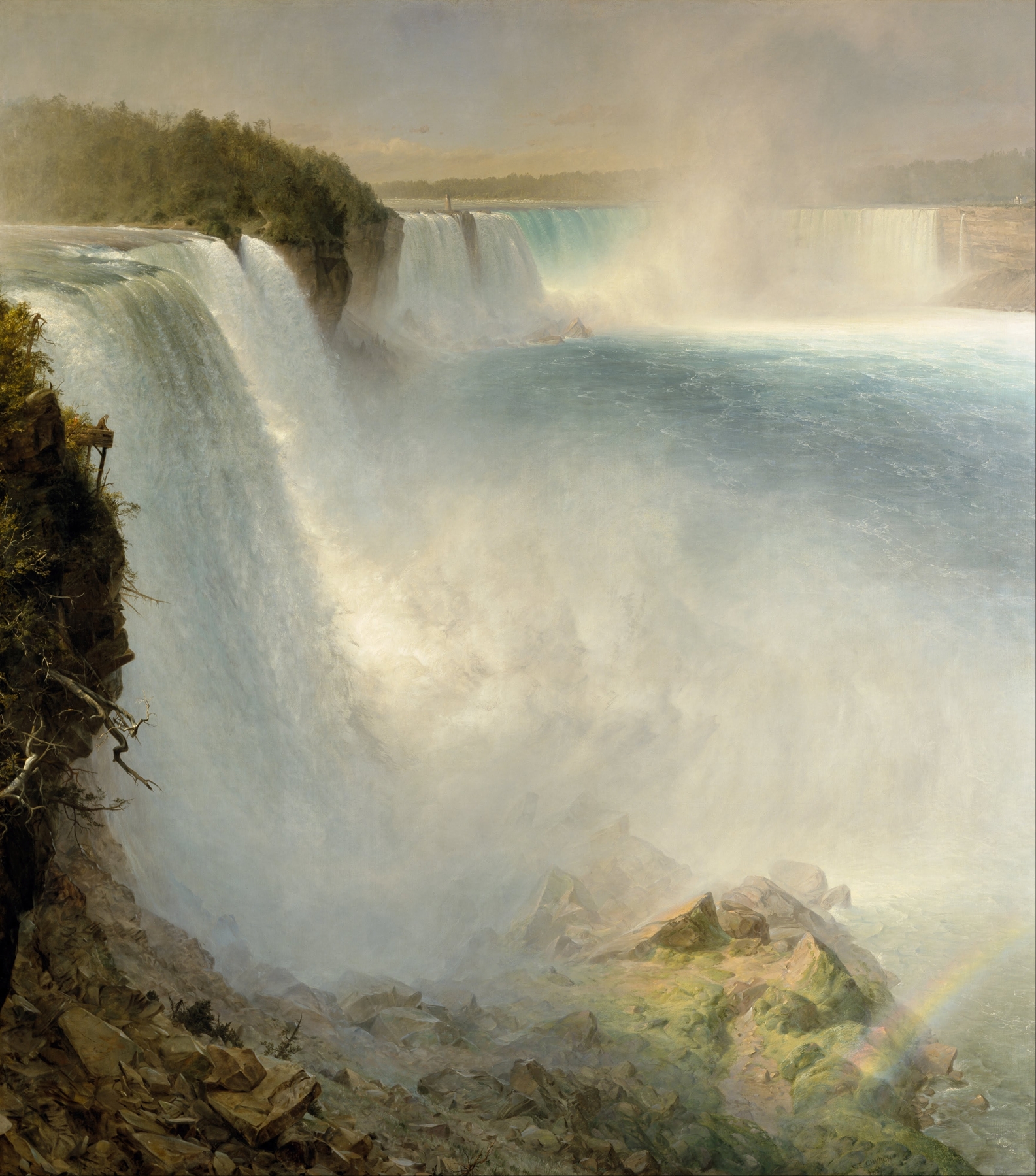
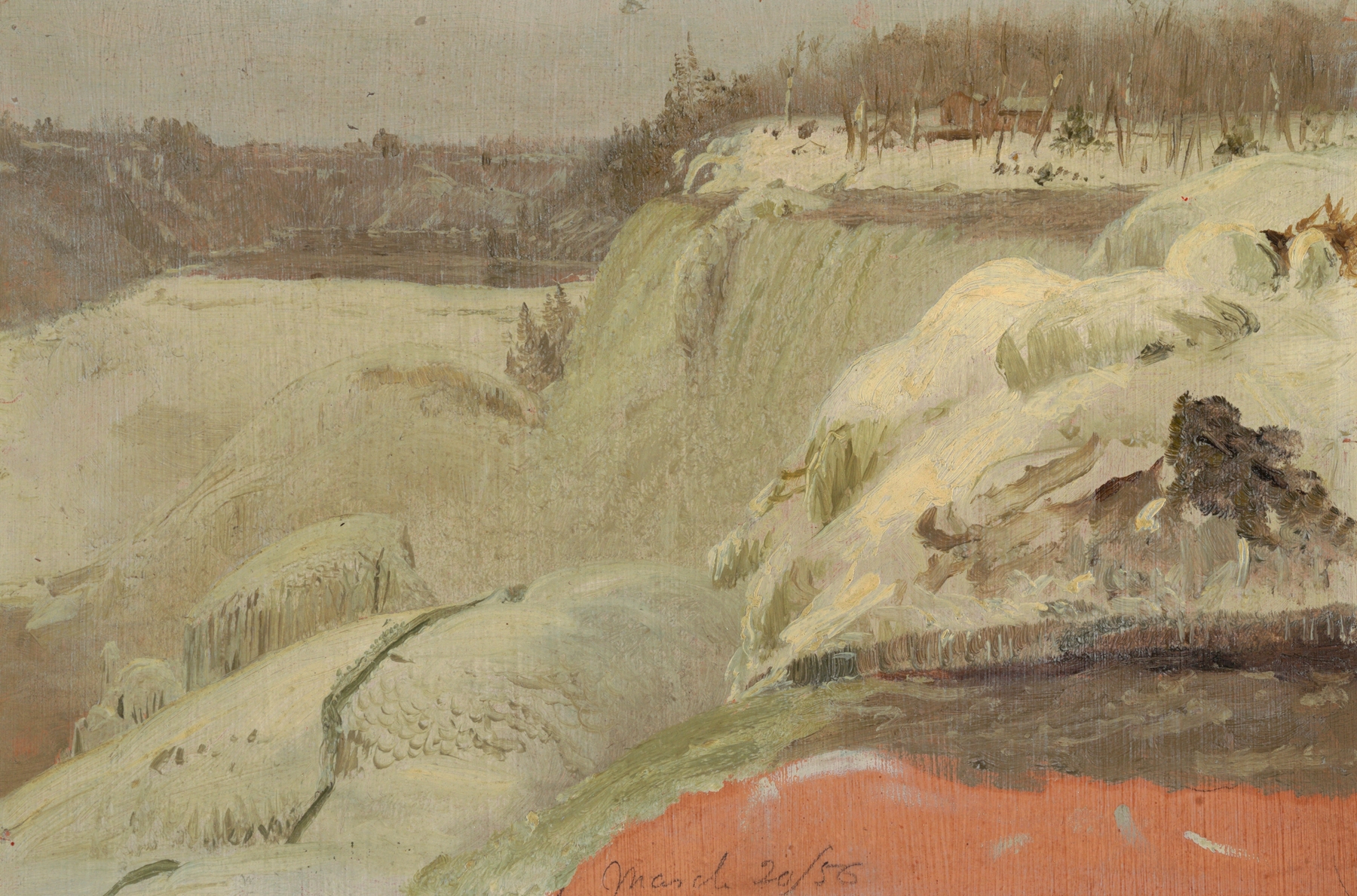
When did color learn to lie? Beneath the snowy drapery of winter, a majestic cascade challenges our perception of reality, caught between nature's raw power and its serene beauty. This painting reveals transformation, as the familiar becomes otherworldly, inviting contemplation and awe. Focus on the tumultuous falls nestled within the delicate embrace of snow. Look to the left, where the icy blue hues contrast sharply with the silvery whites, creating a luminous interplay that dances across the canvas. Notice how the artist meticulously captures the frosty mist rising from the icy waters, appearing almost ethereal against the muted palette. The towering trees, dusted with snow, frame the scene, grounding the chaos of the waterfall and guiding our gaze towards the heart of the landscape. Deeper insights emerge through the juxtaposition of permanence and change. The powerful rush of the falls symbolizes the relentless forces of nature, while the tranquil blanket of snow suggests a fleeting stillness. The moment encapsulated here speaks to the duality of existence, where fierce energy is momentarily tamed by winter's calm. Each brushstroke whispers secrets about resilience and the transient beauty found within nature's contrasts. Frederic Edwin Church painted *Niagara Falls in the Snow, seen from Goat Island* in 1856 during a transformative period in American art. The Hudson River School, which emphasized the romanticism of the American landscape, was gaining prominence, and Church was at the forefront of this movement. While he explored the vastness of the natural world, he was also grappling with his own artistic identity and the profound changes occurring in a rapidly industrializing society.