Nocturnal Cavalcade, Tehran — History & Analysis
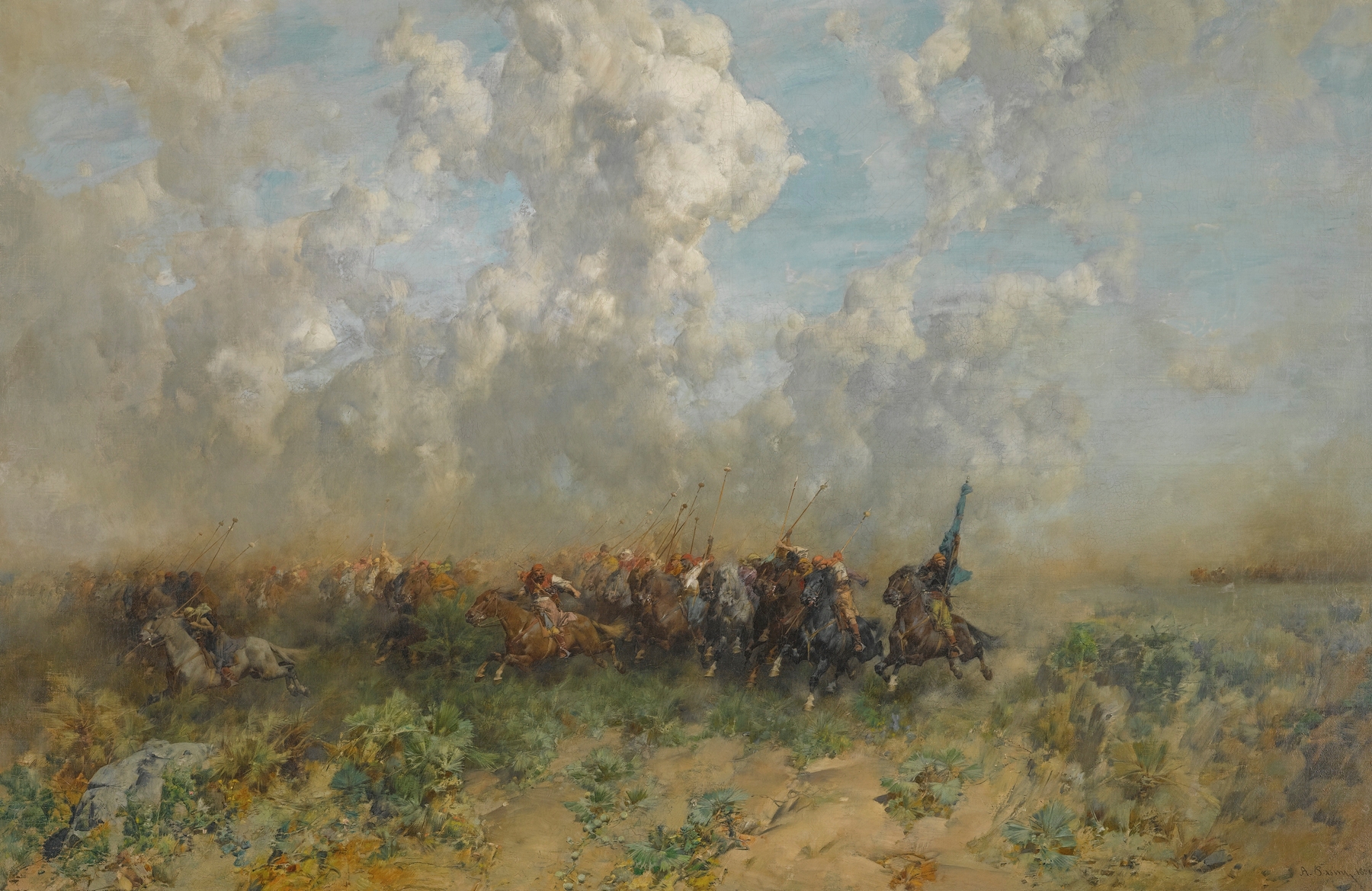
“To paint is to remember what time wants us to forget.” In a world where solitude lingers like an uninvited guest, the brush captures the essence of loneliness amid a bustling spectacle. Look to the center of the canvas, where the figures of a caravan emerge in the night, their silhouettes seemingly swallowed by shadows. The muted palette of deep blues and grays envelops them, contrasting the golden glimmers of lantern light. Notice the interplay between light and dark—each flicker of flame reveals not just the travelers, but also the vast emptiness of the night that surrounds them.
The composition draws the eye along the winding path, inviting you to journey with them into the unknown. Hidden within this nocturnal scene lies a profound tension—the excitement of movement paired with an undercurrent of isolation. Each traveler appears both connected and disconnected, threading through the night yet separated by the weight of their own thoughts. The distant city looms, a reminder of a life bustling with connection, yet here, the caravan's journey is a poignant metaphor for the human experience of seeking companionship while feeling perpetually alone.
In 1859, amidst the backdrop of a rapidly modernizing world, Pasini painted this work during his travels in Iran. It reflects his fascination with Eastern culture and landscapes, a time when European artists were increasingly drawn to the exotic and the unknown. As he navigated a world of artistic exploration, Nocturnal Cavalcade emerged as a testament to both the romance and the alienation of travel in an age of change.